Adjustment with a Human Face
Giovanni Andrea Cornia, Richard Jolly, Frances Stewart
Häftad, 1987
693 kr
Du är på sajten för privatpersoner.
Del i serien United Nations Intellectual History Project Series
438 kr
Beställningsvara. Skickas inom 10-15 vardagar. Fri frakt över 249 kr.
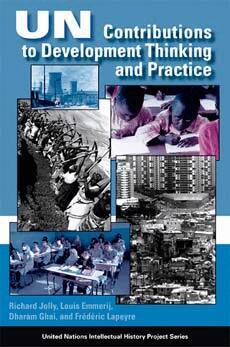
Richard Jolly is Senior Research Fellow at the CUNY Graduate Center, where he is co-director of the United Nations Intellectual History Project. Louis Emmerij is Senior Research Fellow at the CUNY Graduate Center, where he is co-director of the United Nations Intellectual History Project. Dharam Ghai is Advisor to the International Labour Organization. Frédéric Lapeyre is Professor at the Institute of Development Studies, Catholic University of Louvain, and a member of the United Nations Intellectual History Project.
"One of the titles in a projected 14—volume series sponsored by the United Nations Intellectual History Project (see also Michael Ward's book in this series, Quantifying the World: UN Ideas and Statistics, CH, Oct'04), this institutional history of the UN is surprisingly readable. The product of four authors' collaboration, it tells an interesting story of UN work in development theory and practice. After a brief review of development literature, the authors break down the UN experience into five major periods. The 1940s and 1950s were foundational, with the work of Raul Prebisch and many others promulgated under UN auspices. The 1960s were the decade of development, first declared by John F. Kennedy in 1961. The 1970s saw a focus on equity in development, and the 1980s saw UN agencies being eclipsed by the International Monetary Fund and World Bank. By the 1990s, the UN Development Program restored a focus on human development that had been lost earlier. Concluding with a review of UN development ideas, the authors describe successes but do not hesitate to point out failures. Well organized and well written, this book will be essential reading in international organization or economic development courses. Summing Up: Highly recommended. Public, academic, upper—division undergraduate and up, and professional library collections."—S. Waalkes, Malone College , Choice, January 2005"Well organized and well written, this book will be essential reading in international organization or economic development courses. Summing Up: Highly recommended. Public, academic, upper-division undergraduate and up, and professional library collections.January 2005"—Choice
Giovanni Andrea Cornia, Richard Jolly, Frances Stewart
Häftad, 1987
693 kr
Cornia, Giovanni Andrea Cornia, Richard Jolly, Frances Stewart
Inbunden, 1988
2 795 kr
Du är på sajten för privatpersoner.
Del i serien United Nations Intellectual History Project Series
438 kr
Beställningsvara. Skickas inom 10-15 vardagar. Fri frakt över 249 kr.
Richard Jolly is Senior Research Fellow at the CUNY Graduate Center, where he is co-director of the United Nations Intellectual History Project. Louis Emmerij is Senior Research Fellow at the CUNY Graduate Center, where he is co-director of the United Nations Intellectual History Project. Dharam Ghai is Advisor to the International Labour Organization. Frédéric Lapeyre is Professor at the Institute of Development Studies, Catholic University of Louvain, and a member of the United Nations Intellectual History Project.
"One of the titles in a projected 14—volume series sponsored by the United Nations Intellectual History Project (see also Michael Ward's book in this series, Quantifying the World: UN Ideas and Statistics, CH, Oct'04), this institutional history of the UN is surprisingly readable. The product of four authors' collaboration, it tells an interesting story of UN work in development theory and practice. After a brief review of development literature, the authors break down the UN experience into five major periods. The 1940s and 1950s were foundational, with the work of Raul Prebisch and many others promulgated under UN auspices. The 1960s were the decade of development, first declared by John F. Kennedy in 1961. The 1970s saw a focus on equity in development, and the 1980s saw UN agencies being eclipsed by the International Monetary Fund and World Bank. By the 1990s, the UN Development Program restored a focus on human development that had been lost earlier. Concluding with a review of UN development ideas, the authors describe successes but do not hesitate to point out failures. Well organized and well written, this book will be essential reading in international organization or economic development courses. Summing Up: Highly recommended. Public, academic, upper—division undergraduate and up, and professional library collections."—S. Waalkes, Malone College , Choice, January 2005"Well organized and well written, this book will be essential reading in international organization or economic development courses. Summing Up: Highly recommended. Public, academic, upper-division undergraduate and up, and professional library collections.January 2005"—Choice
Giovanni Andrea Cornia, Richard Jolly, Frances Stewart
Häftad, 1987
693 kr
Cornia, Giovanni Andrea Cornia, Richard Jolly, Frances Stewart
Inbunden, 1988
2 795 kr