Louise Manning - Böcker
Visar alla böcker från författaren Louise Manning. Handla med fri frakt och snabb leverans.
7 produkter
7 produkter
130 kr
Skickas inom 5-8 vardagar
Food and Drink - Good Manufacturing Practice
A Guide to its Responsible Management
Häftad, Engelska, 2013
1 555 kr
Skickas inom 7-10 vardagar
Good Manufacturing Practice (GMP) refers to advice and guidance put in place to outline the aspects of production and testing that can impact the quality and safety of a product. In the case of food and drink, GMP is aimed at ensuring that products are safe for the consumer and are consistently manufactured to a quality appropriate to their intended use. Manufacturers have for several years been driving towards such goals as Total Quality Management (TQM), lean manufacturing and sustainability – GMP is bound up with these issues. The ever-increasing interest amongst consumers, retailers and enforcement authorities in the conditions and practices in food manufacture and distribution, increases the need for the food manufacturer to operate within clearly defined policies such as those laid down in GMP. The ability to demonstrate that Good Manufacturing Practice has been fully and effectively implemented could, in the event of a consumer complaint or a legal action, reduce the manufacturer’s liability and protect them from prosecution.First launched in 1986, IFST’s Good Manufacturing Practice Guide has been widely recognized as an indispensable reference work for food scientists and technologists. It sets out to ensure that food manufacturing processes deliver products that are uniform in quality, free from defects and contamination, and as safe as it is humanly possible to make them. This 6th edition has been completely revised and updated to include all the latest standards and guidance, especially with regard to legislation-driven areas such as HACCP.The Guide is a must have for anyone in a managerial or technical capacity concerned with the manufacture, storage and distribution of food and drink. It is also a valuable reference for food education, training and for those involved in food safety and enforcement. Food scientists in academic and industry environments will value its precision, and policy makers and regulatory organizations will find it an indispensable guide to an important and multifaceted area.About IFSTIFST is the leading independent qualifying body for food professionals in Europe and the only professional body in the UK concerned with all aspects of food science and technology. IFST members are drawn from all over the world and from all ages and backgrounds, including industry (manufacturing, retailing and food service), universities and schools, government, research and development, quality assurance and food law enforcement. IFST qualifications are internationally recognised as a sign of proficiency and integrity.
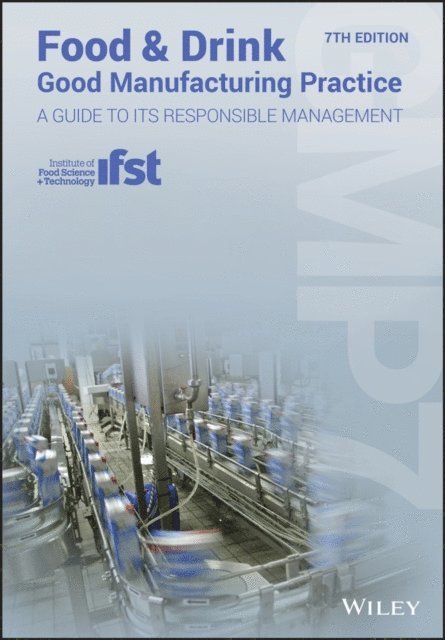
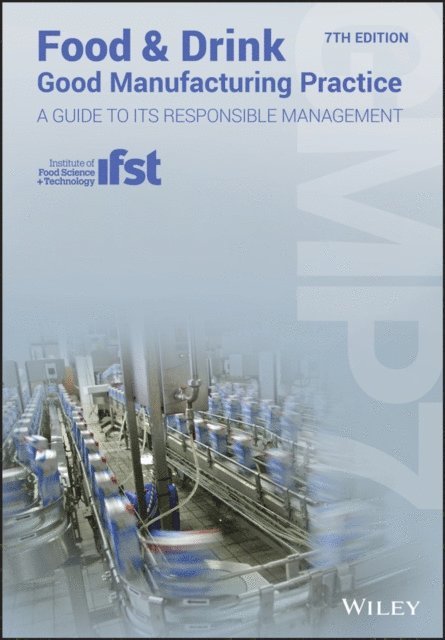
Food and Drink - Good Manufacturing Practice
A Guide to its Responsible Management (GMP7)
Häftad, Engelska, 2018
1 349 kr
Skickas inom 7-10 vardagar
The latest updated edition of the market-leading guide to Good Manufacturing Practice (GMP) in the food and drink industry This all-new, 7th edition of Food and Drink - Good Manufacturing Practice: A Guide to its Responsible Management features a wealth of new information reflecting changes in the industry and advances in science that have occurred since the publication of the last edition back in 2013. They include topics such as: Food Safety Culture, Food Crime and Food Integrity Management Systems, Food Crime Risk Assessment including vulnerability risk assessment and Threat Analysis Critical Control Point (TACCP), Security and Countermeasures, Food Toxins, Allergens and Risk Assessment, Provenance and authenticity, Electronic and digital traceability technologies, Worker Welfare Standards; Smart Packaging, Food Donation Controls and Animal Food Supply, Safety Culture; Provenance and integrity testing and Sustainability Issues.In addition to the new topics mentioned above, Food and Drink - Good Manufacturing Practice, 7th Edition offers comprehensive coverage of information in chapters on Quality Management System; Hazard Analysis Critical Control Point (HACCP); Premises and Equipment; Cleaning and Sanitation; Product Control, Testing and Inspection; Heat Preserved Foods; Frozen Foods; Foods for Catering and Vending Operations; and much more. Comprises both general guidance and food sector-specific requirements for good manufacturing practiceIncorporates all the most recent developments and changes in UK and EU lawProvides a readable and accessible reference for busy managers in the food industryFood and Drink - Good Manufacturing Practice: A Guide to its Responsible Management, 7th Edition is a valuable reference for anyone in a managerial or technical capacity concerned with the manufacture, storage, and distribution of food and drink. The book is also a “must –read” for the recommended reading lists for food science, food technology and food policy undergraduate and postgraduate studies.IFST - the Institute of Food Science and Technology is the leading qualifying body for food professionals in Europe and the only professional qualifying body in the UK concerned with all aspects of food science and technology.
3 698 kr
Skickas inom 10-15 vardagar
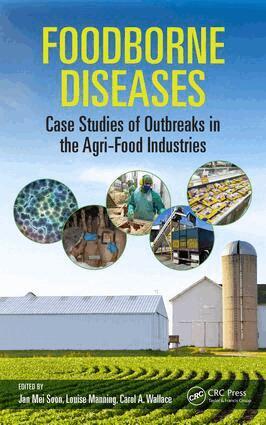
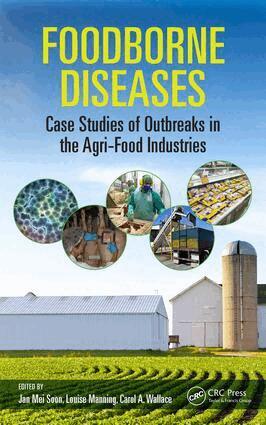
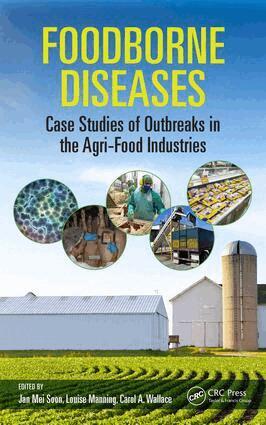
Foodborne Diseases: Case Studies of Outbreaks in the Agri-Food Industries defines the context of foodborne disease across a range of food sectors. It provides insight into the causes and management of outbreaks along with practical lessons about foodborne disease prevention strategies relevant to stakeholders throughout the food supply chain. Individual chapters capture the epidemiological and traceback investigations of foodborne disease outbreaks in a wide range of food sectors that include fresh produce, dairy and eggs, and meat products, to complex food ingredients and products within the food manufacturing and food service sectors.Under each food category, case studies of real outbreaks are presented, along with lessons learned in the way they were managed for future control of foodborne disease outbreaks. The authors look at management of outbreaks across borders and consider how both local and international authorities dealt with the issues in each case. They focus on real-life microbiological/chemical-associated outbreaks and provide insights on how the outbreaks occurred and, if possible, how they were traced to the source of contamination.Each outbreak is unique, and readers are given the distinctive circumstances associated with different hazards, challenges faced during epidemiological and environmental investigations, risk communication to the general public, and insights into outbreak management. The authors cover the entire food supply chain, including a chapter on animal feed safety. A chapter on fraud and foodborne outbreaks considers scenarios where food industries, food services, and other stakeholders commit food adulteration, which ultimately leads to foodborne illnesses. Outbreak management and prevention strategies are key parts of each case study.
Del 148 - Burleigh Dodds Series in Agricultural Science
Improving Standards and Certification in Agri-Food Supply Chains
Ensuring Safety, Sustainability and Social Responsibility
Inbunden, Engelska, 2024
2 690 kr
Skickas inom 3-6 vardagar
“From the very first pages, this collective work impresses with the rigour of its composition. A carefully-structured table of contents guides the reader through the multiple dimensions of agro-environmental standards – from their institutional definitions to the assessment of their impact on the management of quality, safety and traceability. The book also explores their practical implementation across diverse sectors such as regenerative agriculture, livestock farming, forestry, carbon markets, and Good Agricultural Practices (GAP) schemes. It will become an essential reference – helping policymakers, producers and researchers navigate the shifting complexities of these standards.” (Book Review Published in Nature Built Social Environment Health)There is increasing scrutiny of the safety, environmental and social impact of food production. However, the complexity of modern agri-food supply chains has significantly complicated the process of setting and enforcing appropriate standards. The thematic scope of standards has also expanded from its original focus on safety and quality to cover social responsibility and ethical trading, animal welfare, environmental sustainability, biodiversity loss and nature-related risks.Finally, the range of stakeholders involved in setting and monitoring standards governing agri-food supply chains has proliferated, from official national, regional and international bodies to non-government organisations (NGOs), the food industry itself and now the investment sector concerned to ensure their clients meet environmental, social and governance (ESG) standards.Improving standards and certification in agri-food supply chains: Ensuring safety, sustainability and social responsibility comprehensively addresses the challenges raised by this complex picture and features contributions from leading international experts from the Codex Alimentarius Commission and the Rainforest Alliance. The book discusses how to reconcile the roles of different stakeholders in standard setting, how changes in governance and technology can improve accountability, as well as the different ways of enhancing good agricultural practices (GAP) to meet new ways of producing food.The book also discusses the challenges and solutions in achieving effective standards promoting more socially responsible production and how best to address emerging practices to improve environmental sustainability such as regenerative agriculture.
Del 96 - Burleigh Dodds Science: Instant Insights
Instant Insights: Optimising Agri-Food Supply Chains
Häftad, Engelska, 2024
677 kr
Skickas inom 5-8 vardagar
This book features five peer-reviewed reviews on optimising agri-food supply chains.The first chapter provides an overview of agri-food supply chains and explores the unique characteristics which differentiate them from other manufacturing supply chains. The chapter also provides a framework for designing future agri-food supply chains.The second chapter reviews recent advances in agri-food traceability systems and technologies, as well as barriers to their implementation. The chapter also explores possible improvement pathways and policy interventions to promote deployment of advanced food traceability systems.The third chapter considers food governance and how it frames crisis management and product recalls in food supply chains. The chapter also addresses the use of Blockchain systems within public-private partnerships for food governance.The fourth chapter highlights the causes of food losses and waste (FLW) and outlines strategies to prevent/reduce FLW along the supply chain, including investments, good practices, behavioural changes and coordination within the food chain.The final chapter explores the role of decision support systems in improving data management in agri-food supply chains. The chapter also provides an overview of organisational models used in data communication along the supply chain.
Del 112 - Burleigh Dodds Science: Instant Insights
Instant Insights: Good Agricultural Practices
Häftad, Engelska, 2025
677 kr
Skickas inom 5-8 vardagar
This book features five peer-reviewed reviews on the development and deployment of good agricultural practices (GAPs).The first chapter describes GAPs, notions of good farming, how GAP standards have evolved in developed and developing economies and the opportunities to evolve these pre- and postharvest standards.The second chapter reviews the role of GAPs in preventing microbial contamination of fresh produce. The chapter also summarises how GAPs have evolved, the impact they have had on the produce industry, as well as how they are implemented.The third chapter considers the debates about GAPs in the context of controlled environment agriculture (CEA) and how GAPs can be developed as part of an effective food safety control programme in CEA systems around the world.The fourth chapter addresses how GAPs can be used to optimise sustainable crop production and refers to three contrasting maize cultivation systems in the USA, Ethiopia and Argentina to demonstrate this.The final chapter provides an overview of the GAP-related certification schemes in global banana production and how they can be utilised to address the yield gap, improve synchronisation between ecological processes, production routines and cost efficiency.