Lukasz Sulkowski – författare
662 kr
Läs direkt efter köp
Significant disruption to the educational sector occurred due to the COVID-19 pandemic. This shed a light on the need for new delivery methods and greater collaboration, which has become urgent and obvious as existing structures and traditional channels have struggled to cope or shut down. Higher education institutions often fail to crowdsource successfully because crowds differ in how they are organized compared to traditional sourcing. Instead of managing, higher education institutions work with external contributors who self-select into the process.
Crowdsourcing has significant potential to transform the education space by enhancing existing methodologies and offering innovative possibilities to develop new pedagogical techniques. This offers benefits for practitioners, institutions, students and participants. Drawing on theory and best practice, illustrated with a wide range of the examples and cases, Crowdsourcing for Innovation in Higher Education offers invaluable guidance and will be of interest to researchers, academics, policymakers, and students in the fields of higher education, development studies, organizational studies, management science and knowledge management.
662 kr
Läs direkt efter köp
Significant disruption to the educational sector occurred due to the COVID-19 pandemic. This shed a light on the need for new delivery methods and greater collaboration, which has become urgent and obvious as existing structures and traditional channels have struggled to cope or shut down. Higher education institutions often fail to crowdsource successfully because crowds differ in how they are organized compared to traditional sourcing. Instead of managing, higher education institutions work with external contributors who self-select into the process.
Crowdsourcing has significant potential to transform the education space by enhancing existing methodologies and offering innovative possibilities to develop new pedagogical techniques. This offers benefits for practitioners, institutions, students and participants. Drawing on theory and best practice, illustrated with a wide range of the examples and cases, Crowdsourcing for Innovation in Higher Education offers invaluable guidance and will be of interest to researchers, academics, policymakers, and students in the fields of higher education, development studies, organizational studies, management science and knowledge management.
1 895 kr
Skickas inom 10-15 vardagar
573 kr
Skickas inom 10-15 vardagar
1 962 kr
Skickas inom 10-15 vardagar
573 kr
Skickas inom 10-15 vardagar
1 962 kr
Skickas inom 10-15 vardagar
627 kr
Skickas inom 10-15 vardagar
2 222 kr
Skickas inom 10-15 vardagar
622 kr
Skickas inom 10-15 vardagar
2 158 kr
Skickas inom 10-15 vardagar
665 kr
Kommande
1 799 kr
Skickas inom 5-8 vardagar
443 kr
Läs direkt efter köp
443 kr
Läs direkt efter köp
725 kr
Läs direkt efter köp
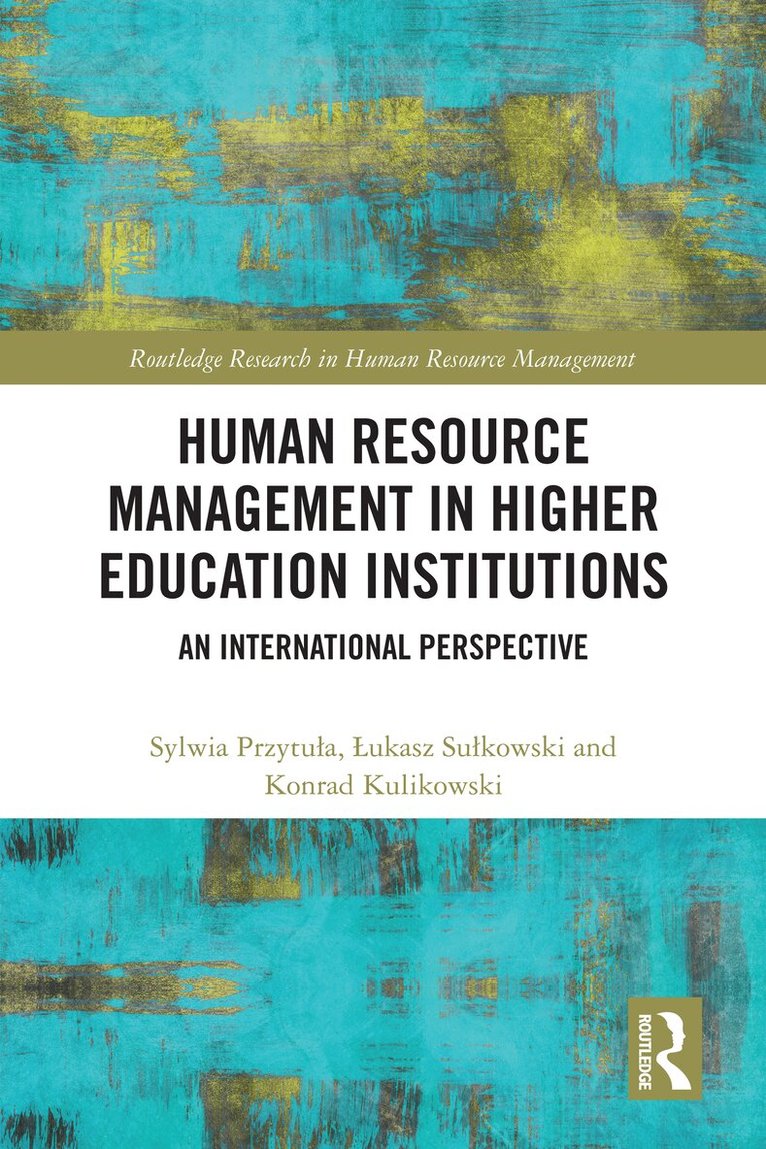
In an era marked by increasing globalization, international competition, digitalization, and social and cultural changes, higher education institutions (HEIs) play a pivotal role in establishing the knowledge-based economy of each country, which is perceived as its soft power. The need to explore and highlight the specificity of human resource management (HRM) practices in higher education institutions has become urgent and evident. This book provides new theoretical and practical insights into HRM in HEIs. A profound analysis of the global literature clearly exposes that human resource practices are often applied in academia as single solutions rather than as a systematic approach to planning, attracting, motivating, developing, and retaining scientists. The global trends in academia, such as the need for branding and positioning in higher education ranking systems, growing retention and brain circulation between academia and business, diversity in academia, and the digitalization of teaching, have resulted in challenges such as de-recruitment, academic burnout and ill-being, and technostress, which are also addressed in this book.
725 kr
Läs direkt efter köp
In an era marked by increasing globalization, international competition, digitalization, and social and cultural changes, higher education institutions (HEIs) play a pivotal role in establishing the knowledge-based economy of each country, which is perceived as its soft power. The need to explore and highlight the specificity of human resource management (HRM) practices in higher education institutions has become urgent and evident. This book provides new theoretical and practical insights into HRM in HEIs. A profound analysis of the global literature clearly exposes that human resource practices are often applied in academia as single solutions rather than as a systematic approach to planning, attracting, motivating, developing, and retaining scientists. The global trends in academia, such as the need for branding and positioning in higher education ranking systems, growing retention and brain circulation between academia and business, diversity in academia, and the digitalization of teaching, have resulted in challenges such as de-recruitment, academic burnout and ill-being, and technostress, which are also addressed in this book.
2 222 kr
Skickas inom 10-15 vardagar
809 kr
Kommande
809 kr
Kommande
608 kr
Kommande
2 225 kr
Kommande
608 kr
Kommande
2 245 kr
Kommande
608 kr
Kommande
2 225 kr
Kommande
608 kr
Kommande
2 225 kr
Kommande
608 kr
Kommande
2 225 kr
Kommande