Zdzisława Dacko-Pikiewicz - Böcker
Visar alla böcker från författaren Zdzisława Dacko-Pikiewicz. Handla med fri frakt och snabb leverans.
10 produkter
10 produkter
2 150 kr
Skickas inom 10-15 vardagar
Corporate reputation is important in gaining long-term competitive advantage and building company value. Thus, the author points out the need to manage reputation, which, due to its complex nature and multidimensional character, is a serious and difficult challenge.The author develops a strategic model for family business reputation management. The book presents the review, systematization and synthesis of views on the notion of reputation and its role in building company value, the determinants of reputation; the identification of the characteristics and distinguishing factors of family businesses, areas of reputation building and resources involved in family business reputation building processes; and the description of determinants, components and processes in the field of corporate reputation management, and the identification of key links between them. It also identifies the key elements of the concept of family business reputation management and the relationship between them and practical recommendations for the use of reputation management concepts in improving the functioning of family businesses.The developed model can undoubtedly be seen as a pioneering contribution to research into the competitiveness of enterprises. The book will therefore be useful to researchers, students and managers who are interested in decision-making in family businesses, entrepreneurship and small business management, and leadership studies.
635 kr
Skickas inom 10-15 vardagar
Corporate reputation is important in gaining long-term competitive advantage and building company value. Thus, the author points out the need to manage reputation, which, due to its complex nature and multidimensional character, is a serious and difficult challenge.The author develops a strategic model for family business reputation management. The book presents the review, systematization and synthesis of views on the notion of reputation and its role in building company value, the determinants of reputation; the identification of the characteristics and distinguishing factors of family businesses, areas of reputation building and resources involved in family business reputation building processes; and the description of determinants, components and processes in the field of corporate reputation management, and the identification of key links between them. It also identifies the key elements of the concept of family business reputation management and the relationship between them and practical recommendations for the use of reputation management concepts in improving the functioning of family businesses.The developed model can undoubtedly be seen as a pioneering contribution to research into the competitiveness of enterprises. The book will therefore be useful to researchers, students and managers who are interested in decision-making in family businesses, entrepreneurship and small business management, and leadership studies.
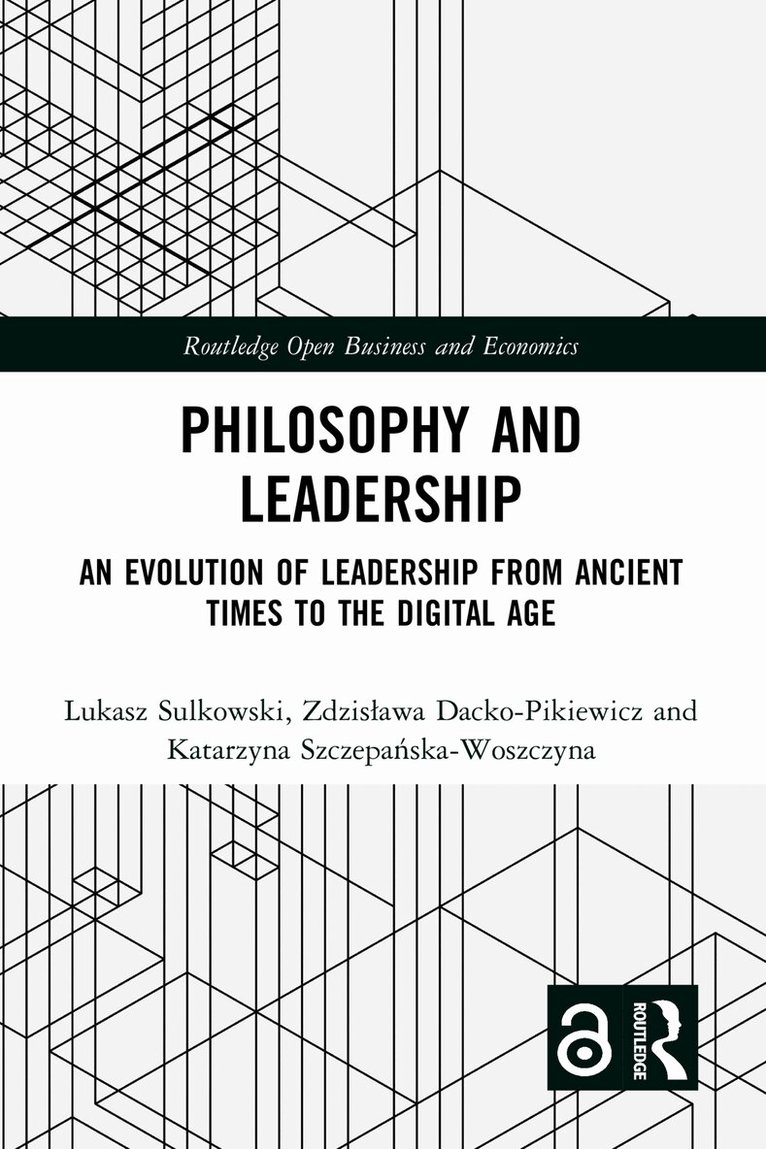
Philosophy and Leadership
An Evolution of Leadership from Ancient Times to the Digital Age
Inbunden, Engelska, 2024
2 150 kr
Skickas inom 10-15 vardagar
Philosophy and Leadership is an ambitious exploration of leadership's philosophical underpinnings from antiquity to the AI-driven future. The book journeys through history, gleaning insights from eminent philosophers and contextualizing their teachings to leadership.The book's foundational premise lies in the symbiosis of philosophy and leadership. Philosophy provides the "why" that drives the practices and decisions in leadership. This intricate connection is unfolded from the teachings of Confucius on virtue and ethics to the contemporary dialogues of Judith Butler on leadership identity. The book also delves into the evolution of leadership concepts through various eras—medieval times highlighting religious and scholastic perspectives, the Renaissance juxtaposing Machiavellian pragmatism with More's utopian ideals, and the Enlightenment era underscoring the importance of duty, skepticism, and rationality. An exciting aspect of the narrative is the amalgamation of evolution and leadership. By drawing parallels between Darwin's natural selection and leadership dynamics or Bergson's vitalism and intuitive leadership, the authors present a merger of biological evolution with leadership's ever-evolving paradigms. Finally, the concluding chapters reside in envisioning the future and reflect upon the impending synergy between AI and leadership. They emphasize the importance of amalgamating philosophical wisdom with the promises and challenges brought about by AI.The book will guide readers from the philosophical epochs of yore to the AI-predicted leadership paradigms of the future. By intertwining the enduring wisdom of philosophers with the dynamic nature of leadership, this book serves as a beacon for anyone aspiring to lead in any era.The Open Access version of this book, available at www.taylorfrancis.com, has been made available under a Creative Commons Attribution-Non Commercial-No Derivatives 4.0 license.
Philosophy and Leadership
An Evolution of Leadership from Ancient Times to the Digital Age
Häftad, Engelska, 2026
607 kr
Skickas inom 10-15 vardagar
Philosophy and Leadership is an ambitious exploration of leadership's philosophical underpinnings from antiquity to the AI-driven future. The book journeys through history, gleaning insights from eminent philosophers and contextualizing their teachings to leadership.The book's foundational premise lies in the symbiosis of philosophy and leadership. Philosophy provides the "why" that drives the practices and decisions in leadership. This intricate connection is unfolded from the teachings of Confucius on virtue and ethics to the contemporary dialogues of Judith Butler on leadership identity. The book also delves into the evolution of leadership concepts through various eras—medieval times highlighting religious and scholastic perspectives, the Renaissance juxtaposing Machiavellian pragmatism with More's utopian ideals, and the Enlightenment era underscoring the importance of duty, skepticism, and rationality. An exciting aspect of the narrative is the amalgamation of evolution and leadership. By drawing parallels between Darwin's natural selection and leadership dynamics or Bergson's vitalism and intuitive leadership, the authors present a merger of biological evolution with leadership's ever-evolving paradigms. Finally, the concluding chapters reside in envisioning the future and reflect upon the impending synergy between AI and leadership. They emphasize the importance of amalgamating philosophical wisdom with the promises and challenges brought about by AI.The book will guide readers from the philosophical epochs of yore to the AI-predicted leadership paradigms of the future. By intertwining the enduring wisdom of philosophers with the dynamic nature of leadership, this book serves as a beacon for anyone aspiring to lead in any era.The Open Access version of this book, available at www.taylorfrancis.com, has been made available under a Creative Commons Attribution-Non Commercial-No Derivatives 4.0 license.
2 150 kr
Skickas inom 10-15 vardagar
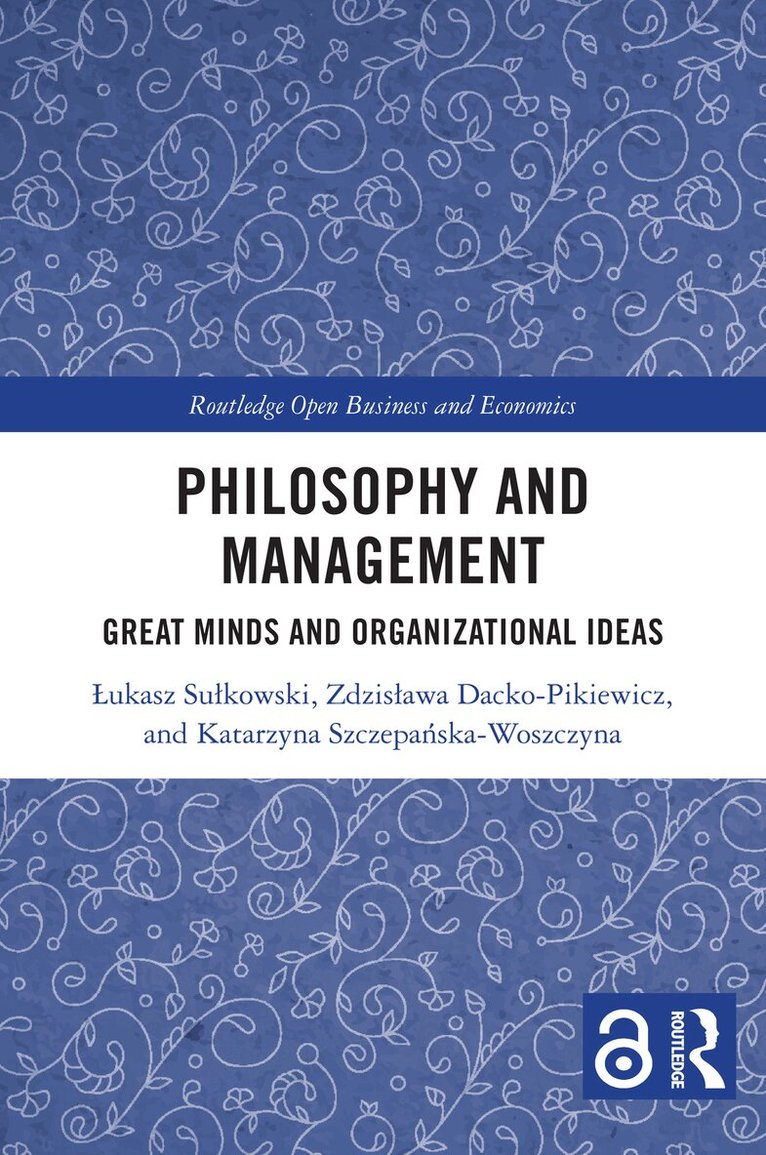
This book invites readers on an intellectual journey where the great minds of philosophy intersect with contemporary organizational challenges.With classical and modern philosophical thought as its backbone, Philosophy and Management: Great Minds and Organizational Ideas demonstrates that the most renowned thinkers in human history, such as Aristotle, Confucius and Nietzsche, provide timeless wisdom for navigating the complexity of today’s business environments. Combining theoretical insights with practical applications, this book presents philosophical frameworks as robust foundations for decision-making, conflict resolution and leadership strategies. It explores crucial areas such as strategic management, human resources, ethics, corporate governance and innovation, challenging readers to explore management from a reflective and ethical perspective, and shows how philosophy equips leaders to build resilient and morally responsible organizations, which are essential in an age dominated by technological advancement and rapid societal changes.The book fills a significant gap in management literature, which often lacks deep philosophical reflection on organizational practices. It draws on ancient, modern and postmodern thought, connecting these insights to current management theories, thus, making it an invaluable resource for both practitioners and scholars.The Open Access version of this book, available at http://www.taylorfrancis.com, has been made available under a Creative Commons Attribution-Non Commercial-No Derivatives (CC BY-NC-ND) 4.0 license.
820 kr
Kommande
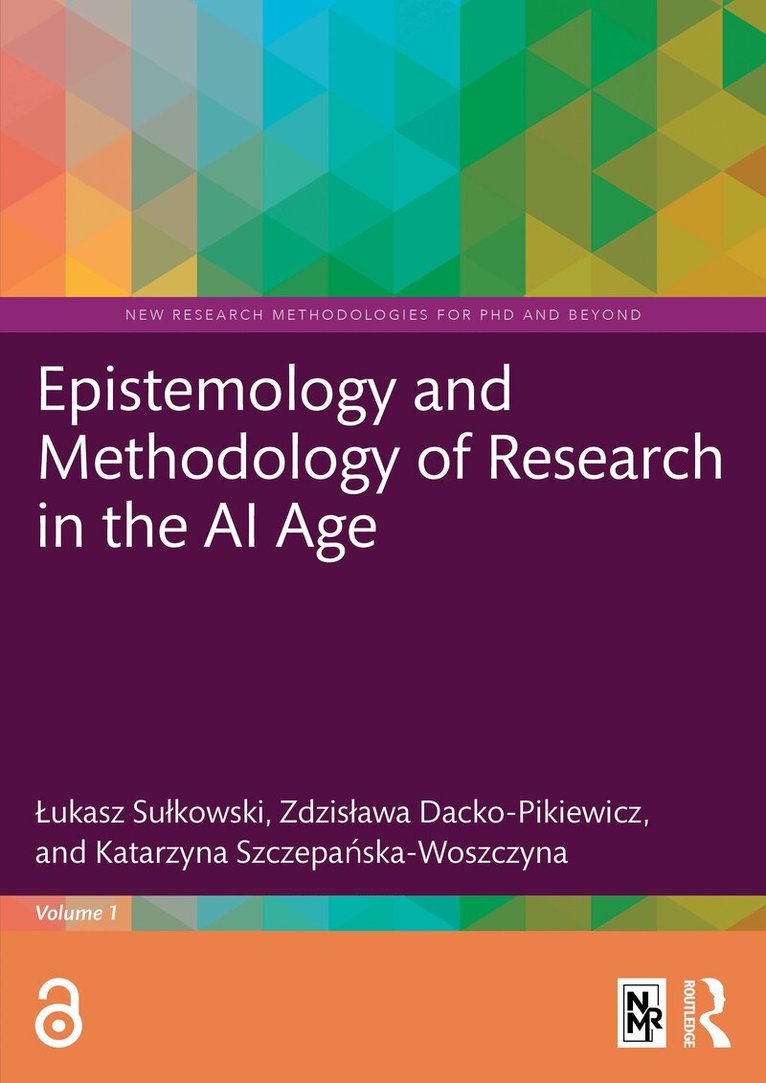
Epistemology and Methodology of Research in the AI Age maps how artificial intelligence (AI), digital platforms, and big data reshape the foundations of social science and management research. It connects epistemology and research design to the practical choices researchers now face, from defining questions in data-rich environments to handling algorithmic bias and ethical risk.Key features include:• Explains how research paradigms and epistemological assumptions shape digital and AI-enabled inquiry.• Translates validity, reliability, and ethics into concrete decisions about sampling, online data, platform effects, and transparency.• Shows how to frame research questions and hypotheses when automation and analytics influence what counts as evidence.• Guides the literature review in the AI age, including digital search strategies, systematic reviews, and meta-analysis.Written for doctoral students, early-career researchers, and methods instructors, this volume supports dissertation work and methods teaching across sociology, psychology, education, economics, and information science. It also anchors the wider series by setting a shared conceptual and ethical baseline for the volumes that follow.
617 kr
Kommande
Digital Quantitative, Qualitative, and Mixed Methodologies in Social Sciences brings together quantitative analysis, qualitative inquiry, and mixed methods for the digital era. This volume shows how to design robust social science research using online surveys, platform data, digital traces, and computational tools, while keeping theory, context, and interpretation in view.Key features include:• frameworks to plan studies that use online surveys, platform data, and digital traces• coverage of digital quantitative methods, digital qualitative methods such as digital ethnography, and mixed-methods integration• worked examples that connect statistical tools with interpretive analysis, including ways to combine survey results with social media analytics and qualitative coding software• guidance on data quality, privacy, research ethics, transparency, and reproducible reporting.Designed for doctoral students, early-career researchers, and applied researchers across sociology, psychology, education, public policy, communication, and management, it supports graduate methods teaching and real research projects in data-rich digital settings.
Quantitative, Qualitative, and Mixed Methodologies in Digital Social Sciences
Inbunden, Engelska, 2026
2 258 kr
Kommande
Digital Quantitative, Qualitative, and Mixed Methodologies in Social Sciences brings together quantitative analysis, qualitative inquiry, and mixed methods for the digital era. This volume shows how to design robust social science research using online surveys, platform data, digital traces, and computational tools, while keeping theory, context, and interpretation in view.Key features include:• frameworks to plan studies that use online surveys, platform data, and digital traces• coverage of digital quantitative methods, digital qualitative methods such as digital ethnography, and mixed-methods integration• worked examples that connect statistical tools with interpretive analysis, including ways to combine survey results with social media analytics and qualitative coding software• guidance on data quality, privacy, research ethics, transparency, and reproducible reporting.Designed for doctoral students, early-career researchers, and applied researchers across sociology, psychology, education, public policy, communication, and management, it supports graduate methods teaching and real research projects in data-rich digital settings.
617 kr
Kommande
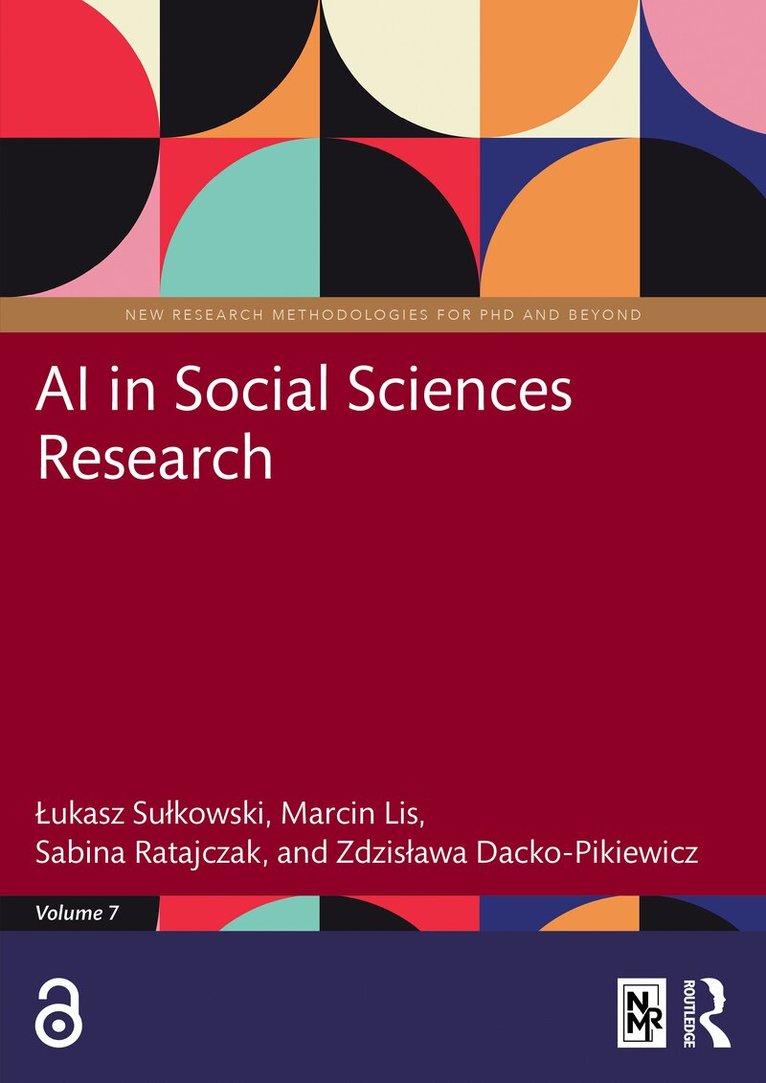
AI in Social Sciences Research explains how artificial intelligence is reshaping social inquiry, from data collection and research design through analysis, interpretation, and theory-building. Treating AI as both a toolkit and a methodological shift, the volume offers a clear route into machine learning, natural language processing, simulation, and generative AI for social researchers, while keeping ethics, bias, transparency, and interpretability in view.Key features include:· Practical guidance on integrating AI into social science research workflows, without losing theoretical and contextual judgement· Coverage of core techniques, including machine learning for prediction and pattern discovery, and NLP for large-scale textual and qualitative data· Discussion of explainability and “black box” risks, with approaches for interpretability and responsible use· Cross-disciplinary examples spanning sociology, psychology, anthropology, political science, economics, and management· A critical account of research integrity issues: data quality, bias, privacy, accountability, and the limits of automationDesigned for postgraduate students, early-career researchers, and instructors teaching digital and computational social science methods, the book supports readers who want to use AI with methodological care, not just technical speed.
2 181 kr
Kommande
AI in Social Sciences Research explains how artificial intelligence is reshaping social inquiry, from data collection and research design through analysis, interpretation, and theory-building. Treating AI as both a toolkit and a methodological shift, the volume offers a clear route into machine learning, natural language processing, simulation, and generative AI for social researchers, while keeping ethics, bias, transparency, and interpretability in view.Key features include:· Practical guidance on integrating AI into social science research workflows, without losing theoretical and contextual judgement· Coverage of core techniques, including machine learning for prediction and pattern discovery, and NLP for large-scale textual and qualitative data· Discussion of explainability and “black box” risks, with approaches for interpretability and responsible use· Cross-disciplinary examples spanning sociology, psychology, anthropology, political science, economics, and management· A critical account of research integrity issues: data quality, bias, privacy, accountability, and the limits of automationDesigned for postgraduate students, early-career researchers, and instructors teaching digital and computational social science methods, the book supports readers who want to use AI with methodological care, not just technical speed.