Katarzyna Szczepańska-Woszczyna - Böcker
Visar alla böcker från författaren Katarzyna Szczepańska-Woszczyna. Handla med fri frakt och snabb leverans.
17 produkter
17 produkter
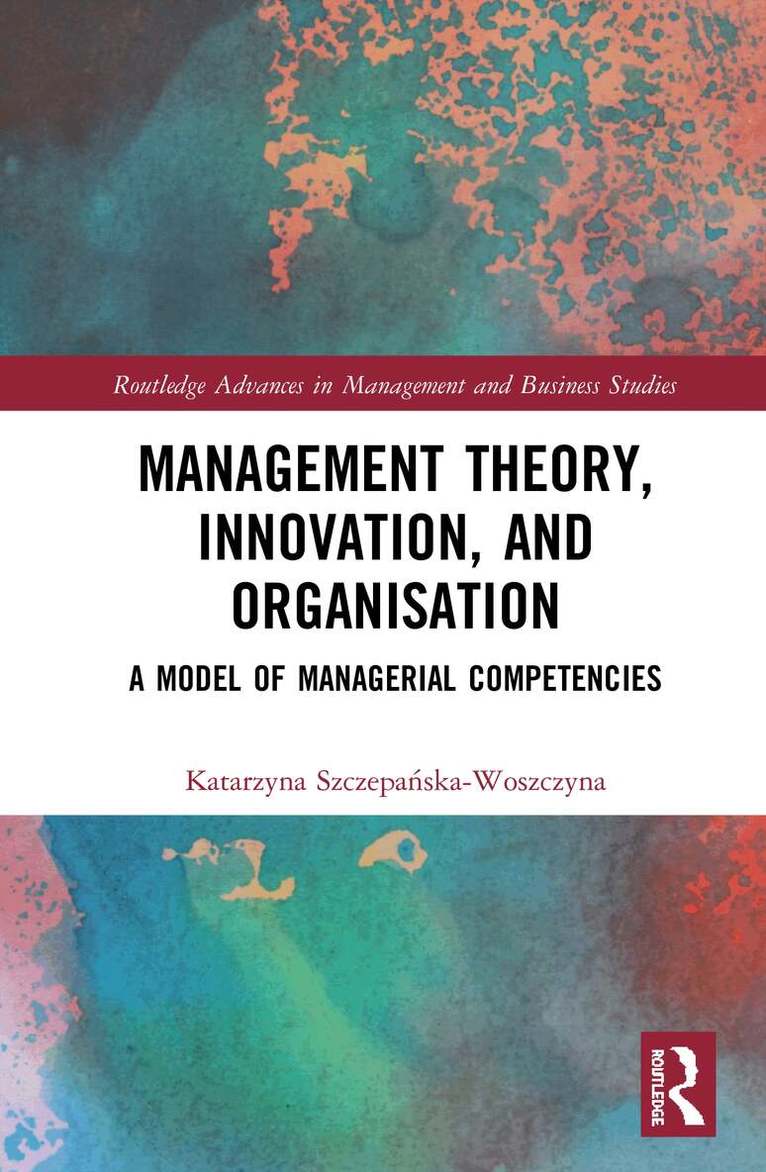
Management Theory, Innovation, and Organisation
A Model of Managerial Competencies
Inbunden, Engelska, 2020
2 113 kr
Skickas inom 10-15 vardagar
Competencies are a component of human capital and one of the most important assets of an enterprise. They play an important role in strengthening the position of the company in a competitive market. Investing in the development of competencies increases the organisation's ability to grow and compete through innovations. This book presents a multi-dimensional analysis of the relationship between managerial competencies and innovations. It analyses the role of a manager in a modern organisation, functions performed by managers, management styles and key challenges, including shaping behaviour in the process of managing change in an organisation, as well as an analysis of the structure of competencies, in particular managerial competencies, and the conditions of the process of forming managerial competencies.Management Theory, Innovation and Organisation: A Model of Managerial Competencies illustrates the organisational conditions of innovativeness, which is the relationship between strategy, structure, organisational culture and leadership and knowledge management and innovation management. The developed model can undoubtedly be considered the author’s pioneering contribution to the studies of managerial competencies and innovativeness.The book will be valuable to researchers, students, and managers in the fields of leadership, organizational studies, innovation management, and human resource management.
Management Theory, Innovation, and Organisation
A Model of Managerial Competencies
Häftad, Engelska, 2022
618 kr
Skickas inom 10-15 vardagar
Competencies are a component of human capital and one of the most important assets of an enterprise. They play an important role in strengthening the position of the company in a competitive market. Investing in the development of competencies increases the organisation's ability to grow and compete through innovations. This book presents a multi-dimensional analysis of the relationship between managerial competencies and innovations. It analyses the role of a manager in a modern organisation, functions performed by managers, management styles and key challenges, including shaping behaviour in the process of managing change in an organisation, as well as an analysis of the structure of competencies, in particular managerial competencies, and the conditions of the process of forming managerial competencies.Management Theory, Innovation and Organisation: A Model of Managerial Competencies illustrates the organisational conditions of innovativeness, which is the relationship between strategy, structure, organisational culture and leadership and knowledge management and innovation management. The developed model can undoubtedly be considered the author’s pioneering contribution to the studies of managerial competencies and innovativeness.The book will be valuable to researchers, students, and managers in the fields of leadership, organizational studies, innovation management, and human resource management.
2 176 kr
Skickas inom 10-15 vardagar
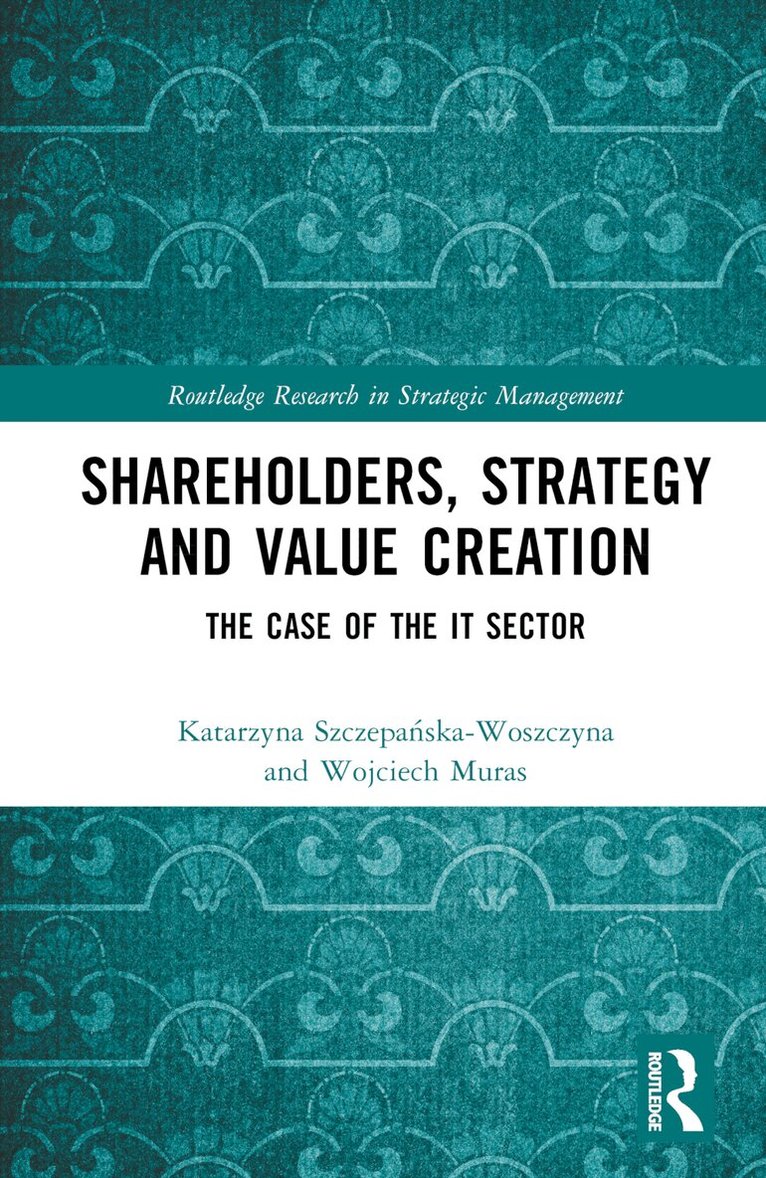
The central task of contemporary strategic management is to look for sources of value and to achieve above- average firm performance. The effective implementation of a value creation strategy requires a comprehensive approach, including the creation of a systemic management structure aimed at increasing company value.The concept of value- based management involves consciously inspiring, undertaking, and implementing value- oriented actions. Value creation takes place at all levels of management and in all organisational units of the company; therefore, the implementation of all management functions should be assigned to this goal. Thus, the role of managers is gaining importance, especially those who are capital- linked to companies, who set goals and verify them by means of informed decisions aimed at maximising value in the long term.The book presents a multidimensional analysis of shareholders’ impact on company value creation. The authors chose the IT sector as the area of study; this sector, being one in which modern technologies are essential, acquires special significance for the global economy.The book features a review of notions and concepts related to the management of company value and methods of measuring it, the shareholder’s impact on the creation of company value, and factors affecting long- term value creation; an analysis of the places of occurrence, power and direction of a shareholder’s impact on building the long- term capacity of an IT sector company for creating the value thereof, as well as the conceptualisation and operationalisation of such impact; an analysis of the role of shareholders in IT sector companies, a profile of shareholder competence which makes the role of a shareholder unique to the company and fulfils the “value- creating owner” postulate; an analysis of the role of hired managers cooperating with the shareholders with an indication of the significance of mutual development and the supplementation of one’s own skills.The book is dedicated to scientists in the field of strategic management, valuebased management, and leadership; shareholders; students of EMBA and MBA programmes; practitioners in strategic management; and current shareholders of modern technology companies (in particular from the IT sector) and future investors, for all of whom it may offer a valuable outlook on the management principles and practices in the sectors, particularly with respect to the long- term creation of company value.The Open Access version of this book, available at www.taylorfrancis.com, has been made available under a Creative Commons Attribution-Non Commercial-No Derivatives (CC-BY-NC-ND) 4.0 International license.
651 kr
Skickas inom 10-15 vardagar
The central task of contemporary strategic management is to look for sources of value and to achieve above- average firm performance. The effective implementation of a value creation strategy requires a comprehensive approach, including the creation of a systemic management structure aimed at increasing company value.The concept of value- based management involves consciously inspiring, undertaking, and implementing value- oriented actions. Value creation takes place at all levels of management and in all organisational units of the company; therefore, the implementation of all management functions should be assigned to this goal. Thus, the role of managers is gaining importance, especially those who are capital- linked to companies, who set goals and verify them by means of informed decisions aimed at maximising value in the long term.The book presents a multidimensional analysis of shareholders’ impact on company value creation. The authors chose the IT sector as the area of study; this sector, being one in which modern technologies are essential, acquires special significance for the global economy.The book features a review of notions and concepts related to the management of company value and methods of measuring it, the shareholder’s impact on the creation of company value, and factors affecting long- term value creation; an analysis of the places of occurrence, power and direction of a shareholder’s impact on building the long- term capacity of an IT sector company for creating the value thereof, as well as the conceptualisation and operationalisation of such impact; an analysis of the role of shareholders in IT sector companies, a profile of shareholder competence which makes the role of a shareholder unique to the company and fulfils the “value- creating owner” postulate; an analysis of the role of hired managers cooperating with the shareholders with an indication of the significance of mutual development and the supplementation of one’s own skills.The book is dedicated to scientists in the field of strategic management, valuebased management, and leadership; shareholders; students of EMBA and MBA programmes; practitioners in strategic management; and current shareholders of modern technology companies (in particular from the IT sector) and future investors, for all of whom it may offer a valuable outlook on the management principles and practices in the sectors, particularly with respect to the long- term creation of company value.The Open Access version of this book, available at www.taylorfrancis.com, has been made available under a Creative Commons Attribution-Non Commercial-No Derivatives (CC-BY-NC-ND) 4.0 International license.
Philosophy and Leadership
An Evolution of Leadership from Ancient Times to the Digital Age
Inbunden, Engelska, 2024
2 176 kr
Skickas inom 10-15 vardagar
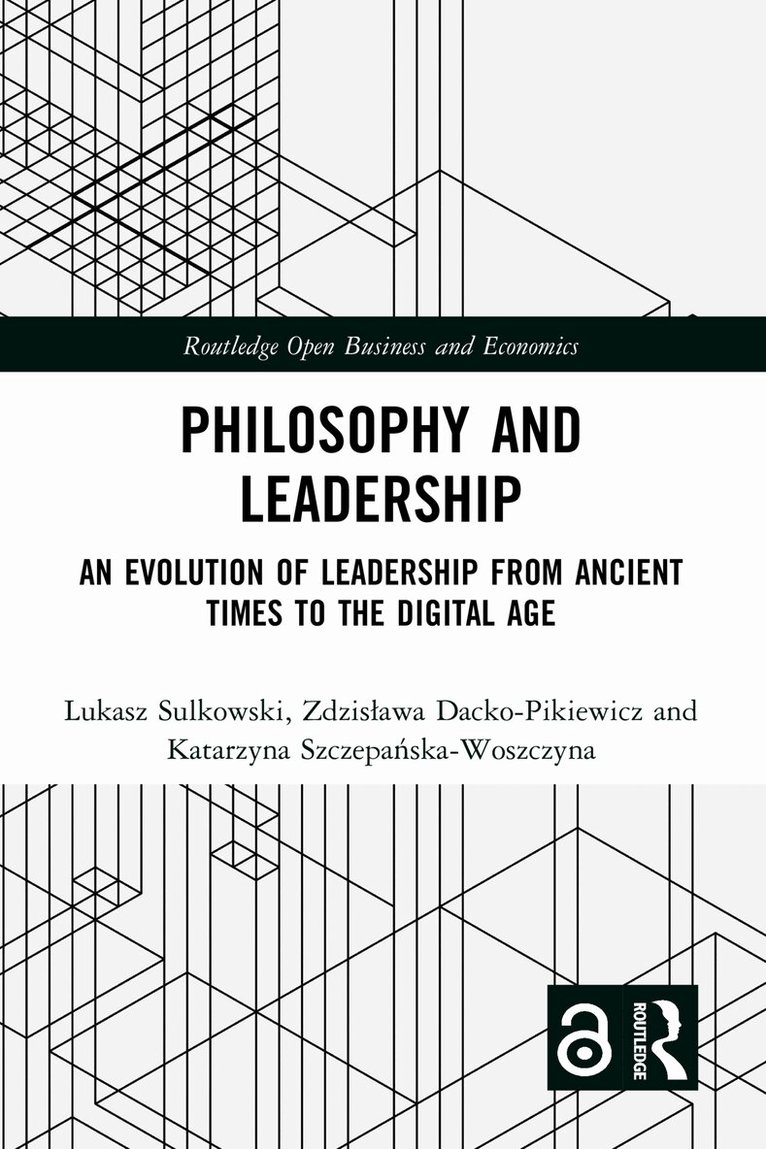
Philosophy and Leadership is an ambitious exploration of leadership's philosophical underpinnings from antiquity to the AI-driven future. The book journeys through history, gleaning insights from eminent philosophers and contextualizing their teachings to leadership.The book's foundational premise lies in the symbiosis of philosophy and leadership. Philosophy provides the "why" that drives the practices and decisions in leadership. This intricate connection is unfolded from the teachings of Confucius on virtue and ethics to the contemporary dialogues of Judith Butler on leadership identity. The book also delves into the evolution of leadership concepts through various eras—medieval times highlighting religious and scholastic perspectives, the Renaissance juxtaposing Machiavellian pragmatism with More's utopian ideals, and the Enlightenment era underscoring the importance of duty, skepticism, and rationality. An exciting aspect of the narrative is the amalgamation of evolution and leadership. By drawing parallels between Darwin's natural selection and leadership dynamics or Bergson's vitalism and intuitive leadership, the authors present a merger of biological evolution with leadership's ever-evolving paradigms. Finally, the concluding chapters reside in envisioning the future and reflect upon the impending synergy between AI and leadership. They emphasize the importance of amalgamating philosophical wisdom with the promises and challenges brought about by AI.The book will guide readers from the philosophical epochs of yore to the AI-predicted leadership paradigms of the future. By intertwining the enduring wisdom of philosophers with the dynamic nature of leadership, this book serves as a beacon for anyone aspiring to lead in any era.The Open Access version of this book, available at www.taylorfrancis.com, has been made available under a Creative Commons Attribution-Non Commercial-No Derivatives 4.0 license.
Philosophy and Leadership
An Evolution of Leadership from Ancient Times to the Digital Age
Häftad, Engelska, 2026
609 kr
Skickas inom 10-15 vardagar
Philosophy and Leadership is an ambitious exploration of leadership's philosophical underpinnings from antiquity to the AI-driven future. The book journeys through history, gleaning insights from eminent philosophers and contextualizing their teachings to leadership.The book's foundational premise lies in the symbiosis of philosophy and leadership. Philosophy provides the "why" that drives the practices and decisions in leadership. This intricate connection is unfolded from the teachings of Confucius on virtue and ethics to the contemporary dialogues of Judith Butler on leadership identity. The book also delves into the evolution of leadership concepts through various eras—medieval times highlighting religious and scholastic perspectives, the Renaissance juxtaposing Machiavellian pragmatism with More's utopian ideals, and the Enlightenment era underscoring the importance of duty, skepticism, and rationality. An exciting aspect of the narrative is the amalgamation of evolution and leadership. By drawing parallels between Darwin's natural selection and leadership dynamics or Bergson's vitalism and intuitive leadership, the authors present a merger of biological evolution with leadership's ever-evolving paradigms. Finally, the concluding chapters reside in envisioning the future and reflect upon the impending synergy between AI and leadership. They emphasize the importance of amalgamating philosophical wisdom with the promises and challenges brought about by AI.The book will guide readers from the philosophical epochs of yore to the AI-predicted leadership paradigms of the future. By intertwining the enduring wisdom of philosophers with the dynamic nature of leadership, this book serves as a beacon for anyone aspiring to lead in any era.The Open Access version of this book, available at www.taylorfrancis.com, has been made available under a Creative Commons Attribution-Non Commercial-No Derivatives 4.0 license.
2 176 kr
Skickas inom 10-15 vardagar
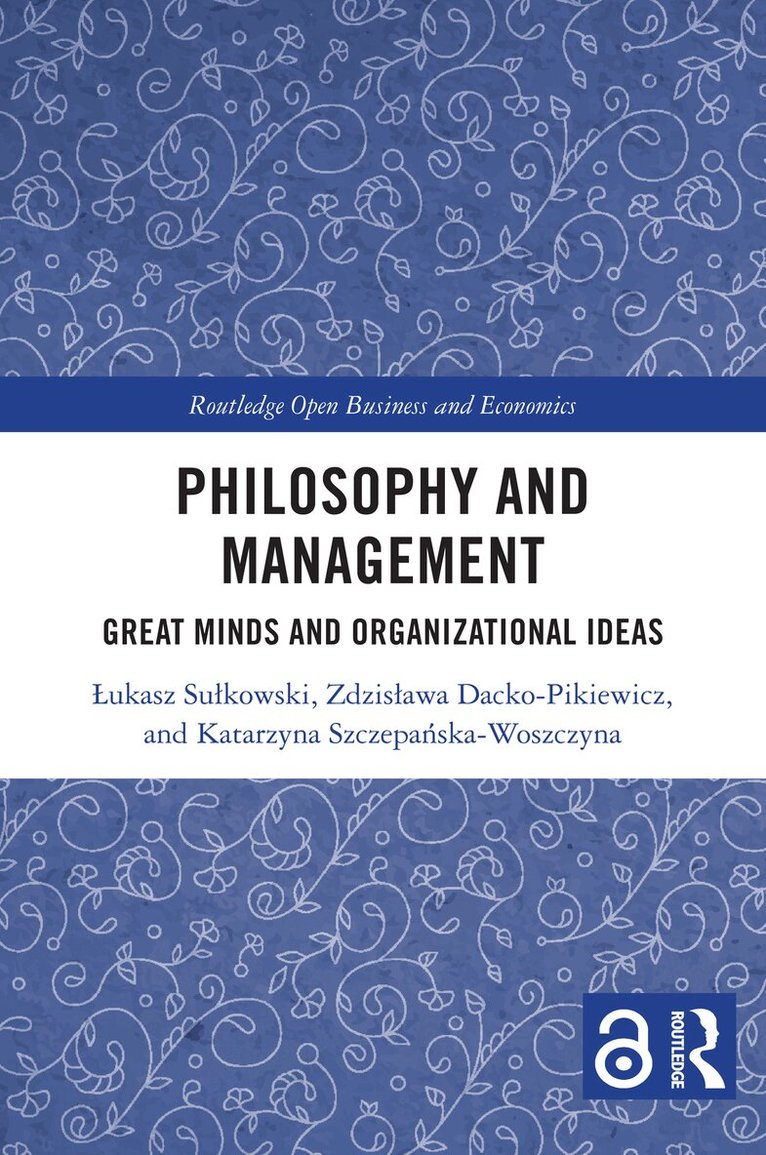
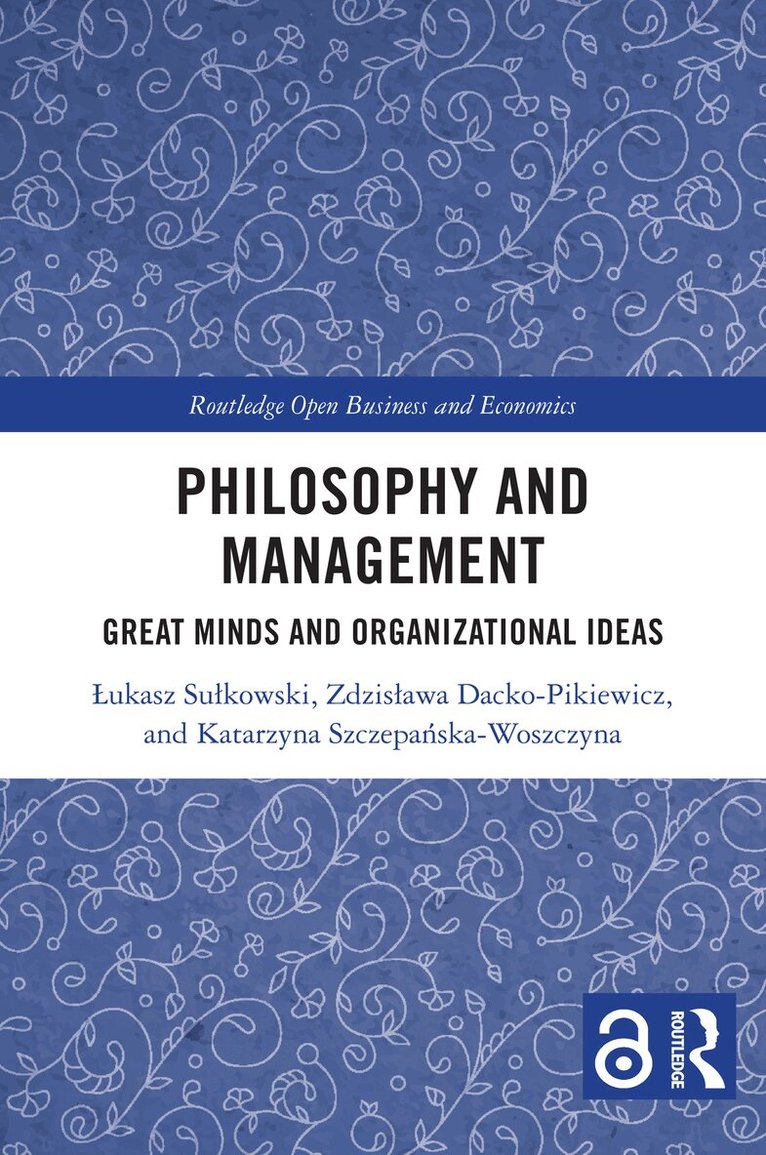
This book invites readers on an intellectual journey where the great minds of philosophy intersect with contemporary organizational challenges.With classical and modern philosophical thought as its backbone, Philosophy and Management: Great Minds and Organizational Ideas demonstrates that the most renowned thinkers in human history, such as Aristotle, Confucius and Nietzsche, provide timeless wisdom for navigating the complexity of today’s business environments. Combining theoretical insights with practical applications, this book presents philosophical frameworks as robust foundations for decision-making, conflict resolution and leadership strategies. It explores crucial areas such as strategic management, human resources, ethics, corporate governance and innovation, challenging readers to explore management from a reflective and ethical perspective, and shows how philosophy equips leaders to build resilient and morally responsible organizations, which are essential in an age dominated by technological advancement and rapid societal changes.The book fills a significant gap in management literature, which often lacks deep philosophical reflection on organizational practices. It draws on ancient, modern and postmodern thought, connecting these insights to current management theories, thus, making it an invaluable resource for both practitioners and scholars.The Open Access version of this book, available at http://www.taylorfrancis.com, has been made available under a Creative Commons Attribution-Non Commercial-No Derivatives (CC BY-NC-ND) 4.0 license.
820 kr
Kommande
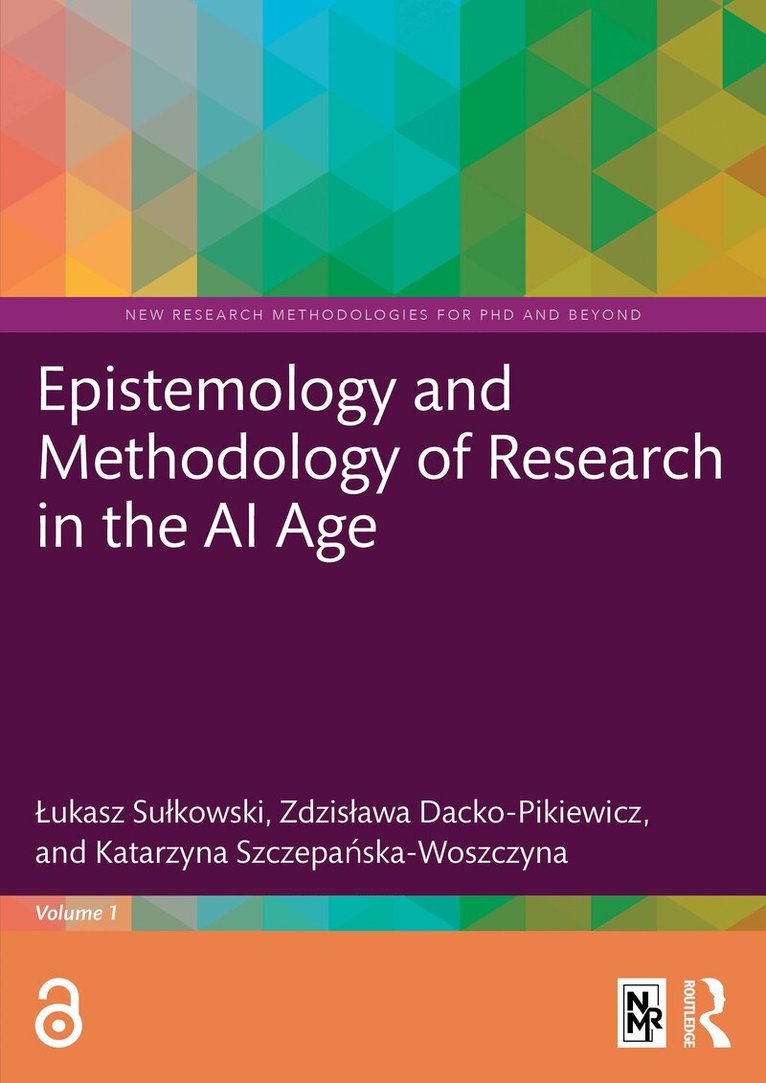
Epistemology and Methodology of Research in the AI Age maps how artificial intelligence (AI), digital platforms, and big data reshape the foundations of social science and management research. It connects epistemology and research design to the practical choices researchers now face, from defining questions in data-rich environments to handling algorithmic bias and ethical risk.Key features include:• Explains how research paradigms and epistemological assumptions shape digital and AI-enabled inquiry.• Translates validity, reliability, and ethics into concrete decisions about sampling, online data, platform effects, and transparency.• Shows how to frame research questions and hypotheses when automation and analytics influence what counts as evidence.• Guides the literature review in the AI age, including digital search strategies, systematic reviews, and meta-analysis.Written for doctoral students, early-career researchers, and methods instructors, this volume supports dissertation work and methods teaching across sociology, psychology, education, economics, and information science. It also anchors the wider series by setting a shared conceptual and ethical baseline for the volumes that follow.
820 kr
Kommande
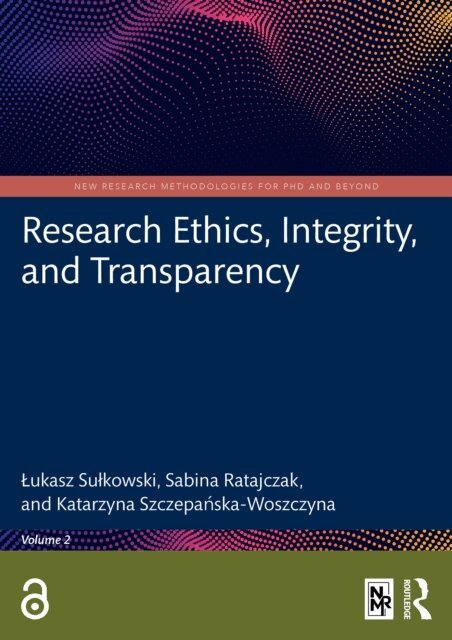
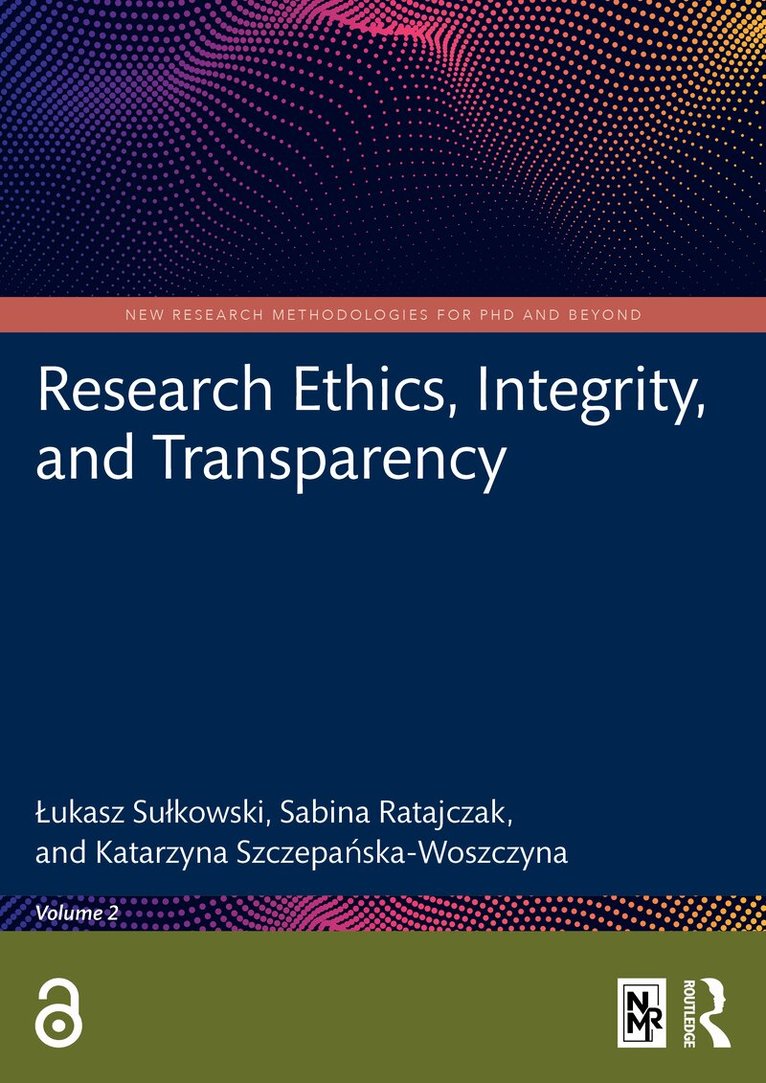
Research Ethics, Integrity, and Transparency guides researchers through ethics, integrity and transparency when using big data, social media and AI, with practical advice on consent, GDPR, bias and open science.Bringing research ethics into the realities of digital data, this volume helps readers plan, run and publish studies that can stand up to scrutiny. It reframes ethics and transparency as enabling conditions for trustworthy work, not a bureaucratic afterthought, and shows how to translate principles into defensible choices across the full research workflow.Key features include:· Guidance on informed consent and dynamic consent for online and platform-based research· GDPR-aware approaches to data protection, governance, anonymisation, and documentation· Practical routes to transparency, preregistration, data sharing, and reproducibility that still protect confidentiality· Responsible use of AI in research, including disclosure, bias checks, and avoidance of “black box” practice· A clear view of algorithmic accountability and the regulatory landscape shaping research practiceWritten for PhD candidates and early-career researchers across the social sciences and management, this book also supports supervisors, methods instructors, research ethics committees and research offices who need an up-to-date reference for integrity and transparency in the digital age.
617 kr
Kommande
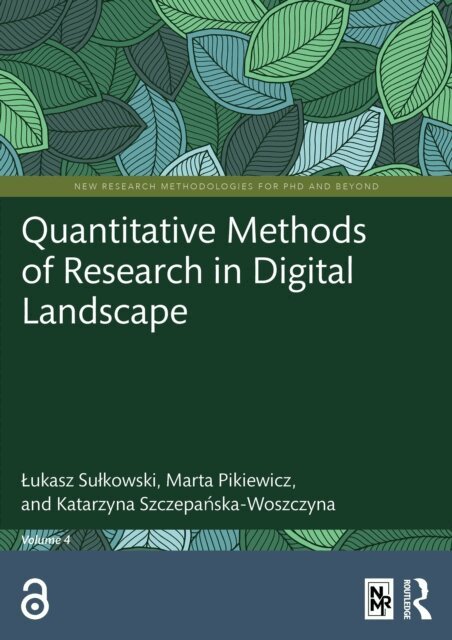
Quantitative Methods of Research in Digital Landscape equips social science and management researchers to design, run, and interpret statistical analyses for today’s data-rich research environment, from core descriptive statistics and hypothesis tests through to regression modelling and factor analysis, with a clear focus on transparency and responsible inference.Key features include:· A structured pathway from statistical foundations to advanced quantitative techniques used across digital social research.· Practical guidance on modelling and inference, including linear and logistic regression, multivariate methods, and factor analysis.· Coverage of common pitfalls in interpretation and reporting, including p-values, uncertainty, and claims that overreach the evidence.· An open science and reproducibility lens, with emphasis on clear documentation of data preparation and analytic choices.· A platform-neutral approach that supports readers working across software packages and coding environments.Written for PhD and Masters students, advanced undergraduates, early-career researchers, and practitioners who work with social data in fields such as sociology, management, communication, education, public policy, and media studies, it supports methods training and applied research projects in the digital age.
2 258 kr
Kommande
Quantitative Methods of Research in Digital Landscape equips social science and management researchers to design, run, and interpret statistical analyses for today’s data-rich research environment, from core descriptive statistics and hypothesis tests through to regression modelling and factor analysis, with a clear focus on transparency and responsible inference.Key features include:· A structured pathway from statistical foundations to advanced quantitative techniques used across digital social research.· Practical guidance on modelling and inference, including linear and logistic regression, multivariate methods, and factor analysis.· Coverage of common pitfalls in interpretation and reporting, including p-values, uncertainty, and claims that overreach the evidence.· An open science and reproducibility lens, with emphasis on clear documentation of data preparation and analytic choices.· A platform-neutral approach that supports readers working across software packages and coding environments.Written for PhD and Masters students, advanced undergraduates, early-career researchers, and practitioners who work with social data in fields such as sociology, management, communication, education, public policy, and media studies, it supports methods training and applied research projects in the digital age.
617 kr
Kommande
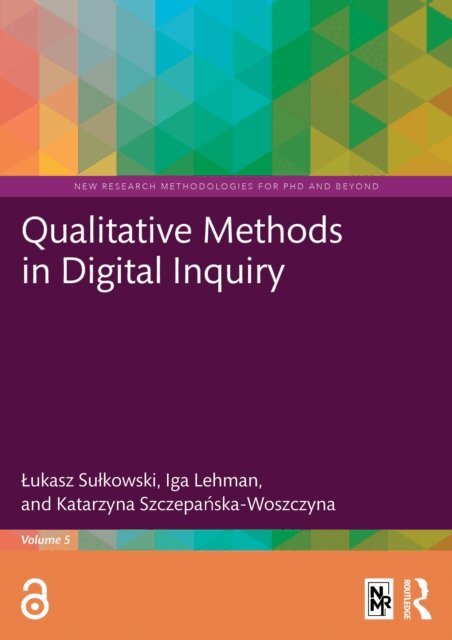
Qualitative Methods in Digital Inquiry shows how to design, conduct, and analyse qualitative research in online and technology-rich settings, from virtual ethnography and netnography to visual and arts-based approaches.Key features include:• Clear, step-by-step coverage of core methods such as ethnography, case study research, grounded theory, phenomenology, and discourse analysis, with guidance on adapting each approach to platform-based data and hybrid field sites.• Direct answers to common problems in online fieldwork, including access, consent, anonymisation, and working with large text or platform archives without losing context.• A balanced approach to research tools, including computer-assisted qualitative data analysis software (CAQDAS) and AI support for coding or text analysis, with emphasis on transparency, reflexivity, and research ethics.Written for PhD students, early-career researchers, and instructors across the social sciences and management, the book also supports applied researchers in UX, market research, and organisational development.
2 258 kr
Kommande
Qualitative Methods in Digital Inquiry shows how to design, conduct, and analyse qualitative research in online and technology-rich settings, from virtual ethnography and netnography to visual and arts-based approaches.Key features include:• Clear, step-by-step coverage of core methods such as ethnography, case study research, grounded theory, phenomenology, and discourse analysis, with guidance on adapting each approach to platform-based data and hybrid field sites.• Direct answers to common problems in online fieldwork, including access, consent, anonymisation, and working with large text or platform archives without losing context.• A balanced approach to research tools, including computer-assisted qualitative data analysis software (CAQDAS) and AI support for coding or text analysis, with emphasis on transparency, reflexivity, and research ethics.Written for PhD students, early-career researchers, and instructors across the social sciences and management, the book also supports applied researchers in UX, market research, and organisational development.
617 kr
Kommande
AI in Social Sciences Research explains how artificial intelligence is reshaping social inquiry, from data collection and research design through analysis, interpretation, and theory-building. Treating AI as both a toolkit and a methodological shift, the volume offers a clear route into machine learning, natural language processing, simulation, and generative AI for social researchers, while keeping ethics, bias, transparency, and interpretability in view.Key features include:· Practical guidance on integrating AI into social science research workflows, without losing theoretical and contextual judgement· Coverage of core techniques, including machine learning for prediction and pattern discovery, and NLP for large-scale textual and qualitative data· Discussion of explainability and “black box” risks, with approaches for interpretability and responsible use· Cross-disciplinary examples spanning sociology, psychology, anthropology, political science, economics, and management· A critical account of research integrity issues: data quality, bias, privacy, accountability, and the limits of automationDesigned for postgraduate students, early-career researchers, and instructors teaching digital and computational social science methods, the book supports readers who want to use AI with methodological care, not just technical speed.
2 181 kr
Kommande
AI in Social Sciences Research explains how artificial intelligence is reshaping social inquiry, from data collection and research design through analysis, interpretation, and theory-building. Treating AI as both a toolkit and a methodological shift, the volume offers a clear route into machine learning, natural language processing, simulation, and generative AI for social researchers, while keeping ethics, bias, transparency, and interpretability in view.Key features include:· Practical guidance on integrating AI into social science research workflows, without losing theoretical and contextual judgement· Coverage of core techniques, including machine learning for prediction and pattern discovery, and NLP for large-scale textual and qualitative data· Discussion of explainability and “black box” risks, with approaches for interpretability and responsible use· Cross-disciplinary examples spanning sociology, psychology, anthropology, political science, economics, and management· A critical account of research integrity issues: data quality, bias, privacy, accountability, and the limits of automationDesigned for postgraduate students, early-career researchers, and instructors teaching digital and computational social science methods, the book supports readers who want to use AI with methodological care, not just technical speed.
600 kr
Kommande
Academic Writing, Visualization, Presentation, and Publishing of Research is a comprehensive guide to scholarly communication in a digital research environment. Written for PhD candidates and early-career researchers in the social sciences and management, it shows how to write with clarity, visualise data with accuracy, present findings with confidence, and navigate publishing with integrity.Rather than treating these as separate skills, the book links them as one workflow: how arguments travel from a dissertation chapter to a figure, from a slide deck to a manuscript, and into peer review and open access publication. It also addresses the realities of modern research communication, including collaborative writing platforms, virtual conferences, preprints, and responsible use of AI tools.Key features include:· Step-by-step guidance on academic writing across genres, including theses, journal articles, and book chapters· Practical support for literature reviews and systematic literature reviews (SLRs), including search strategy, screening, synthesis, and reporting· Principles and best practice for data visualisation, including accessibility, chart selection, and avoiding misleading graphics· A tool-aware overview of visualisation and writing software, from spreadsheets to R and Python, plus collaboration and reference management tools· Guidance on research presentations across formats, including conferences, seminars, posters, and doctoral defences, with advice for virtual delivery· A clear roadmap through publishing, peer review, open access options, and responding to reviewer feedbackWritten for PhD candidates, early-career researchers, and methods instructors in the social sciences and management, this volume also supports research support staff and supervisors who need a course-ready reference on communicating research well across written, visual, and spoken formats.
2 119 kr
Kommande
Academic Writing, Visualization, Presentation, and Publishing of Research is a comprehensive guide to scholarly communication in a digital research environment. Written for PhD candidates and early-career researchers in the social sciences and management, it shows how to write with clarity, visualise data with accuracy, present findings with confidence, and navigate publishing with integrity.Rather than treating these as separate skills, the book links them as one workflow: how arguments travel from a dissertation chapter to a figure, from a slide deck to a manuscript, and into peer review and open access publication. It also addresses the realities of modern research communication, including collaborative writing platforms, virtual conferences, preprints, and responsible use of AI tools.Key features include:· Step-by-step guidance on academic writing across genres, including theses, journal articles, and book chapters· Practical support for literature reviews and systematic literature reviews (SLRs), including search strategy, screening, synthesis, and reporting· Principles and best practice for data visualisation, including accessibility, chart selection, and avoiding misleading graphics· A tool-aware overview of visualisation and writing software, from spreadsheets to R and Python, plus collaboration and reference management tools· Guidance on research presentations across formats, including conferences, seminars, posters, and doctoral defences, with advice for virtual delivery· A clear roadmap through publishing, peer review, open access options, and responding to reviewer feedbackWritten for PhD candidates, early-career researchers, and methods instructors in the social sciences and management, this volume also supports research support staff and supervisors who need a course-ready reference on communicating research well across written, visual, and spoken formats.