M. Govinda Rao – författare
Visar alla böcker från författaren M. Govinda Rao. Handla med fri frakt och snabb leverans.
8 produkter
8 produkter
Inbunden, Engelska, 2015
1 112 kr
Skickas inom 5-8 vardagar
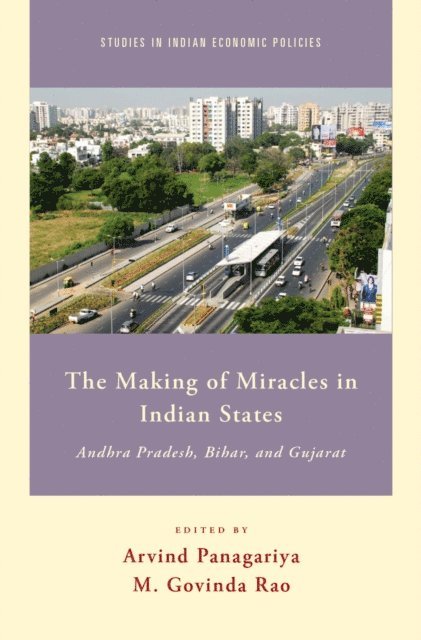
Growth miracles typically have been studied at the country level. The Making of Miracles in Indian States breaks from that tradition and studies three growth miracles in India at the level of the state: Andhra Pradesh, Bihar, and Gujarat. These are three of the largest and most diverse states in India. Andhra Pradesh is situated in the south of India, Bihar in the east, and Gujarat in the west. Bihar is the poorest among all states in India, Gujarat the third richest among the largest eighteen states, and Andhra Pradesh in the middle. Andhra Pradesh and Gujarat have long coastal lines while Bihar is landlocked. Yet, all of these states have grown at rates exceeding 8% for an entire decade in the 21st century.Despite many differences in the initial conditions, several common threads tie the high-growth experiences of the three states. First, accelerated growth has permitted acceleration in the growth of development expenditures in all three states, which has helped improve connectivity to markets. Alongside this growth, poverty has seen accelerated decline. Second, the composition of growth matters. Growth in high-value commodities such as fruits and vegetables, commercial crops, dairy, and animal husbandry in Andhra Pradesh and Gujarat has led to accelerated reduction in rural poverty. However, the failure of labor-intensive industry has stunted the migration of workers out of agriculture into industry. Third, the quality of leadership that brings improved governance with it is central to improved outcomes in the states. Visionary leaders---Chandrababu Naidu in Andhra Pradesh, Nitish Kumar in Bihar, and Narendra Modi in Gujarat---played critical roles in the making of all three miracles. Fourth, the three studies also bring out the importance of pro-market reforms and the adoption of technology in development. Finally, the studies show that good economics is also good politics: voters reward the chief ministers who bring about significant improvement to the people's lives.
E-bok
PDF, Engelska, 20151 026 kr
Läs direkt efter köp
Growth miracles typically have been studied at the country level. In The Making of Miracles in Indian States, internationally-renowned economists Arvind Panagariya and M. Govinda Rao bring together a team of six leading scholars to break from that tradition and study three growth miracles in India at the level of the state: Andhra Pradesh, Bihar, and Gujarat. These are three large and diverse states in India: Gujarat has the third-highest per-capita income among the largest eighteen states, Bihar is the poorest, and Andhra Pradesh falls in the middle. Despite vast differences among the states, all three have grown at rates exceeding 8% for an entire decade in the twenty-first century.Each section of this three-part book offers a historical perspective on the state''s development and the specific factors that improved its economic fortunes. The three case studies are backed by extensive quantitative documentation. They demonstrate the critical role that leadership, translated into improved policies and implementation, plays in stimulating growth and development. The Making of Miracles in Indian States is essential reading for students and scholars alike, as well as policy makers, NGO workers, and employees of international institutions.
E-bok
Engelska, 20151 035 kr
Läs direkt efter köp
Growth miracles typically have been studied at the country level. In The Making of Miracles in Indian States, internationally-renowned economists Arvind Panagariya and M. Govinda Rao bring together a team of six leading scholars to break from that tradition and study three growth miracles in India at the level of the state: Andhra Pradesh, Bihar, and Gujarat. These are three large and diverse states in India: Gujarat has the third-highest per-capita income among the largest eighteen states, Bihar is the poorest, and Andhra Pradesh falls in the middle. Despite vast differences among the states, all three have grown at rates exceeding 8% for an entire decade in the twenty-first century.Each section of this three-part book offers a historical perspective on the state''s development and the specific factors that improved its economic fortunes. The three case studies are backed by extensive quantitative documentation. They demonstrate the critical role that leadership, translated into improved policies and implementation, plays in stimulating growth and development. The Making of Miracles in Indian States is essential reading for students and scholars alike, as well as policy makers, NGO workers, and employees of international institutions.
E-bok
PDF, Engelska, 20221 327 kr
Läs direkt efter köp
Studies in Indian Public Finance is a comprehensive analytical study of Indian public finance evaluated in the background of theories and best practice approaches. It is a comprehensive analysis of the nature and composition of public spending and its financing. Beginning with normative questions on the role of the State, the book argues that public expenditure policies in India are dominated by political economy considerations. Low revenue productivity of the tax system has constrained the ability of the government to adequately finance physical and social infrastructure at required levels causing elevated levels of large deficits and debt threatening stability, and sustainability. The book also analyses the trends and issues in Indian fiscal federalism and evaluates the effectiveness of intergovernmental transfers in a country marked with wide inter-regional disparities. The analysis also extends to the devastating effects of the COVID-19 pandemic on Indian public finances. The book will be useful to students of economics, scholars working on the subject, and policy makers.
E-bok
Engelska, 20221 327 kr
Läs direkt efter köp
Studies in Indian Public Finance is a comprehensive analytical study of Indian public finance evaluated in the background of theories and best practice approaches. It is a comprehensive analysis of the nature and composition of public spending and its financing. Beginning with normative questions on the role of the State, the book argues that public expenditure policies in India are dominated by political economy considerations. Low revenue productivity of the tax system has constrained the ability of the government to adequately finance physical and social infrastructure at required levels causing elevated levels of large deficits and debt threatening stability, and sustainability. The book also analyses the trends and issues in Indian fiscal federalism and evaluates the effectiveness of intergovernmental transfers in a country marked with wide inter-regional disparities. The analysis also extends to the devastating effects of the COVID-19 pandemic on Indian public finances. The book will be useful to students of economics, scholars working on the subject, and policy makers.
Inbunden, Engelska, 2022
1 342 kr
Skickas inom 5-8 vardagar
Studies in Indian Public Finance is a comprehensive analytical study of Indian public finance evaluated in the background of theories and best practice approaches. It is a comprehensive analysis of the nature and composition of public spending and its financing. Beginning with normative questions on the role of the State, the book argues that public expenditure policies in India are dominated by political economy considerations. Low revenue productivity of the tax system has constrained the ability of the government to adequately finance physical and social infrastructure at required levels causing elevated levels of large deficits and debt threatening stability, and sustainability. The book also analyses the trends and issues in Indian fiscal federalism and evaluates the effectiveness of intergovernmental transfers in a country marked with wide inter-regional disparities. The analysis also extends to the devastating effects of the COVID-19 pandemic on Indian public finances. The book will be useful to students of economics, scholars working on the subject, and policy makers.
Inbunden, Engelska, 2014
1 059 kr
Skickas inom 5-8 vardagar
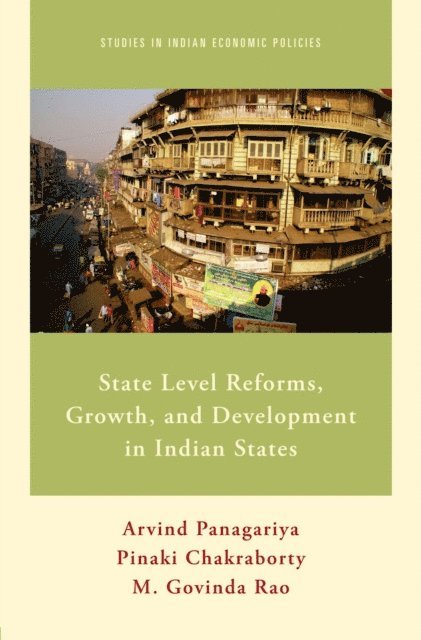
Most discussions of India's substantive economic growth since the 1990s tend to focus on national level statistics or on particular sectors such as the financial and call service sectors or on the pharmaceutical industry. But with a population of 1.2 billion, India demands to be treated like a collection of individual "countries, " rather than a unified nation. Ten of its states have populations equaling or exceeding that of the United Kingdom. If the state of Uttar Pradesh were a country, it would be the fourth largest, behind China, India, and the United States. These facts pointedly tell us that if we are to understand the ongoing experiment in economic reforms and poverty alleviation, we must study India at the level of the state.In this spirit, State Level Reforms and Growth and Development in Indian States provides the first-ever comprehensive analysis of growth at the highly diverse state level. The authors argue that when the national government loosened its stronghold on industry and services, state governments were able to shape the fortunes of their citizens through state-level policy reforms. Because of this, every Indian state experienced accelerated growth, unlike China during the first two decades of its development when the eastern half flourished as the western half lagged. Every Indian state has grown faster in the last decade than any other decade in the post-independence era. In fact, some of the poorest states, notably Bihar and Orissa, have been growing the fastest.Professors Panagariya and Chakraborty and Dr. Rao refute the common assumptions that growth has not occurred or that poverty has not been reduced in all Indian states. The recent reforms have also led to improved access in every state to basic amenities such as permanent houses, electricity, water, and sanitation. These accomplishments notwithstanding, regional inequality on a per capita basis has grown as well. Reforms in state-controlled sectors such as agriculture, industry, healthcare, and education have not advanced as far as some analysts previously predicted. The authors outline the reforms in these areas and draw on the experience of states that have successfully carried out some of them. The authors pay special attention to reforms in the areas of education and health while recognizing that the Indian constitution vests in the states much of this legislative and other authority and while considering the real absolute rise in income, literacy, and health status across all the states.
E-bok
PDF, Engelska, 2014938 kr
Läs direkt efter köp
Most discussions of India''s recent economic growth focus on progress and policies at the national level. But with a population of 1.2 billion, several of the states in India are larger than many of the countries in the world. Therefore, a more complete understanding of India''s ongoing experiment in economic reforms requires a study at the state level.State Level Reforms, Growth, and Development in Indian States provides the first-ever comprehensive analysis of growth and reforms in the highly diverse states of the country. The authors argue that when the national government loosened its controls on industry and services, state governments began shaping the fortunes of their citizens through state-level policy reforms, resulting in faster growth in every state over the last decade than any other decade in the post-independence era. In fact, some of the poorest states, notably Bihar and Odisha, have been growing the fastest.Professors Panagariya and Chakraborty and Dr. Rao refute the common assumptions that growth has not occurred or that poverty has not been reduced in all Indian states. The recent reforms have also led to improved access in every state to basic amenities such as permanent houses, electricity, water, and sanitation. These accomplishments notwithstanding, regional inequality on a per capita basis has grown as well. The authors analyze the economic transformation that has taken place in the largest eighteen states of India and suggest reforms in areas of agriculture, industry, services and urbanization that can further accelerate this transformation. They also provide a comprehensive analysis of education and health in the states.