M. K. Hopkins – författare
Visar alla böcker från författaren M. K. Hopkins. Handla med fri frakt och snabb leverans.
6 produkter
Libertas as a Political Idea at Rome during the Late Republic and Early Principate
Av CH. Wirszubski, P. E. Easterling m. fl.
Inbunden, 1950
1608 kr
Lägg i varukorg
This study describes the meaning of libertas as a political idea at Rome during the two hundred years or so between the Gracchi and Trajan, a period in which the Republican constitution gradually gave way and was finally superceded by the Principate which, in its own turn, considerably changed …
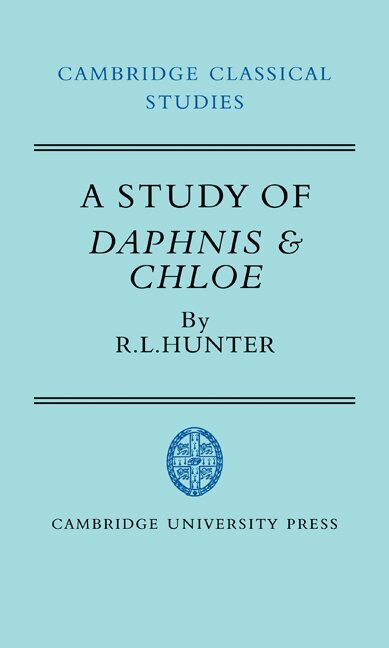
A Study of Daphnis and Chloe
Av R. L. Hunter, P. E. Easterling m. fl.
Inbunden, 1983
607 kr
Lägg i varukorg
This 1983 book provides a serious modern literary treatment of perhaps the best known of all surviving works of ancient Greek fiction. Dr Hunter demonstrates the sophistication of this pastoral romance, a sophistication which he maintains has often been assumed but never properly discussed. …
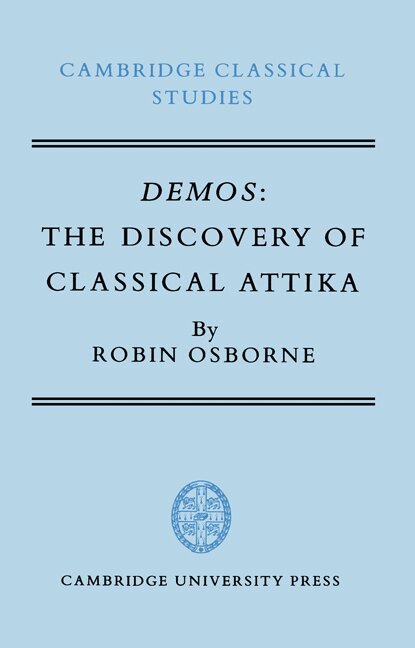
Demos
The Discovery of Classical Attika
Av Robin Osborne, P. E. Easterling m. fl.
Häftad, 2005
918 kr
Lägg i varukorg
Demos is a study of a classical city-state. It is the first attempt to provide an integrated account which gives due attention to the countryside as well as the urban areas of a polis. Concentrating on classical Athens, for which the literary and archaeological evidence is richest, Dr Osborne …
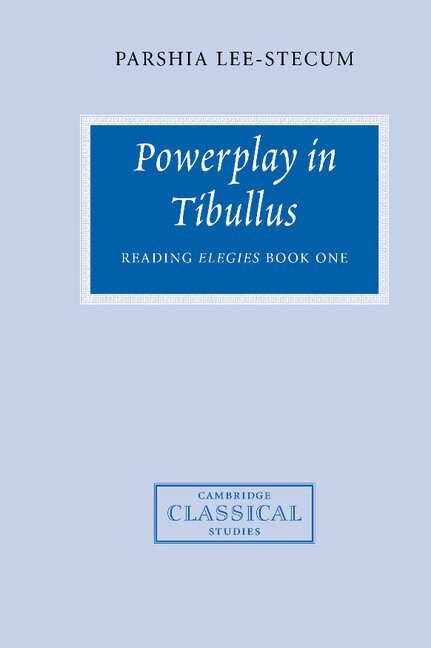
Powerplay in Tibullus
Reading Elegies Book One
Av Parshia Lee-Stecum, P. E. Easterling m. fl.
Inbunden, 1998
1797 kr
Lägg i varukorg
This study, first published in 1998, explores the subtle, many-faceted interplay of power in Tibullus' first book of elegies. A series of power relationships are created by the text (lover and beloved, poet and patron) and the processes through which power of various sorts can be exercised are …
Homer's People
Epic Poetry and Social Formation
Av Johannes Haubold, P. E. Easterling m. fl.
Inbunden, 2000
1891 kr
Lägg i varukorg
This book examines the role and character of Homer's people, laoi, in Homeric story-telling, arguing that Homeric poetry is crucially concerned with the people as a basis for communal life. Both The Iliad and The Odyssey are read as sustained meditations on the processes involved in protecting and …
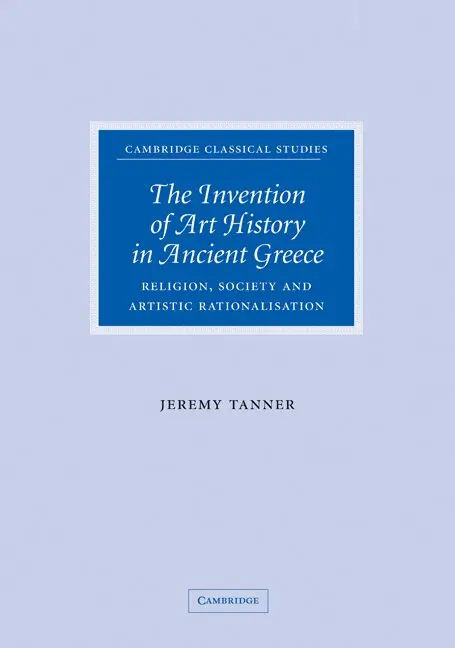
The Invention of Art History in Ancient Greece
Religion, Society and Artistic Rationalisation
Av Jeremy Tanner, P. E. Easterling m. fl.
Inbunden, 2006
1693 kr
Lägg i varukorg
The ancient Greeks developed their own very specific ethos of art appreciation, advocating a rational involvement with art. This book explores why the ancient Greeks started to write art history and how the writing of art history transformed the social functions of art in the Greek world. It looks …