M. Vukobratovic - Böcker
Visar alla böcker från författaren M. Vukobratovic. Handla med fri frakt och snabb leverans.
12 produkter
12 produkter
1 588 kr
Skickas inom 10-15 vardagar
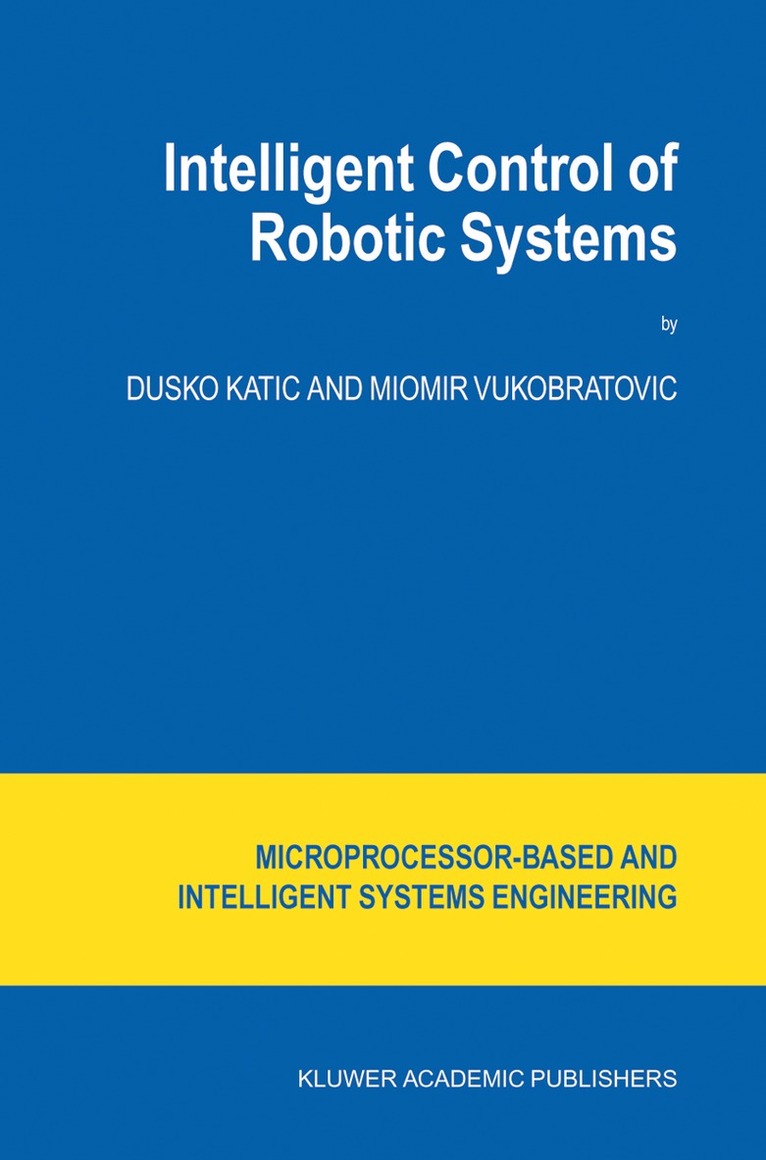
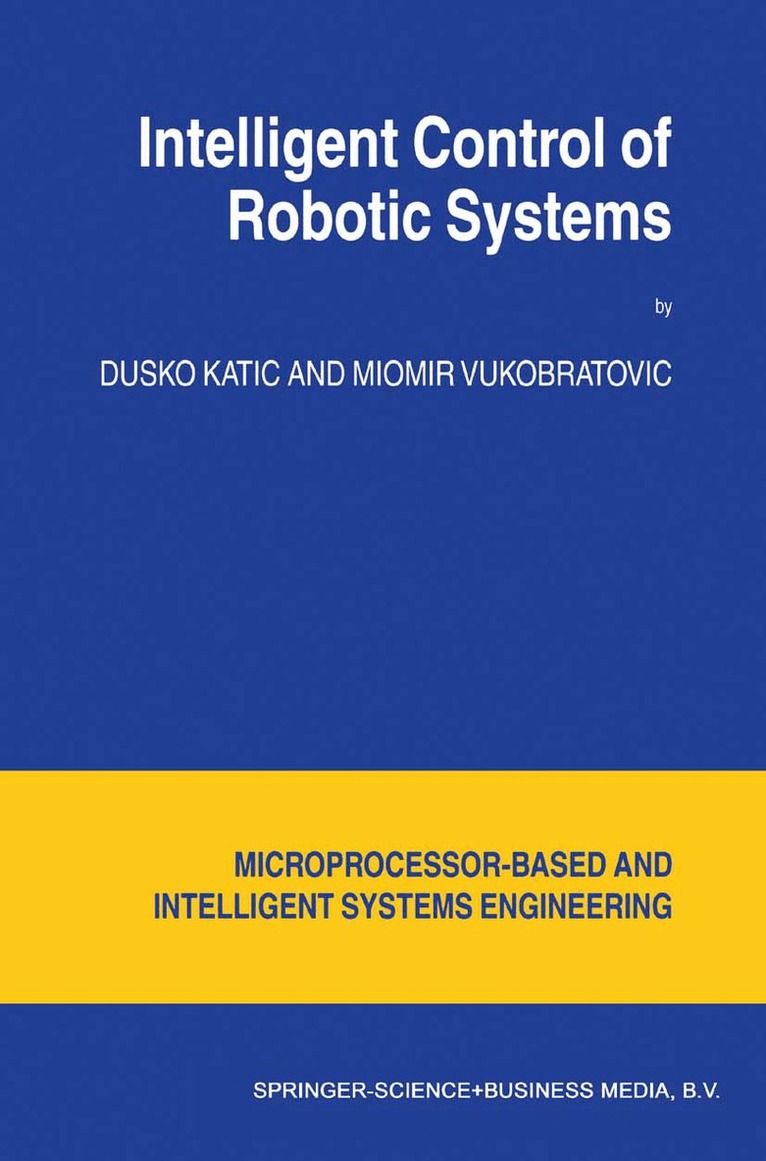
This text provides a strong coverage of both the theoretical and application aspects of neural networks, fuzzy logic, genetic algorithms and hybrid intelligent techniques in robotics. Specific emphasis in the research work is given on the development of new efficient learning rules for robotic connectionist training and synthesis of neural learning algorithms for low-level control in the domain of robotic compliance tasks. The book contains several different examples of applications based on neural and hybrid intelligent techniques. The book: provides the theoretical background an a survey of most up-to-date developments in this rapidly growing application area of intelligent control of robotic systems; focuses on research in connectionist and hybrid intelligent techniques, directly applicable to control or making use of modern control theory in robotics; takes a new approach to the synthesis of learning and classification of control laws for robotic compliance tasks, together with the appropriate application examples.This text should be useful to a wide audience of engineers, ranging from undergraduate and graduate students, new and advanced academic researchers, to the practitioners (mechanical and electrical engineers, computer and systems scientists).
1 588 kr
Skickas inom 10-15 vardagar
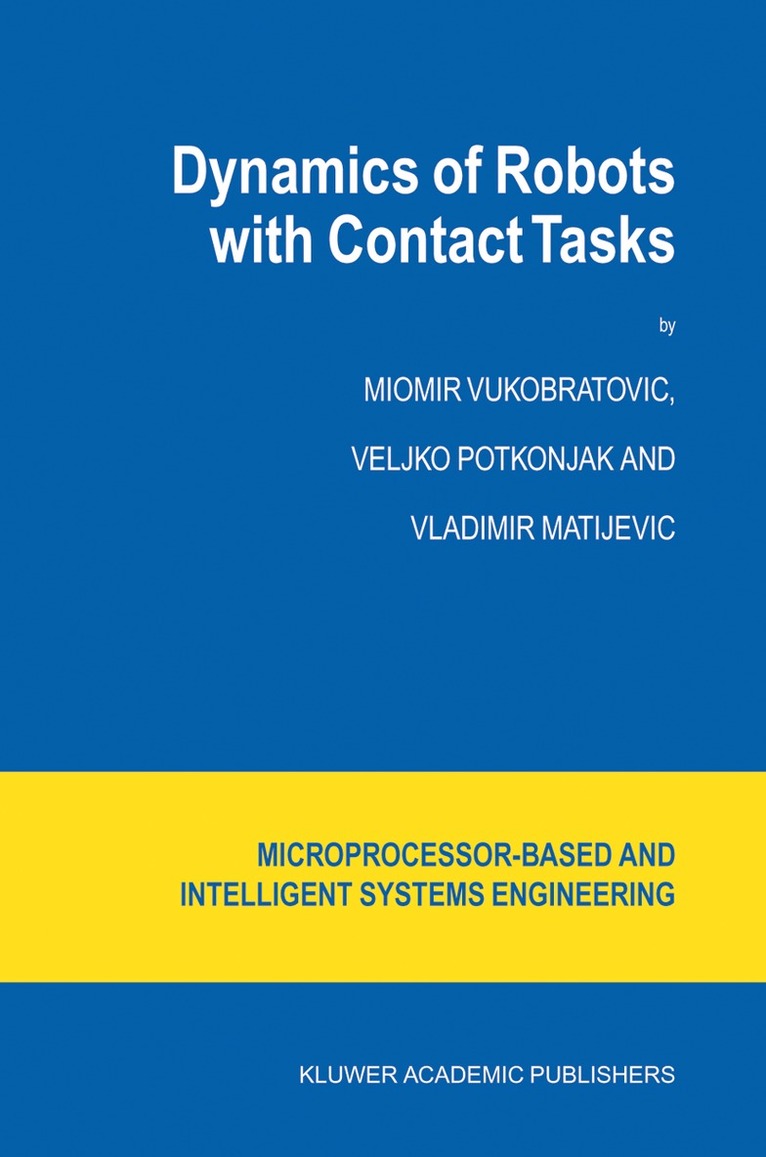
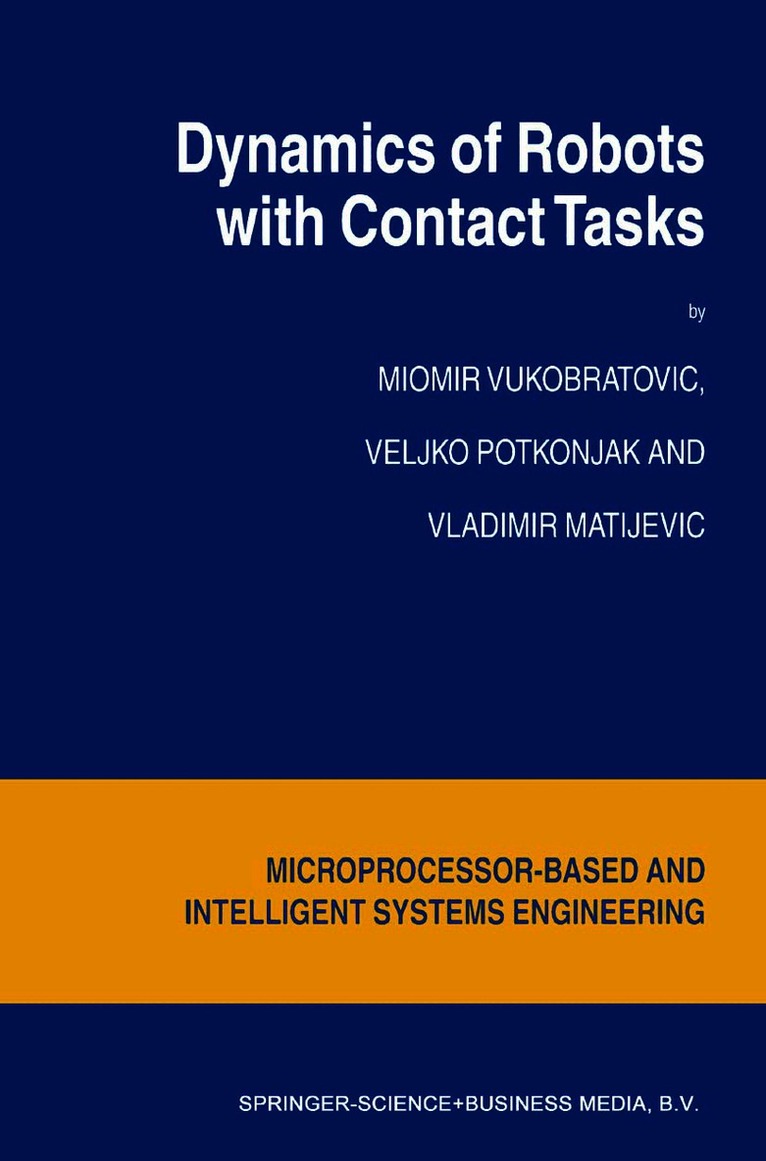
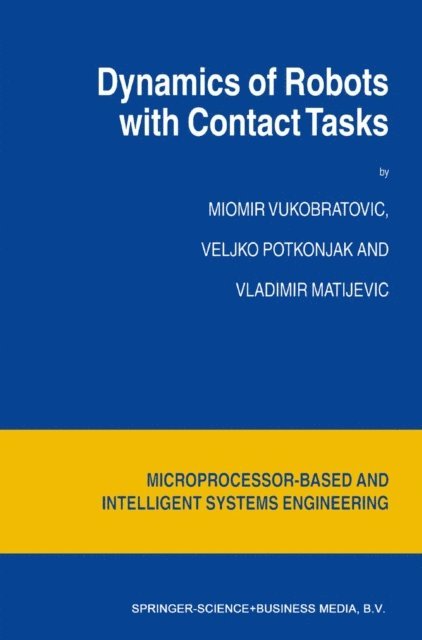
As robots are becoming more and more sophisticated the interest in robot dynamics is increasing. Within this field, contact problems are among the most interesting, since contacts are present in almost any robot task and introduce serious complexity to system dynamics, strongly influencing robot behavior. The book formulates dynamic models of robot interaction with different kinds of environment, from pure geometrical constraints to complex dynamic environments. It provides a number of examples. Dynamic modeling is the primary interest of the book but control issues are treated as well. Because dynamics and contact control tasks are strongly related the authors also provide a brief description of relevant control issues. The book will be of interest to engineers working in research and development in robotics and automation and to both graduate and postgraduate students. The work will also be valuable to readers involved in manufacturing, robotics, automation, computer and control engineering.
1 904 kr
Skickas inom 10-15 vardagar
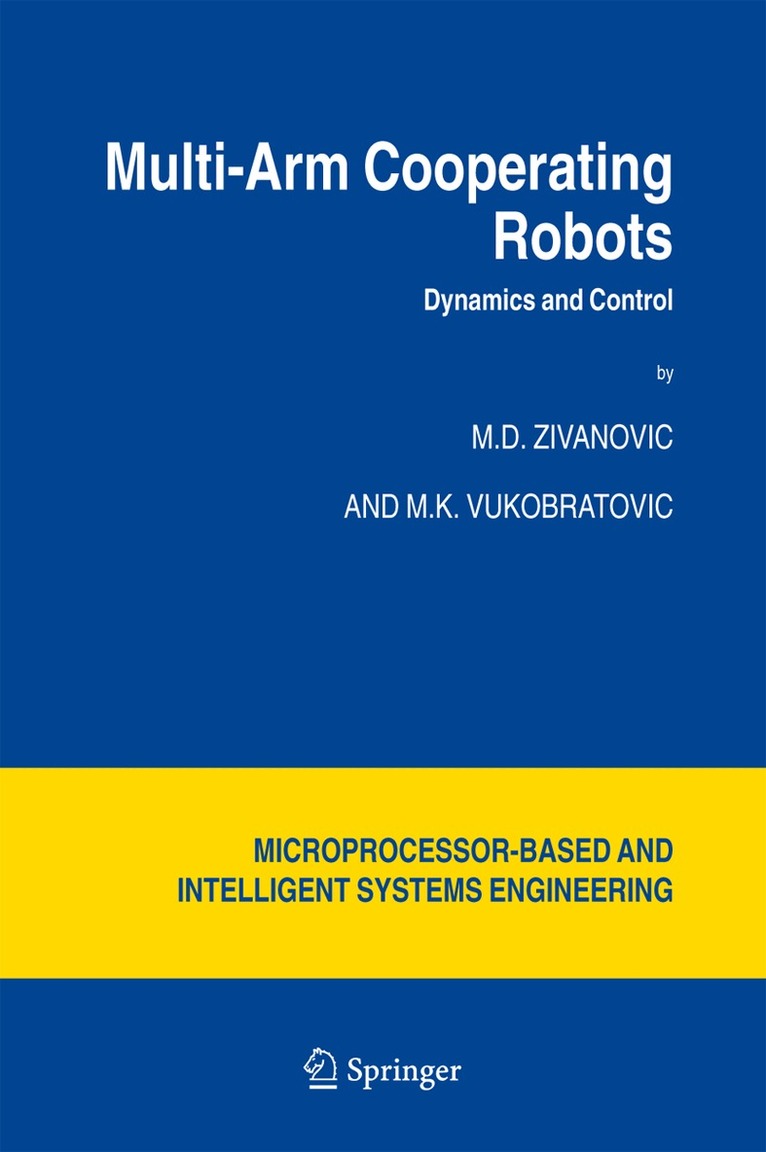
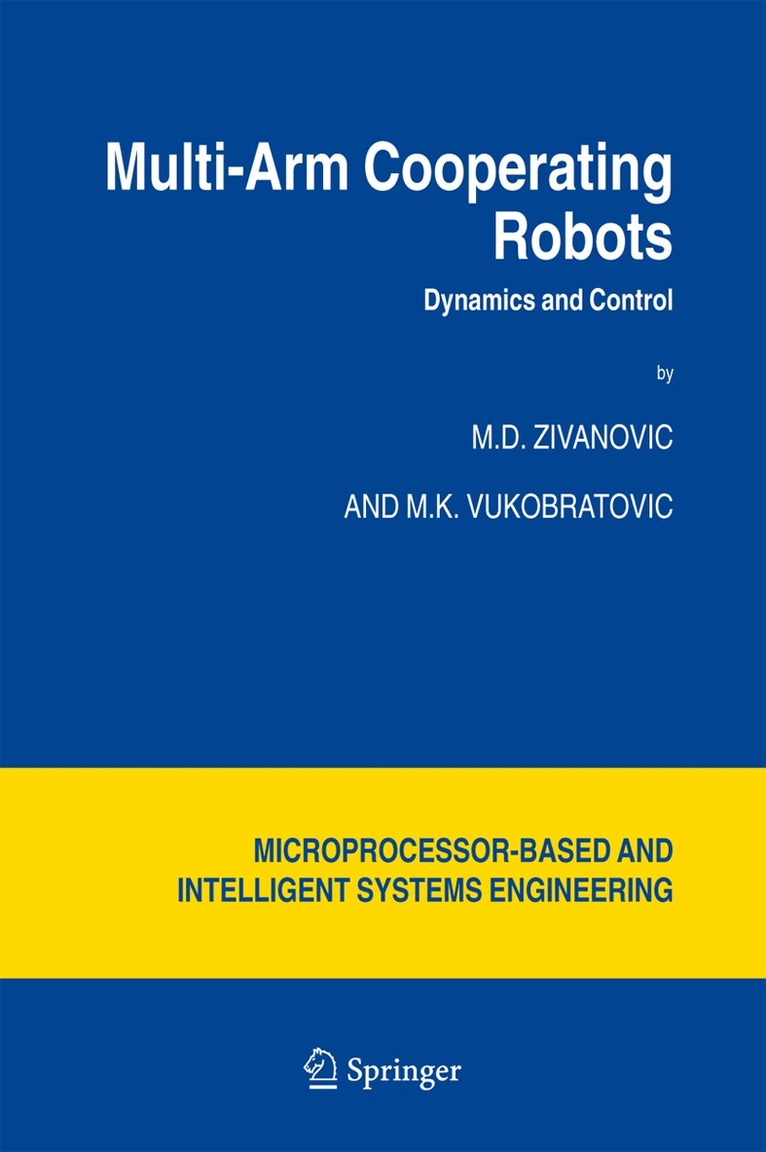
Several consistent solutions for cooperative system control have recently been identified by the authors of the current monograph. This was achieved by solving three separate tasks that are essential for solving the problem of cooperative manipulation as a whole. The first task is related to the understanding of the physical nature of cooperative manipulation and finding a way for a sufficiently exact characterization of cooperative system statics, kinematics and dynamics. After successfully completing this task, in the frame of the second task, the problem of coordinated motion of the cooperative system is solved. Finally, as a solution to the third task, the control laws of cooperative manipulation are synthesized. The starting point in dealing with the above three tasks of cooperative manipulation was the assumption that the problem of force uncertainty in cooperative manipulation can be resolved by introducing elastic properties into the cooperative system, at least in the part where force uncertainty appears. In static and dynamic analysis of the elastic structure of cooperative systems the finite element method is applied. In contrast to the procedure used in the major part of the available literature where deformation work is expressed by deviations from the unloaded state of fixed elastic structure, in this monograph the deformation work is expressed by internal forces as a function of the absolute coordinates of contacts of mobile elastic structure. Coordinated motion and control in cooperative manipulation are solved as the problem of coordinated motion and control of a mobile elastic structure, taking into account the specific features of cooperative manipulation. Coordinated motion and control laws in cooperative manipulation are synthesized on the basis of a non-linear model where the problem of uncertainty is solved, which is not the case in the available literature. Simple examples demonstrate the consistent procedure of mathematical modeling and synthesis of nominal coordinated motion, as well as control of the cooperative system. This book will be useful to a wide audience of engineers, ranging from undergraduate and graduate students, new and advanced academic researchers, to practitioners (mechanical and electrical engineers, computer and system scientists). It is intended for readers whose work involves manufacturing, industrial, robotics, automation, computer and control engineering, and who wish to find out about this important new technology and its potential advantages for control engineering applications.
Del 1 - Communications and Control Engineering
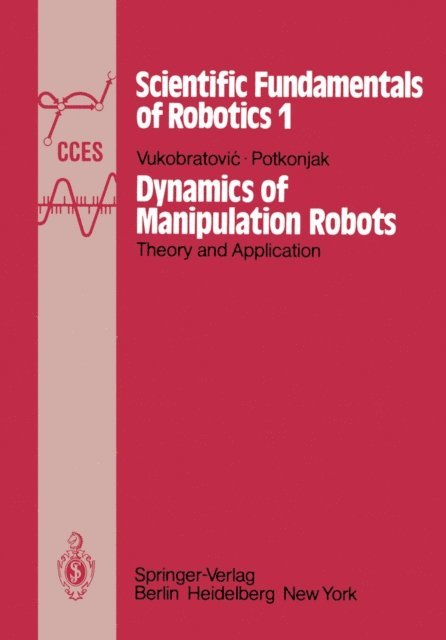
Dynamics of Manipulation Robots
Theory and Application
Häftad, Engelska, 2012
534 kr
Skickas inom 10-15 vardagar
This monograph represents the first book of the series entitled "SCI ENTIFIC FUNDAMENTALS OF ROBOTICS". The aim of this monograph is to ap proach the dynamics of active mechanisms from the standpoint of its application to the synthesis of complex motion and computer-aided de sign of manipulation mechanisms with some optimal performances. The rapid development of a new class of mechanisms, which may be referred to as active mechanisms, contributed to their application in various environments (from underwater to cosmic) . Because of some specific fea tures, these mechanisms require very careful description, both in a mechanical sense (kinematic and dynamic) and in the synthesis of algo rithms for precise tracking of the above motion under insufficiently defined operating conditions. Having also in mind the need for a very fast (even real-time) calculation of system dynamics and for eliminating, in principle, the errors made when forming mathematical models "by hand" this monograph will primarily present methods for automatic for mUlation of dynamic equations of motion of active spatial mechanisms. Apart from these computer-oriented methods, mention will be made of all those methods which have preceded the computer-oriented procedures, predominantly developed for different problems of rigid body dynamics. If we wish to systematically establish the origins of the scientific discipline, which could be called robot dynamics, we must recall some groups and individuals, who, by solving actual problems in the synthe sis and control of artificial motion, have contributed to a gradual formation of this discipline.
534 kr
Skickas inom 10-15 vardagar
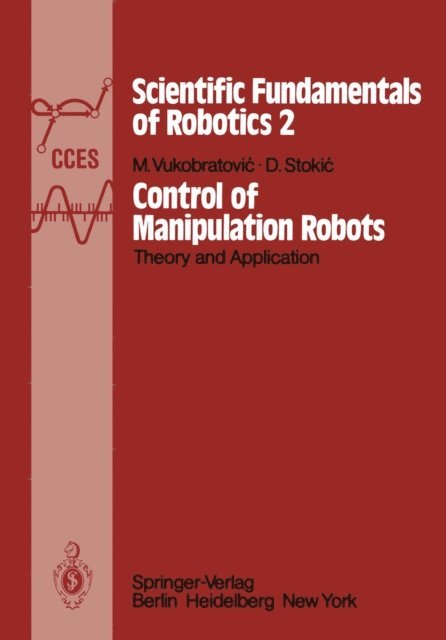
This monograph represents the second book of the series entitled: "SCI ENTIFIC FUNDAl-1ENTALS OF ROBOTICS". While the first volume provides a study of the dynamics of spatial mechanisms and its application to the design of these mechanisms, the present one focuses on the synthesis -of control based~n the knowledge of dynamic models (presented in de tail in the first_ volume). In this way a logical continuity is formed in which one may easily recognize a "dynamic" approach to the design of manipulation r-obots and the synthesis of control algorithms based on exact mathematical models of dynamics of open spatial mechanisms. When writing the monograph, the authors had the following objective: to prove that a study of dynamic properties of manipulation mechanisms is justifiable, to use the dynamic properties in the synthesis of con trol algorithms, and to determine, from one case to another, a proper measure of dynamics depending on the type of manipulation task, the "v$!locity at which "it is carried out, and on the type of the manipu- tion mechanisms itself. The authors believe they have thus made the study of dynamics,' aimed at synthesizing algorithms for dynamic con trol, free from unnecessary academicism and allowed the readers to apply all the results presented here to practical purposes of manipu lator design in thfil broader sense of the word. At this point, the au thors would like to present some concepts which were their guidelines in preparing this text.
1 061 kr
Skickas inom 10-15 vardagar
A few words about the series "Scientific Fundamentals of Robotics" should be said on the occasion of publication of the present monograph. This six-volume series has been conceived so as to allow the readers to master a contemporary approach to the construction and synthesis of con trol for manipulation ~obots. The authors' idea was to show how to use correct mathematical models of the dynamics of active spatial mecha nisms for dynamic analysis of robotic systems, optimal design of their mechanical parts based on the accepted criteria and imposed constraints, optimal choice of actuators, synthesis of dynamic control algorithms and their microcomputer implementation. In authors' oppinion this idea has been relatively successfully realized within the six-volume mono graphic series. Let us remind the readers of the books of this series. Volumes 1 and 2 are devoted to the dynamics and control algorithms of manipulation ro bots, respectively. They form the first part of the series which has a certain topic-related autonomy in the domain of the construction and application of the mathematical models of robotic mechanisms' dynamics.
Del 4 - Communications and Control Engineering
Real-Time Dynamics of Manipulation Robots
Häftad, Engelska, 2011
534 kr
Skickas inom 10-15 vardagar
This is the fourth book from the Series "Scientific Fundamentals of Ro botics". The first two volumes have established abackqround for studying the dynamics and control of robots. While the first book was exclusive ly devoted to the dynamics of active spatial mechanisms, the second treated the problems of the dynamic control of manipulation robots. In contrast to the first two books, where recursive computer-aided me thods for setting robot dynamic equations where described, this mono graph presents a new approach to the formation of robot dynamics. The goal is to achieve the real-time model computation using up-to-date mi crocomputers. The presented concept could be called a numeric-symbolic, or analytic, approach to robot modelling. It will be shown that the generation of analytical robot model may give new excellent possibili ties concerning real-time applications. It is of essential importance in synthesizing the algorithms for nonadaptive and adaptive control of manipulation robots. If should be pointed out that the high computational efficiency has been achieved by off-line computer-aided preparation of robot equations. The parameters of a specified robot must be given in advance. This, af ter each significant variation in robot structure (geometrical and dy namical parameters) ,we must repeat the off-line stage. Thus is why the numerical procedures will always have their place in studying the dy namic properties of robotic systems. This monograph is organized in 5 chapters.
1 061 kr
Skickas inom 10-15 vardagar
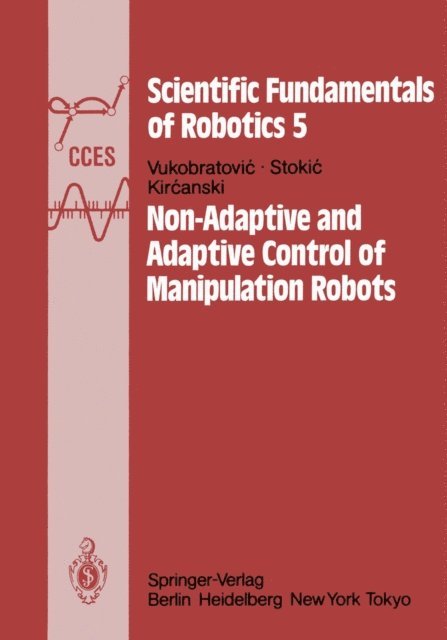
The material presented in this monograph is a logical continuation of research results achieved in the control of manipulation robots. This is in a way, a synthesis of many-year research efforts of the associates of Robotics Department, Mihailo Pupin Institute, in the field of dynamic control.of robotic systems. As in Vol. 2 of this Series, all results rely on the mathematical models of dynamics of active spatial mechanisms which offer the possibility for adequate dynamic control of manipula tion robots. Compared with Vol. 2, this monograph has three essential new character istics, and a variety of new tasks arising in the control of robots which have been formulated and solved for the first time. One of these novelties is nonadaptive control synthesized for the case of large variations in payload parameters, under the condition that the practical stability of the overall system is satisfied. Such a case of control synthesis meets the actual today's needs in industrial robot applications. The second characteristic of the monograph is the efficient adaptive control algorithm based on decentralized control structure intended for tasks in which parameter variations cannot be specified in advance. To be objective, this is not the case in industrial robotics today. Thus, nonadaptive control with and without a particular parameter variation is supplemented by adaptive dynamic control algorithms which will cer tainly be applicable in the future industrial practice when parametric identification of workpieces will be required.
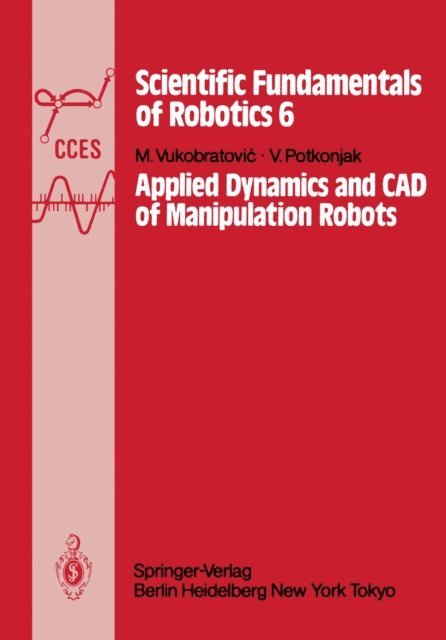
Del 6 - Communications and Control Engineering
Applied Dynamics and CAD of Manipulation Robots
Häftad, Engelska, 2011
534 kr
Skickas inom 10-15 vardagar
This book is a logical continuation of Volume 1 of the series entitled "Scientific Fundamentals of Robotics" which presents all of the basic methods for computerized construction of dynamics of manipulation ro bots as well as the essential concepts of computer-aided design of their mechanics. Vol. 1 of the Series also contains the main practical re sults from the elastodynamics of manipulation robots, having in mind a need for forming a computer procedure which allows efficient checks of elastic deformations of a manipulator tip or some other of its charac teristic points. Wishing to add a highly applications-oriented dimension to the dynamic aspect of studies of manipulation robots, the authors have made a kind of a topic-based selection by leaving unconsidered some aspects of studies of robots, such as elasticity, and discussing others, more im portant in their opinion, to such an extent as suffices to make them practically applicable. The authors have decided not to treat in detail the problem of flexible manipulation robots for two reasons. The first results from the atti tude that the permissible (desired) robot elasticity may, satisfacto rily well, be tested using the method described in Vol. 1 of the Series.
1 588 kr
Skickas inom 10-15 vardagar
This book provides a strong coverage of both the theoretical and application aspects of neural networks, fuzzy logic, genetic algorithms and hybrid intelligent techniques in robotics. Specific emphasis in the research work is given on the development of new efficient learning rules for robotic connectionist training and synthesis of neural learning algorithms for low-level control in the domain of robotic compliance tasks. The book contains several different examples of applications based on neural and hybrid intelligent techniques.
1 588 kr
Skickas inom 10-15 vardagar
As robots are becoming more and more sophisticated the interest in robot dynamics is increasing. Within this field, contact problems are among the most interesting, since contacts are present in almost any robot task and introduce serious complexity to system dynamics, strongly influencing robot behavior. The book formulates dynamic models of robot interaction with different kinds of environment, from pure geometrical constraints to complex dynamic environments. It provides a number of examples. Dynamic modeling is the primary interest of the book but control issues are treated as well. Because dynamics and contact control tasks are strongly related the authors also provide a brief description of relevant control issues. The book will be of interest to engineers working in research and development in robotics and automation and to both graduate and postgraduate students. The work will also be valuable to readers involved in manufacturing, robotics, automation, computer and control engineering.
1 780 kr
Skickas inom 10-15 vardagar
Several consistent solutions for cooperative system control have recently been identified by the authors of the current monograph. This was achieved by solving three separate tasks that are essential for solving the problem of cooperative manipulation as a whole. The first task is related to the understanding of the physical nature of cooperative manipulation and finding a way for a sufficiently exact characterization of cooperative system statics, kinematics and dynamics. After successfully completing this task, in the frame of the second task, the problem of coordinated motion of the cooperative system is solved. Finally, as a solution to the third task, the control laws of cooperative manipulation are synthesized. The starting point in dealing with the above three tasks of cooperative manipulation was the assumption that the problem of force uncertainty in cooperative manipulation can be resolved by introducing elastic properties into the cooperative system, at least in the part where force uncertainty appears. In static and dynamic analysis of the elastic structure of cooperative systems the finite element method is applied. In contrast to the procedure used in the major part of the available literature where deformation work is expressed by deviations from the unloaded state of fixed elastic structure, in this monograph the deformation work is expressed by internal forces as a function of the absolute coordinates of contacts of mobile elastic structure. Coordinated motion and control in cooperative manipulation are solved as the problem of coordinated motion and control of a mobile elastic structure, taking into account the specific features of cooperative manipulation. Coordinated motion and control laws in cooperative manipulation are synthesized on the basis of a non-linear model where the problem of uncertainty is solved, which is not the case in the available literature. Simple examples demonstrate the consistent procedure of mathematical modeling and synthesis of nominal coordinated motion, as well as control of the cooperative system. This book will be useful to a wide audience of engineers, ranging from undergraduate and graduate students, new and advanced academic researchers, to practitioners (mechanical and electrical engineers, computer and system scientists). It is intended for readers whose work involves manufacturing, industrial, robotics, automation, computer and control engineering, and who wish to find out about this important new technology and its potential advantages for control engineering applications.