Manfred F. R. Kets de Vries – författare
Visar alla böcker från författaren Manfred F. R. Kets de Vries. Handla med fri frakt och snabb leverans.
88 produkter
Organizational Paradoxes
Clinical approaches to management
Av Manfred F. R. Kets de Vries
Inbunden, 2001
4343 kr
Lägg i varukorg
Tavistock Press was established as a co-operative venture between the Tavistock Institute and Routledge & Kegan Paul (RKP) in the 1950s to produce a series of major contributions across the social sciences. This volume is part of a 2001 reissue of a selection of those important works which have …
Organizational Paradoxes
Clinical approaches to management
Av Manfred F. R. Kets de Vries
Häftad, 2009
757 kr
Lägg i varukorg
Tavistock Press was established as a co-operative venture between the Tavistock Institute and Routledge & Kegan Paul (RKP) in the 1950s to produce a series of major contributions across the social sciences. This volume is part of a 2001 reissue of a selection of those important works which have …
Are Leaders Born or Are They Made?
The Case of Alexander the Great
Av Manfred F. R. Kets de Vries, Elisabet Engellau
E-bok, 2018
524 kr
Lägg i varukorg
This book discusses the psychodynamics of leadership-in and relies on concepts of developmental psychology, family systems theory, cognitive theory, dynamic psychiatry, psychotherapy, and psychoanalysis to understand Alexander''s behaviour and actions.
Are Leaders Born or Are They Made?
The Case of Alexander the Great
Av Manfred F. R. Kets de Vries, Elisabet Engellau
E-bok, 2018
535 kr
Lägg i varukorg
This book discusses the psychodynamics of leadership-in and relies on concepts of developmental psychology, family systems theory, cognitive theory, dynamic psychiatry, psychotherapy, and psychoanalysis to understand Alexander''s behaviour and actions.
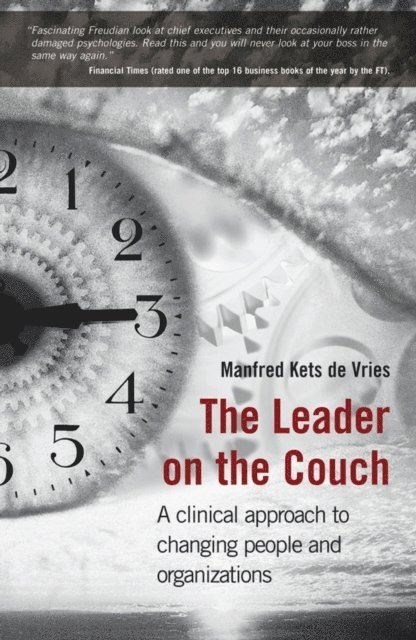
Leader on the Couch
A Clinical Approach to Changing People and Organizations
Av Manfred F. R. Kets de Vries
Inbunden, 2006
336 kr
Lägg i varukorg
Despite the proven benefits of emotional intelligence, organizational life has typically been hostile to the inner world of feeling. Rationality is deemed superior to feeling, which can contaminate judgment. But without feeling there is no passion, and no action. This book sets out to change people …
Leader on the Couch
A Clinical Approach to Changing People and Organizations
Av Manfred F. R. Kets de Vries
E-bok, 2006
554 kr
Lägg i varukorg
Despite the proven benefits of emotional intelligence, organizational life has typically been hostile to the inner world of feeling. Rationality is deemed superior to feeling, which can contaminate judgment. But without feeling there is no passion, and no action. This book sets out to change people …
Family Business on the Couch
A Psychological Perspective
Av Manfred F. R. Kets de Vries, Randel S. Carlock
Inbunden, 2007
5,0 utav 5 stjärnor. Totalt antal röster: (1)
515 kr
Lägg i varukorg
The challenge faced by family businesses and their stakeholders, is to recognise the issues that they face, understand how to develop strategies to address them and more importantly, to create narratives, or family stories that explain the emotional dimension of the issues to the family. The most …
Family Business on the Couch
A Psychological Perspective
Av Randel S. Carlock, Manfred F. R. Kets de Vries
E-bok, 2010
605 kr
Lägg i varukorg
The challenge faced by family businesses and their stakeholders, is to recognise the issues that they face, understand how to develop strategies to address them and more importantly, to create narratives, or family stories that explain the emotional dimension of the issues to the family. The most …
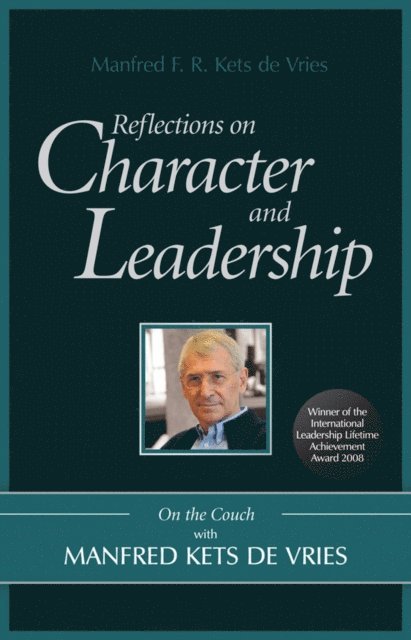
Reflections on Character and Leadership
On the Couch with Manfred Kets de Vries
Av Manfred F. R. Kets de Vries
E-bok, 2010
454 kr
Lägg i varukorg
Reflections on Character and Leadership is the first of the three books in the Manfred kets de Vries on the Couch series. Here, Kets de Vries looks at entrepreneurship, the pathology of leadership, and the personality of the leader. The reader will visit the disturbed inner worlds of leaders like …
Family Business on the Couch
A Psychological Perspective
Av Randel S. Carlock, Manfred F. R. Kets de Vries
E-bok, 2008
605 kr
Lägg i varukorg
The challenge faced by family businesses and their stakeholders, is to recognise the issues that they face, understand how to develop strategies to address them and more importantly, to create narratives, or family stories that explain the emotional dimension of the issues to the family. The most …
Reflections on Leadership and Career Development
On the Couch with Manfred Kets de Vries
Av Manfred F. R. Kets de Vries
Inbunden, 2010
424 kr
Lägg i varukorg
Views from the interface of psychoanalysis and organizational life In the books in this series Manfred Kets de Vriesfailed engineer, entrepreneur manqué, reluctant economist, international management guru, psychoanalyst, wit, and outdoorsmanoffers an overview of his work spanning four decades, a …
Reflections on Character and Leadership
On the Couch with Manfred Kets de Vries
Av Manfred F. R. Kets de Vries
E-bok, 2009
454 kr
Lägg i varukorg
Reflections on Character and Leadership is the first of the three books in the Manfred kets de Vries on the Couch series. Here, Kets de Vries looks at entrepreneurship, the pathology of leadership, and the personality of the leader. The reader will visit the disturbed inner worlds of leaders like …
Reflections on Groups and Organizations
On the Couch With Manfred Kets de Vries
Av Manfred F. R. Kets de Vries
E-bok, 2011
454 kr
Lägg i varukorg
Reflections on Groups and Organizations is the third and final book in the On the Couch with Manfred Kets de Vries series. Broadening the Kets De Vries canvas, this book examines concepts of organizational health, performance, and change. Material ranges from studies of high performance teams – …
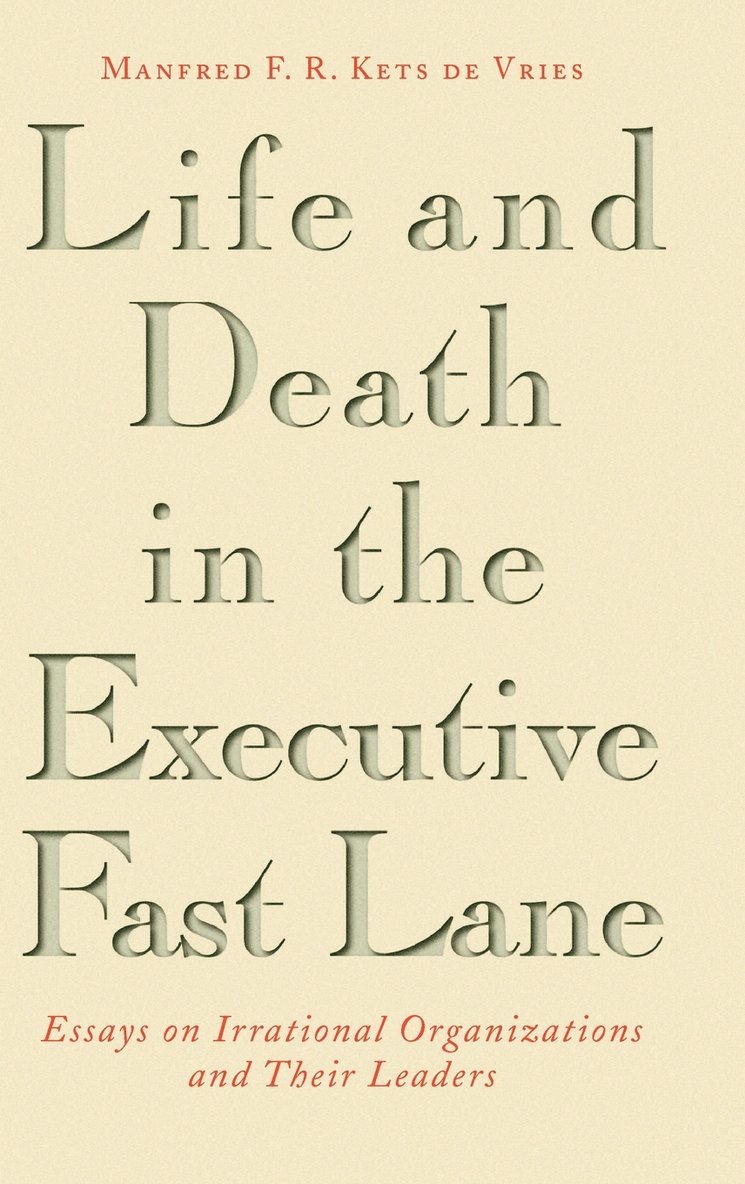
Life and Death in the Executive Fast Lane
Essays on Irrational Organizations and Their Leaders
Av Manfred F. R. Kets de Vries
Inbunden, 1995
510 kr
Lägg i varukorg
World-renowned management guru and expert in corporate neurosis Manfred F. R. Kets de Vries puts organizations on the couch. By combining the dismal science of management and the impossible profession of psychoanalysis, Kets de Vries presents eclectic advice on how things really work in …
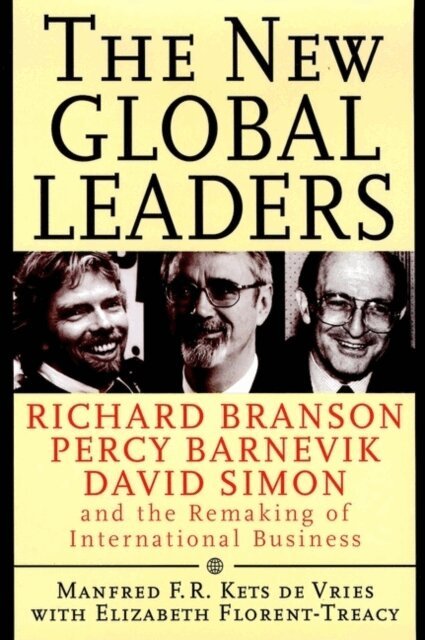
New Global Leaders
Richard Branson, Percy Barnevik, David Simon and the Remaking of International Business
Av Manfred F. R. Kets de Vries, Elizabeth Florent-Treacy
Inbunden, 1999
347 kr
Lägg i varukorg
Spend some time with three of today's most noted business pioneers and share their secrets for achieving international success. The New Global Leaders takes readers into the private worlds of Asea Brown Boveri's Percy Barnevik, Virgin founder Richard Branson, and British Petroleum titan David Simon …
Global Executive Leadership Inventory (GELI), Observer, Observer
Av Manfred F. R. Kets de Vries
Häftad, 2004
169 kr
Lägg i varukorg
The Global Executive Leadership Inventory, Observer is a questionnaire that consists of 100 action and behavior-based questions that an observer of the leader fills out about the leader. The questions are designed to measure competency within twelve areas: Envisioning, Empowering, Energizing, …
Neurotic Organization
Diagnosing and Changing Counterproductive Styles of Management
Av Manfred F. R. Kets de Vries, Danny Miller
Inbunden, 1991
769 kr
Lägg i varukorg
Is your organization obsessive-compulsive or passive-aggressive? Corporate neurosis expert Manfred Kets de Vries analyzes dysfunctional organizational behavior in terms of accepted psychoanalytic types and arrives at some genuine insights into why some companies are healthier than others.
The Happiness Equation: Meditations on Happiness
Av Manfred F. R. Kets de Vries
Häftad
301 kr
Lägg i varukorg
Le Sexe, L'Argent, Le Bonheur et La Mort: à la poursuite de l'authenticité perdu
Av Manfred F. R. Kets de Vries
Häftad
853 kr
Lägg i varukorg
Life Well Lived
Dialogues with a “Kabouter”
Av Manfred F. R. Kets de Vries
E-bok, 2023
572 kr
Lägg i varukorg
Manfred Kets de Vries wears many “hats”—psychoanalyst, executive coach, consultant, management educator, researcher, writer—but he has noticed that whichever hat he is wearing, every question he is asked boils down to one thing: “How can I live a well-lived life?” Over many years of practice in all …
Life Well Lived
Dialogues with a “Kabouter”
Av Manfred F. R. Kets de Vries
E-bok, 2023
572 kr
Lägg i varukorg
Manfred Kets de Vries wears many “hats”—psychoanalyst, executive coach, consultant, management educator, researcher, writer—but he has noticed that whichever hat he is wearing, every question he is asked boils down to one thing: “How can I live a well-lived life?” Over many years of practice in all …
Life Well Lived
Dialogues with a “Kabouter”
Av Manfred F. R. Kets de Vries
Inbunden, 2023
2433 kr
Lägg i varukorg
Manfred Kets de Vries wears many “hats”—psychoanalyst, executive coach, consultant, management educator, researcher, writer—but he has noticed that whichever hat he is wearing, every question he is asked boils down to one thing: “How can I live a well-lived life?”Over many years of practice in all …
Life Well Lived
Dialogues with a “Kabouter”
Av Manfred F. R. Kets de Vries
Häftad, 2023
486 kr
Lägg i varukorg
Manfred Kets de Vries wears many “hats”—psychoanalyst, executive coach, consultant, management educator, researcher, writer—but he has noticed that whichever hat he is wearing, every question he is asked boils down to one thing: “How can I live a well-lived life?”Over many years of practice in all …
Darker Side of Leadership
Pythons Devouring Crocodiles
Av Manfred F. R. Kets de Vries
Häftad, 2024
557 kr
Lägg i varukorg
Manfred Kets de Vries is one of the most authoritative voices on organizational dynamics, leadership, executive coaching, and psychotherapy today. In all his roles, he has noticed that questions are now, increasingly, coming back to one thing – the wider state of the world. Using an engaging and …
Darker Side of Leadership
Pythons Devouring Crocodiles
Av Manfred F. R. Kets de Vries
Inbunden, 2024
2433 kr
Lägg i varukorg
Manfred Kets de Vries is one of the most authoritative voices on organizational dynamics, leadership, executive coaching, and psychotherapy today. In all his roles, he has noticed that questions are now, increasingly, coming back to one thing – the wider state of the world. Using an engaging and …
Storytelling for Leaders
Tales of Sorrow and Love
Av Manfred F. R. Kets de Vries
Häftad, 2024
515 kr
Lägg i varukorg
Stories matter. Written by renowned psychoanalyst, leadership scholar, and executive coach, Manfred Kets de Vries, this book uncovers, explains, and captures the power and art of storytelling at work and in life, and how it can be applied in organizations to powerful effect.Our talent in telling …
Storytelling for Leaders
Tales of Sorrow and Love
Av Manfred F. R. Kets de Vries
Inbunden, 2024
2578 kr
Lägg i varukorg
Stories matter. Written by renowned psychoanalyst, leadership scholar, and executive coach, Manfred Kets de Vries, this book uncovers, explains, and captures the power and art of storytelling at work and in life, and how it can be applied in organizations to powerful effect.Our talent in telling …
Narcissistic Leadership
Narcissus on the Couch
Av Manfred F. R. Kets de Vries
Häftad, 2025
444 kr
Lägg i varukorg
Narcissism has become a contemporary pandemic that seems to have been normalized, accepted, and even celebrated, both in society at large and by some of our political and business leaders. In this book, world-renowned psychology and leadership thinker Manfred Kets de Vries explains this modern …
Narcissistic Leadership
Narcissus on the Couch
Av Manfred F. R. Kets de Vries
Inbunden, 2025
2066 kr
Lägg i varukorg
Narcissism has become a contemporary pandemic that seems to have been normalized, accepted, and even celebrated, both in society at large and by some of our political and business leaders. In this book, world-renowned psychology and leadership thinker Manfred Kets de Vries explains this modern …
Darker Side of Leadership
Pythons Devouring Crocodiles
Av Manfred F. R. Kets de Vries
E-bok, 2024
642 kr
Lägg i varukorg
Manfred Kets de Vries is one of the most authoritative voices on organizational dynamics, leadership, executive coaching, and psychotherapy today. In all his roles, he has noticed that questions are now, increasingly, coming back to one thing – the wider state of the world. Using an engaging and …