Manuel Vargas - Böcker
Visar alla böcker från författaren Manuel Vargas. Handla med fri frakt och snabb leverans.
10 produkter
10 produkter
665 kr
Skickas
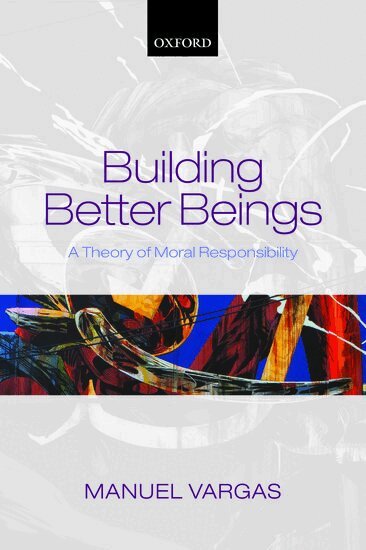
Building Better Beings presents a new theory of moral responsibility. Beginning with a discussion of ordinary convictions about responsibility and free will and their implications for a philosophical theory, Manuel Vargas argues that no theory can do justice to all the things we want from a theory of free will and moral responsibility. He goes on to show how we can nevertheless justify our responsibility practices and provide a normatively and naturalistically adequate account of of responsible agency, blame, and desert. Three ideas are central to Vargas' account: the agency cultivation model, circumstantialism about powers, and revisionism about responsibility and free will. On Vargas' account, responsibility norms and practices are justified by their effects. In particular, the agency cultivation model holds that responsibility practices help mold us into creatures that respond to moral considerations. Moreover, the abilities that matter for responsibility and free will are not metaphysically prior features of agents in isolation from social contexts. Instead, they are functions of both agents and their normatively structured contexts. This is the idea of circumstantialism about the powers required for responsibility. Third, Vargas argues that an adequate theory of responsibility will be revisionist, or at odds with important strands of ordinary convictions about free will and moral responsibility. Building Better Beings provides a compelling and state-of-the-art defense of moral responsibility in the face of growing philosophical and scientific skepticism about free will and moral responsibility.
3 553 kr
Skickas inom 3-6 vardagar
Moral psychology is the study of how human minds make and are made by human morality. This state-of-the-art volume covers contemporary philosophical and psychological work on moral psychology, as well as notable historical theories and figures in the field of moral psychology, such as Aristotle, Kant, Nietzsche, and the Buddha. The Oxford Handbook of Moral Psychology's fifty chapters, authored by leading figures in the field, cover foundational topics, such as character, virtue, emotion, moral responsibility, the neuroscience of morality, weakness of will, and the nature of moral judgments and reasons. The volume also canvases emerging work in applied moral psychology, including adaptive preferences, animals, mental illness, poverty, marriage, race, bias, and victim blaming. Collectively, the essays form the definitive survey of contemporary moral psychology.
Del 8 - Oxford Studies in Agency and Responsibility
Oxford Studies in Agency and Responsibility Volume 8
Non-Ideal Agency and Responsibility
Inbunden, Engelska, 2024
1 146 kr
Skickas inom 5-8 vardagar
Oxford Studies in Agency and Responsibility is a series of volumes presenting outstanding new work on a set of connected themes, investigating such questions as:· What does it mean to be an agent? · What is the nature of moral responsibility? Of criminal responsibility? What is the relation between moral and criminal responsibility (if any)? · What is the relation between responsibility and the metaphysical issues of determinism and free will?· What do various psychological disorders tell us about agency and responsibility?· How do moral agents develop? How does this developmental story bear on questions about the nature of moral judgment and responsibility?· What do the results from neuroscience imply (if anything) for our questions about agency and responsibility?OSAR thus straddles the areas of moral philosophy and philosophy of action, but also draws from a diverse range of cross-disciplinary sources, including moral psychology, psychology proper (including experimental and developmental), philosophy of psychology, philosophy of law, legal theory, metaphysics, neuroscience, neuroethics, political philosophy, and more. It is unified by its focus on who we are as deliberators and (inter)actors, embodied practical agents negotiating (sometimes unsuccessfully) a world of moral and legal norms.Volume 8 focuses on non-ideal agency and responsibility.
938 kr
Skickas inom 5-8 vardagar
Building Better Beings presents a new theory of moral responsibility. Beginning with a discussion of ordinary convictions about responsibility and free will and their implications for a philosophical theory, Manuel Vargas argues that no theory can do justice to all the things we want from a theory of free will and moral responsibility. He goes on to show how we can nevertheless justify our responsibility practices and provide a normatively and naturalistically adequate account of responsible agency, blame, and desert. Three ideas are central to Vargas' account: the agency cultivation model, circumstantialism about powers, and revisionism about responsibility and free will. On Vargas' account, responsibility norms and practices are justified by their effects. In particular, the agency cultivation model holds that responsibility practices help mold us into creatures that respond to moral considerations. Moreover, the abilities that matter for responsibility and free will are not metaphysically prior features of agents in isolation from social contexts. Instead, they are functions of both agents and their normatively structured contexts. This is the idea of circumstantialism about the powers required for responsibility. Third, Vargas argues that an adequate theory of responsibility will be revisionist, or at odds with important strands of ordinary convictions about free will and moral responsibility. Building Better Beings provides a compelling and state-of-the-art defense of moral responsibility in the face of growing philosophical and scientific skepticism about free will and moral responsibility.
1 391 kr
Skickas inom 5-8 vardagar
Michael Bratman's work has been unusually influential, with significance in disciplines as diverse as philosophy, computer science, law, and primatology. This is a collection of critical essays by some of contemporary philosophy's most distinguished figures, including Margaret Gilbert, Richard Holton, Christine Korsgaard, Alfred Mele, Elijah Milgram, Kieran Setiya, Geoffrey Sayre-McCord, Scott Shapiro, Michael Smith, J. David Velleman, R. Jay Wallace. It also contains an introduction by the editors, situating Bratman's work and its broader significance. The essays in this volume engage with ideas and themes prominent in Bratman's work. The volume also includes a lengthy reply by Bratman that breaks new ground and deepens our understanding of the nature of action, rationality, and social agency.
76 kr
Skickas inom 5-8 vardagar
576 kr
Skickas inom 10-15 vardagar
The Latinx Philosophy Reader showcases a wide range of significant philosophical works about Latinx people and their experiences, displaying the breadth, distinctiveness, originality, and diversity of Latinx philosophy. Readings include discussions of what it is like to be perceived as undocumented, ethical quagmires affecting those who interpret for their family members, the difficulty of pursuing career success without compromising one’s cultural identity and values, the nature of citizenship, disputes about labels, the significance of language, and debates about the nature of Latinx identity.The editors’ detailed introduction orients readers with an overview of the origins of the field of Latinx philosophy, a guide to terminology, and a history of the idea of Latinx identity in the United States. The volume’s 35 readings are made up of both widely read and cited articles from journals and books and newly commissioned contributions from the leading voices in the field. All of them are organized into seven thematic units in contemporary Latinx philosophy:Social IdentityMestizaje and IndigeneityCross-Cultural ChallengesEpistemology, Phenomenology, and ColonialityLanguage and CommunicationImmigration and CitizenshipMetaphilosophyEach of these seven units includes its own introduction that connects each reading to the overarching themes of the unit and volume. Throughout, the readings provide an accessible entry point to readers who are new to philosophy. The texts generate opportunities for philosophical reflection without requiring readers to consult additional resources to grasp the major insights. They can be read in any order, allowing for ready adaptation to the particular interests of instructors and students.Key FeaturesIncludes accessible, previously published articles as well as newly commissioned contributions from leading voices in the fieldForegrounds the explosion of more recent work on Latinx philosophy, while also including essential classic textsProvides a general introduction that contextualizes Latinx philosophy and explains its distinct and broader importanceIncludes seven smaller unit introductions that describe the importance and relevance of each reading in the unitHighlights a diversity of latinidades, or ways of being Latinx, portraying a range of Latinx experiences and concernsProvides reading and discussion questions for each chapter
2 088 kr
Skickas inom 10-15 vardagar
The Latinx Philosophy Reader showcases a wide range of significant philosophical works about Latinx people and their experiences, displaying the breadth, distinctiveness, originality, and diversity of Latinx philosophy. Readings include discussions of what it is like to be perceived as undocumented, ethical quagmires affecting those who interpret for their family members, the difficulty of pursuing career success without compromising one’s cultural identity and values, the nature of citizenship, disputes about labels, the significance of language, and debates about the nature of Latinx identity.The editors’ detailed introduction orients readers with an overview of the origins of the field of Latinx philosophy, a guide to terminology, and a history of the idea of Latinx identity in the United States. The volume’s 35 readings are made up of both widely read and cited articles from journals and books and newly commissioned contributions from the leading voices in the field. All of them are organized into seven thematic units in contemporary Latinx philosophy:Social IdentityMestizaje and IndigeneityCross-Cultural ChallengesEpistemology, Phenomenology, and ColonialityLanguage and CommunicationImmigration and CitizenshipMetaphilosophyEach of these seven units includes its own introduction that connects each reading to the overarching themes of the unit and volume. Throughout, the readings provide an accessible entry point to readers who are new to philosophy. The texts generate opportunities for philosophical reflection without requiring readers to consult additional resources to grasp the major insights. They can be read in any order, allowing for ready adaptation to the particular interests of instructors and students.Key FeaturesIncludes accessible, previously published articles as well as newly commissioned contributions from leading voices in the fieldForegrounds the explosion of more recent work on Latinx philosophy, while also including essential classic textsProvides a general introduction that contextualizes Latinx philosophy and explains its distinct and broader importanceIncludes seven smaller unit introductions that describe the importance and relevance of each reading in the unitHighlights a diversity of latinidades, or ways of being Latinx, portraying a range of Latinx experiences and concernsProvides reading and discussion questions for each chapter
414 kr
Skickas inom 7-10 vardagar
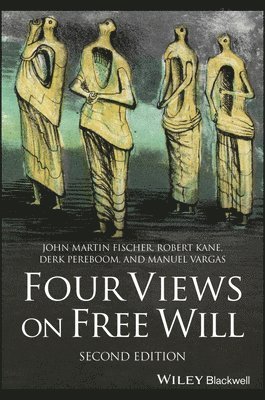
A lively and engaging debate between four representative views on free will, completely revised and updated with new perspectives Four Views on Free Will is a robust and careful debate about free will, how it interacts with determinism and indeterminism, and whether we have it or not. Providing the most up-to-date account of four major positions in the free will debate, the second edition of this classic text presents the opposing perspectives of renowned philosophers John Martin Fischer, Robert Kane, Derk Pereboom, and Manuel Vargas. Substantially revised throughout, this new volume contains eight in-depth chapters, almost entirely rewritten for the new edition, in which the authors state their different positions on the debate, offer insights into how their views have evolved over the past fifteen years, respond to recent critical literature in the field, and interact and engage with each other in dialogue. In the first four chapters the authors defend their distinctive views about free will: libertarianism, compatibilism, hard incompatibilism, and revisionism. The subsequent four chapters consist of direct replies by each of the authors to the other three. Offering a one-of-a-kind interactive conversation about the most recent work on the subject, Four Views on Free Will, Second Edition provides a balanced and enlightening discussion on all the key concepts and conflicts in the free will debate. Part of the acclaimed Great Debates in Philosophy series, it remains essential reading for undergraduate and graduate students, lecturers and scholars in philosophy, ethics, free will, philosophy of mind, political philosophy, law, and related subjects.
1 216 kr
Skickas inom 7-10 vardagar
Focusing on the concepts and interactions of free will, moral responsibility, and determinism, this text represents the most up-to-date account of the four major positions in the free will debate. Four serious and well-known philosophers explore the opposing viewpoints of libertarianism, compatibilism, hard incompatibilism, and revisionismThe first half of the book contains each philosopher's explanation of his particular view; the second half allows them to directly respond to each other's arguments, in a lively and engaging conversationOffers the reader a one of a kind, interactive discussionForms part of the acclaimed Great Debates in Philosophy series