Marcel Schweiker – författare
909 kr
Läs direkt efter köp
Do you have data on occupant behaviour, indoor environment or energy use in buildings? Are you interested in statistical analysis and modelling? Do you have a specific (research) question and dataset and would like to know how to answer the question with the data available?
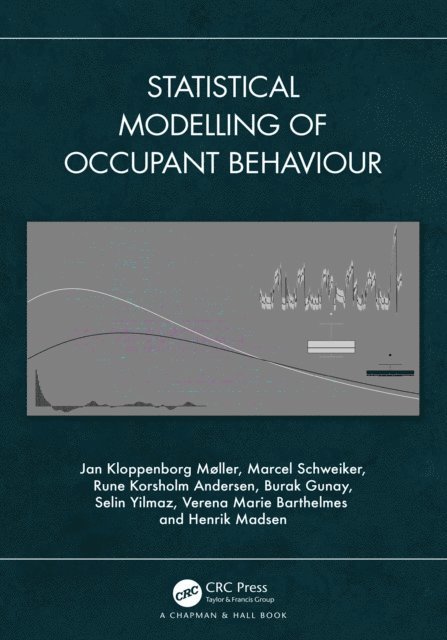
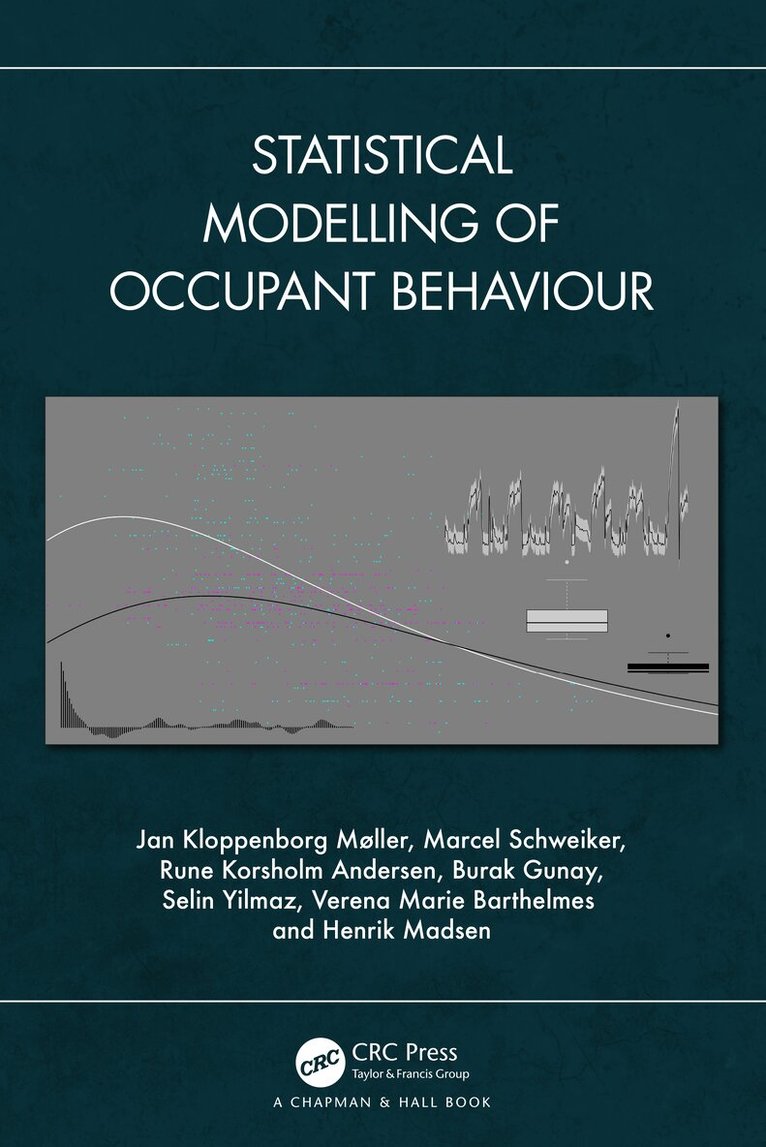
Statistical Modelling of Occupant Behaviour covers a range of statistical methods and models used for modelling energy- and comfort-related occupant behaviour in buildings. It is a classical textbook on statistics, including many practical examples related to occupant behaviour that are either taken from real research problems or adapted from such.
The main focus is traditional statistical techniques based on the likelihood principle that can be applied to occupant behaviour modelling, including:
General, generalised linear and survival models Mixed effect and hierarchical models Linear time series and Markov models Linear state space and hidden Markov models Illustration of all methods using occupant behaviour examples implemented in RThe built environment affects occupants who live and work in it, and occupants affect the built environment by adapting it to their needs – for example, by adapting their indoor environments by interacting with building components and systems. These adaptive behaviours account for great uncertainty in the prediction of building energy use and indoor environmental conditions. Occupant behaviour is complex and multi-disciplinary but can be successfully modelled using statistical approaches.
Statistical Modelling of Occupant Behaviour is written for researchers and advanced practitioners who work with real-world applications and modelling of occupant data. It describes the kinds of statistical models that may be used in various occupant behaviour modelling research. It gives a theoretical overview of these methods and then applies them to the study of occupant behaviour using readily replaceable examples in the R environment that are based on actual and experimental data.
909 kr
Läs direkt efter köp
Do you have data on occupant behaviour, indoor environment or energy use in buildings? Are you interested in statistical analysis and modelling? Do you have a specific (research) question and dataset and would like to know how to answer the question with the data available?
Statistical Modelling of Occupant Behaviour covers a range of statistical methods and models used for modelling energy- and comfort-related occupant behaviour in buildings. It is a classical textbook on statistics, including many practical examples related to occupant behaviour that are either taken from real research problems or adapted from such.
The main focus is traditional statistical techniques based on the likelihood principle that can be applied to occupant behaviour modelling, including:
General, generalised linear and survival models Mixed effect and hierarchical models Linear time series and Markov models Linear state space and hidden Markov models Illustration of all methods using occupant behaviour examples implemented in RThe built environment affects occupants who live and work in it, and occupants affect the built environment by adapting it to their needs – for example, by adapting their indoor environments by interacting with building components and systems. These adaptive behaviours account for great uncertainty in the prediction of building energy use and indoor environmental conditions. Occupant behaviour is complex and multi-disciplinary but can be successfully modelled using statistical approaches.
Statistical Modelling of Occupant Behaviour is written for researchers and advanced practitioners who work with real-world applications and modelling of occupant data. It describes the kinds of statistical models that may be used in various occupant behaviour modelling research. It gives a theoretical overview of these methods and then applies them to the study of occupant behaviour using readily replaceable examples in the R environment that are based on actual and experimental data.
1 966 kr
Skickas inom 10-15 vardagar
760 kr
Skickas inom 10-15 vardagar
733 kr
Läs direkt efter köp
1 512 kr
Skickas inom 10-15 vardagar
1 832 kr
Läs direkt efter köp
631 kr
Skickas inom 5-8 vardagar
1 512 kr
Skickas inom 10-15 vardagar
421 kr
Skickas inom 3-6 vardagar
409 kr
Läs direkt efter köp
Sehwahrnehmung ist eine zentrale Fähigkeit des Menschen und nahezu aller Tiere. Der Sehsinn hat sich schon früh in der Entstehungsgeschichte der Lebewesen entwickelt und ständig weiter perfektioniert. Für die Informationsvermittlung, Kommunikation und Interaktion ist der Sehsinn von großer Bedeutung und der Verlust des Sehvermögens wird als besonders starke Einschränkung des Lebens begriffen, erlebt und befürchtet. Und trotzdem sind unsere Sinne für uns selbstverständlich und werden erst dann bewusst wahrgenommen, wenn es zu einer Störung durch eine Erkrankung kommt.
Dieses Buch soll dazu beitragen, Sehen als solches zu verstehen und den Einfluss unserer Sehwahrnehmung auf verschiedene Bereiche des Lebens, wie Gesundheit, Wohlbefinden, Wohnen, Kommunikation und Verstehen, zu erkennen. Zu diesem Zweck haben sich die fünf Autoren aus verschiedenen Wissenschaftsgebieten ausgetauscht. Sie beschreiben den Sehsinn aus Sicht ihres jeweiligen Fachgebietes und diskutieren über Aspekte des Sehens besonders an den Schnittstellen ihrer Fächer.