Marina Rupp – författare
Visar alla böcker från författaren Marina Rupp. Handla med fri frakt och snabb leverans.
8 produkter
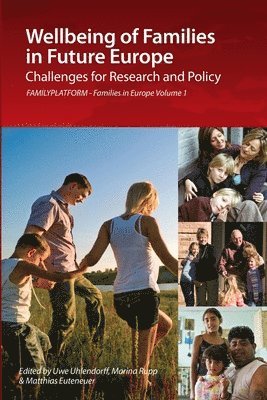
Wellbeing of Families in Future Europe: Challenges for Research and Policy - FAMILYPLATFORM - Families in Europe Vol. 1
Av Uwe Uhlendorff, Marina Rupp m. fl.
Häftad, 2011
212 kr
Lägg i varukorg
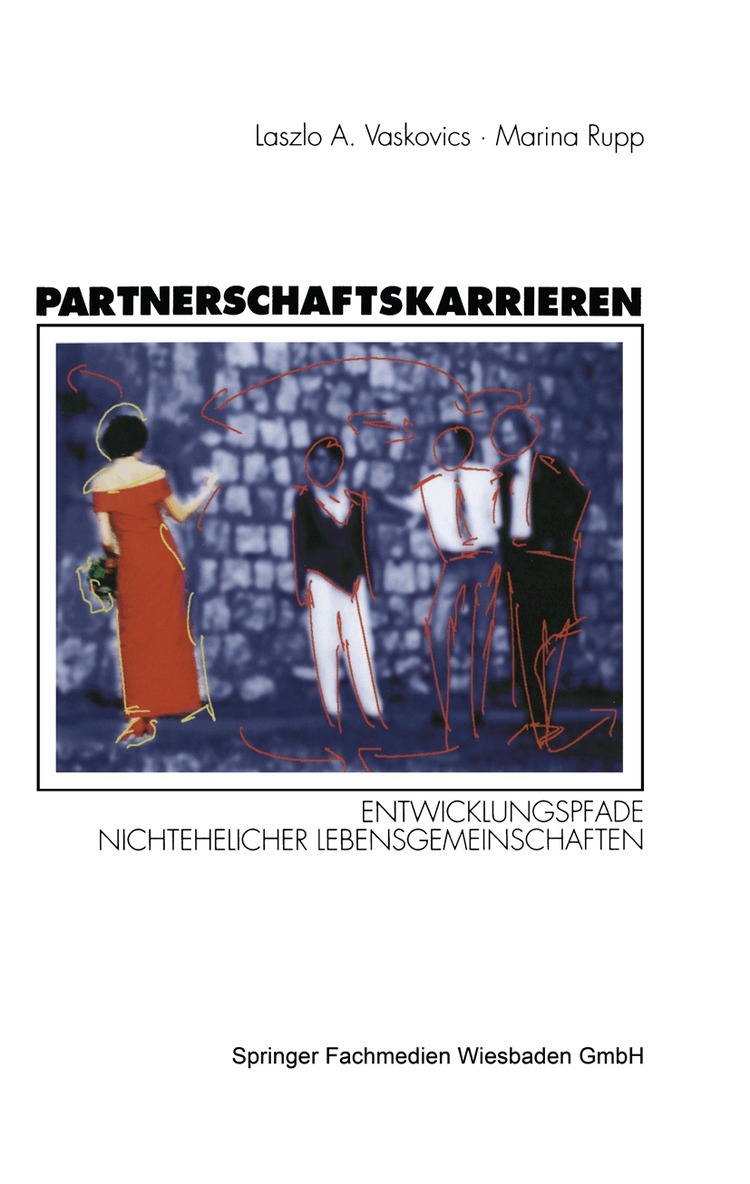
Partnerschaftskarrieren
Entwicklungspfade nichtehelicher Lebensgemeinschaften
Av Marina Rupp
E-bok, 2013
542 kr
Lägg i varukorg
Lebensverläufe in der Moderne 1 Nichteheliche Lebensgemeinschaften
Eine soziologische Längsschnittstudie
Av Barbara Hofmann, Marina Rupp m. fl.
E-bok, 2013
587 kr
Lägg i varukorg
Partnerschaftskarrieren
Entwicklungspfade nichtehelicher Lebensgemeinschaften
Av Marina Rupp
Häftad, 1995
515 kr
Lägg i varukorg
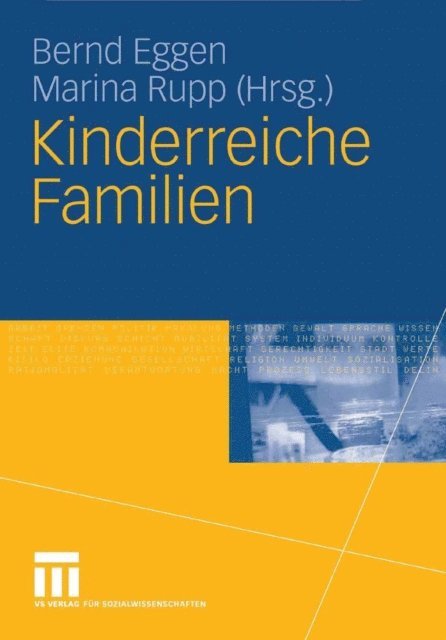
Kinderreiche Familien
Häftad, 2006
515 kr
Lägg i varukorg
Kinderreiche Familien, also Familien mit drei oder mehr Kindern, sind in der Wissenschaft und Politik ein bislang vernachlässigtes Thema. Die vorliegende Arbeit liefert vertiefte Einblicke in die Vielfalt der Lebensbedingungen kinderreicher Familien und, durch den Vergleich mit Familien mit weniger …
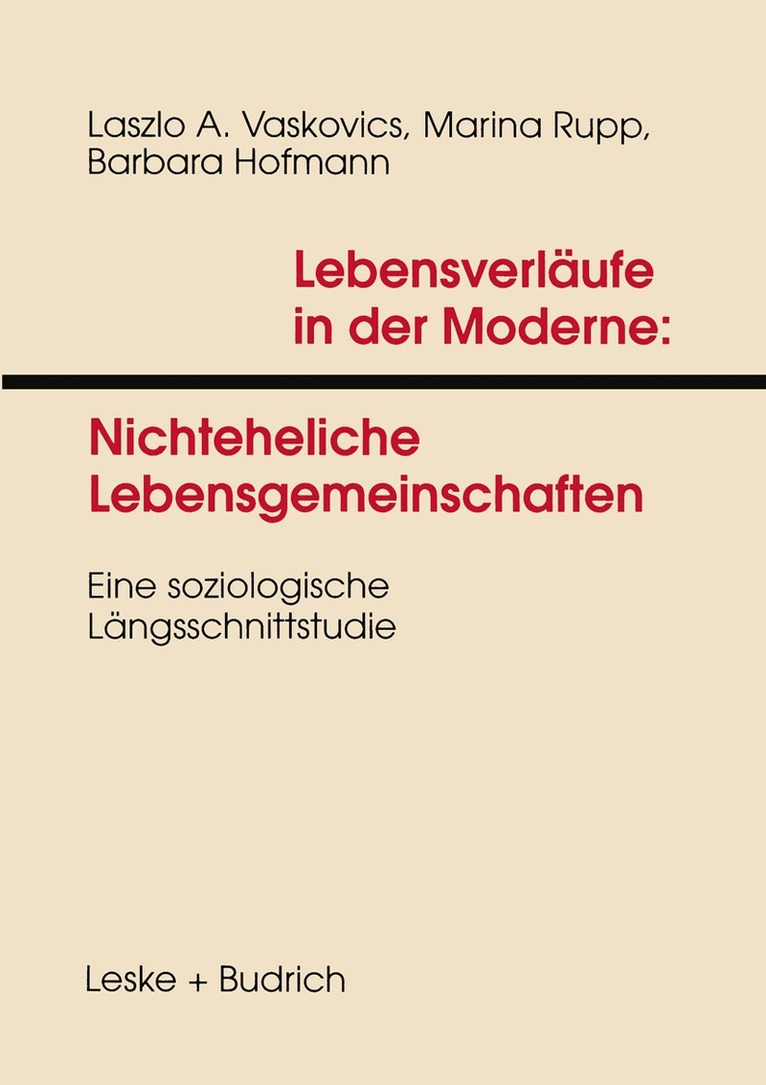
Lebensverläufe in der Moderne 1 Nichteheliche Lebensgemeinschaften
Eine soziologische Längsschnittstudie
Av Laszlo Vaskovics, Marina Rupp m. fl.
Häftad, 1997
566 kr
Lägg i varukorg
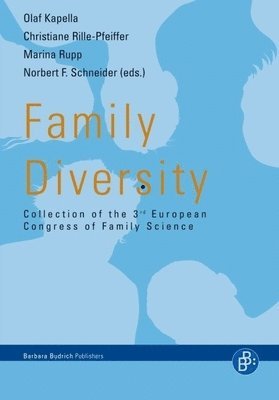
Family Diversity
Collection of the 3rd European Congress of Family Science
Av Olaf Kapella, Christiane Rille-Pfeiffer m. fl.
Inbunden, 2010
717 kr
Tillfälligt slut
Family in all its aspects Familienbande International experts provide an overview of the current state-of-the-art of European family research and outline the multiple formations, structures and configurations of family in Europe. Four aspects are discussed in depth: family images, sex/gender roles, …