Mark J Nieuwenhuijsen - Böcker
Visar alla böcker från författaren Mark J Nieuwenhuijsen. Handla med fri frakt och snabb leverans.
5 produkter
5 produkter
1 002 kr
Skickas inom 5-8 vardagar
Air pollution, water contamination, persistent organic pollutants, pesticides, metals, and radiofrequencies are just some examples of environmental factors that have been linked to adverse health effects such as cancer, respiratory disease and reproductive problems. Environmental epidemiology studies the interaction of disease and these environmental determinants of disease at a population level. Whilst risks associated with environmental exposures are generally small, the exposed population, and hence the population burden of disease, may be large. To detect these small risks, it is therefore essential that related methods and their application are refined. In addition, there is increasing attention on environmental health issues from the public, government, and media, thus raising the profile of envrionmental epidemiology in preventive medicine. This book describes the methods of environmental epidemiology, with emphasis on good practice. It outlines the basic principles of epidemiology and environmental health, and describes in more detail special environmental epidemiological designs that are rarely described in other textbooks. The principles of health risk assessment and forecasting, as well as the application of study data in these types of study, are explored. Several chapters cover practical issues in the conduct of studies, such as field work and data analyses and its requirements. Ethical issues and the role of environmental epidemiology in policy making are also covered.
1 523 kr
Skickas inom 5-8 vardagar
Set against a background of growing public, media and political concern about occupational and environmental health issues, and a scientific need to better understand and explain the effects of pollutants on human health, this book is a unique resource. Contributions from an expert panel of international practitioners provide a comprehensive reference on the state of the art methods and applications in the field of occupational and environmental pollution and the adverse health effects, particularly the exposure assessment in epidemiological studies.Risks associated with occupational and environmental exposure are generally small, but the exposed population, and hence the population attributable risk, may be large. To detect small risk, the exposure assessment needs to be very refined. Exposure assessment is the study of the distribution and determinants of potentially hazardous agents, and includes the estimation of intensity, duration and frequency of exposure, the variation in these indices and their determinants. The aim of this book is to develop an understanding and knowledge of exposure assessment methods and their application to substantive issues in occupational and environmental epidemiology. The emphasis is on methodological principles and good practice. It is focused on exposure assessment in both occupational and environmental epidemiology since there are many similarities but also some interesting differences. The book outlines the basic principles of exposure assessment, and examines the current status and research questions in the exposure assessment of occupational and environmental epidemiological studies of allergens, particulate matter, chlorination disinfection by-products, agricultural pesticides and radiofrequencies.The book will be of interest to all concerned with exposure assessment and epidemiology. It will be a valuable source for undergraduate and postgraduate courses in exposure assessment, occupational hygiene, environmental science, epidemiology, toxicology, biostatistics, occupational and environmental health, health risk assessment and related disciplines and a useful resource of reference for policy makers and regulators.
1 020 kr
Skickas inom 5-8 vardagar
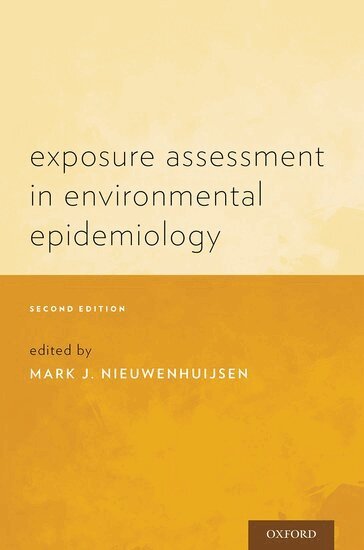
This completely updated edition of Exposure Assessment in Environmental Epidemiology offers a practical introduction to exposure assessment methodologies in environmental epidemiologic studies. In addition to methods for traditional methods -- questionnaires, biomonitoring -- this new edition is expanded to include geographic information systems, modeling, personal sensoring, remote sensing, and OMICs technologies. In addition, each of these methods is contextualized within a recent epidemiology study, maximizing illustration for students and those new to these to these techniques. With clear writing and extensive illustration, this book will be useful to anyone interested in exposure assessment, regardless of background.
2 162 kr
Skickas inom 10-15 vardagar
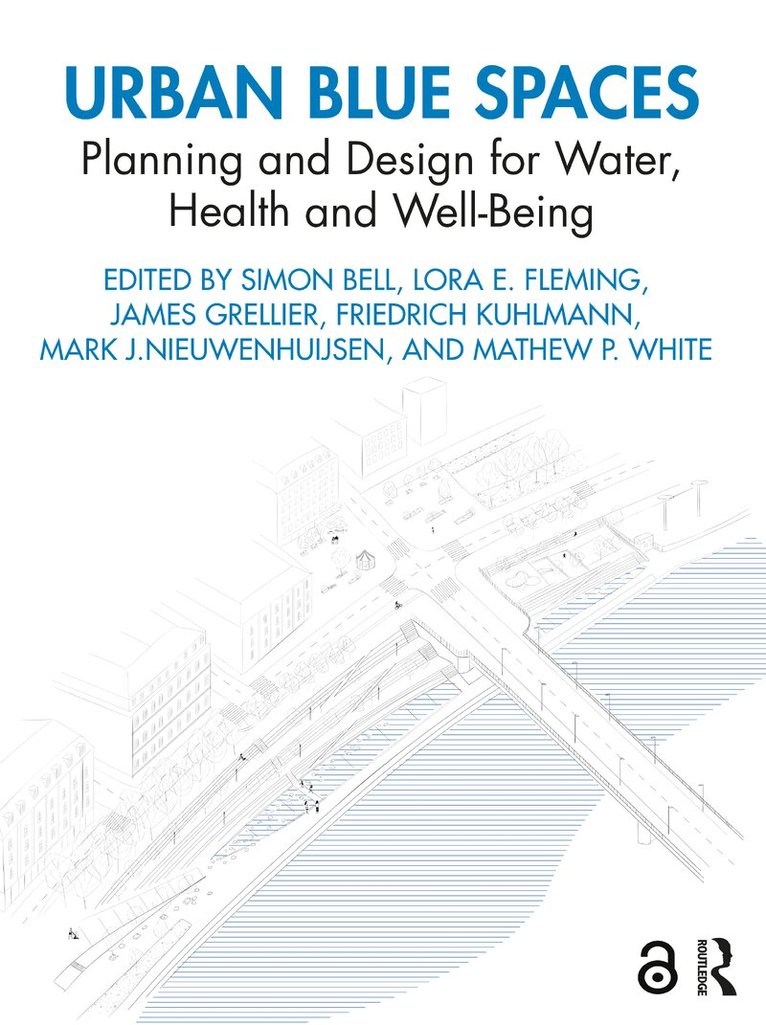
This book presents an evidence-based approach to landscape planning and design for urban blue spaces that maximises the benefits to human health and well-being while minimising the risks. Based on applied research and evidence from primary and secondary data sources stemming from the EU-funded BlueHealth project, the book presents nature-based solutions to promote sustainable and resilient cities.Numerous cities around the world are located alongside bodies of water in the form of coastlines, lakes, rivers and canals, but the relationship between city inhabitants and these water sources has often been ambivalent. In many cities, water has been polluted, engineered or ignored completely. But, due to an increasing awareness of the strong connections between city, people, nature and water and health, this paradigm is shifting.The international editorial team, consisting of researchers and professionals across several disciplines, leads the reader through theoretical aspects, evidence, illustrated case studies, risk assessment and a series of validated tools to aid planning and design before finishing with overarching planning and design principles for a range of blue-space types. Over 200 full-colour illustrations accompany the case-study examples from geographic locations all over the world, including Portugal, the United Kingdom, China, Canada, the US, South Korea, Singapore, Norway and Estonia. With green and blue infrastructure now at the forefront of current policies and trends to promote healthy, sustainable cities, Urban Blue Spaces is a must-have for professionals and students in landscape planning, urban design and environmental design.Open Access for the book was funded by the European Union's Horizon 2020 research and innovation programme under grant agreement No 666773The Open Access version of this book, available atwww.taylorfrancis.com/books/oa-edit/10.4324/9780429056161, has been made available under a Creative Commons Attribution-Non Commercial-No Derivatives 4.0 license
702 kr
Skickas inom 10-15 vardagar
This book presents an evidence-based approach to landscape planning and design for urban blue spaces that maximises the benefits to human health and well-being while minimising the risks. Based on applied research and evidence from primary and secondary data sources stemming from the EU-funded BlueHealth project, the book presents nature-based solutions to promote sustainable and resilient cities.Numerous cities around the world are located alongside bodies of water in the form of coastlines, lakes, rivers and canals, but the relationship between city inhabitants and these water sources has often been ambivalent. In many cities, water has been polluted, engineered or ignored completely. But, due to an increasing awareness of the strong connections between city, people, nature and water and health, this paradigm is shifting.The international editorial team, consisting of researchers and professionals across several disciplines, leads the reader through theoretical aspects, evidence, illustrated case studies, risk assessment and a series of validated tools to aid planning and design before finishing with overarching planning and design principles for a range of blue-space types. Over 200 full-colour illustrations accompany the case-study examples from geographic locations all over the world, including Portugal, the United Kingdom, China, Canada, the US, South Korea, Singapore, Norway and Estonia. With green and blue infrastructure now at the forefront of current policies and trends to promote healthy, sustainable cities, Urban Blue Spaces is a must-have for professionals and students in landscape planning, urban design and environmental design.Open Access for the book was funded by the European Union's Horizon 2020 research and innovation programme under grant agreement No 666773The Open Access version of this book, available atwww.taylorfrancis.com/books/oa-edit/10.4324/9780429056161, has been made available under a Creative Commons Attribution-Non Commercial-No Derivatives 4.0 license