• Fri frakt över 249 kr
  • •
  • Snabba leveranser
  • •
  • Billiga böcker
Kundservice

Du är på sajten för privatpersoner.

Företag, bibliotek eller offentlig verksamhet?

Du handlar på classic.bokus.com, där alla dina funktioner finns intakta.
Till classic.bokus.com
Bokus logotyp. Gå till startsidan.
  • Erbjudanden
  • Nyheter
  • Student
  • Topplistor
  • Barn & ungdom
  • Bokus Play
  • E-böcker
  • Pocketböcker
  • Spel & pussel

10% rabatt på allt med kod: NYSTART10 →

Sidfot

Mina sidor

    Hjälp

    • Kundservice
    • Vanliga frågor och svar
    • Frakt och leverans
    • Retur vid ångerrätt
    • Reklamera vara
    • Betalning
    • Köpvillkor
    • Allmänna villkor
    • Information om webbplatsens tillgänglighet

    Om Bokus

    • Om oss
    • Pressrum
    • För studenter
    • För företag
    • För bibliotek och offentlig verksamhet
    • För leverantörer
    • Hållbarhet

    Populärt

    • Aktuella erbjudanden
    • Presentkort
    • Studentlitteratur
    • Nya böcker
    • Topplistor
    • Signerade böcker
    • Engelska böcker

    Inspiration

    • Boktips
    • BookTok
    • Populära bokserier
    • Barnbokskaraktärer
    • Populära författare
    Logotyp för Bokus
    Följ oss på Facebook (extern länk)Följ oss på Instagram (extern länk)Följ oss på YouTube (extern länk)Följ oss på TikTok (extern länk)
    bokus @ CookiesAnpassa cookiesIntegritetspolicyKöpvillkor
    Till Citymail hemsida (extern länk)Till Budbee hemsida (extern länk)Till Postnord hemsida (extern länk)Till Schenker hemsida (extern länk)Till Early Bird hemsida (extern länk)Till Walleys hemsida (extern länk)
    1. Naturvetenskap och teknik
    2. Geovetenskap
    3. Regional planering

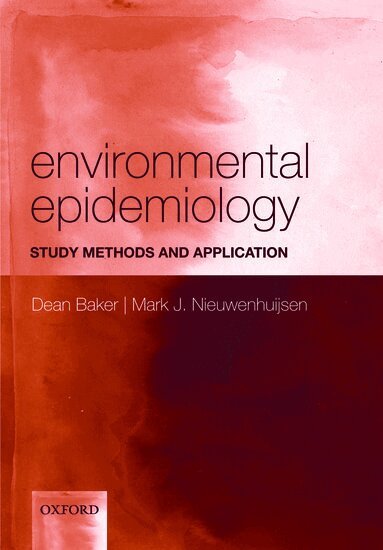
    Environmental Epidemiology

    Study methods and application

    AvDean Baker,Mark J Nieuwenhuijsen

    Häftad, Engelska, 2008

    1 697 kr

    Beställningsvara. Skickas inom 5-8 vardagar. Fri frakt över 249 kr.

    Beskrivning

    Air pollution, water contamination, persistent organic pollutants, pesticides, metals, and radiofrequencies are just some examples of environmental factors that have been linked to adverse health effects such as cancer, respiratory disease and reproductive problems. Environmental epidemiology studies the interaction of disease and these environmental determinants of disease at a population level. Whilst risks associated with environmental exposures are generally small, the exposed population, and hence the population burden of disease, may be large. To detect these small risks, it is therefore essential that related methods and their application are refined. In addition, there is increasing attention on environmental health issues from the public, government, and media, thus raising the profile of envrionmental epidemiology in preventive medicine. This book describes the methods of environmental epidemiology, with emphasis on good practice. It outlines the basic principles of epidemiology and environmental health, and describes in more detail special environmental epidemiological designs that are rarely described in other textbooks. The principles of health risk assessment and forecasting, as well as the application of study data in these types of study, are explored. Several chapters cover practical issues in the conduct of studies, such as field work and data analyses and its requirements. Ethical issues and the role of environmental epidemiology in policy making are also covered.

    Produktinformation

    • Utgivningsdatum:2008-06-05
    • Mått:172 x 247 x 21 mm
    • Vikt:694 g
    • Format:Häftad
    • Språk:Engelska
    • Antal sidor:416
    • Förlag:OUP OXFORD
    • ISBN:9780198527923

    Utforska kategorier

    • Regional planering inom Naturvetenskap och teknik
    • Folkhälsa och hälsopedagogik inom Medicin
    • Epidemiologi och medicinsk statistik inom Medicin

    Mer om författaren

    Dean Baker has more than 25 years of research experience in occupational and environmental epidemiology. The primary emphasis of his research has been on community-based epidemiological studies. During the past several years, he has focused on developmental toxicity and children's environmental health. He has conducted several epidemiological research studies examining chronic health effects of gestational and early childhood exposure to heavy metals and organochlorine chemicals. His other area of research has been on the health effects of psychosocial stressors in the workplace and in communities exposed to environmental hazards. In both of these areas, Dr. Baker has made contributions to the epidemiological study design and methods. He was elected 3 times as Secretary-Treasurer of the International Society for Environmental Epidemiology, and was a founding member. He is an active teacher at the university, directing an occupational medicine residency program and supervising graduate students.Mark J Nieuwenhuijsen has been involved in various environmental exposure assessment, epidemiology, and health risk assessment studies in the Netherlands, the UK, Eastern Europe and the US. His interests include the health effects of chlorination by-products in water, traffic related air pollution and metals, specifically in relation to reproductive, respiratory, renal and cancer effects. He has published over a hundred papers. He graduated from Wageningen University, the Netherlands, and went to do a PhD at the National Heart and Lung Institute in London, UK. For his post doc he went to the University of California, Davis, USA after which he took up a faculty position at Imperial College London, UK. In January 2007 he joined the Center for Research in Environmental Epidemiology (CREAL) in Barcelona, Spain as a Research Professor. He is associate editor on the journals 'Occupational and Environmental Medicine' and the 'Journal of Exposure Science and Environmental Epidemiology'.

    Recensioner i media

    ...this book provides a solid grounding for intermediate- to advanced-level training in environmental science, epidemiology and public health.

    Innehållsförteckning

    • 1. What is environmental epidemiology? ; 2. Review of basic environmental health and epidemiological principles ; 3. Environmental exposure assessment ; 4. Health effects assessment ; 5. Measurement error: consequences and design issues ; 6. Study design and methods ; 7. Data analysis ; 8. Special study designs and analyses in environmental epidemiology ; 9. The epidemiology of chemical incidents and natural disasters ; 10. Environmental epidemiology in developing countries ; 11. Practical issues in study implementation ; 12. Stakeholder and participant involvement ; 13. Ethics and environmental epidemiology ; 14. Health risk assessment ; 15. Analyzing and forecasting the future effects of global environmental change ; 16. The role and limits of epidemiology in policy arguments