Mary W. Trucksess – författare
Visar alla böcker från författaren Mary W. Trucksess. Handla med fri frakt och snabb leverans.
6 produkter
6 produkter
Inbunden, Engelska, 2002
1 681 kr
Skickas inom 10-15 vardagar
Mycotoxins, from the Greek "mukes" referring to fungi or slime molds and toxin from the Latin "toxicum" referencing a poison for arrows, have earned their reputation for being potentially deleterious to the health and well being of a consuming organism, whether it be animal or human. Unfortunately, mycotoxins are a ubiquitous factor in the natural life cycle of food producing plants. As such, control of the potential impact of mycotoxins on food safety relies heavily upon accurate analysis and surveys followed by commodity segregation and restricted use or decontamination through processing. The purpose of this book is to provide the most comprehensive and current information on the topic of mycotoxins and assuring food safety. Chapters represented in the book reflect such diverse topics ranging from occurrence and impact, analysis, reduction through processing and plant breeding, toxicology and safety assessments to regulatory perspectives. Authors represent a range of international perspectives.
Inbunden, Engelska, 2000
1 124 kr
Skickas inom 10-15 vardagar
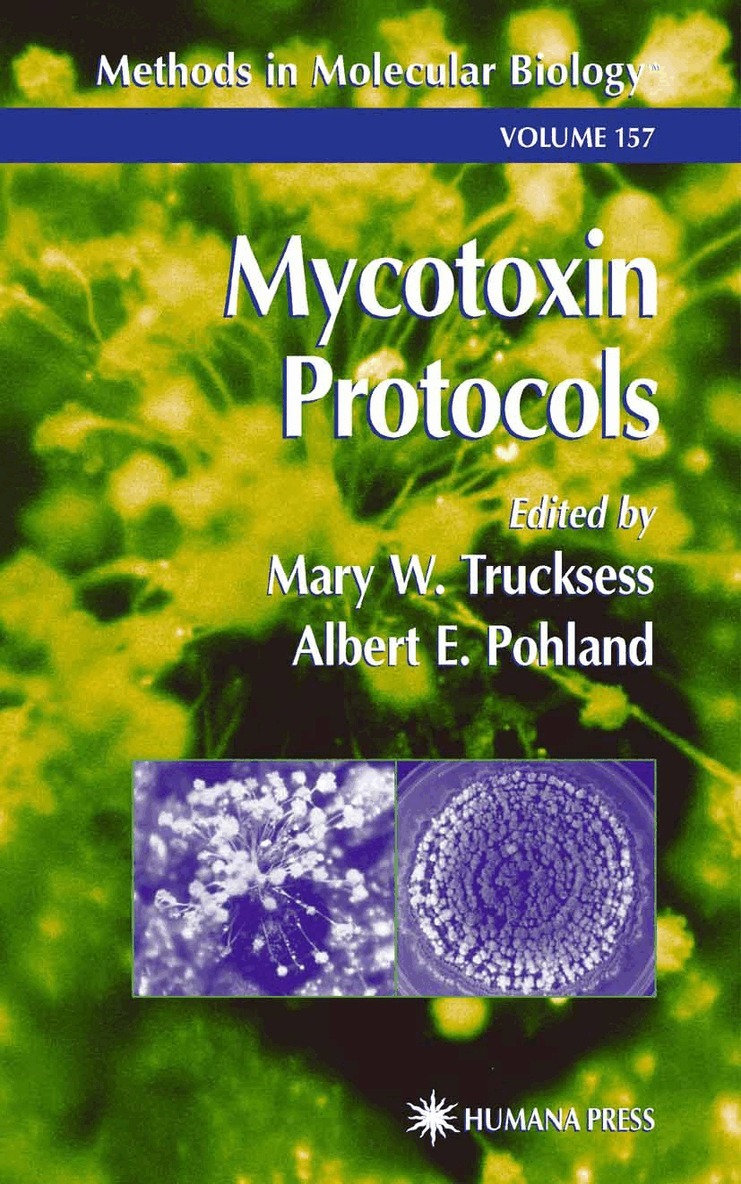
Mycotoxins produced by molds are common contaminants of many important crops, including wheat, corn, rice, and peanuts. Some mycotoxins are found in fruits and vegetables. These contaminants have a broad range of toxic effects, including carcinogenicity, neurotoxicity, and reproductive and developmental toxicity. The occurrence of mycotoxins in foods is an unavoidable worldwide problem. About 80 countries have imposed regulatory limits to minimize human and animal exposure to mycotoxins. Regulatory limits, including international standards, have tremendous economic impact and must be developed using science-based risk assessments. The purpose of Mycotoxin Protocols is to provide the scientific and technological basis for analytical methods for use in obtaining the exposure data needed for risk assessments. Mycotoxin Protocols is divided into four sections, which are interc- nected. The first section: Chapters 1–5 describe the general techniques for mycotoxin analysis with emphasis on the importance of method validation based on statistical parameters; sampling procedures for collecting a sample as representative as possible of a bulk lot; the isolation of mycotoxins for use as analytical standards or for toxicological studies; the evaluation of purity and preparation of standards; and the detection and identification of impu- ties in isolated mycotoxins. Sections 2–4: Chapters 6–19 describe the most current chromatographic and immunochemical methods for studies on the major mycotoxins.
Häftad, Engelska, 2012
1 681 kr
Skickas inom 10-15 vardagar
Mycotoxins, from the Greek "mukes" referring to fungi or slime molds and toxin from the Latin "toxicum" referencing a poison for arrows, have earned their reputation for being potentially deleterious to the health and well being of a consuming organism, whether it be animal or human. Unfortunately, mycotoxins are a ubiquitous factor in the natural life cycle of food producing plants. As such, control of the potential impact of mycotoxins on food safety relies heavily upon accurate analysis and surveys followed by commodity segregation and restricted use or decontamination through processing. The purpose of this book is to provide the most comprehensive and current information on the topic of mycotoxins and assuring food safety. Chapters represented in the book reflect such diverse topics ranging from occurrence and impact, analysis, reduction through processing and plant breeding, toxicology and safety assessments to regulatory perspectives. Authors represent a range of international perspectives.
E-bok
PDF, Engelska, 20122 036 kr
Läs direkt efter köp
Mycotoxins, from the Greek "mukes" referring to fungi or slime molds and toxin from the Latin "toxicum" referencing a poison for arrows, have earned their reputation for being potentially deleterious to the health and well being of a consuming organism, whether it be animal or human. Unfortunately, mycotoxins are a ubiquitous factor in the natural life cycle of food producing plants. As such, control of the potential impact of mycotoxins on food safety relies heavily upon accurate analysis and surveys followed by commodity segregation and restricted use or decontamination through processing. The purpose of this book is to provide the most comprehensive and current information on the topic of mycotoxins and assuring food safety. Chapters represented in the book reflect such diverse topics ranging from occurrence and impact, analysis, reduction through processing and plant breeding, toxicology and safety assessments to regulatory perspectives. Authors represent a range of international perspectives.
Häftad, Engelska, 2013
1 124 kr
Skickas inom 10-15 vardagar
Mycotoxins produced by molds are common contaminants of many important crops, including wheat, corn, rice, and peanuts. Some mycotoxins are found in fruits and vegetables. These contaminants have a broad range of toxic effects, including carcinogenicity, neurotoxicity, and reproductive and developmental toxicity. The occurrence of mycotoxins in foods is an unavoidable worldwide problem. About 80 countries have imposed regulatory limits to minimize human and animal exposure to mycotoxins. Regulatory limits, including international standards, have tremendous economic impact and must be developed using science-based risk assessments. The purpose of Mycotoxin Protocols is to provide the scientific and technological basis for analytical methods for use in obtaining the exposure data needed for risk assessments. Mycotoxin Protocols is divided into four sections, which are interc- nected. The first section: Chapters 1–5 describe the general techniques for mycotoxin analysis with emphasis on the importance of method validation based on statistical parameters; sampling procedures for collecting a sample as representative as possible of a bulk lot; the isolation of mycotoxins for use as analytical standards or for toxicological studies; the evaluation of purity and preparation of standards; and the detection and identification of impu- ties in isolated mycotoxins. Sections 2–4: Chapters 6–19 describe the most current chromatographic and immunochemical methods for studies on the major mycotoxins.
E-bok
Engelska, 20081 408 kr
Läs direkt efter köp
Mycotoxins produced by molds are common contaminants of many important crops, including wheat, corn, rice, and peanuts. Some mycotoxins are found in fruits and vegetables. These contaminants have a broad range of toxic effects, including carcinogenicity, neurotoxicity, and reproductive and developmental toxicity. The occurrence of mycotoxins in foods is an unavoidable worldwide problem. About 80 countries have imposed regulatory limits to minimize human and animal exposure to mycotoxins. Regulatory limits, including international standards, have tremendous economic impact and must be developed using science-based risk assessments. The purpose of Mycotoxin Protocols is to provide the scientific and technological basis for analytical methods for use in obtaining the exposure data needed for risk assessments. Mycotoxin Protocols is divided into four sections, which are interc- nected. The first section: Chapters 1–5 describe the general techniques for mycotoxin analysis with emphasis on the importance of method validation based on statistical parameters; sampling procedures for collecting a sample as representative as possible of a bulk lot; the isolation of mycotoxins for use as analytical standards or for toxicological studies; the evaluation of purity and preparation of standards; and the detection and identification of impu- ties in isolated mycotoxins. Sections 2–4: Chapters 6–19 describe the most current chromatographic and immunochemical methods for studies on the major mycotoxins.