Mason Crane – författare
Visar alla böcker från författaren Mason Crane. Handla med fri frakt och snabb leverans.
7 produkter
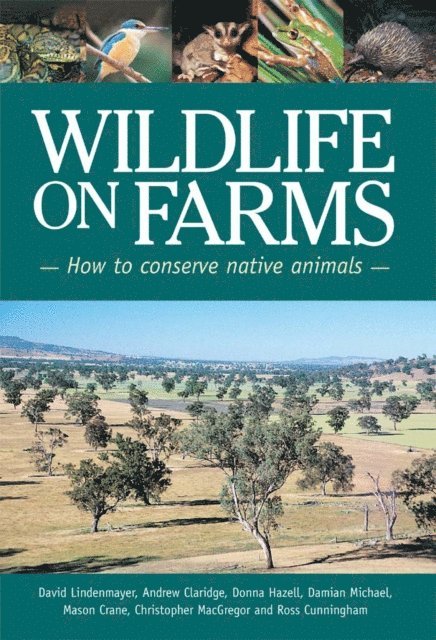
Wildlife on Farms
How to Conserve Native Animals
Av Ross Cunningham, Christopher MacGregor m. fl.
E-bok, 2003
321 kr
Lägg i varukorg
Many landowners are interested in the native animals that live on their farms or once occurred there. In particular they want to know why particular species are present (or absent), what they can do to encourage them to visit, and what they might do to keep them there.Wildlife on Farms outlines the …
Wildlife on Farms
How to Conserve Native Animals
Av Ross Cunningham, Christopher MacGregor m. fl.
E-bok, 2003
321 kr
Lägg i varukorg
Many landowners are interested in the native animals that live on their farms or once occurred there. In particular they want to know why particular species are present (or absent), what they can do to encourage them to visit, and what they might do to keep them there. Wildlife on Farms outlines …
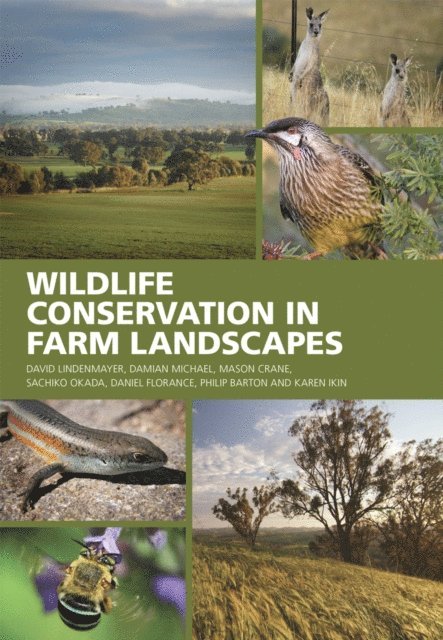
Wildlife Conservation in Farm Landscapes
Av David Lindenmayer, Damian Michael m. fl.
Häftad, 2016
419 kr
Lägg i varukorg
Wildlife Conservation in Farm Landscapes
Av Karen Ikin, Philip Barton m. fl.
E-bok, 2016
396 kr
Lägg i varukorg
An increasing number of Australians want to be assured that the food and fibre being produced on this continent have been grown and harvested in an ecologically sustainable way. Ecologically sustainable farming conserves the array of species that are integral to key ecological processes such as …
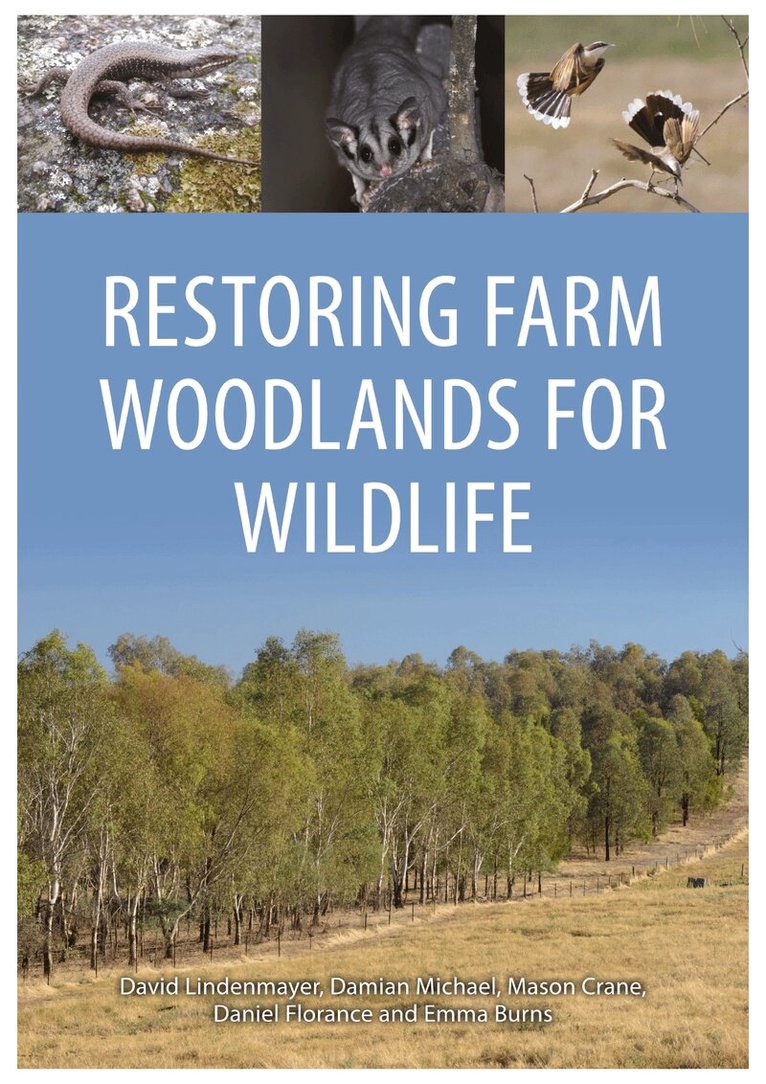
Restoring Farm Woodlands for Wildlife
Av David Lindenmayer, Damian Michael m. fl.
Häftad, 2018
328 kr
Lägg i varukorg
Restoring Farm Woodlands for Wildlife
Av Emma Burns, Daniel Florance m. fl.
E-bok, 2018
412 kr
Lägg i varukorg
Millions of hectares of temperate woodland and billions of trees have been cleared from Australia’s agricultural landscapes. This has allowed land to be developed for cropping and grazing livestock but has also had significant environmental impacts, including erosion, salinity and loss of native …
Restoring Farm Woodlands for Wildlife
Av Emma Burns, Daniel Florance m. fl.
E-bok, 2018
403 kr
Lägg i varukorg
Millions of hectares of temperate woodland and billions of trees have been cleared from Australia’s agricultural landscapes. This has allowed land to be developed for cropping and grazing livestock but has also had significant environmental impacts, including erosion, salinity and loss of native …