Massimo Buscema - Böcker
Visar alla böcker från författaren Massimo Buscema. Handla med fri frakt och snabb leverans.
7 produkter
7 produkter
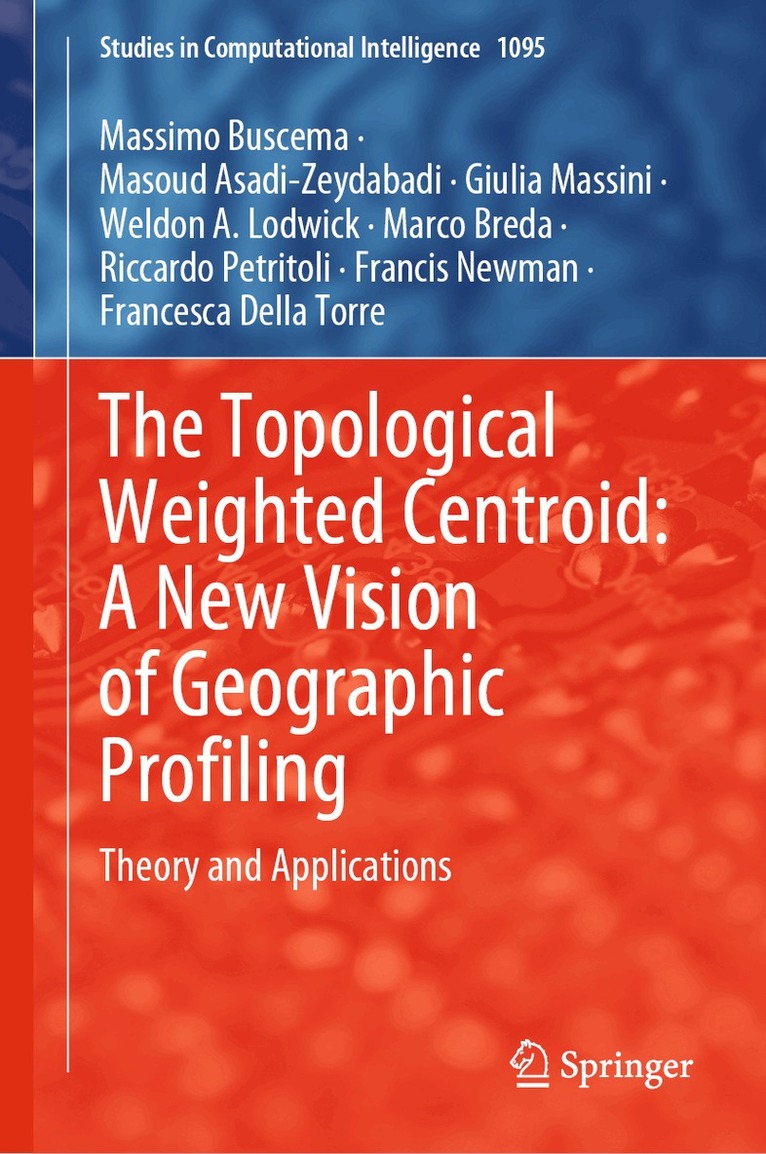
Topological Weighted Centroid: A New Vision of Geographic Profiling
Theory and Applications
Inbunden, Engelska, 2023
1 786 kr
Skickas inom 10-15 vardagar
This book introduces the Topological Weighed Centroid approach and describes some applications in the study of the dynamics of various spatial phenomena with a special emphasis on the spatial analysis of the relationship, influence, and dynamics of geographical phenomena.
The Topological Weighted Centroid: A New Vision of Geographic Profiling : Theory and Applications
Engelska, 2023
634 kr
Skickas inom 5-8 vardagar
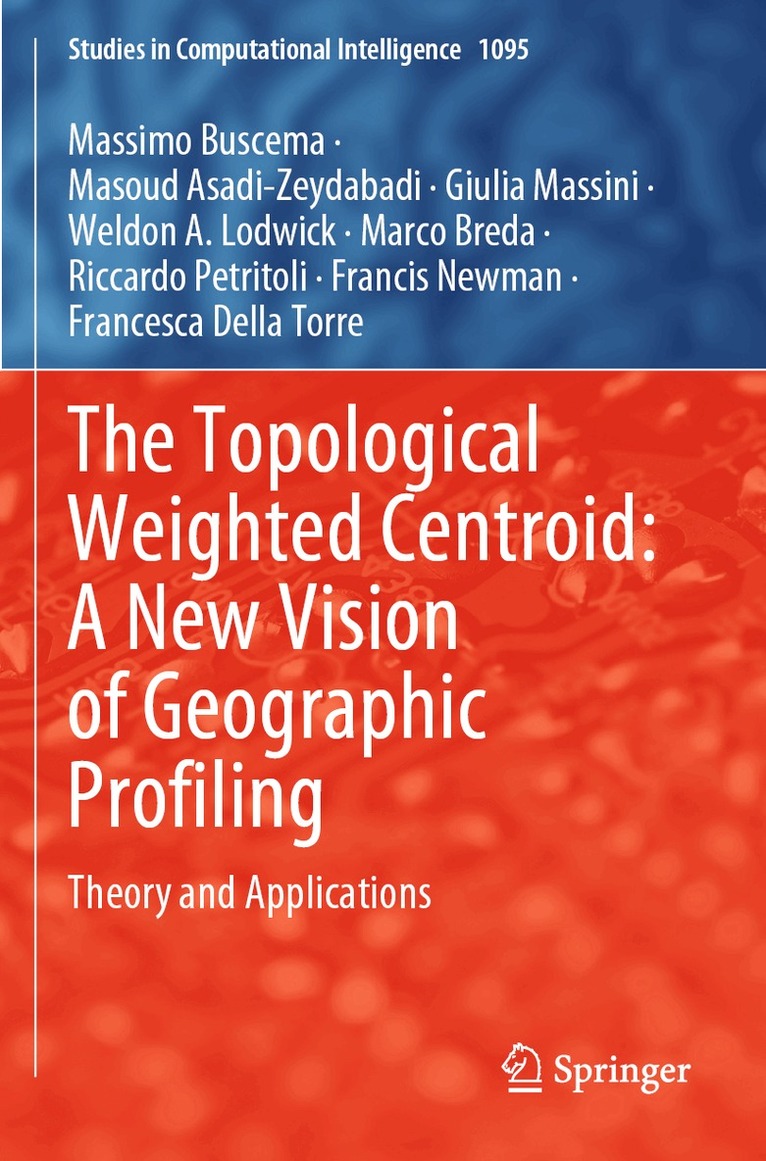
Topological Weighted Centroid: A New Vision of Geographic Profiling
Theory and Applications
Häftad, Engelska, 2024
1 786 kr
Skickas inom 10-15 vardagar
This book introduces the Topological Weighed Centroid approach and describes some applications in the study of the dynamics of various spatial phenomena with a special emphasis on the spatial analysis of the relationship, influence, and dynamics of geographical phenomena.
712 kr
Skickas inom 10-15 vardagar
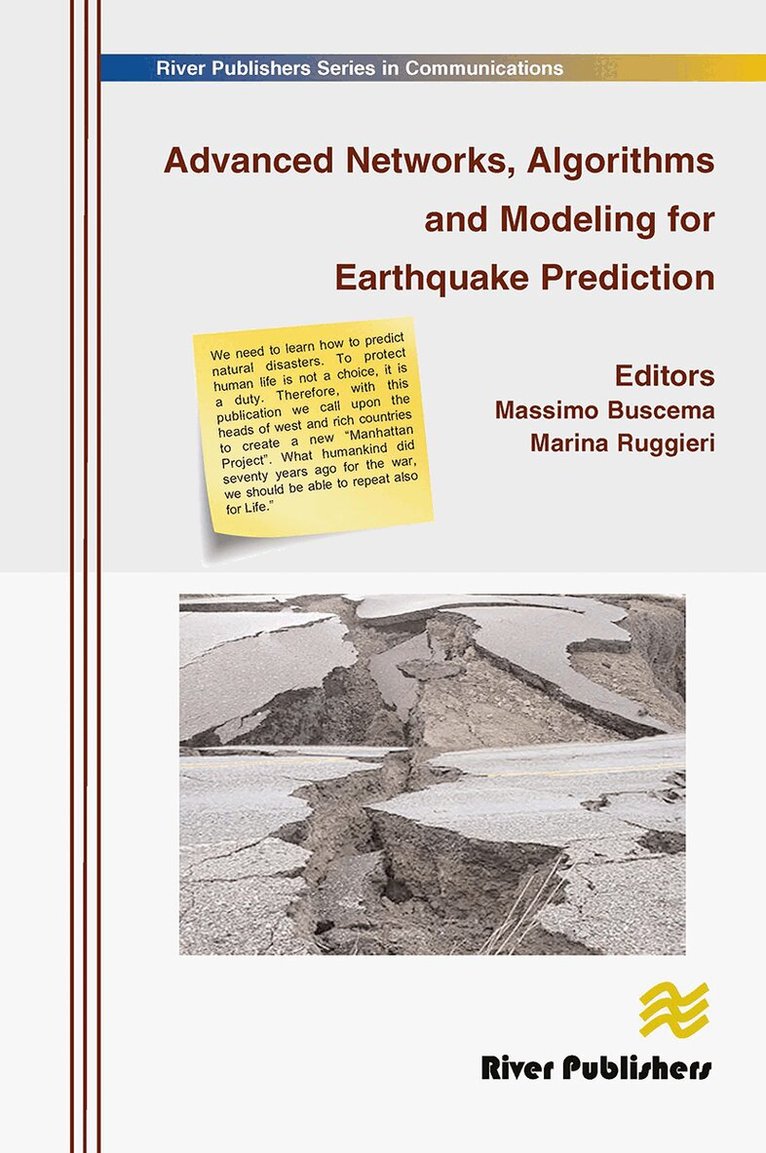
Imagination depicts earthquakes as a mysterious and magic matter. However, as scientists and technical, we do have to consider them also form a different perspective: they are natural phenomena that evolve with time and depend on a number of variables.Their modeling can help us to reply to the simplest and ? at the same time ? the most complex question: are earthquakes predictable?In case the answer is affirmative, what could be the role of the extremely mature Information and Communication Technology (ICT) in setting up an effective prediction process? How artificial Intelligence Algorithms can contribute to the picture?The book presents our vision about the above matter. The book is organized in three parts. Part 1 frames the possible use of ICT and Artificial Intelligence in dealing with earthquake-related Disaster Ahead management (DAM). Part 2 presents modeling tools for the earthquake issue and proposes possible ICT tools for supporting the earthquake DAM. Part 3 presents and experimental network for earthquake DAM based on communications and navigation (GNSS) tools.
1 686 kr
Skickas inom 10-15 vardagar
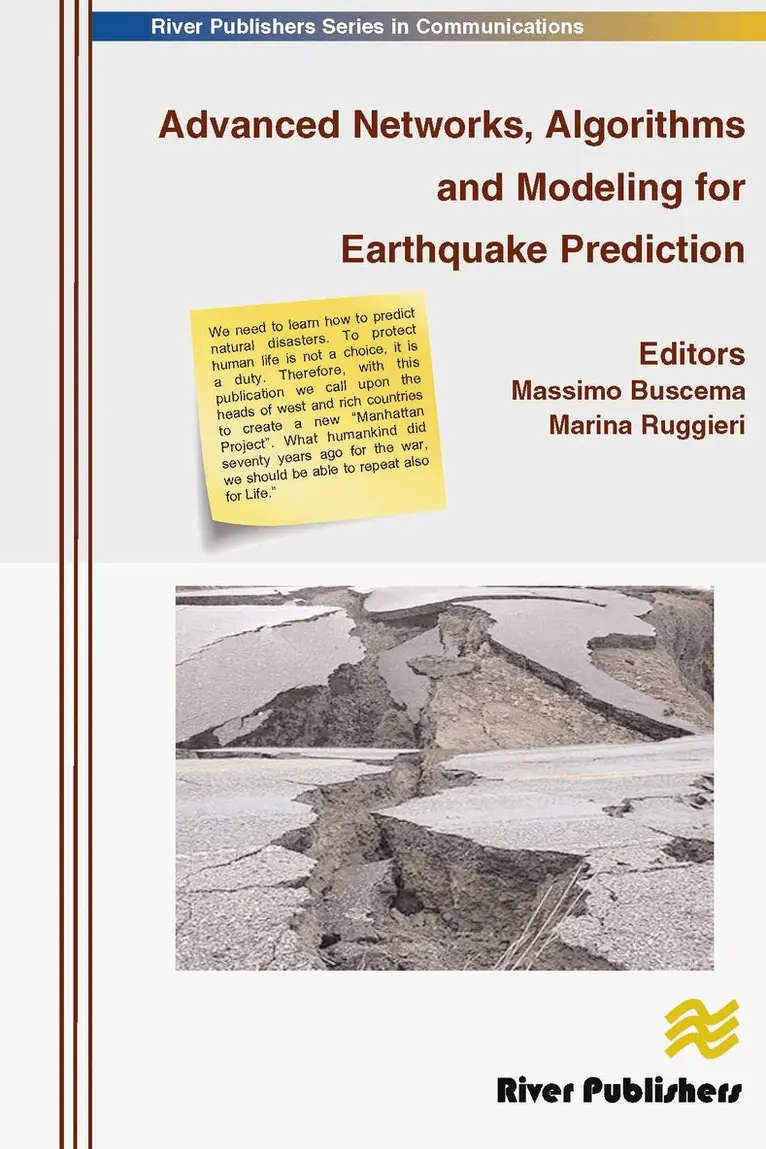
Imagination depicts earthquakes as a mysterious and magic matter. However, as scientists and technical, we do have to consider them also form a different perspective: they are natural phenomena that evolve with time and depend on a number of variables.Their modeling can help us to reply to the simplest and ? at the same time ? the most complex question: are earthquakes predictable?In case the answer is affirmative, what could be the role of the extremely mature Information and Communication Technology (ICT) in setting up an effective prediction process? How artificial Intelligence Algorithms can contribute to the picture?The book presents our vision about the above matter. The book is organized in three parts. Part 1 frames the possible use of ICT and Artificial Intelligence in dealing with earthquake-related Disaster Ahead management (DAM). Part 2 presents modeling tools for the earthquake issue and proposes possible ICT tools for supporting the earthquake DAM. Part 3 presents and experimental network for earthquake DAM based on communications and navigation (GNSS) tools.
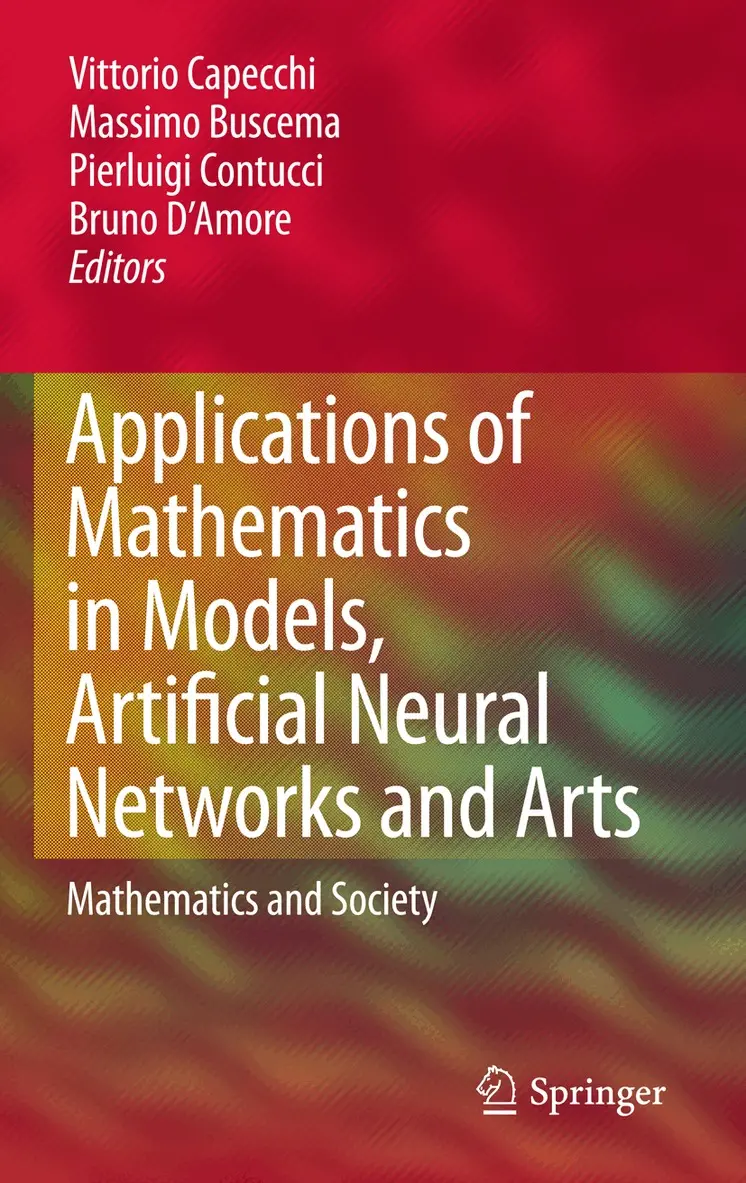
Applications of Mathematics in Models, Artificial Neural Networks and Arts
Mathematics and Society
Inbunden, Engelska, 2010
2 100 kr
Skickas inom 10-15 vardagar
The book shows a very original organization addressing in a non traditional way, but with a systematic approach, to who has an interest in using mathematics in the social sciences.The book is divided in four parts: (a) a historical part, written by Vittorio Capecchi which helps us understand the changes in the relationship between mathematics and sociology by analyzing the mathematical models of Paul F. Lazarsfeld, the model of simulation and artificial societies, models of artificial neural network and considering all the changes in scientific paradigms considered; (b) a part coordinated by Pier Luigi Contucci on mathematical models that consider the relationship between the mathematical models that come from physics and linguistics to arrive at the study of society and those which are born within sociology and economics; (c) a part coordinated by Massimo Buscema analyzing models of artificial neural networks; (d) a part coordinated by Bruno D’Amore which considers the relationship between mathematics and art.The title of the book "Mathematics and Society" was chosen because the mathematical applications exposed in the book allow you to address two major issues: (a) the general theme of technological innovation and quality of life (among the essays are on display mathematical applications to the problems of combating pollution and crime, applications to mathematical problems of immigration, mathematical applications to the problems of medical diagnosis, etc.) (b) the general theme of technical innovation and creativity, for example the art and mathematics section which connects to the theme of creative cities.The book is very original because it is not addressed only to those who are passionate about mathematical applications in social science but also to those who, in different societies, are: (a) involved in technological innovation to improve the quality of life; (b) involved in the wider distribution of technologicalinnovation in different areas of creativity (as in the project "Creative Cities Network" of UNESCO).
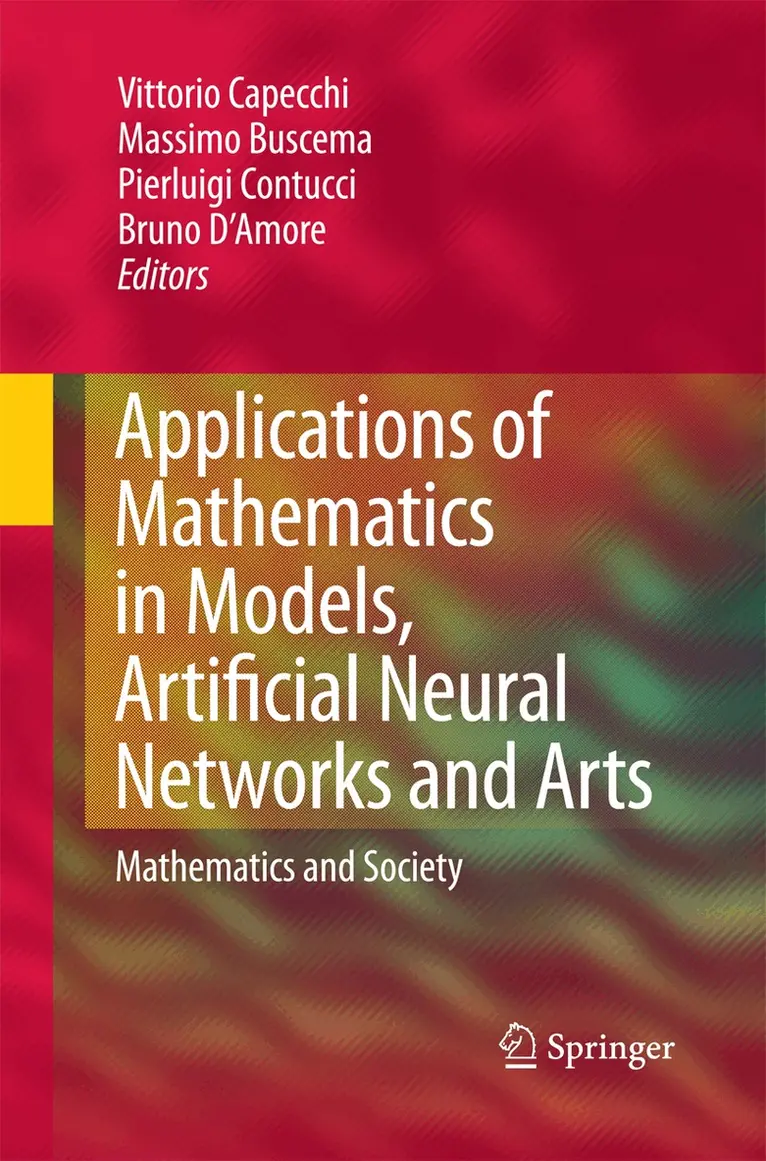
Applications of Mathematics in Models, Artificial Neural Networks and Arts
Mathematics and Society
Häftad, Engelska, 2014
2 163 kr
Skickas inom 10-15 vardagar
The book shows a very original organization addressing in a non traditional way, but with a systematic approach, to who has an interest in using mathematics in the social sciences.The book is divided in four parts: (a) a historical part, written by Vittorio Capecchi which helps us understand the changes in the relationship between mathematics and sociology by analyzing the mathematical models of Paul F. Lazarsfeld, the model of simulation and artificial societies, models of artificial neural network and considering all the changes in scientific paradigms considered; (b) a part coordinated by Pier Luigi Contucci on mathematical models that consider the relationship between the mathematical models that come from physics and linguistics to arrive at the study of society and those which are born within sociology and economics; (c) a part coordinated by Massimo Buscema analyzing models of artificial neural networks; (d) a part coordinated by Bruno D’Amore which considers the relationship between mathematics and art.The title of the book "Mathematics and Society" was chosen because the mathematical applications exposed in the book allow you to address two major issues: (a) the general theme of technological innovation and quality of life (among the essays are on display mathematical applications to the problems of combating pollution and crime, applications to mathematical problems of immigration, mathematical applications to the problems of medical diagnosis, etc.) (b) the general theme of technical innovation and creativity, for example the art and mathematics section which connects to the theme of creative cities.The book is very original because it is not addressed only to those who are passionate about mathematical applications in social science but also to those who, in different societies, are: (a) involved in technological innovation to improve the quality of life; (b) involved in the wider distribution of technologicalinnovation in different areas of creativity (as in the project "Creative Cities Network" of UNESCO).