Matin Qaim - Böcker
Visar alla böcker från författaren Matin Qaim. Handla med fri frakt och snabb leverans.
3 produkter
3 produkter
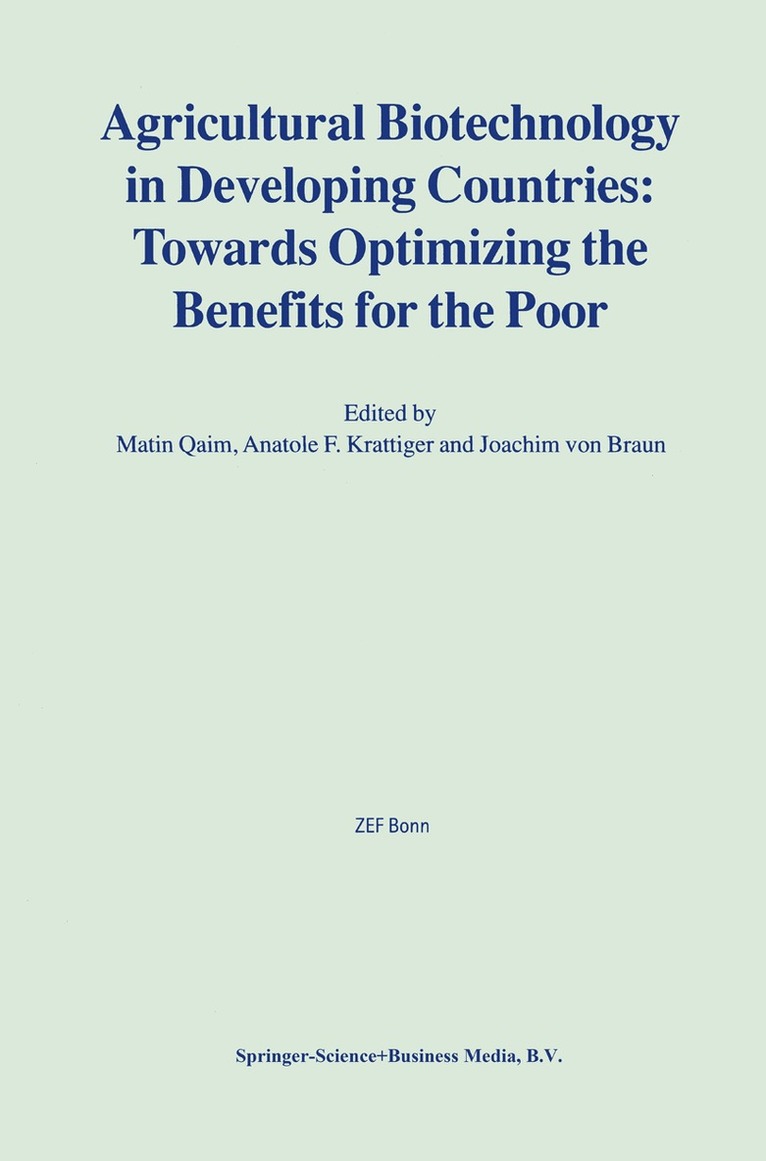
Agricultural Biotechnology in Developing Countries
Towards Optimizing the Benefits for the Poor
Inbunden, Engelska, 2000
1 578 kr
Skickas inom 10-15 vardagar
Biotechnology offers great potential to contribute to sustainable agricultural growth, food security and poverty alleviation in developing countries. Yet there are economic and institutional constraints at national and international levels that inhibit poor people's access to appropriate biotechnological innovations. This volume addresses the major constraints. Its 23 chapters, written by a wide range of scholars and stake-holders, provide an up-to-date analysis of agricultural biotechnology developments in Latin America, Africa and Asia. Besides the expected economic and social impacts, the challenges for an adjustment of the international research structure are discussed, with a special focus on intellectual property rights and the roles of the main research organizations. Harnessing the comparative advantages of the public and private sectors through innovative partnerships is the only way forward to optimize the benefits of biotechnology for the poor.
271 kr
Skickas inom 10-15 vardagar
This book analyzes the impacts of current and possible future GM crop applications and shows that these technologies can contribute substantially to sustainable agricultural development and food security.
Agricultural Biotechnology in Developing Countries
Towards Optimizing the Benefits for the Poor
Häftad, Engelska, 2010
1 578 kr
Skickas inom 10-15 vardagar
Biotechnology offers great potential to contribute to sustainable agricultural growth, food security and poverty alleviation in developing countries. Yet there are economic and institutional constraints at national and international levels that inhibit the poor people's access to appropriate biotechnological innovations. Agricultural Biotechnology in Developing Countries: Towards Optimizing the Benefits for the Poor addresses the major constraints. Twenty-three chapters, written by a wide range of scholars and stake-holders, provide an up-to-date analysis of agricultural biotechnology developments in Latin America, Africa and Asia. Besides the expected economic and social impacts, the challenges for an adjustment of the international research structure are discussed, with a special focus on intellectual property rights and the roles of the main research organizations. Harnessing the comparative advantages of the public and private sectors through innovative partnerships is the only way forward to optimize the benefits of biotechnology for the poor.The book will be an invaluable resource for both academics and policy-makers concerned with agricultural biotechnology in context of developing-countries.