Matthias Fritsch - Böcker
Visar alla böcker från författaren Matthias Fritsch. Handla med fri frakt och snabb leverans.
9 produkter
9 produkter
989 kr
Skickas inom 7-10 vardagar
Argues for a closer connection between memories of injustice and promises of justice as a means to overcome violence.Rereading Marx through Walter Benjamin and Jacques Derrida, The Promise of Memory attempts to establish a philosophy of liberation. Matthias Fritsch explores how memories of injustice relate to the promises of justice that democratic societies have inherited from the Enlightenment. Focusing on the Marxist promise for a classless society, since it contains a political promise whose institutionalization led to totalitarian outcomes, Fritsch argues that both memories and promises, if taken by themselves, are one-sided and potentially justify violence if they do not reflect on the implicit relation between them. He examines Benjamin's reinterpretation of Marxism after the disappointment of the Russian and German revolutions and Derrida's "messianic" inheritance of Marx after the breakdown of the Soviet Union. The book also contributes to contemporary political philosophy by relating Marxist social goals and German critical theory to debates about deconstructive ethics and politics.
382 kr
Tillfälligt slut
Argues for a closer connection between memories of injustice and promises of justice as a means to overcome violence.Rereading Marx through Walter Benjamin and Jacques Derrida, The Promise of Memory attempts to establish a philosophy of liberation. Matthias Fritsch explores how memories of injustice relate to the promises of justice that democratic societies have inherited from the Enlightenment. Focusing on the Marxist promise for a classless society, since it contains a political promise whose institutionalization led to totalitarian outcomes, Fritsch argues that both memories and promises, if taken by themselves, are one-sided and potentially justify violence if they do not reflect on the implicit relation between them. He examines Benjamin's reinterpretation of Marxism after the disappointment of the Russian and German revolutions and Derrida's "messianic" inheritance of Marx after the breakdown of the Soviet Union. The book also contributes to contemporary political philosophy by relating Marxist social goals and German critical theory to debates about deconstructive ethics and politics.
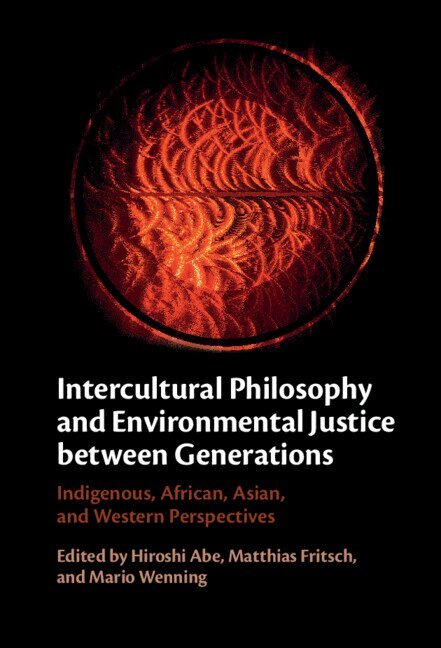
Intercultural Philosophy and Environmental Justice between Generations
Indigenous, African, Asian, and Western Perspectives
Inbunden, Engelska, 2024
1 258 kr
Skickas inom 7-10 vardagar
This anthology combines an intercultural approach with intergenerational ethics to address critical environmental challenges. Written by scholars from all over the world, including Canada, the US, New Zealand, Nigeria, Ethiopia, Japan, the UK, China, and Spain, this book offers new perspectives on how to foster sustainable societal practises that draw on the past and are fair to future generations. It introduces the Māori idea that views all things and human generations in layered relations; Indigenous accounts of spiralling time and reciprocities among ancestors and descendants; the philosophical dimensions of Chinese conceptions of ancestor spirits and future ghosts; and African accounts of anamnestic solidarity among generations. These ideas influence proposals for how to confront ending worlds and address the environmental future of humanity, making this book a valuable resource for scholars and students of environmental law and policy, environmental humanities, political science, and intercultural and comparative philosophy, as well as policymakers.
2 088 kr
Skickas inom 10-15 vardagar
This book explores the contributions of East Asian traditions, particularly Buddhism and Daoism, to environmental philosophy in dialogue with European philosophy. It critically examines the conceptions of human responsibility toward nature and across time presented within these traditions.The volume rethinks human relationships to the natural world by focusing on three main themes: Daoist and Eurodaoist perspectives on nature, human responsibility toward nature, and Buddhist perspectives on life and nature. By way of discussing East Asian traditions and European thinkers, this collection reveals that the impact of humanity on the environment is shaped not only by distinctive modes of economic production, but also by cultural beliefs and practices. Representing a unique constellation of environmental and intercultural philosophy, the contributions present systematic approaches to the global need for cultivating environmental responsibility across cultures and generations to address the political, ethical, and aesthetic challenges arising from humanity’s transformative impact on the natural world.Presenting a critical re-evaluation of human relationships to the natural world in dialogue with East Asian traditions, this will be a valuable resource for students and scholars of Philosophy, Environmental Studies and Asian Studies.
617 kr
Skickas inom 10-15 vardagar
This book explores the contributions of East Asian traditions, particularly Buddhism and Daoism, to environmental philosophy in dialogue with European philosophy. It critically examines the conceptions of human responsibility toward nature and across time presented within these traditions.The volume rethinks human relationships to the natural world by focusing on three main themes: Daoist and Eurodaoist perspectives on nature, human responsibility toward nature, and Buddhist perspectives on life and nature. By way of discussing East Asian traditions and European thinkers, this collection reveals that the impact of humanity on the environment is shaped not only by distinctive modes of economic production, but also by cultural beliefs and practices. Representing a unique constellation of environmental and intercultural philosophy, the contributions present systematic approaches to the global need for cultivating environmental responsibility across cultures and generations to address the political, ethical, and aesthetic challenges arising from humanity’s transformative impact on the natural world.Presenting a critical re-evaluation of human relationships to the natural world in dialogue with East Asian traditions, this will be a valuable resource for students and scholars of Philosophy, Environmental Studies and Asian Studies.
1 456 kr
Skickas inom 3-6 vardagar
Demonstrates the fertility of the phenomenological tradition of philosophy for intergenerational justice and climate ethics.In the face of widespread environmental and social destabilization and growing uncertainty about the future of humanity, this collection of essays brings the philosophical tradition of phenomenology to the question of relations between generations to examine our ethical, political, and environmental obligations to future people. Emphasizing phenomenology's rich reflections on the role of time in the constitution of the social-historical world and its relation to the environment, the essays interweave the central themes of mortality, natality, generativity, and amor mundi to build vital bridges between new developments in both eco- and critical phenomenology and important work in intergenerational ethics. Together, the chapters reevaluate the traditional scope and foundational concepts of environmental ethics and social justice, paving the way for a revised understanding of intergenerational responsibilities, culminating in the key insight that future people are of us. The result is an invaluable conceptual toolkit for phenomenologists, ethicists, theorists, students, and activists concerned with environmental justice and climate ethics.
361 kr
Skickas
Demonstrates the fertility of the phenomenological tradition of philosophy for intergenerational justice and climate ethics.In the face of widespread environmental and social destabilization and growing uncertainty about the future of humanity, this collection of essays brings the philosophical tradition of phenomenology to the question of relations between generations to examine our ethical, political, and environmental obligations to future people. Emphasizing phenomenology's rich reflections on the role of time in the constitution of the social-historical world and its relation to the environment, the essays interweave the central themes of mortality, natality, generativity, and amor mundi to build vital bridges between new developments in both eco- and critical phenomenology and important work in intergenerational ethics. Together, the chapters reevaluate the traditional scope and foundational concepts of environmental ethics and social justice, paving the way for a revised understanding of intergenerational responsibilities, culminating in the key insight that future people are of us. The result is an invaluable conceptual toolkit for phenomenologists, ethicists, theorists, students, and activists concerned with environmental justice and climate ethics.
Taking Turns with the Earth
Phenomenology, Deconstruction, and Intergenerational Justice
Inbunden, Engelska, 2018
1 269 kr
Skickas inom 7-10 vardagar
The environmental crisis, one of the great challenges of our time, tends to disenfranchise those who come after us. Arguing that as temporary inhabitants of the earth, we cannot be indifferent to future generations, this book draws on the resources of phenomenology and poststructuralism to help us conceive of moral relations in connection with human temporality. Demonstrating that moral and political normativity emerge with generational time, the time of birth and death, this book proposes two related models of intergenerational and environmental justice. The first entails a form of indirect reciprocity, in which we owe future people both because of their needs and interests and because we ourselves have been the beneficiaries of peoples past; the second posits a generational taking of turns that Matthias Fritsch applies to both our institutions and our natural environment, in other words, to the earth as a whole. Offering new readings of key philosophers, and emphasizing the work of Emmanuel Levinas and Jacques Derrida in particular, Taking Turns with the Earth disrupts human-centered notions of terrestrial appropriation and sharing to give us a new continental philosophical account of future-oriented justice.
Taking Turns with the Earth
Phenomenology, Deconstruction, and Intergenerational Justice
Häftad, Engelska, 2018
309 kr
Skickas inom 7-10 vardagar
The environmental crisis, one of the great challenges of our time, tends to disenfranchise those who come after us. Arguing that as temporary inhabitants of the earth, we cannot be indifferent to future generations, this book draws on the resources of phenomenology and poststructuralism to help us conceive of moral relations in connection with human temporality. Demonstrating that moral and political normativity emerge with generational time, the time of birth and death, this book proposes two related models of intergenerational and environmental justice. The first entails a form of indirect reciprocity, in which we owe future people both because of their needs and interests and because we ourselves have been the beneficiaries of peoples past; the second posits a generational taking of turns that Matthias Fritsch applies to both our institutions and our natural environment, in other words, to the earth as a whole. Offering new readings of key philosophers, and emphasizing the work of Emmanuel Levinas and Jacques Derrida in particular, Taking Turns with the Earth disrupts human-centered notions of terrestrial appropriation and sharing to give us a new continental philosophical account of future-oriented justice.