1 246 kr
Maurizio Ferraris – författare
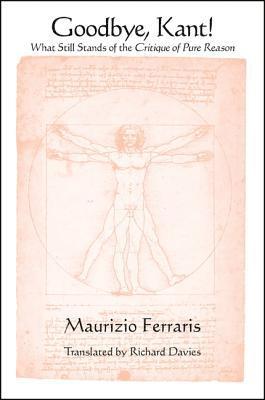
- Inbunden, Engelska, 2013A penetrating and freewheeling evaluation of Kant's magnum opus.A best seller in Italy, Maurizio Ferraris's Goodbye, Kant! delivers a nontechnical, entertaining, and occasionally irreverent overview of Immanuel Kant's Critique of Pure Reason. He borrows his title from Wolfgang Becker's Goodbye Lenin!, the 2003 film about East Germany after the fall of the Berlin Wall, which depicts both relief at the passing of the Soviet era and affection for the ideals it embodied. Ferraris approaches Kant in similar spirits, demonstrating how the structure that Kant elaborates for the understanding of human knowledge can generate nostalgia for lost aspirations, while still leaving room for constructive criticism. Isolating key themes and concerns in the work, Ferraris evaluates Kant's claims relative to what science and philosophy have come to regard as the conditions for knowledge and experience in the intervening two centuries. He remains attentive to the historical context and ideals from which Kant's Critique emerged but also resolute in identifying what he sees as the limits and blind spots in the work. The result is an accessible account of a notoriously difficult book that will both provoke experts and introduce students to the work and to these important philosophical debates about the relations of experience to science.
- Inbunden, Engelska, 2019
884 kr
Skickas inom 10-15 vardagar
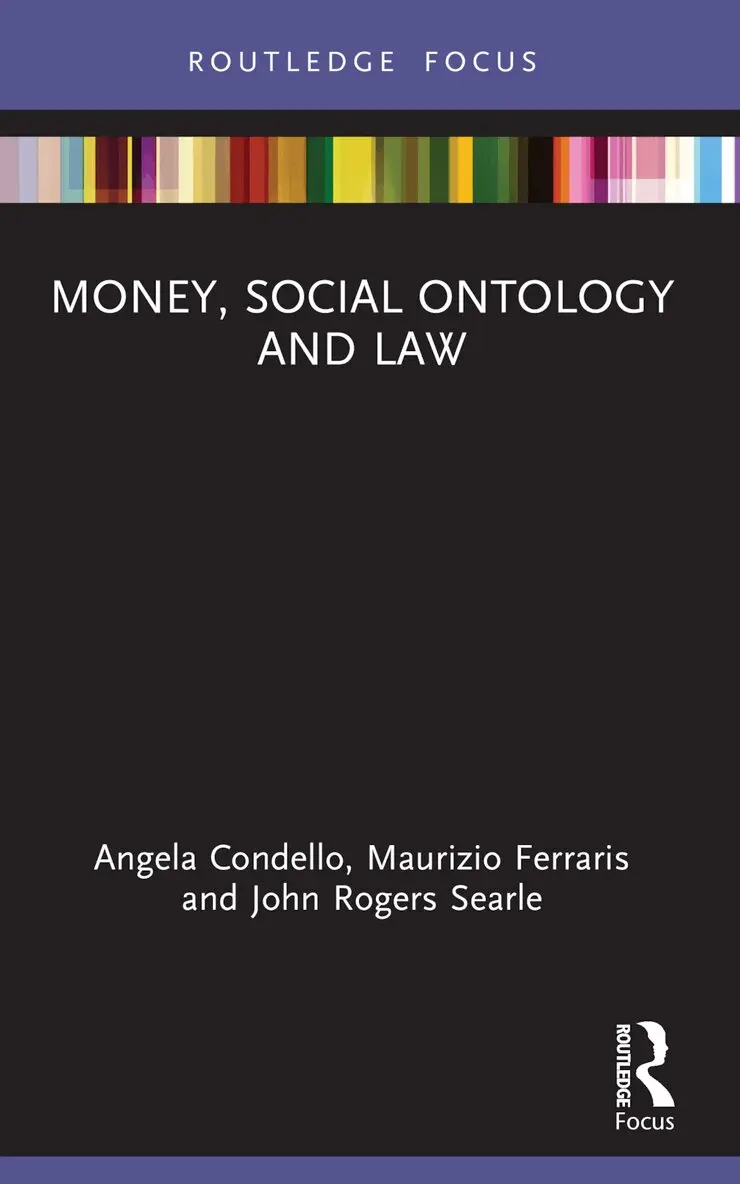
Presenting legal and philosophical essays on money, this book exploresthe conditions according to which an object like a piece of paper, or anelectronic signal, has come to be seen as having a value.Money plays a crucial role in the regulation of social relationships andtheir normative determination. It is thus integral to the very nature of the“social”, and the question of how society is kept together by a networkof agreements, conventions, exchanges, and codes. All of which mustbe traced down. The technologies of money discussed here by Searle,Ferraris, and Condello show how we conceive the category of the social atthe intersection of individual and collective intentionality, documentality,and materiality. All of these dimensions, as the introduction to this volumedemonstrates, are of vital importance for legal theory and for a whole set oflegal concepts that are crucial in reflections on the relationship between law,philosophy, and society. - Häftad, Engelska, 2020
342 kr
Skickas inom 10-15 vardagar
Presenting legal and philosophical essays on money, this book exploresthe conditions according to which an object like a piece of paper, or anelectronic signal, has come to be seen as having a value.Money plays a crucial role in the regulation of social relationships andtheir normative determination. It is thus integral to the very nature of the“social”, and the question of how society is kept together by a networkof agreements, conventions, exchanges, and codes. All of which mustbe traced down. The technologies of money discussed here by Searle,Ferraris, and Condello show how we conceive the category of the social atthe intersection of individual and collective intentionality, documentality,and materiality. All of these dimensions, as the introduction to this volumedemonstrates, are of vital importance for legal theory and for a whole set oflegal concepts that are crucial in reflections on the relationship between law,philosophy, and society. - E-bokEngelska, 2019
401 kr
Läs direkt efter köp
Presenting legal and philosophical essays on money, this book explores
the conditions according to which an object like a piece of paper, or an
electronic signal, has come to be seen as having a value.
Money plays a crucial role in the regulation of social relationships and
their normative determination. It is thus integral to the very nature of the
“socialâ€, and the question of how society is kept together by a network
of agreements, conventions, exchanges, and codes. All of which must
be traced down. The technologies of money discussed here by Searle,
Ferraris, and Condello show how we conceive the category of the social at
the intersection of individual and collective intentionality, documentality,
and materiality. All of these dimensions, as the introduction to this volume
demonstrates, are of vital importance for legal theory and for a whole set of
legal concepts that are crucial in reflections on the relationship between law,
philosophy, and society.
- E-bokPDF, Engelska, 2019
401 kr
Läs direkt efter köp
Presenting legal and philosophical essays on money, this book explores
the conditions according to which an object like a piece of paper, or an
electronic signal, has come to be seen as having a value.
Money plays a crucial role in the regulation of social relationships and
their normative determination. It is thus integral to the very nature of the
“socialâ€, and the question of how society is kept together by a network
of agreements, conventions, exchanges, and codes. All of which must
be traced down. The technologies of money discussed here by Searle,
Ferraris, and Condello show how we conceive the category of the social at
the intersection of individual and collective intentionality, documentality,
and materiality. All of these dimensions, as the introduction to this volume
demonstrates, are of vital importance for legal theory and for a whole set of
legal concepts that are crucial in reflections on the relationship between law,
philosophy, and society.
- Inbunden, Engelska, 2001
766 kr
Skickas inom 11-20 vardagar
In this series of dialogues, Derrida discusses and elaborates on some of the central themes of his work, such as the problems of genesis, justice, authorship and death. Combining autobiographical reflection with philosophical enquiry, Derrida illuminates the ideas that have characterized his thought from its beginning to the present day. If there is one feature that links these contributions, it is the theme of singularity - the uniqueness of the individual, the resistance of existence to philosophy, the temporality of the singular and exceptional moment, and the problem of exemplarity. The second half of this book contains an essay by Maurizio Ferraris, in which he explores the questions of indication, time and the inscription of the transcendental in the empirical. A work of outstanding philosophy and scholarship, the essay is developed in close proximity to Derrida and in dialogue with figures such as Plato, Aristotle, Plotinus, Kant, Hegel and Heidegger. It thereby provides a useful introduction to the philosophy of one of Italy's most prominent philosophers as well as an excellent complement to Derrida's own ideas. A Taste for the Secret consists of material that has never before appeared in English. It will be of interest to second-year undergraduates, graduate students and academics in philosophy, modern languages, literature, literary theory and the humanities generally. - Häftad, Engelska, 2001
226 kr
Skickas inom 5-8 vardagar
In this series of dialogues, Derrida discusses and elaborates on some of the central themes of his work, such as the problems of genesis, justice, authorship and death. Combining autobiographical reflection with philosophical enquiry, Derrida illuminates the ideas that have characterized his thought from its beginning to the present day. If there is one feature that links these contributions, it is the theme of singularity - the uniqueness of the individual, the resistance of existence to philosophy, the temporality of the singular and exceptional moment, and the problem of exemplarity. The second half of this book contains an essay by Maurizio Ferraris, in which he explores the questions of indication, time and the inscription of the transcendental in the empirical. A work of outstanding philosophy and scholarship, the essay is developed in close proximity to Derrida and in dialogue with figures such as Plato, Aristotle, Plotinus, Kant, Hegel and Heidegger. It thereby provides a useful introduction to the philosophy of one of Italy's most prominent philosophers as well as an excellent complement to Derrida's own ideas. A Taste for the Secret consists of material that has never before appeared in English. It will be of interest to second-year undergraduates, graduate students and academics in philosophy, modern languages, literature, literary theory and the humanities generally. - Inbunden, Engelska, 2012
1 533 kr
Skickas inom 10-15 vardagar
This books ushers in a new way of talking about social phenomena. It develops an ontology of social objects on the basis of the claim that registration or inscription—the leaving of a trace to be called up later—is what is most fundamental to them. In doing so, it systematically organizes concepts and theories that Ferraris'spredecessors—most notably Derrida, in his project of a positive grammatology—left in an impressionistic state.Ferraris begins by redefining ontology as a way of cataloguing the world. Before any epistemology can discuss the validity of scientific or nonscientific judgments, one faces a collection of objects, be they natural, ideal, or social. Among these, Ferraris focuses on social objects, elaborating a theory of experience in the social world that leads him to define social objects as "inscribed acts." He then uses this notion to interpret social phenomena, also in light of a systematic discussion of the concept of performatives, from Austin to Derrida and Searle.Moving into considerations of the present technological revolution, Ferraris develops a "symptomatology of the document" that leads to a consideration of legal systems, finding in them original applications for his theory that an object equals a written act.Written in an easy, often witty style, Documentality revises Foucault's late concept of the "ontology of actuality" into the project of an "ontological laboratory," thereby reinventing philosophy as a pragmatic activity that is directly applicable to our everyday life. - Häftad, Engelska, 2012
451 kr
Skickas inom 10-15 vardagar
This books ushers in a new way of talking about social phenomena. It develops an ontology of social objects on the basis of the claim that registration or inscription—the leaving of a trace to be called up later—is what is most fundamental to them. In doing so, it systematically organizes concepts and theories that Ferraris'spredecessors—most notably Derrida, in his project of a positive grammatology—left in an impressionistic state.Ferraris begins by redefining ontology as a way of cataloguing the world. Before any epistemology can discuss the validity of scientific or nonscientific judgments, one faces a collection of objects, be they natural, ideal, or social. Among these, Ferraris focuses on social objects, elaborating a theory of experience in the social world that leads him to define social objects as "inscribed acts." He then uses this notion to interpret social phenomena, also in light of a systematic discussion of the concept of performatives, from Austin to Derrida and Searle.Moving into considerations of the present technological revolution, Ferraris develops a "symptomatology of the document" that leads to a consideration of legal systems, finding in them original applications for his theory that an object equals a written act.Written in an easy, often witty style, Documentality revises Foucault's late concept of the "ontology of actuality" into the project of an "ontological laboratory," thereby reinventing philosophy as a pragmatic activity that is directly applicable to our everyday life. - Häftad, Engelska, 2014
527 kr
Skickas inom 3-6 vardagar
This book sheds light on the most philosophically interesting of contemporary objects: the cell phone. "Where are you?"—a question asked over cell phones myriad times each day—is arguably the most philosophical question of our age, given the transformation of presence the cell phone has wrought in contemporary social life and public space.Throughout all public spaces, cell phones are now a ubiquitous prosthesis of what Descartes and Hegel once considered the absolute tool: the hand. Their power comes in part from their ability to move about with us—they are like a computer, but we can carry them with us at all times—in part from what they attach to us (and how), as all that computational and connective power becomes both handy and hand-sized.Quite surprisingly, despite their name, one might argue, as Ferraris does, that cell phones are not really all that good for sound and speaking. Instead, the main philosophical point of this book is that mobile phones have come into their own as writing machines—they function best for text messages, e-mail, and archives of allkinds. Their philosophical urgency lies in the manner in which they carry us from the effects of voice over into reliance upon the written traces that are, Ferraris argues, the basic stuff of human culture.Ontology is the study of what there is, and what there is in our age is a huge network of documents, papers, and texts of all kinds. Social reality is not constructed by collective intentionality; rather, it is made up of inscribed acts. As Derrida already prophesized, our world revolves around writing. Cell phones have attached writing to our fingers and dragged it into public spaces in a new way. This is why, with their power to obliterate or morph presence and replace voice with writing, the cell phone is such a philosophically interesting object. - Häftad, Engelska, 2015
418 kr
Skickas inom 5-8 vardagar
Retraces the history of postmodern philosophy and proposes solutions to overcome its impasses.Philosophical realism has taken a number of different forms, each applied to different topics and set against different forms of idealism and subjectivism. Maurizio Ferraris's Manifesto of New Realism takes aim at postmodernism and hermeneutics, arguing against their emphasis on reality as constructed and interpreted. While acknowledging the value of these criticisms of traditional, dogmatic realism, Ferraris insists that the insights of postmodernism have reached a dead end. Calling for the discipline to turn its focus back to truth and the external world, Ferraris's manifesto-which sparked lively debate in Italy and beyond-offers a wiser realism with social and political relevance. - Inbunden, Engelska, 2014
1 325 kr
Skickas inom 10-15 vardagar
Introduction to New Realism provides an overview of the movement of contemporary thought named New Realism, by its creator and most celebrated practitioner, Maurizio Ferraris. Sharing significant concerns and features with Speculative Realism and Object Oriented Ontology, New Realism can be said to be one of the most prescient philosophical positions today. Its desire to overcome the postmodern antirealism of Kantian origin, and to reassert the importance of truth and objectivity in the name of a new Enlightenment, has had an enormous resonance both in Europe and in the US. Introduction to New Realism is the first volume dedicated to exposing this continental movement to an anglophone audience.Featuring a foreword by the eminent contemporary philosopher and leading exponent of Speculative Realism, Iain Hamilton Grant, the book begins by tracing the genesis of New Realism, and outlining its central theoretical tenets, before opening onto three distinct sections. The first, 'Negativity', is a critique of the postmodern idea that the world is constructed by our conceptual schemas, all the more so as we have entered the age of digitality and virtuality. The second thesis, 'positivity', proposes the fundamental ontological assertion of New Realism, namely that not only are there parts of reality that are independent of thought, but these parts are also able to act causally over thought and the human world. The third thesis, 'normativity,' applies New Realism to the sphere of the social world. Finally, an afterword written by two young scholars explains in more detail the relationship between New Realism and other forms of contemporary realism. - E-bokEngelska, 2014
393 kr
Läs direkt efter köp
Introduction to New Realism provides an overview of the movement of contemporary thought named New Realism, by its creator and most celebrated practitioner, Maurizio Ferraris. Sharing significant concerns and features with Speculative Realism and Object Oriented Ontology, New Realism can be said to be one of the most prescient philosophical positions today. Its desire to overcome the postmodern antirealism of Kantian origin, and to reassert the importance of truth and objectivity in the name of a new Enlightenment, has had an enormous resonance both in Europe and in the US. Introduction to New Realism is the first volume dedicated to exposing this continental movement to an anglophone audience.Featuring a foreword by the eminent contemporary philosopher and leading exponent of Speculative Realism, Iain Hamilton Grant, the book begins by tracing the genesis of New Realism, and outlining its central theoretical tenets, before opening onto three distinct sections. The first, ''Negativity'', is a critique of the postmodern idea that the world is constructed by our conceptual schemas, all the more so as we have entered the age of digitality and virtuality. The second thesis, ''positivity'', proposes the fundamental ontological assertion of New Realism, namely that not only are there parts of reality that are independent of thought, but these parts are also able to act causally over thought and the human world. The third thesis, ''normativity,'' applies New Realism to the sphere of the social world. Finally, an afterword written by two young scholars explains in more detail the relationship between New Realism and other forms of contemporary realism. - E-bokPDF, Engelska, 2014
393 kr
Läs direkt efter köp
Introduction to New Realism provides an overview of the movement of contemporary thought named New Realism, by its creator and most celebrated practitioner, Maurizio Ferraris. Sharing significant concerns and features with Speculative Realism and Object Oriented Ontology, New Realism can be said to be one of the most prescient philosophical positions today. Its desire to overcome the postmodern antirealism of Kantian origin, and to reassert the importance of truth and objectivity in the name of a new Enlightenment, has had an enormous resonance both in Europe and in the US. Introduction to New Realism is the first volume dedicated to exposing this continental movement to an anglophone audience.Featuring a foreword by the eminent contemporary philosopher and leading exponent of Speculative Realism, Iain Hamilton Grant, the book begins by tracing the genesis of New Realism, and outlining its central theoretical tenets, before opening onto three distinct sections. The first, ''Negativity'', is a critique of the postmodern idea that the world is constructed by our conceptual schemas, all the more so as we have entered the age of digitality and virtuality. The second thesis, ''positivity'', proposes the fundamental ontological assertion of New Realism, namely that not only are there parts of reality that are independent of thought, but these parts are also able to act causally over thought and the human world. The third thesis, ''normativity,'' applies New Realism to the sphere of the social world. Finally, an afterword written by two young scholars explains in more detail the relationship between New Realism and other forms of contemporary realism. - Häftad, Engelska, 2014
368 kr
Skickas inom 10-15 vardagar
Introduction to New Realism provides an overview of the movement of contemporary thought named New Realism, by its creator and most celebrated practitioner, Maurizio Ferraris. Sharing significant concerns and features with Speculative Realism and Object Oriented Ontology, New Realism can be said to be one of the most prescient philosophical positions today. Its desire to overcome the postmodern antirealism of Kantian origin, and to reassert the importance of truth and objectivity in the name of a new Enlightenment, has had an enormous resonance both in Europe and in the US. Introduction to New Realism is the first volume dedicated to exposing this continental movement to an anglophone audience.Featuring a foreword by the eminent contemporary philosopher and leading exponent of Speculative Realism, Iain Hamilton Grant, the book begins by tracing the genesis of New Realism, and outlining its central theoretical tenets, before opening onto three distinct sections. The first, 'Negativity', is a critique of the postmodern idea that the world is constructed by our conceptual schemas, all the more so as we have entered the age of digitality and virtuality. The second thesis, 'positivity', proposes the fundamental ontological assertion of New Realism, namely that not only are there parts of reality that are independent of thought, but these parts are also able to act causally over thought and the human world. The third thesis, 'normativity,' applies New Realism to the sphere of the social world. Finally, an afterword written by two young scholars explains in more detail the relationship between New Realism and other forms of contemporary realism. - Inbunden, Engelska, 2024
2 038 kr
Skickas inom 3-6 vardagar
Since the 1780s, Western philosophy has been largely under the spell of Immanuel Kant's transcendental philosophy. In this book, Maurizio Ferraris offers a number of important criticisms of Kant in a book of two parts, written 21 years apart. The first part of the book, 'Observation', originally published in 2001, lays the foundations of Ferraris' New Realism, foreshadowing the realist turn that has become characteristic of 21st century philosophy. The second part, 'Speculation', written in 2021, outlines a complete metaphysical theory of realism. What ties both parts of the book together is the the notion of hysteresis, the ability of effects to survive even when their causes have ceased to exist. - Häftad, Engelska, 2024
366 kr
Skickas inom 7-10 vardagar
Since the 1780s, Western philosophy has been largely under the spell of Immanuel Kant's transcendental philosophy. In this book, Maurizio Ferraris offers a number of important criticisms of Kant in a book of two parts, written 21 years apart. The first part of the book, 'Observation', originally published in 2001, lays the foundations of Ferraris' New Realism, foreshadowing the realist turn that has become characteristic of 21st century philosophy. The second part, 'Speculation', written in 2021, outlines a complete metaphysical theory of realism. What ties both parts of the book together is the the notion of hysteresis, the ability of effects to survive even when their causes have ceased to exist. - Häftad, Engelska, 2015
88 kr
Skickas inom 5-8 vardagar
Positive Realism could be seen as the "sequel" to Maurizio Ferraris' Manifesto of New Realism and Introduction to New Realism. The focus here is the other side of unamendability: a notion, described in his previous books, according to which reality is "unamendable", it cannot be corrected at will. This "resistance" of the real is what ultimately tells us that, in opposition to the claims of post-Kantian philosophy, the world is not a result of our conceptual work: if it were so, our power over reality would be much greater. Now, the often disappointing limits that the real sets against our expectations are also a resource: and this is the key point of the present book. Things exist, and therefore undoubtedly resist us, but in doing so they offer affordances, resources, opportunities. And that the greatest opportunity, which underlies all the other ones, is the fact that we share a world that is far from liquid: on the contrary, it provides the solid ground on which everything rests, starting from our happiness or unhappiness. - Del 2 - Reality and Hermeneutics
Doc-Humanity
Inbunden, Engelska, 20221 166 kr
Skickas inom 5-8 vardagar
Die technologische Revolution hat uns in ein neues Ökosystem geführt. Die Natur des Webs zu verstehen, ist der erste Schritt zum Verständnis dieser Revolution, die eine neue Welt, ein neues Kapital und eine neue Menschheit hervorbringt: die Doc-Humanity. - E-bokPDF, Tyska, 2017
173 kr
Läs direkt efter köp
Was hat die Seele mit dem iPad zu tun? Auf den ersten Blick: nichts. Doch bei genauerem Hinsehen entpuppt sich das schwer fassbare menschliche Innere, das unser Lebendigsein bescheinigt und unser Gewissen konstituiert, überraschend affin zum technischen Must-have der gegenwärtigen Zeit, dem Tablet.Wird die heutige Technik nicht – wie so oft – als Entfremdung des Menschen von sich selbst betrachtet, enthüllt sie überraschende Überreinstimmungen mit der menschlichen Seele und den jahrhundertealten, mannigfaltigen Versuchen, sie zu beschreiben und zu fassen. – Ein gewagter Vergleich?Sowohl die Seele als auch das iPad haben ein Erinnerungsvermögen, beides sind Tafeln, auf denen gelesen, geschrieben, archiviert wird. Auf den ‹Block› verweist nicht nur das englische ‹pad›, auch die antiken Vorstellungen der Seele greifen auf das Bild der Wachstafel zurück – die Wachstafel als tabula, auf der geschrieben und gelöscht wird, so etwa bereits bei Platon, aber auch viel später bei Sigmund Freud oder Jacques Derrida.Die Schrift, in- oder ausserhalb des menschlichen Geistes, ist zugleich Ursprung unseres Gewissens wie Grundelement jeder sozialen Realität. Unmöglich, sich eine Gesellschaft ohne Formen der Erinnerung vorzustellen, denn seit jeher stützt sie sich darauf: sei es über den Ritus, über das Archiv und Urkunden aller Art bis hin zum Computer. Auf die Erinnerungsfähigkeit der Schrift bezieht sich nicht nur unser gesamtes Leben, auch unser Überleben wird erst dadurch ermöglicht.So hat denn auch die grosse technologische Wende der letzten Jahre genau jenes Element in den Blick genommen: die Schrift, wofür das iPad heute emblematisch steht. Das iPad – in ausgeschaltetem Zustand nützlich als Spiegel unseres äusseren Er- scheinungsbildes – wird, sobald eingeschaltet, zum Spiegel der Seele. - Häftad, Engelska, 2024
448 kr
Skickas inom 3-6 vardagar
From time immemorial, humans have been making deals, consuming goods, cultivating interests, thereby manifesting specific forms of life. Now, these forms of life solidify automatically by transforming into data. Webfare, a form of digital welfare, seeks to initiate a Copernican revolution that places need instead of merit at the center of society. In 21st-century welfare, consumption and production will be considered as the two faces of the same reality. The possibility to create new value is precisely what sets Webfare apart from traditional welfare: it recognizes the new value created by the Web, and aims to use it for everyone's well-being. - E-bokSpanska, 2023
148 kr
Läs direkt efter köp
Internet es el mayor instrumento de registro que la humanidad ha desarrollado hasta la fecha, lo que explica la importancia de los cambios que ha desencadenado. Basta con pensar que, a pesar de que más de una de cada dos personas aún no posee un teléfono móvil, el número de dispositivos conectados a la red es de 23.000 millones: más de tres veces la población mundial. Cada día, esta conectividad produce una cantidad de "objetos socialmente relevantes" mayor que lo que se produce en todas las fábricas del mundo: una inmensa mole de datos, contactos, transacciones y huellas que quedan codificados en 2,5 trillones de bytes. El número de símbolos que tenemos a nuestra disposición para manipularlos y combinarlos se ha vuelto infinitamente más alto que en cualquier otra cultura precedente, y esto lo cambia todo. Por esto, comprender la naturaleza de la web es el primer paso hacia la comprensión de la revolución en curso, que genera un nuevo mundo, un nuevo capital, una nueva humanidad: es decir, una "documanidad". Este libro está dedicado precisamente a la revisión radical y la reconstrucción conceptual de la forma en que miramos a la técnica, a la humanidad y al capital. - E-bokSpanska, 2017
96 kr
Läs direkt efter köp
El punto de partida del autor es un hecho de lo más común: en pleno fin de semana y a altas horas de la noche recibimos un e-mail del trabajo, lo leemos y lo respondemos. ¿Qué nos lleva a responderlo como si fuera una verdadera llamada a las armas? ¿Cómo es posible que, tantas décadas después y en tiempos de paz, se haya cumplido el ideal de la "movilización total" expresado por Ernst Jünger en los años treinta?No cabe duda de que la relación establecida entre tecnología y ser humano es desigual. Sin embargo, Ferraris se aleja de la visión para la cual detrás de la emergencia tecnológica hay una estrategia de dominación y aborda esta cuestión desde el punto de vista del Nuevo Realismo. Propone una antropología del homo cellularis, que acepta inicialmente la concepción del ser humano en tanto que ser técnico y por lo tanto, constitutivamente dependiente y alienado para luego deconstruirla, abriendo así la posibilidad a un panorama realista de emancipación que no descuide el programa de la Ilustración y el Humanismo.Tal vez por primera vez en la historia del mundo, el absoluto está en nuestras manos. Pero tener el mundo en las manos es también, de manera automática, estar en manos del mundo. - E-bokSpanska, 2000
57 kr
Läs direkt efter köp
La obra de Nietzsche ha constituido a lo largo de todo el siglo XX una inagotable fuente de inspiración filosófica, literaria y artística. La violencia de su prosa y su esteticismo revolucionario han fascinado a un complejo y heterogéneo mundo intelectual. Sin embargo, los textos de Nietzsche continúan teniendo una extraña calidad translúcida: resulta difícil fijar pautas hermenéuticas que hagan posible leer a Nietzsche como filósofo y no como profeta arrebatado. Son muchas las interpretaciones del legado nietzscheano que muestran a un autor absorto en un pasado que en realidad desconocía y atento a problemas que sólo tras su muerte llegarían a plantearse. Sin duda ha sido Heidegger uno de los que más ha exacerbado este carácter intempestivo de la obra de Nietzsche.El presente trabajo de Maurizio Ferraris hace saltar por los aires esa mesiánica indeterminación nietzscheana al vincular su obra, a través de un riguroso aparato teórico, con la eclosión del positivismo y el neokantismo. Se muestra así un Nietzsche luminoso plenamente interesado por la biología, la física y la química, para quien el nihilismo, lejos de ser un problema, representa más bien una solución a la superstición y la ideología. De este modo, la obra nietzscheana aparece radicalmente entreverada por formulaciones clásicas de cuestiones relativas a la ontología y la epistemología: los problemas que Nietzsche nos plantea remiten, pues, al largo itinerario de la filosofía moderna y, en especial, a la reacción anti-idealista del siglo XIX. El trabajo de Ferraris reconstruye, en abierta polémica con la interpretación heideggeriana, los caminos intelectuales por los que discurre el pensamiento de Nietzsche, estableciendo los vínculos que le unen al universo científico y filosófico de su época. - Häftad, Spanska
230 kr
Skickas inom 3-6 vardagar
- E-bokSpanska, 2018
62 kr
Läs direkt efter köp
A mitad de camino entre dos perfecciones (la animal en cuanto instintiva, natural, y la del superhombre nietzschiano o la propia de la divinidad), el hombre recibe con su naturaleza la inteligencia que lo distingue como especie, pero también, al mismo tiempo, la cruz de esa misma moneda: la convivencia con la posibilidad de juzgar y decidir, y consiguientemente de cometer imbecilidades, como demuestra con gran ironía el autor mediante múltiples ejemplos que van de los personajes más vulgares de la sociedad a eminentes figuras del pensamiento y la creatividad artística. Este ser necesitado de apoyo ("in-baculo") depende de las armas de la técnica, de la cultura, del arte y de la ciencia para enfrentarse al mundo, pero éstas, si bien suplen sus carencias, dejan asimismo al desnudo el clamor de sus imperfecciones. Aun en el filo del abismo (un imbécil reflexionando sobre la imbecilidad y otros imbéciles), el prestigioso filósofo Maurizio Ferraris reivindica en este libro singular la necesidad de volver sobre este rasgo esencial, que no accidental, de todo ser humano. - E-bokSpanska, 2019
45 kr
Läs direkt efter köp
La imaginación, libro publicado originalmente en 1996, en el marco de la colección Léxico dell''estetica, que dirige Remo Bodei, es una minuciosa y original aproximación a un tema polémico. Ferraris recorre la trayectoria histórica de las diversas concepciones de la imaginación, y tiene buen cuidado de resaltar aquello que para las teorías establecidas tiene la imaginación de molesto. Ferraris, autor de una gran erudición, es también maestro en la presentación original y muchas veces deslumbrante de una teoría cuyo tratamiento siempre deja insatisfecho. - E-bokSpanska, 2019
68 kr
Läs direkt efter köp
Si "Posverdad" de Matthew D''Ancona, publicado ya en esta colección, abordaba este asunto central en nuestros días exponiéndolo desde un punto de vista práctico y político, en "Posverdad y otros enigmas" el filósofo Maurizio Ferraris lo aborda de forma más analítica y teórica, con el objeto de buscar el origen y los fundamentos de este fenómeno como «objeto social real» y de proponer medios para combatirlo. Pese a los múltiples argumentos que se dan para trivializarla, para Ferraris la posverdad es un concepto filosóficamente relevante y su surgimiento define una característica esencial del mundo contemporáneo: la alianza entre la modernísima potencia de la web y el más antiguo anhelo del hombre, a saber: tener la razón a cualquier precio. Otras obras del autor en esta colección: "La imbecilidad es cosa seria". - Häftad, Engelska, 2019
1 201 kr
Skickas inom 5-8 vardagar
Photography was invented in the mid-nineteenth century, and ever since that moment painters have been asking what they are there for. Everyone has their own strategy. Some say they do not paint what is there, but their impressions. Others paint things that are not seen in the world, and therefore cannot be photographed, because they are abstractions. Others yet exhibit urinals in art galleries. This may look like the end of art but, instead, it is the dawn of a new day, not only for painting but – this is the novelty – for every form of art, as well as for the social world in general and for industry, where repetitive tasks are left to machines and humans are required to behave like artists. - Häftad, Svenska, 2014
194 kr
Skickas
Finns det bara tolkningar och åter tolkningar, men inga egentliga fakta? Existerar det inte någon värld utanför texten? Är allt beroende av våra begrepp? I detta Manifest för en ny realism, som fått stor uppmärksamhet i Italien, vänder sig filosofen Maurizio Ferrraris med kraft mot det postmodernistiska tänkande som ifrågasätter begrepp som ?verklighet?, ?sanning? och ?objektivitet?. Den intellektuella frigörelse som postmodernisterna ? eller åtminstone somliga av dem ? har utlovat uppfattar Ferraris som bedrägligt illusorisk. Och som en inbjudan till ett intellektuellt och kulturellt självmord. Ferraris drar en tydlig gräns mellan ontologi och epistemologi, vad som finns och vad vi vet. Allting är inte beroende av våra begreppsscheman, men vissa delar av verkligheten är det. Sociala objekt som pengar skiljer sig från naturliga objekt som träd och stenar, men det hindrar oss inte från att ha objektiv kunskap om båda typerna av objekt. Maurizio Ferraris, född 1956, är professor i filosofi vid universitetet i Turin. Han är författare till en lång rad böcker och Manifest för en ny realism summerar hans arbete under de senaste decennierna inom kunskapsteori, ontologi och estetik.