Maxime Doyon – författare
Visar alla böcker från författaren Maxime Doyon. Handla med fri frakt och snabb leverans.
9 produkter
Phenomenology and the Norms of Perception
Av Maxime Doyon
Inbunden, 2024
1205 kr
Lägg i varukorg
In the philosophical literature, it is customary to think of perception as being assessable with respect to epistemic norms. E.g., the whole discussion around disjunctivism, which is now often considered to be the dominant, if not the default position in philosophy of perception, is, by and large, …
Phenomenology and the Norms of Perception
Av Maxime Doyon
E-bok, 2024
1229 kr
Lägg i varukorg
In the philosophical literature, it is customary to think of perception as being assessable with respect to epistemic norms. E.g., the whole discussion around disjunctivism, which is now often considered to be the dominant, if not the default position in philosophy of perception, is, by and large, …
Phenomenology and the Norms of Perception
Av Maxime Doyon
E-bok, 2024
1229 kr
Lägg i varukorg
In the philosophical literature, it is customary to think of perception as being assessable with respect to epistemic norms. E.g., the whole discussion around disjunctivism, which is now often considered to be the dominant, if not the default position in philosophy of perception, is, by and large, …
New Yearbook for Phenomenology and Phenomenological Philosophy
Volume 17
Av Timothy Burns, Thomas Szanto m. fl.
Inbunden, 2019
2515 kr
Lägg i varukorg
Volume XVIIPart 1: Phenomenology, Idealism, and Intersubjectivity: A Festschrift in Celebration of Dermot Moran’s Sixty-Fifth BirthdayPart 2: The Imagination: Kant’s Phenomenological Legacy Aim and Scope:The New Yearbook for Phenomenology and Phenomenological Philosophy provides an annual …
New Yearbook for Phenomenology and Phenomenological Philosophy
Volume 17
Av Augustin Dumont, Maxime Doyon m. fl.
E-bok, 2019
831 kr
Lägg i varukorg
Volume XVII Part 1: Phenomenology, Idealism, and Intersubjectivity: A Festschrift in Celebration of Dermot Moran’s Sixty-Fifth Birthday Part 2: The Imagination: Kant’s Phenomenological Legacy Aim and Scope: The New Yearbook for Phenomenology and Phenomenological Philosophy provides an annual …
New Yearbook for Phenomenology and Phenomenological Philosophy
Volume 17
Av Augustin Dumont, Maxime Doyon m. fl.
E-bok, 2019
813 kr
Lägg i varukorg
Volume XVII Part 1: Phenomenology, Idealism, and Intersubjectivity: A Festschrift in Celebration of Dermot Moran’s Sixty-Fifth Birthday Part 2: The Imagination: Kant’s Phenomenological Legacy Aim and Scope: The New Yearbook for Phenomenology and Phenomenological Philosophy provides an annual …
New Yearbook for Phenomenology and Phenomenological Philosophy
Volume 17
Av Timothy Burns, Thomas Szanto m. fl.
Häftad, 2023
707 kr
Lägg i varukorg
Volume XVIIPart 1: Phenomenology, Idealism, and Intersubjectivity: A Festschrift in Celebration of Dermot Moran’s Sixty-Fifth BirthdayPart 2: The Imagination: Kant’s Phenomenological LegacyAim and Scope:The New Yearbook for Phenomenology and Phenomenological Philosophy provides an annual …
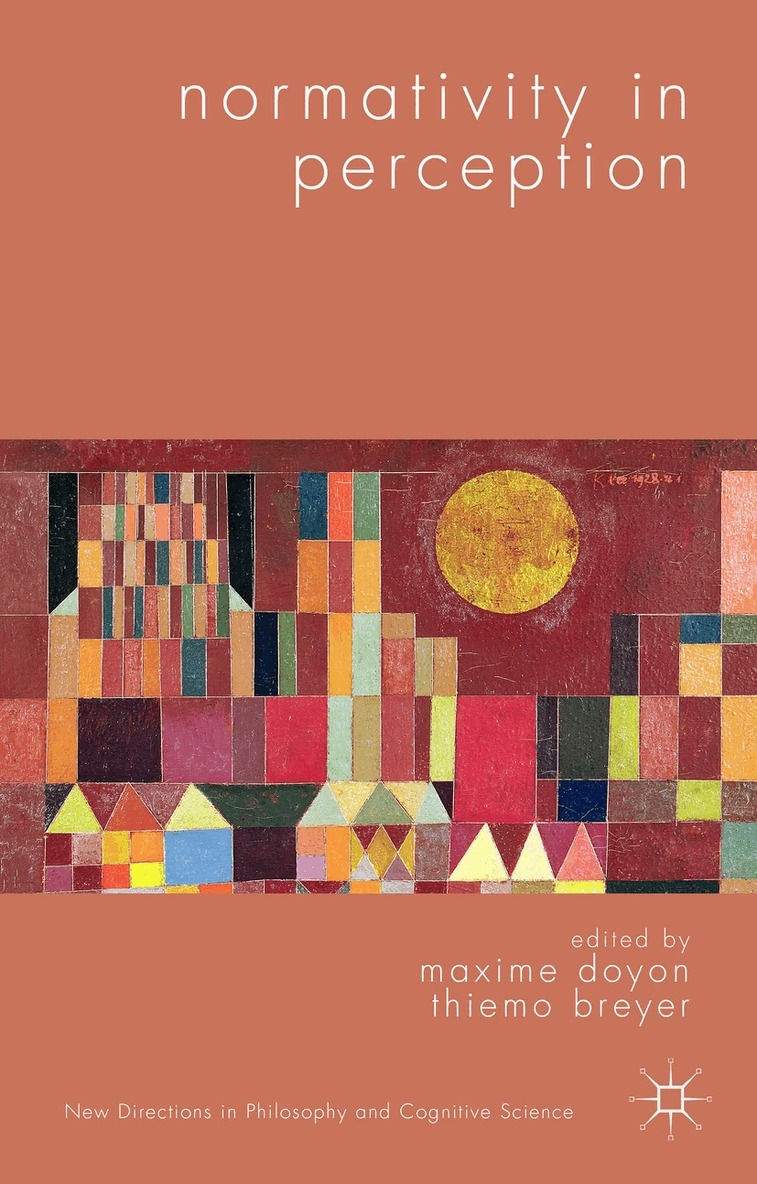
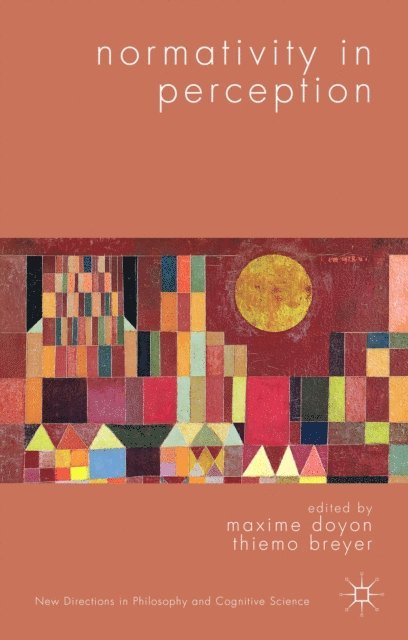
Normativity in Perception
Av Maxime Doyon, Thiemo Breyer
Inbunden, 2015
987 kr
Lägg i varukorg
The ways in which human action and rationality are guided by norms are well documented in philosophy and neighboring disciplines. But how do norms shape the way we experience the world perceptually? The present volume explores this question and investigates the specific normativity inherent to …
Normativity in Perception
Av Thiemo Breyer, Maxime Doyon
E-bok, 2015
1377 kr
Lägg i varukorg
The ways in which human action and rationality are guided by norms are well documented in philosophy and neighboring disciplines. But how do norms shape the way we experience the world perceptually? The present volume explores this question and investigates the specific normativity inherent to …