Meiying Xu – författare
Visar alla böcker från författaren Meiying Xu. Handla med fri frakt och snabb leverans.
4 produkter
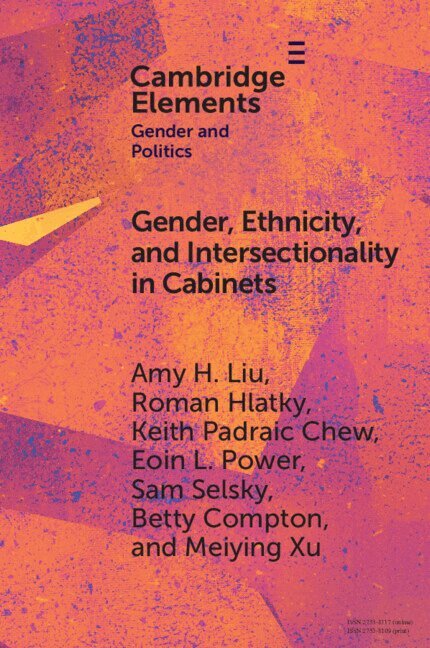
Gender, Ethnicity, and Intersectionality in Cabinets
Asia and Europe in Comparative Perspective
Av Amy H. Liu, Roman Hlatky m. fl.
Häftad, 2025
308 kr
Lägg i varukorg
What explains patterns of representation - of women and ethnic minorities - in government cabinets? The authors argue governments diversify their cabinets when (1) a minority group - and it need not be ethnic - is sizable and can mobilize (political competition); and/or (2) the general population …
Gender, Ethnicity, and Intersectionality in Cabinets
Asia and Europe in Comparative Perspective
Av Meiying Xu, Betty Compton m. fl.
E-bok, 2025
284 kr
Lägg i varukorg
Gender, Ethnicity, and Intersectionality in Cabinets
Asia and Europe in Comparative Perspective
Av Meiying Xu, Betty Compton m. fl.
E-bok, 2025
294 kr
Lägg i varukorg
Gender, Ethnicity, and Intersectionality in Cabinets
Asia and Europe in Comparative Perspective
Av Amy H. Liu, Roman Hlatky m. fl.
Inbunden, 2025
911 kr
Lägg i varukorg
What explains patterns of representation - of women and ethnic minorities - in government cabinets? The authors argue governments diversify their cabinets when (1) a minority group - and it need not be ethnic - is sizable and can mobilize (political competition); and/or (2) the general population …