Michael J. Shapiro – författare
1 249 kr
Skickas inom 5-8 vardagar
316 kr
Skickas inom 5-8 vardagar
245 kr
Läs direkt efter köp
245 kr
Läs direkt efter köp
1 099 kr
Skickas inom 7-10 vardagar
315 kr
Skickas inom 5-8 vardagar
916 kr
Kommande
2 151 kr
Skickas inom 10-15 vardagar
629 kr
Skickas inom 10-15 vardagar
2 474 kr
Skickas inom 10-15 vardagar
660 kr
Skickas inom 10-15 vardagar
2 357 kr
Skickas inom 10-15 vardagar
697 kr
Skickas inom 10-15 vardagar
657 kr
Skickas inom 10-15 vardagar
2 220 kr
Skickas inom 10-15 vardagar
685 kr
Skickas inom 10-15 vardagar
712 kr
Skickas inom 10-15 vardagar
746 kr
Läs direkt efter köp
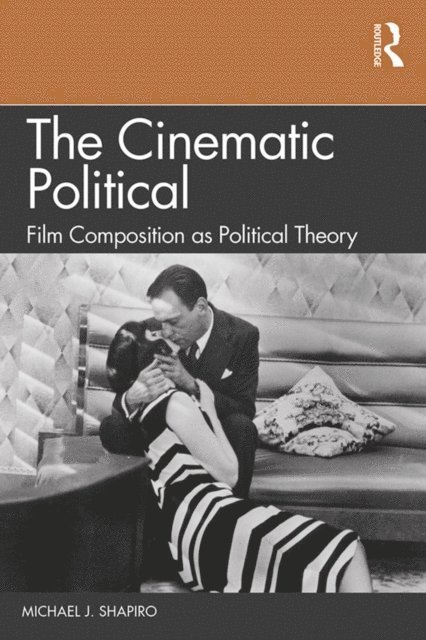
In this book, Michael J. Shapiro stages a series of pedagogical encounters between political theory, represented as a compositional challenge, and cinematic texts, emphasizing how to achieve an effective research paper/essay by heeding the compositional strategies of films. The text’s distinctiveness is its focus on the intermediation between two textual genres. It is aimed at providing both a conceptual introduction to the politics of aesthetics and a guide to writing strategies. In its illustrations of encounters between political theory and cinema, the book’s critical edge is its emphasis on how to intervene in cinematic texts with innovative conceptual frames in ways that challenge dominant understandings of life worlds.
The Cinematic Political is designed as a teaching resource that introduces students to the relationship between film form and political thinking. With diverse illustrative investigations, the book instructs students on how to watch films with an eye toward writing a research paper in which a film (or set of films) constitutes the textual vehicle for political theorizing.
746 kr
Läs direkt efter köp
In this book, Michael J. Shapiro stages a series of pedagogical encounters between political theory, represented as a compositional challenge, and cinematic texts, emphasizing how to achieve an effective research paper/essay by heeding the compositional strategies of films. The text’s distinctiveness is its focus on the intermediation between two textual genres. It is aimed at providing both a conceptual introduction to the politics of aesthetics and a guide to writing strategies. In its illustrations of encounters between political theory and cinema, the book’s critical edge is its emphasis on how to intervene in cinematic texts with innovative conceptual frames in ways that challenge dominant understandings of life worlds.
The Cinematic Political is designed as a teaching resource that introduces students to the relationship between film form and political thinking. With diverse illustrative investigations, the book instructs students on how to watch films with an eye toward writing a research paper in which a film (or set of films) constitutes the textual vehicle for political theorizing.
745 kr
Skickas inom 5-8 vardagar
235 kr
Skickas inom 5-8 vardagar
260 kr
Läs direkt efter köp
What do we know about war crimes and justice? What are the discursive practices through which the dominant images of war crimes, atrocity and justice are understood?
In this wide ranging text, Michael J. Shapiro contrasts the justice-related imagery of the war crimes trial (for example the solitary, headphone-wearing defendant at the Hague listening with intent to a catalogue of charges) with ?literary justice?: representations in literature, film, and biographical testimony, raising questions about atrocities and justice that juridical proceedings exclude.
By engaging with the ambiguities exposed by the artistic and experiential genres, reading them alongside policy and archival documentation and critical theoretical discourses, Shapiro?s War Crimes, Atrocity, and Justice challenges traditional notions of ?responsibility? in juridical settings. His comparative readings instead encourage a focus on the conditions of possibility for war crimes as they arise from the actions of states, non-state agencies and individuals involved in arms trading, peace keeping, sex trafficking, and law enforcement and adjudication. Theory springs to life as Shapiro draws on examples from legal discourse, literature, media, film, and television, to build a nuanced picture of politics and the problem of justice. It will be of great interest to students of film and media, literature, cultural studies, contemporary philosophy and political science
3 092 kr
Läs direkt efter köp
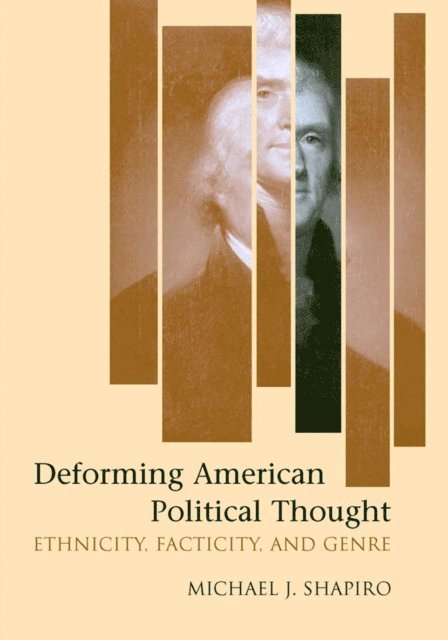
By affirming the relativity of the American historical imagination, political theorist Michael J. Shapiro offers a powerful polemic against ethnocentric interpretations of American culture and politics. Deforming American Political Thought analyzes issues that range from the nature of Thomas Jefferson''s vision of an egalitarian nation to the persistence of racial inequality. Shapiro offers a multifaceted argument that transcends the myopic scope of traditional political discourse. Deforming American Political Thought illustrates the various ways in which history, architecture, film, music, literature, and art provide approaches to the comprehension of diverse facets of American political thought from the founding to the present. Using these seemingly disparate disciplines as a framework, Shapiro paints a picture of American political philosophy that is as distinctive as it enlightening. Shapiro explores the historically vital role of dissenting points of view in American politics and asserts its continuing importance in today''s political landscape. Exploring such diverse works as slave narratives, contemporary films, genre fiction, and blues and jazz music, Shapiro reveals that there have always been dissenting voices casting doubt on the moral purpose and exceptionalism of the American mind. An unprecedented inquiry into American politics, Deforming American Political Thought will surely serve to reinvigorate discussions about the essence of American political thought.
3 092 kr
Läs direkt efter köp
By affirming the relativity of the American historical imagination, political theorist Michael J. Shapiro offers a powerful polemic against ethnocentric interpretations of American culture and politics. Deforming American Political Thought analyzes issues that range from the nature of Thomas Jefferson''s vision of an egalitarian nation to the persistence of racial inequality. Shapiro offers a multifaceted argument that transcends the myopic scope of traditional political discourse. Deforming American Political Thought illustrates the various ways in which history, architecture, film, music, literature, and art provide approaches to the comprehension of diverse facets of American political thought from the founding to the present. Using these seemingly disparate disciplines as a framework, Shapiro paints a picture of American political philosophy that is as distinctive as it enlightening. Shapiro explores the historically vital role of dissenting points of view in American politics and asserts its continuing importance in today''s political landscape. Exploring such diverse works as slave narratives, contemporary films, genre fiction, and blues and jazz music, Shapiro reveals that there have always been dissenting voices casting doubt on the moral purpose and exceptionalism of the American mind. An unprecedented inquiry into American politics, Deforming American Political Thought will surely serve to reinvigorate discussions about the essence of American political thought.
1 389 kr
Skickas inom 5-8 vardagar
427 kr
Skickas inom 5-8 vardagar
1 376 kr
Skickas inom 5-8 vardagar
329 kr
Skickas inom 5-8 vardagar
488 kr
Läs direkt efter köp
840 kr
Läs direkt efter köp
To understand the historical complexity of the Pakistan–Afghanistan borderland, this book brings together some of the foremost thinkers of this borderland and seeks to approach its various problematic dimensions.
This book presents an overview of the geopolitics of the Pakistan–Afghanistan borderland and approaches the topic from different methods and perspectives. It focuses on some of the least debated dimensions of this borderland, for instance, the status of women in the tribal-border culture, the legal status of aliens in the making of the border, material and immaterial manifestations of the border, political aesthetics of the border, and the identity crisis on the border. Given the fact that its authors come from diverse backgrounds, academic and geographic, they make an enriching contribution. Employing their expertise in different theories and methods, they focus on local memories, literature, and wisdom to understand the border. This book seeks to give voice to the plight of local tribal people, their culture, and land on an advanced academic level and makes it legible for the international audience.
The chapters in this book were originally published as a special issue of the journal Geopolitics.