Michael Kube – författare
Visar alla böcker från författaren Michael Kube. Handla med fri frakt och snabb leverans.
5 produkter
Allan Pettersson
Av Michael Kube
Häftad, 2015
5,0 utav 5 stjärnor. Totalt antal röster: (1)
214 kr
Lägg i varukorg
Allan Pettersson är 1900-talets främsta svenska symfoniker. Efter en trög start får den av sjukdom plågade tonsättaren växande uppmärksamhet, och i och med den sjunde symfonin (1968) sprids ryktet om honom ut i Europa. I synnerhet i Tyskland finner hans ömsom sargade, ömsom trösterika tonspråk …
A due
Musical Essays in Honour of John D Bergsagel & Heinrich W Schwab
Av Ole Kongsted, Niels Krabbe m. fl.
Inbunden, 2008
934 kr
Lägg i varukorg
Text in English, Danish & German. On 19 April 2008, professor John D Bergsagel celebrated his 80th birthday, and three weeks later -- on 8 May -- Professor Heinrich W Schwab attained the age of 70. The Department of Musicology at the University of Copenhagen and The Royal Library have decided to …
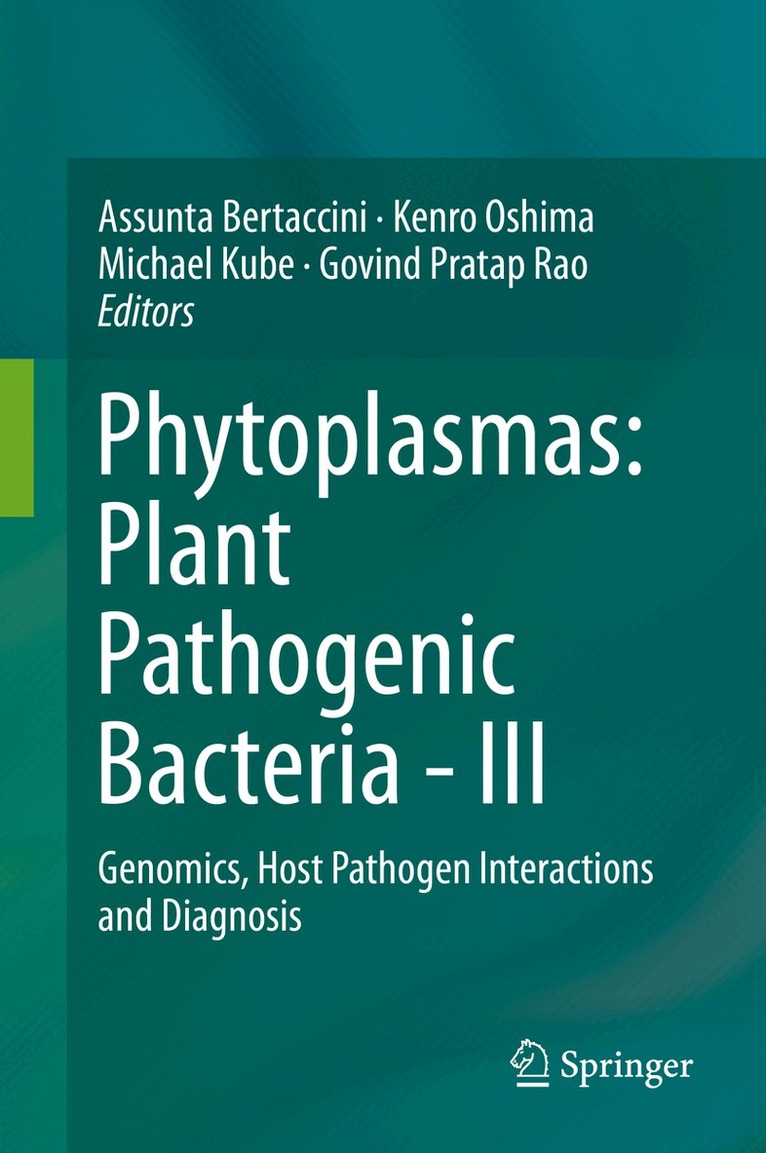
Phytoplasmas: Plant Pathogenic Bacteria - III
Genomics, Host Pathogen Interactions and Diagnosis
Av Assunta Bertaccini, Kenro Oshima m. fl.
Inbunden, 2019
1970 kr
Lägg i varukorg
Phytoplasma III is the last of three books in the series covering all the aspects of phytoplasma-associated diseases. Phytoplasmas are a major limiting factor in the quality and productivity of many ornamental, horticultural and economically important agriculture crops worldwide, and losses due to …
Phytoplasmas: Plant Pathogenic Bacteria - III
Genomics, Host Pathogen Interactions and Diagnosis
Av Govind Pratap Rao, Michael Kube m. fl.
E-bok, 2019
2599 kr
Lägg i varukorg
Phytoplasma III is the last of three books in the series covering all the aspects of phytoplasma-associated diseases. Phytoplasmas are a major limiting factor in the quality and productivity of many ornamental, horticultural and economically important agriculture crops worldwide, and losses due to …
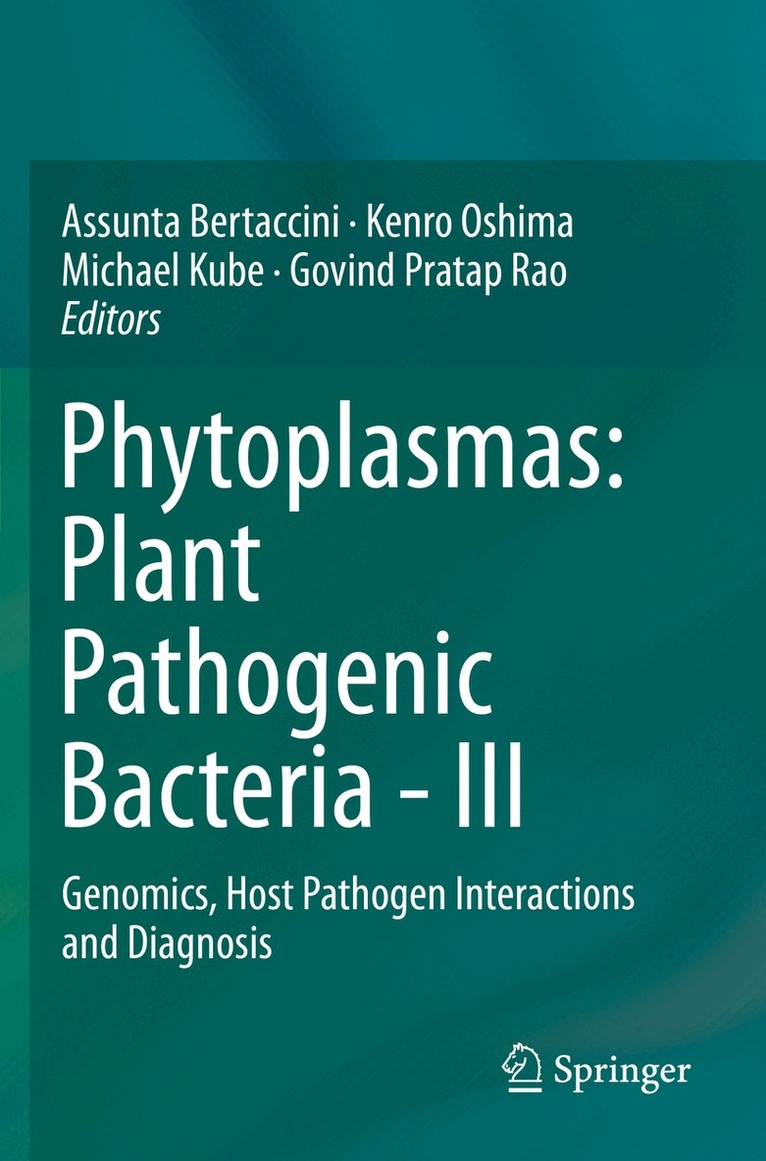
Phytoplasmas: Plant Pathogenic Bacteria - III
Genomics, Host Pathogen Interactions and Diagnosis
Av Assunta Bertaccini, Kenro Oshima m. fl.
Häftad, 2020
1970 kr
Lägg i varukorg
Phytoplasma III is the last of three books in the series covering all the aspects of phytoplasma-associated diseases. Phytoplasmas are a major limiting factor in the quality and productivity of many ornamental, horticultural and economically important agriculture crops worldwide, and losses due to …