Michael L. Platt - Böcker
Visar alla böcker från författaren Michael L. Platt. Handla med fri frakt och snabb leverans.
3 produkter
3 produkter
1 932 kr
Skickas inom 5-8 vardagar
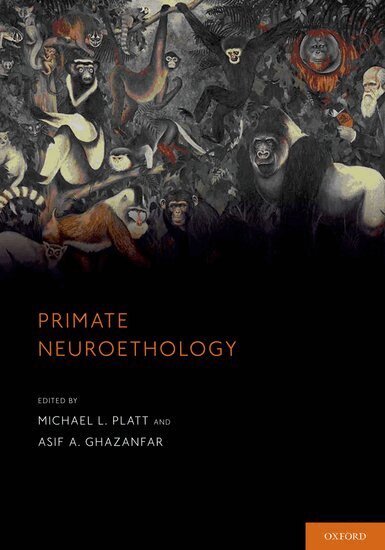
Why do people find monkeys and apes so compelling to watch? One clear answer is that they seem so similar to us--a window into our own minds and how we have evolved over millennia. As Charles Darwin wrote in his Notebook, "He who understands baboon would do more toward metaphysics than Locke." Darwin recognized that behavior and cognition, and the neural architecture that support them, evolved to solve specific social and ecological problems. Defining these problems for neurobiological study, and conveying neurobiological results to ethologists and psychologists, is fundamental to an evolutionary understanding of brain and behavior.The goal of this book is to do just that. It collects, for the first time in a single book, information on primate behavior and cognition, neurobiology, and the emerging discipline of neuroethology. Here leading scientists in several fields review work ranging from primate foraging behavior to the neurophysiology of motor control, from vocal communication to the functions of the auditory cortex. The resulting synthesis of cognitive, ethological, and neurobiological approaches to primate behavior yields a richer understanding of our primate cousins that also sheds light on the evolutionary development of human behavior and cognition.
329 kr
Skickas inom 7-10 vardagar
How human language evolved from the need for social communication The origins of human language remain hotly debated. Despite growing appreciation of cognitive and neural continuity between humans and other animals, an evolutionary account of human language--in its modern form--remains as elusive as ever. The Social Origins of Language provides a novel perspective on this question and charts a new path toward its resolution. In the lead essay, Robert Seyfarth and Dorothy Cheney draw on their decades-long pioneering research on monkeys and baboons in the wild to show how primates use vocalizations to modulate social dynamics. They argue that key elements of human language emerged from the need to decipher and encode complex social interactions. In other words, social communication is the biological foundation upon which evolution built more complex language. Seyfarth and Cheney's argument serves as a jumping-off point for responses by John McWhorter, Ljiljana Progovac, Jennifer E. Arnold, Christopher I. Petkov and Benjamin Wilson, and Peter Godfrey-Smith, each of whom draw on their respective expertise in linguistics, neuroscience, philosophy, and psychology.Michael Platt provides an introduction, Seyfarth and Cheney a concluding essay. Ultimately, The Social Origins of Language offers thought-provoking viewpoints on how human language evolved.
2 653 kr
Skickas inom 10-15 vardagar
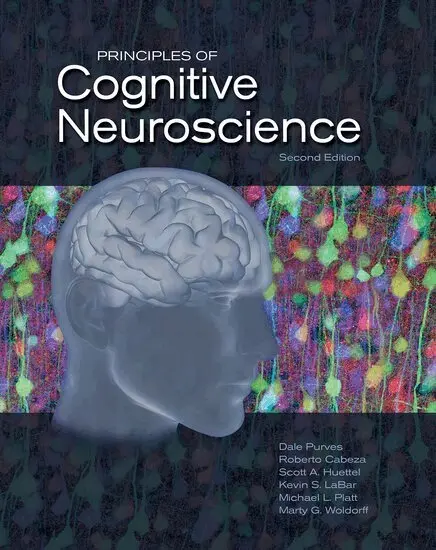
Published by Sinauer Associates, an imprint of Oxford University Press. The new and rapidly evolving field of cognitive neuroscience brings together cognitive psychology and neuroscience, drawing conceptual and technical elements from both these traditional disciplines. This union has been motivated by the exciting possibility of better understanding complex human brain functions that have puzzled thinkers for centuries. The emergence of cognitive neuroscience as a discipline in its own right over the last two decades is thus an expression of what many see as the next logical step for both neuroscience and cognitive psychology, driven by powerful new methods for studying the human brain.Principles of Cognitive Neuroscience, introduced in 2008, was written to inform readers at all levels about the growing canon of cognitive neuroscience, and to make clear the many challenges that remain to be solved. Now, in this Second Edition, the authors--all leaders in the field--offer what is in essence a completely new book:* The 28 chapters of the original edition have been condensed and combined to 15 chapters for the new edition.* The condensation makes the topics covered easier to assimilate, and better suited to presentation in a single-semester course.* Each chapter has been updated to address the latest developments in the field, including expanded coverage of genetics, evolution, and neural development.* Introductory Boxes in each chapter take up an especially interesting issue to better capture readers' attention.* An appendix reviews the major features of human neuroanatomy and basic aspects of neural signaling.As before, this edition includes an extensive glossary of key terms. And, with every copy, we offer a fully upgraded version of Sylvius 4 Online, which includes an interactive tutorial on human neuroanatomy as well as a magnetic resonance imaging atlas of the human brain.