• Fri frakt över 249 kr
  • •
  • Snabba leveranser
  • •
  • Billiga böcker
Kundservice

Du är på sajten för privatpersoner.

Företag, bibliotek eller offentlig verksamhet?

Du handlar på classic.bokus.com, där alla dina funktioner finns intakta.
Till classic.bokus.com
Bokus logotyp. Gå till startsidan.
  • Erbjudanden
  • Nyheter
  • Student
  • Topplistor
  • Barn & ungdom
  • Bokus Play
  • E-böcker
  • Pocketböcker
  • Spel & pussel

10% rabatt på allt med kod NYSTART10 →

Sidfot

Mina sidor

    Hjälp

    • Kundservice
    • Vanliga frågor och svar
    • Frakt och leverans
    • Retur vid ångerrätt
    • Reklamera vara
    • Betalning
    • Köpvillkor
    • Allmänna villkor
    • Information om webbplatsens tillgänglighet

    Om Bokus

    • Om oss
    • Pressrum
    • För studenter
    • För företag
    • För bibliotek och offentlig verksamhet
    • För leverantörer
    • Hållbarhet

    Populärt

    • Aktuella erbjudanden
    • Presentkort
    • Studentlitteratur
    • Nya böcker
    • Topplistor
    • Signerade böcker
    • Engelska böcker

    Inspiration

    • Boktips
    • BookTok
    • Populära bokserier
    • Barnbokskaraktärer
    • Populära författare
    Logotyp för Bokus
    Följ oss på Facebook (extern länk)Följ oss på Instagram (extern länk)Följ oss på YouTube (extern länk)Följ oss på TikTok (extern länk)
    bokus @ CookiesAnpassa cookiesIntegritetspolicyKöpvillkor
    Till Citymail hemsida (extern länk)Till Budbee hemsida (extern länk)Till Postnord hemsida (extern länk)Till Schenker hemsida (extern länk)Till Early Bird hemsida (extern länk)Till Walleys hemsida (extern länk)
    1. Naturvetenskap och teknik
    2. Matematik och naturvetenskap
    3. Biologi
    4. Biovetenskap

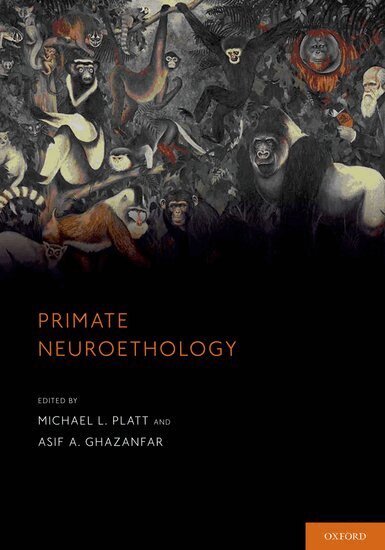
    Primate Neuroethology

    AvPLATT,Michael L. Platt

    Häftad, Engelska, 2012

    2 500 kr

    Beställningsvara. Skickas inom 5-8 vardagar. Fri frakt över 249 kr.

    Fler format och utgåvor

    Inbunden

    5 739 kr

    Beskrivning

    Why do people find monkeys and apes so compelling to watch? One clear answer is that they seem so similar to us--a window into our own minds and how we have evolved over millennia. As Charles Darwin wrote in his Notebook, "He who understands baboon would do more toward metaphysics than Locke." Darwin recognized that behavior and cognition, and the neural architecture that support them, evolved to solve specific social and ecological problems. Defining these problems for neurobiological study, and conveying neurobiological results to ethologists and psychologists, is fundamental to an evolutionary understanding of brain and behavior.The goal of this book is to do just that. It collects, for the first time in a single book, information on primate behavior and cognition, neurobiology, and the emerging discipline of neuroethology. Here leading scientists in several fields review work ranging from primate foraging behavior to the neurophysiology of motor control, from vocal communication to the functions of the auditory cortex. The resulting synthesis of cognitive, ethological, and neurobiological approaches to primate behavior yields a richer understanding of our primate cousins that also sheds light on the evolutionary development of human behavior and cognition.

    Produktinformation

    • Utgivningsdatum:2012-08-16
    • Mått:178 x 251 x 35 mm
    • Vikt:1 701 g
    • Format:Häftad
    • Språk:Engelska
    • Antal sidor:704
    • Förlag:OUP USA
    • ISBN:9780199929245

    Utforska kategorier

    • Biovetenskap inom Naturvetenskap och teknik
    • Kognitiv psykologi inom Psykologi och pedagogik

    Mer om författaren

    Michael L. Platt, Ph.D., is an Associate Professor of Neurobiology and Evolutionary Anthropology at Duke University, and Director of the Center for Cognitive Neuroscience.Asif A. Ghazanfar, Ph.D., is an Assistant Professor in the Neuroscience Institute and Departments of Psychology and Ecology & Evolutionary Biology at Princeton University.

    Innehållsförteckning

    • 1. Introduction ; Michael L. Platt and Asif A. Ghazanfar ; 2. Primate Classification and Diversity ; Matt Cartmill ; 3. Primate Locomotor Evolution: Biomechanical Studies of Primate Locomotion and Their Implications for Understanding Primate Neuroethology ; Daniel Schmitt ; 4. Foraging Cognition in Nonhuman Primates ; Klaus Zuberbuhler and Karline Janmaat ; 5. Primate Vocal Communication ; Robert M. Seyfarth and Dorothy L. Cheney ; 6. Rational Decision Making in Primates: The Bounded and the Ecological ; Jeffrey R. Stevens ; 7. Primate Social Cognition: Thirty Years After Premack and Woodruff ; Alexandra G. Rosati, Laurie R. Santos and Brian Hare ; 8. Behavioral Signatures of Numerical Cognition ; Elizabeth M. Brannon, Kerry E. Jordan and Sarah M. Jones ; 9. The Foundations of Transdisciplinary Behavioral Science ; Herbert Gintis ; 10. Sensory and Motor Systems in Primates ; Jon H. Kaas ; 11. Vision: A Neuroethological Perspective ; Benjamin Y. Hayden ; 12. Circuits of Visual Attention ; Tirin Moore, Robert J. Schafer and Behrad Noudoost ; 13. Vocalizations as Auditory Objects: Behavior and Neurophysiology ; Cory T. Miller and Yale E. Cohen ; 14. Encoding and Beyond in the Motor Cortex ; Nicholas G. Hatsopoulos, Maryam Saleh, and Julian A. Mattiello ; 15. Looking at Sounds: Neural Mechanisms in the Primate Brain ; Jennifer M. Groh and Dinesh K. Pai ; 16. Circuits of Emotion in the Primate Brain ; Katalin M. Gothard and Kari L. Hoffman ; 17. Neurophysiological Correlates of Reward Learning ; Wolfram Schultz ; 18. Associative Memory in the Medial Temporal Lobe ; Yuji Naya and Wendy A. Suzuki ; 19. Neurobiology of Social Behavior ; Dario Maestripieri ; 20. Neural Bases of Numerical Cognition ; Andreas Nieder ; 21. Executive Control Circuits ; Jonathan D. Wallis ; 22. Reinventing Primate Neuroscience for the Twenty-First Century ; Todd M. Preuss ; 23. Ethologically Relevant Movements Mapped on the Motor Cortex ; Michael S. A. Graziano ; 24. Object Recognition: Physiological and Computational Insights ; Doris Y. Tsao, Charles F. Cadieu, and Margaret S. Livingstone ; 25. The Primate Frontal and Temporal Lobes and Their Role in Multisensory Vocal Communication ; Lizabeth M. Romanski and Asif A. Ghazanfar ; 26. Neuroethology of Attention in Primates ; Stephen V. Shepherd and Michael L. Platt ; 27. Neuroethology of Decision Making ; Daeyeol Lee ; 28. Out of Our Minds: The Neuroethology of Primate Strategic Behavior ; Louise Barrett and Drew Rendall ; 29. The Comparative Neuropsychology of Tool Use in Primates with Specific Reference to Chimpanzees and Capuchin Monkeys ; William D. Hopkins ; 30. Evolution of an Intellectual Mind in the Primate Brain ; Atsushi Iriki, Yumiko Yamazaki, and Osamu Sakura