Michael Sonenscher – författare
Visar alla böcker från författaren Michael Sonenscher. Handla med fri frakt och snabb leverans.
14 produkter
14 produkter
Häftad, Engelska, 2002
595 kr
Skickas inom 7-10 vardagar
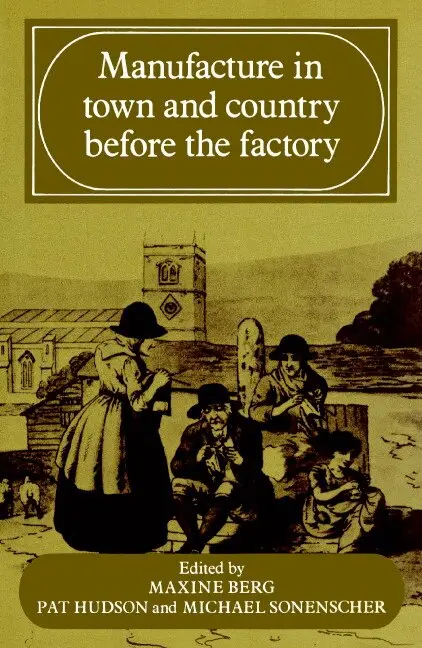
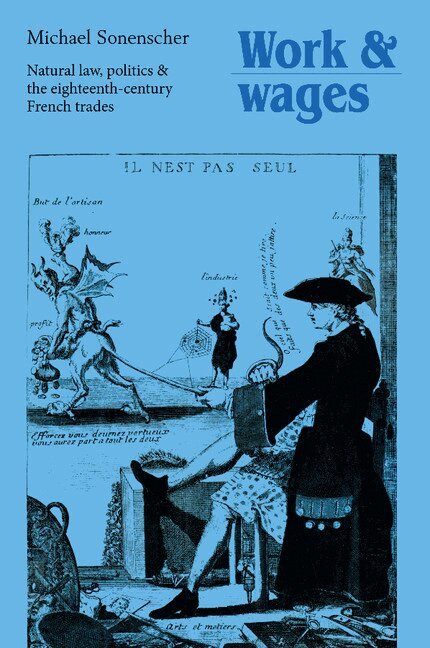
The internal organisation of production before the development of the factory system is still shrouded in historical mystery. How goods were made before machines, how work was organised before the factory system, how artisans and labourers perceived and lived their work are questions to which we have only hesitant and tentative answers. Hitherto, historians have been too concerned with the emerging features of the modern industrial capitalist order to seek to understand how another and different economy and community worked in its own terms. The essays in this book are intended to begin to remedy this neglect.
Inbunden, Engelska, 2015
403 kr
Skickas inom 10-15 vardagar
Scholars normally emphasize the contrast between the two great eighteenth-century thinkers Jean-Jacques Rousseau and Adam Smith. Rousseau is seen as a critic of modernity, Smith as an apologist. Istvan Hont, however, finds significant commonalities in their work, arguing that both were theorists of commercial society and from surprisingly similar perspectives.In making his case, Hont begins with the concept of commercial society and explains why that concept has much in common with what the German philosopher Immanuel Kant called unsocial sociability. This is why many earlier scholars used to refer to an Adam Smith Problem and, in a somewhat different way, to a Jean-Jacques Rousseau Problem. The two problems—and the questions about the relationship between individualism and altruism that they raised—were, in fact, more similar than has usually been thought because both arose from the more fundamental problems generated by thinking about morality and politics in a commercial society. Commerce entails reciprocity, but a commercial society also entails involuntary social interdependence, relentless economic competition, and intermittent interstate rivalry. This was the world to which Rousseau and Smith belonged, and Politics in Commercial Society is an account of how they thought about it.Building his argument on the similarity between Smith’s and Rousseau’s theoretical concerns, Hont shows the relevance of commercial society to modern politics—the politics of the nation-state, global commerce, international competition, social inequality, and democratic accountability.
Häftad, Engelska, 2009
848 kr
Skickas inom 5-8 vardagar
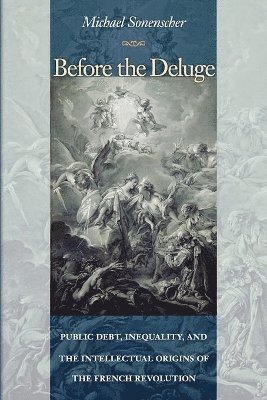
Ever since the French Revolution, Madame de Pompadour's comment, "Apres moi, le deluge" (after me, the deluge), has looked like a callous if accurate prophecy of the political cataclysms that began in 1789. But decades before the Bastille fell, French writers had used the phrase to describe a different kind of selfish recklessness--not toward the flood of revolution but, rather, toward the flood of public debt. In Before the Deluge, Michael Sonenscher examines these fears and the responses to them, and the result is nothing less than a new way of thinking about the intellectual origins of the French Revolution. In this nightmare vision of the future, many prerevolutionary observers predicted that the pressures generated by modern war finance would set off a chain of debt defaults that would either destroy established political orders or cause a sudden lurch into despotic rule. Nor was it clear that constitutional government could keep this possibility at bay. Constitutional government might make public credit more secure, but public credit might undermine constitutional government itself.Before the Deluge examines how this predicament gave rise to a widespread eighteenth-century interest in figuring out how to establish and maintain representative governments able to realize the promise of public credit while avoiding its peril. By doing so, the book throws new light on a neglected aspect of modern political thought and on the French Revolution.
Häftad, Engelska, 2018
778 kr
Skickas inom 3-6 vardagar
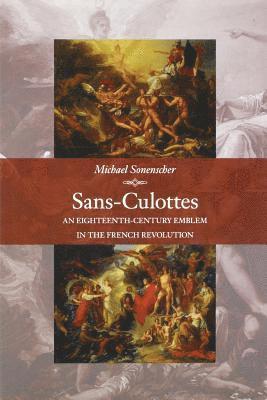
This is a bold new history of the sans-culottes and the part they played in the French Revolution. It tells for the first time the real story of the name now usually associated with urban violence and popular politics during the revolutionary period. By doing so, it also shows how the politics and economics of the revolution can be combined to form a genuinely historical narrative of its content and course. To explain how an early eighteenth-century salon society joke about breeches and urbanity was transformed into a republican emblem, Sans-Culottes examines contemporary debates about Ciceronian, Cynic, and Cartesian moral philosophy, as well as subjects ranging from music and the origins of government to property and the nature of the human soul. By piecing together this now forgotten story, Michael Sonenscher opens up new perspectives on the Enlightenment, eighteenth-century moral and political philosophy, the thought of Jean-Jacques Rousseau, and the political history of the French Revolution itself.
Inbunden, Engelska, 2022
251 kr
Skickas inom 5-8 vardagar
How the history of a word sheds new light on capitalism and modern politicsWhat exactly is capitalism? How has the meaning of capitalism changed over time? And what’s at stake in our understanding or misunderstanding of it? In Capitalism, Michael Sonenscher examines the history behind the concept and pieces together the range of subjects bound up with the word. Sonenscher shows that many of our received ideas fail to pick up the work that the idea of capitalism is doing for us, without us even realizing it.“Capitalism” was first coined in France in the early nineteenth century. It began as a fusion of two distinct sets of ideas. The first involved thinking about public debt and war finance. The second involved thinking about the division of labour. Sonenscher shows that thinking about the first has changed radically over time. Funding welfare has been added to funding warfare, bringing many new questions in its wake. Thinking about the second set of ideas has offered far less room for manoeuvre. The division of labour is still the division of labour and the debates and discussions that it once generated have now been largely forgotten. By exploring what lay behind the earlier distinction before it collapsed and was eroded by the passage of time, Sonenscher shows why the present range of received ideas limits our political options and the types of reform we might wish for.
Häftad, Engelska, 2024
145 kr
Skickas inom 5-8 vardagar
How the history of a word sheds new light on capitalism and modern politicsWhat exactly is capitalism? How has the meaning of capitalism changed over time? And what’s at stake in our understanding or misunderstanding of it? In Capitalism, Michael Sonenscher examines the history behind the concept and pieces together the range of subjects bound up with the word. Sonenscher shows that many of our received ideas fail to pick up the work that the idea of capitalism is doing for us, without us even realizing it.“Capitalism” was first coined in France in the early nineteenth century. It began as a fusion of two distinct sets of ideas. The first involved thinking about public debt and war finance. The second involved thinking about the division of labour. Sonenscher shows that thinking about the first has changed radically over time. Funding welfare has been added to funding warfare, bringing many new questions in its wake. Thinking about the second set of ideas has offered far less room for manoeuvre. The division of labour is still the division of labour and the debates and discussions that it once generated have now been largely forgotten. By exploring what lay behind the earlier distinction before it collapsed and was eroded by the passage of time, Sonenscher shows why the present range of received ideas limits our political options and the types of reform we might wish for.
Inbunden, Engelska, 2023
1 026 kr
Skickas inom 5-8 vardagar
Tracing the origins of modern political thought through three sets of arguments over history, morality, and freedomIn this wide-ranging work, Michael Sonenscher traces the origins of modern political thought and ideologies to a question, raised by Immanuel Kant, about what is involved in comparing individual human lives to the whole of human history. How can we compare them, or understand the results of the comparison? Kant’s question injected a new, future-oriented dimension into existing discussions of prevailing norms, challenging their orientation toward the past. This reversal made Kant’s question a bridge between three successive sets of arguments: between the supporters of the ancients and moderns, the classics and romantics, and the Romans and the Germans. Sonenscher argues that the genealogy of modern political ideologies—from liberalism to nationalism to communism—can be connected to the resulting discussions of time, history, and values, mainly in France but also in Germany, Switzerland, and Britain, in the period straddling the French and Industrial revolutions.What is the genuinely human content of human history? Everything begins somewhere—democracy with the Greeks, or the idea of a res publica with the Romans—but these local arrangements have become vectors of values that are, apparently, universal. The intellectual upheaval that Sonenscher describes involved a struggle to close the gap, highlighted by Kant, between individual lives and human history. After Kant is an examination of that struggle’s enduring impact on the history and the historiography of political thought.
Häftad, Engelska, 2023
455 kr
Skickas inom 5-8 vardagar
Tracing the origins of modern political thought through three sets of arguments over history, morality, and freedomIn this wide-ranging work, Michael Sonenscher traces the origins of modern political thought and ideologies to a question, raised by Immanuel Kant, about what is involved in comparing individual human lives to the whole of human history. How can we compare them, or understand the results of the comparison? Kant’s question injected a new, future-oriented dimension into existing discussions of prevailing norms, challenging their orientation toward the past. This reversal made Kant’s question a bridge between three successive sets of arguments: between the supporters of the ancients and moderns, the classics and romantics, and the Romans and the Germans. Sonenscher argues that the genealogy of modern political ideologies—from liberalism to nationalism to communism—can be connected to the resulting discussions of time, history, and values, mainly in France but also in Germany, Switzerland, and Britain, in the period straddling the French and Industrial revolutions.What is the genuinely human content of human history? Everything begins somewhere—democracy with the Greeks, or the idea of a res publica with the Romans—but these local arrangements have become vectors of values that are, apparently, universal. The intellectual upheaval that Sonenscher describes involved a struggle to close the gap, highlighted by Kant, between individual lives and human history. After Kant is an examination of that struggle’s enduring impact on the history and the historiography of political thought.
Häftad, Engelska, 2003
199 kr
Skickas
The abbe Emmanuel Joseph Sieyes (1748-1836) distinguished himself as the chief theoretician of the French Revolution--and as a revolutionary constitutional and social theorist in his own right--through his rigorously analytical theory of representative government and its corollary, the representative character of social life in general. He expressed the essence of his thought in a series of three pamphlets published in the months leading up to the meeting of the Estates-General in 1789. This volume presents all three essays--Views of the Executive Means, An Essay on Privileges, and What Is the Third Estate?--in their entirety. The third essay, in a new translation by Michael Sonenscher, is followed by Sieyes's 1791 newspaper debate with Tom Paine on the merits of monarchy versus republicanism. Elucidated by Sonenscher's insightful Introduction, these texts will fascinate anyone interested in the history of the French Revolution, the history of social and political thought, or the origins and character of modern liberalism.
Inbunden, Engelska, 2003
531 kr
Skickas inom 11-20 vardagar
The abbe Emmanuel Joseph Sieyes (1748-1836) distinguished himself as the chief theoretician of the French Revolution--and as a revolutionary constitutional and social theorist in his own right--through his rigorously analytical theory of representative government and its corollary, the representative character of social life in general. He expressed the essence of his thought in a series of three pamphlets published in the months leading up to the meeting of the Estates-General in 1789. This volume presents all three essays--Views of the Executive Means, An Essay on Privileges, and What Is the Third Estate?--in their entirety. The third essay, in a new translation by Michael Sonenscher, is followed by Sieyes's 1791 newspaper debate with Tom Paine on the merits of monarchy versus republicanism. Elucidated by Sonenscher's insightful Introduction, these texts will fascinate anyone interested in the history of the French Revolution, the history of social and political thought, or the origins and character of modern liberalism.
Häftad, Engelska, 2026
327 kr
Kommande
Three questions have usually been asked about the French Revolution: why did it happen? why was it so violent? and what was its legacy? These questions seem to beg other, more conceptually ambitious queries about causation, violence or legacies. This book aims to answer both sets of questions by bringing together events and ideas. Michael Sonenscher draws on neglected aspects of eighteenth-century intellectual and political life and thought to demonstrate the importance of ideas for making connections between historical explanation and historical narrative. Concisely synthesizing a broad range of established scholarship, Sonenscher utilises new and fresh information to explore why using ideas as evidence adds a dimension of novelty, possibility, expectation and choice to the social, cultural and political history of the French Revolution.This is history about what was expected, but did not happen, and what was unexpected, but really did.
Inbunden, Engelska, 2026
1 108 kr
Kommande
Three questions have usually been asked about the French Revolution: why did it happen? why was it so violent? and what was its legacy? These questions seem to beg other, more conceptually ambitious queries about causation, violence or legacies. This book aims to answer both sets of questions by bringing together events and ideas. Michael Sonenscher draws on neglected aspects of eighteenth-century intellectual and political life and thought to demonstrate the importance of ideas for making connections between historical explanation and historical narrative. Concisely synthesizing a broad range of established scholarship, Sonenscher utilises new and fresh information to explore why using ideas as evidence adds a dimension of novelty, possibility, expectation and choice to the social, cultural and political history of the French Revolution.This is history about what was expected, but did not happen, and what was unexpected, but really did.
Häftad, Engelska, 2012
762 kr
Skickas inom 7-10 vardagar
First published in 1989, this paperback edition of Work and Wages comes with a new Preface, entitled 'Fashion's Empire', that positions the book's argument within the broader context of historical thinking about eighteenth-century France and the origins of the French revolution. It also comes with an updated set of bibliographical notes linking recent historical writing on industry before industrialisation to the picture of the eighteenth-century French trades presented in Work and Wages. Together, they add up to a fresh way in to one of the books that has changed the direction of historical thinking about artisans, small businesses and the political economy of eighteenth-century France.
Inbunden, Engelska, 2008
664 kr
Tillfälligt slut
This is a bold new history of the sans-culottes and the part they played in the French Revolution. It tells for the first time the real story of the name now usually associated with urban violence and popular politics during the revolutionary period. By doing so, it also shows how the politics and economics of the revolution can be combined to form a genuinely historical narrative of its content and course. To explain how an early eighteenth-century salon society joke about breeches and urbanity was transformed into a republican emblem, Sans-Culottes examines contemporary debates about Ciceronian, Cynic, and Cartesian moral philosophy, as well as subjects ranging from music and the origins of government to property and the nature of the human soul. By piecing together this now forgotten story, Michael Sonenscher opens up new perspectives on the Enlightenment, eighteenth-century moral and political philosophy, the thought of Jean-Jacques Rousseau, and the political history of the French Revolution itself.