Milan Sonka – författare
Visar alla böcker från författaren Milan Sonka. Handla med fri frakt och snabb leverans.
12 produkter
12 produkter
Häftad, Engelska, 2023
1 393 kr
Skickas inom 10-15 vardagar
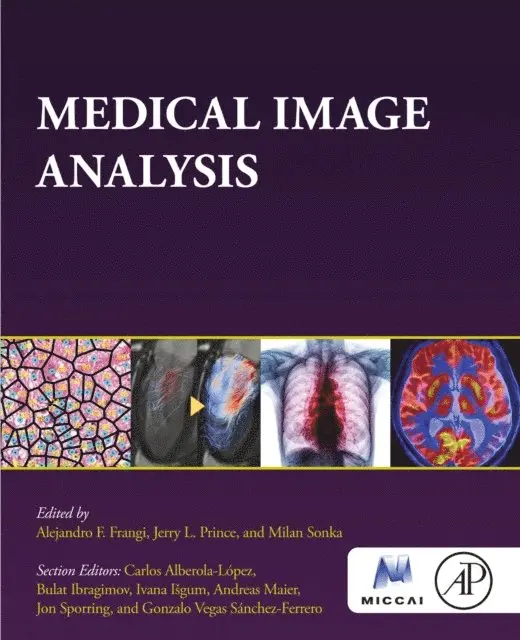
Medical imaging is increasingly at the base of many breakthroughs in biomedical sciences, becoming a fundamental enabling technology of biomedical scientific progress. Medical Image Analysis presents practical knowledge on medical image computing and analysis and is written by top educators and experts in the field. This text is a modern, practical, broad, and self-contained reference that conveys a mix of essential methodological concepts within different medical domains, reflecting the nature of the discipline today, making it suitable as a course text and a self-learning resource.An authoritative presentation of key concepts and methods from experts in the fieldSections clearly explaining key methodological principles within relevant medical applicationsSelf-contained chapters enable the text to be used on courses with differing structuresA representative selection of modern topics and techniques in medical image computingFocus on medical image computing as an enabling technology to tackle unmet clinical needsPresentation of traditional and machine learning approaches to medical image computing
E-bok
Engelska, 20231 911 kr
Läs direkt efter köp
Medical Image Analysis presents practical knowledge on medical image computing and analysis as written by top educators and experts. This text is a modern, practical, self-contained reference that conveys a mix of fundamental methodological concepts within different medical domains. Sections cover core representations and properties of digital images and image enhancement techniques, advanced image computing methods (including segmentation, registration, motion and shape analysis), machine learning, how medical image computing (MIC) is used in clinical and medical research, and how to identify alternative strategies and employ software tools to solve typical problems in MIC.- An authoritative presentation of key concepts and methods from experts in the field- Sections clearly explaining key methodological principles within relevant medical applications- Self-contained chapters enable the text to be used on courses with differing structures- A representative selection of modern topics and techniques in medical image computing- Focus on medical image computing as an enabling technology to tackle unmet clinical needs- Presentation of traditional and machine learning approaches to medical image computing
Häftad, Engelska, 1993
1 091 kr
Skickas inom 10-15 vardagar
Image Processing, Analysis and Machine Vision represent an exciting part of modern cognitive and computer science. Following an explosion of inter est during the Seventies, the Eighties were characterized by the maturing of the field and the significant growth of active applications; Remote Sensing, Technical Diagnostics, Autonomous Vehicle Guidance and Medical Imaging are the most rapidly developing areas. This progress can be seen in an in creasing number of software and hardware products on the market as well as in a number of digital image processing and machine vision courses offered at universities world-wide. There are many texts available in the areas we cover - most (indeed, all of which we know) are referenced somewhere in this book. The subject suffers, however, from a shortage of texts at the 'elementary' level - that appropriate for undergraduates beginning or completing their studies of the topic, or for Master's students - and the very rapid developments that have taken and are still taking place, which quickly age some of the very good text books produced over the last decade or so. This book reflects the authors' experience in teaching one and two semester undergraduate and graduate courses in Digital Image Processing, Digital Image Analysis, Machine Vision, Pattern Recognition and Intelligent Robotics at their respective institutions.
E-bok
PDF, Engelska, 20131 459 kr
Läs direkt efter köp
Image Processing, Analysis and Machine Vision represent an exciting part of modern cognitive and computer science. Following an explosion of inter est during the Seventies, the Eighties were characterized by the maturing of the field and the significant growth of active applications; Remote Sensing, Technical Diagnostics, Autonomous Vehicle Guidance and Medical Imaging are the most rapidly developing areas. This progress can be seen in an in creasing number of software and hardware products on the market as well as in a number of digital image processing and machine vision courses offered at universities world-wide. There are many texts available in the areas we cover - most (indeed, all of which we know) are referenced somewhere in this book. The subject suffers, however, from a shortage of texts at the ''elementary'' level - that appropriate for undergraduates beginning or completing their studies of the topic, or for Master''s students - and the very rapid developments that have taken and are still taking place, which quickly age some of the very good text books produced over the last decade or so. This book reflects the authors'' experience in teaching one and two semester undergraduate and graduate courses in Digital Image Processing, Digital Image Analysis, Machine Vision, Pattern Recognition and Intelligent Robotics at their respective institutions.
Häftad, Engelska, 2004
565 kr
Skickas inom 10-15 vardagar
Medical imaging and medical image analysisare rapidly developing. While m- ical imaging has already become a standard of modern medical care, medical image analysis is still mostly performed visually and qualitatively. The ev- increasing volume of acquired data makes it impossible to utilize them in full. Equally important, the visual approaches to medical image analysis are known to su?er from a lack of reproducibility. A signi?cant researche?ort is devoted to developing algorithms for processing the wealth of data available and extracting the relevant information in a computerized and quantitative fashion. Medical imaging and image analysis are interdisciplinary areas combining electrical, computer, and biomedical engineering; computer science; mathem- ics; physics; statistics; biology; medicine; and other ?elds. Medical imaging and computer vision, interestingly enough, have developed and continue developing somewhat independently. Nevertheless, bringing them together promises to b- e?t both of these ?elds. We were enthusiastic when the organizers of the 2004 European Conference on Computer Vision (ECCV) allowed us to organize a satellite workshop devoted to medical image analysis.
Häftad, Engelska, 2005
1 125 kr
Skickas inom 10-15 vardagar
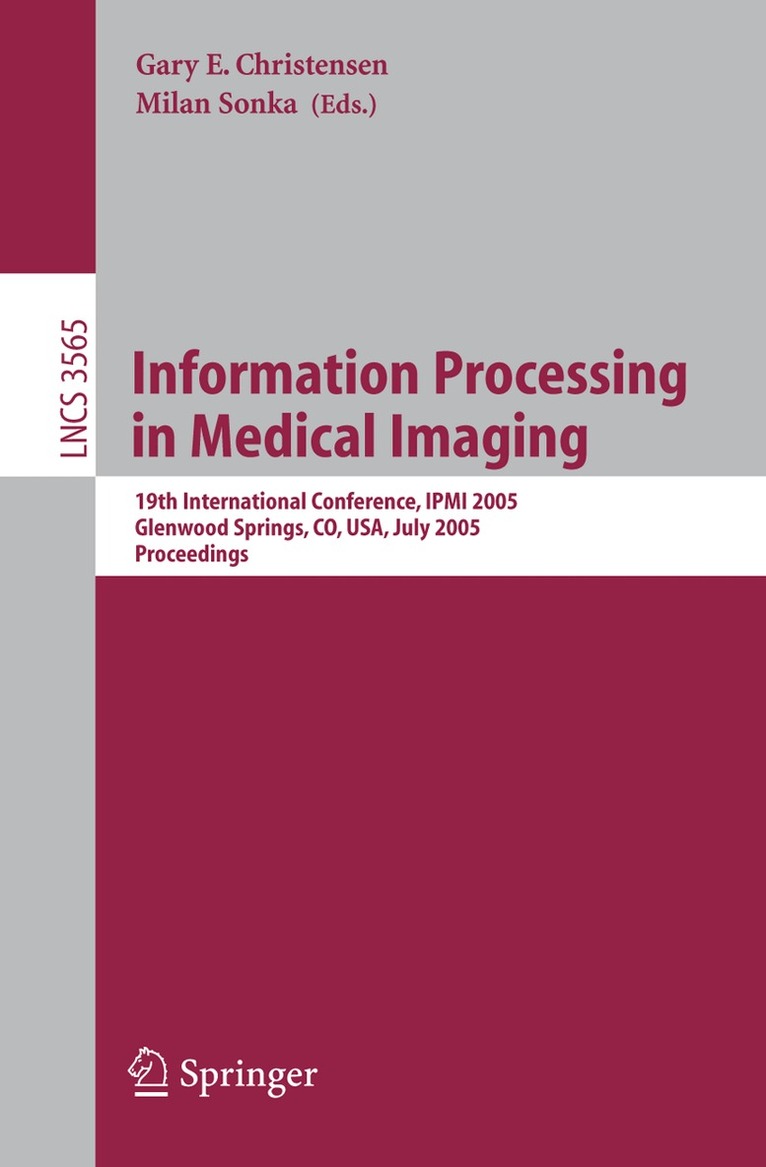
The nineteenth biennial International Conference on Information Processing in Medical Imaging (IPMI) was held July 11–15, 2005 in Glenwood Springs, CO, USA on the Spring Valley campus of the Colorado Mountain College. Following the successful meeting in beautiful Ambleside in England, this year’s conference addressed important recent developments in a broad range of topics related to the acquisition, analysis and application of biomedical images. Interest in IPMI has been steadily growing over the last decade. This is p- tially due to the increased number of researchers entering the ?eld of medical imagingasaresultoftheWhitakerFoundationandtherecentlyformedNational Institute of Biomedical Imaging and Bioengineering. This year, there were 245 full manuscripts submitted to the conference which was twice the number s- mitted in 2003 and almost four times the number of submissions in 2001. Of these papers, 27 were accepted as oral presentations, and 36 excellent subm- sions that could not be accommodated as oral presentations were presented as posters. Selection of the papers for presentation was a di?cult task as we were unable to accommodate many of the excellent papers submitted this year. All accepted manuscripts were allocated 12 pages in these proceedings.
E-bok
PDF, Engelska, 2004693 kr
Läs direkt efter köp
Medical imaging and medical image analysisare rapidly developing. While m- ical imaging has already become a standard of modern medical care, medical image analysis is still mostly performed visually and qualitatively. The ev- increasing volume of acquired data makes it impossible to utilize them in full. Equally important, the visual approaches to medical image analysis are known to su?er from a lack of reproducibility. A signi?cant researche?ort is devoted to developing algorithms for processing the wealth of data available and extracting the relevant information in a computerized and quantitative fashion. Medical imaging and image analysis are interdisciplinary areas combining electrical, computer, and biomedical engineering; computer science; mathem- ics; physics; statistics; biology; medicine; and other ?elds. Medical imaging and computer vision, interestingly enough, have developed and continue developing somewhat independently. Nevertheless, bringing them together promises to b- e?t both of these ?elds. We were enthusiastic when the organizers of the 2004 European Conference on Computer Vision (ECCV) allowed us to organize a satellite workshop devoted to medical image analysis.
E-bok
PDF, Engelska, 20051 408 kr
Läs direkt efter köp
The nineteenth biennial International Conference on Information Processing in Medical Imaging (IPMI) was held July 11–15, 2005 in Glenwood Springs, CO, USA on the Spring Valley campus of the Colorado Mountain College. Following the successful meeting in beautiful Ambleside in England, this year’s conference addressed important recent developments in a broad range of topics related to the acquisition, analysis and application of biomedical images. Interest in IPMI has been steadily growing over the last decade. This is p- tially due to the increased number of researchers entering the ?eld of medical imagingasaresultoftheWhitakerFoundationandtherecentlyformedNational Institute of Biomedical Imaging and Bioengineering. This year, there were 245 full manuscripts submitted to the conference which was twice the number s- mitted in 2003 and almost four times the number of submissions in 2001. Of these papers, 27 were accepted as oral presentations, and 36 excellent subm- sions that could not be accommodated as oral presentations were presented as posters. Selection of the papers for presentation was a di?cult task as we were unable to accommodate many of the excellent papers submitted this year. All accepted manuscripts were allocated 12 pages in these proceedings.
Häftad, Engelska, 2006
566 kr
Skickas inom 10-15 vardagar
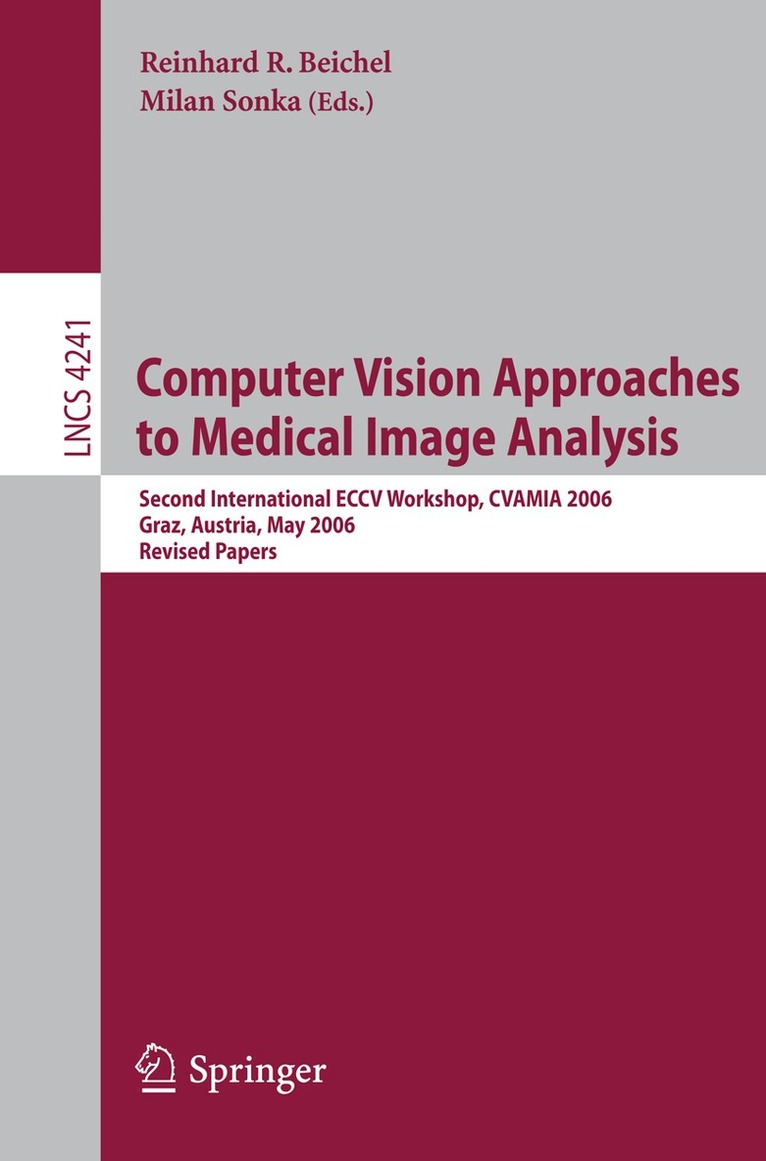
Medical imaging and medical image analysis are developing rapidly. While m- ical imaging has already become a standard of modern medical care, medical image analysis is still mostly performed visually and qualitatively. The ev- increasing volume of acquired data makes it impossible to utilize them in full. Equally important, the visual approaches to medical image analysis are known to su?er from a lack of reproducibility. A signi?cant researche?ort is devoted to developing algorithms for processing the wealth of data available and extracting the relevant information in a computerized and quantitative fashion. Medical imaging and image analysis are interdisciplinary areas combining electrical, computer, and biomedical engineering; computer science; mathem- ics; physics; statistics; biology; medicine; and other ?elds. Medical imaging and computer vision, interestingly enough, have developed and continue developing somewhat independently. Nevertheless, bringing them together promises to b- e?t both of these ?elds. This was the second time that a satellite workshop,solely devoted to medical image analysis issues, was held in conjunction with the European Conference on Computer Vision (ECCV), and we are optimistic that this will become a tradition at ECCV. We received 38 full-length paper submissions to the second Computer Vision Approaches to Medical Image Analysis (CVAMIA) Workshop, out of which 10 were accepted for oral and 11 for poster presentation after a rigorous peer-review process. In addition, the workshop included three invited talks. The ?rst was given by Maryellen Giger from the University of Chicago, USA — titled “Multi-Modality Breast CADx”.
E-bok
PDF, Engelska, 2006687 kr
Läs direkt efter köp
Medical imaging and medical image analysis are developing rapidly. While m- ical imaging has already become a standard of modern medical care, medical image analysis is still mostly performed visually and qualitatively. The ev- increasing volume of acquired data makes it impossible to utilize them in full. Equally important, the visual approaches to medical image analysis are known to su?er from a lack of reproducibility. A signi?cant researche?ort is devoted to developing algorithms for processing the wealth of data available and extracting the relevant information in a computerized and quantitative fashion. Medical imaging and image analysis are interdisciplinary areas combining electrical, computer, and biomedical engineering; computer science; mathem- ics; physics; statistics; biology; medicine; and other ?elds. Medical imaging and computer vision, interestingly enough, have developed and continue developing somewhat independently. Nevertheless, bringing them together promises to b- e?t both of these ?elds. This was the second time that a satellite workshop,solely devoted to medical image analysis issues, was held in conjunction with the European Conference on Computer Vision (ECCV), and we are optimistic that this will become a tradition at ECCV. We received 38 full-length paper submissions to the second Computer Vision Approaches to Medical Image Analysis (CVAMIA) Workshop, out of which 10 were accepted for oral and 11 for poster presentation after a rigorous peer-review process. In addition, the workshop included three invited talks. The ?rst was given by Maryellen Giger from the University of Chicago, USA — titled “Multi-Modality Breast CADx”.
Häftad, Engelska, 2010
566 kr
Skickas inom 10-15 vardagar
In the medical ?eld, personalmedical feature data,especially digitalimages,can be referred to as medical biometrics. Such data are produced in ever-increasing quantities and used for diagnostics and therapy purposes. Medical biometric research aims to use personal medical features in di?erent formats such as - ages, signals and other sources to solve medical problems and to provide hi- performance services in the medical ?eld. Medical biometric systems integrate multidisciplinary technologies in biology, medicine, electronics, computing, and statistics. The importance of computer-aided diagnosis and therapy has drawn moreandmoreattentionworldwideandlaidthefoundationformodernmedicine withexcellentpotentialforpromisingapplicationssuchastelemedicineandW- based healthcare. The2010InternationalConferenceonMedicalBiometrics(ICMB2010)placed emphasis on e?cient and e?ective medical biometric technologies and systems. It provided a central forum for researchers,engineers and vendors from di?erent disciplines to exchange the most recent results, identify future directions and challenges, and initiate possible collaborative research and system development.We are pleased that this conference attracted a large number of high-quality research papers that re?ect the increasing interests and popularity in this fa- growing ?eld. The conference proceedingscontain 45 papers which were selected through a strict review process, with an acceptance rate at 38%. Each paper was assessed by three independent reviewers. All of the accepted papers were presented in either oral (20) or poster (25) sessions at the conference in conju- tion with three special sessions on State-of-the-Art of Computer-Aided Det- tion/Diagnosis (CAD), Modernization of Traditional Chinese Medicine (TCM) and E?ective Healthcare.
E-bok
PDF, Engelska, 2010734 kr
Läs direkt efter köp