Vaclav Hlavac – författare
Visar alla böcker från författaren Vaclav Hlavac. Handla med fri frakt och snabb leverans.
8 produkter
8 produkter
Häftad, Engelska, 1993
1 091 kr
Skickas inom 10-15 vardagar
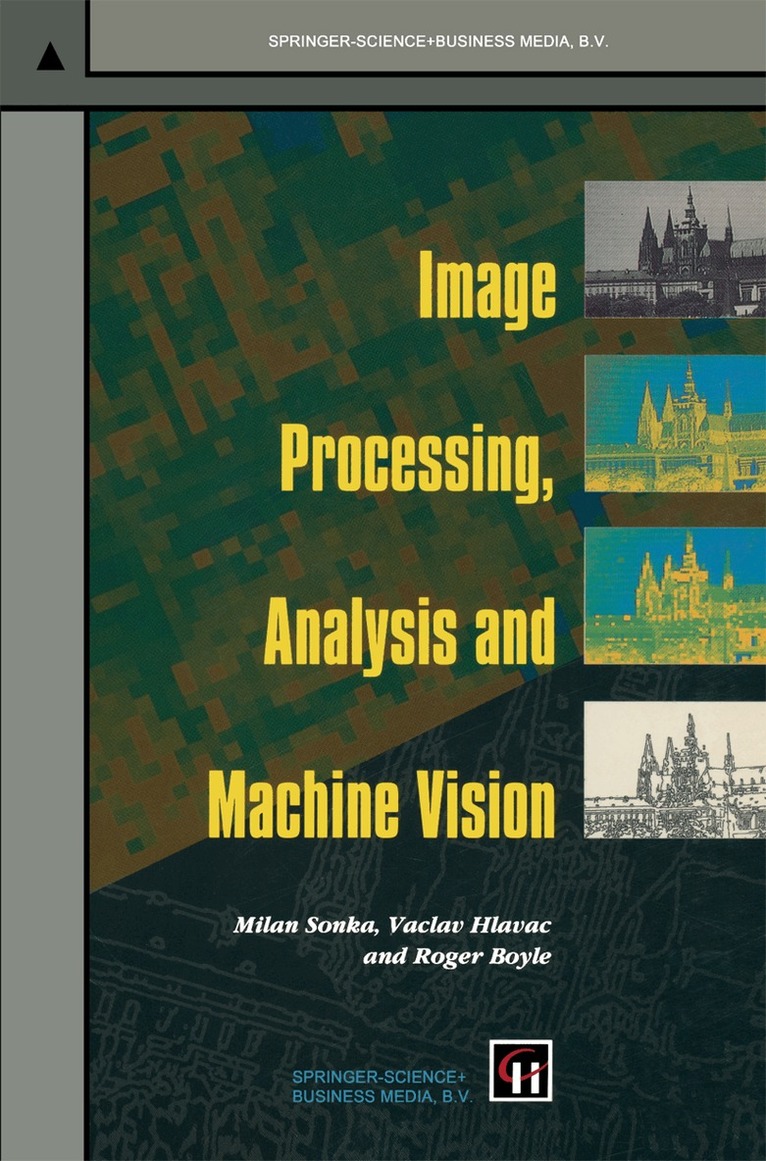
Image Processing, Analysis and Machine Vision represent an exciting part of modern cognitive and computer science. Following an explosion of inter est during the Seventies, the Eighties were characterized by the maturing of the field and the significant growth of active applications; Remote Sensing, Technical Diagnostics, Autonomous Vehicle Guidance and Medical Imaging are the most rapidly developing areas. This progress can be seen in an in creasing number of software and hardware products on the market as well as in a number of digital image processing and machine vision courses offered at universities world-wide. There are many texts available in the areas we cover - most (indeed, all of which we know) are referenced somewhere in this book. The subject suffers, however, from a shortage of texts at the 'elementary' level - that appropriate for undergraduates beginning or completing their studies of the topic, or for Master's students - and the very rapid developments that have taken and are still taking place, which quickly age some of the very good text books produced over the last decade or so. This book reflects the authors' experience in teaching one and two semester undergraduate and graduate courses in Digital Image Processing, Digital Image Analysis, Machine Vision, Pattern Recognition and Intelligent Robotics at their respective institutions.
Inbunden, Engelska, 2002
563 kr
Skickas inom 10-15 vardagar
This monograph explores the close relationship of various well-known pattern recognition problems that have so far been considered independent. These relationships became apparent with the discovery of formal procedures for addressing known problems and their generalisations. The generalised problem formulations were analysed mathematically and unified algorithms were found. The main scientific contribution of this book is the unification of two main streams in pattern recognition - statistical and structural. The material is presented in the form of ten lectures, each of which concludes with a discussion with a student.
E-bok
PDF, Engelska, 20131 459 kr
Läs direkt efter köp
Image Processing, Analysis and Machine Vision represent an exciting part of modern cognitive and computer science. Following an explosion of inter est during the Seventies, the Eighties were characterized by the maturing of the field and the significant growth of active applications; Remote Sensing, Technical Diagnostics, Autonomous Vehicle Guidance and Medical Imaging are the most rapidly developing areas. This progress can be seen in an in creasing number of software and hardware products on the market as well as in a number of digital image processing and machine vision courses offered at universities world-wide. There are many texts available in the areas we cover - most (indeed, all of which we know) are referenced somewhere in this book. The subject suffers, however, from a shortage of texts at the ''elementary'' level - that appropriate for undergraduates beginning or completing their studies of the topic, or for Master''s students - and the very rapid developments that have taken and are still taking place, which quickly age some of the very good text books produced over the last decade or so. This book reflects the authors'' experience in teaching one and two semester undergraduate and graduate courses in Digital Image Processing, Digital Image Analysis, Machine Vision, Pattern Recognition and Intelligent Robotics at their respective institutions.
Häftad, Engelska, 2000
565 kr
Skickas inom 10-15 vardagar
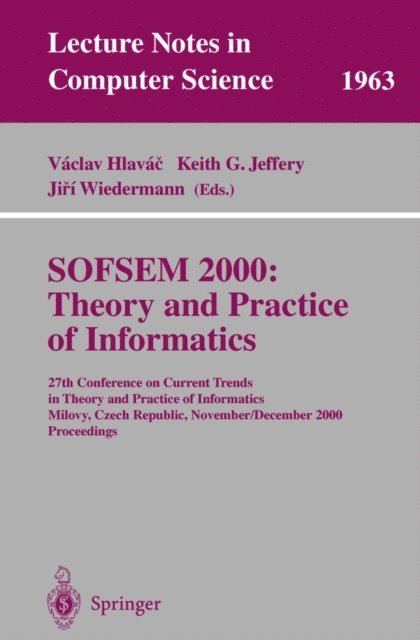
The international conference on current trends in the theory and practice of informatics SOFSEM 2000 was held 25 November–2 December 2000 in the c- ference facilities of the Dev?et Skal (Nine Rocks) Hotel, Milovy, Czech-Moravian Highlands, the Czech Republic. It was already the 27th annual meeting in the series of SOFSEM conferences organized in either the Czech or the Slovak Rep- lic. Since its establishment in 1974, SOFSEM has gone through a long dev- opment in parallel with the entire ?eld of informatics. Currently SOFSEM is a wide-scope, multidisciplinary conference, with stress on the interplay between the theory and practice of informatics. The SOFSEM scienti?c program consists mainly of invited talks which determine the topics of the conference. Invited talks are complemented by short refereed talks contributed by SOFSEM parti- pants. The topics of invited talks are chosen so as to cover the span from theory to practice and to bring interesting research areas to the attention of conf- ence participants. For the year 2000, the following three streams were chosen for presentation by the SOFSEM Steering Committee: – Trends in Algorithmics – Information Technologies in Practice – Computational Perception The above streams were covered through 16 invited talks given by prominent researchers. There were 18 contributed talks also presented, chosen by the int- national Program Committee from among 36 submitted papers. The program also included a panel on lessons learned from the Y2K problem.
E-bok
PDF, Engelska, 2003708 kr
Läs direkt efter köp
The international conference on current trends in the theory and practice of informatics SOFSEM 2000 was held 25 November–2 December 2000 in the c- ference facilities of the Dev?et Skal (Nine Rocks) Hotel, Milovy, Czech-Moravian Highlands, the Czech Republic. It was already the 27th annual meeting in the series of SOFSEM conferences organized in either the Czech or the Slovak Rep- lic. Since its establishment in 1974, SOFSEM has gone through a long dev- opment in parallel with the entire ?eld of informatics. Currently SOFSEM is a wide-scope, multidisciplinary conference, with stress on the interplay between the theory and practice of informatics. The SOFSEM scienti?c program consists mainly of invited talks which determine the topics of the conference. Invited talks are complemented by short refereed talks contributed by SOFSEM parti- pants. The topics of invited talks are chosen so as to cover the span from theory to practice and to bring interesting research areas to the attention of conf- ence participants. For the year 2000, the following three streams were chosen for presentation by the SOFSEM Steering Committee: – Trends in Algorithmics – Information Technologies in Practice – Computational Perception The above streams were covered through 16 invited talks given by prominent researchers. There were 18 contributed talks also presented, chosen by the int- national Program Committee from among 36 submitted papers. The program also included a panel on lessons learned from the Y2K problem.
Häftad, Engelska, 1995
566 kr
Skickas inom 10-15 vardagar
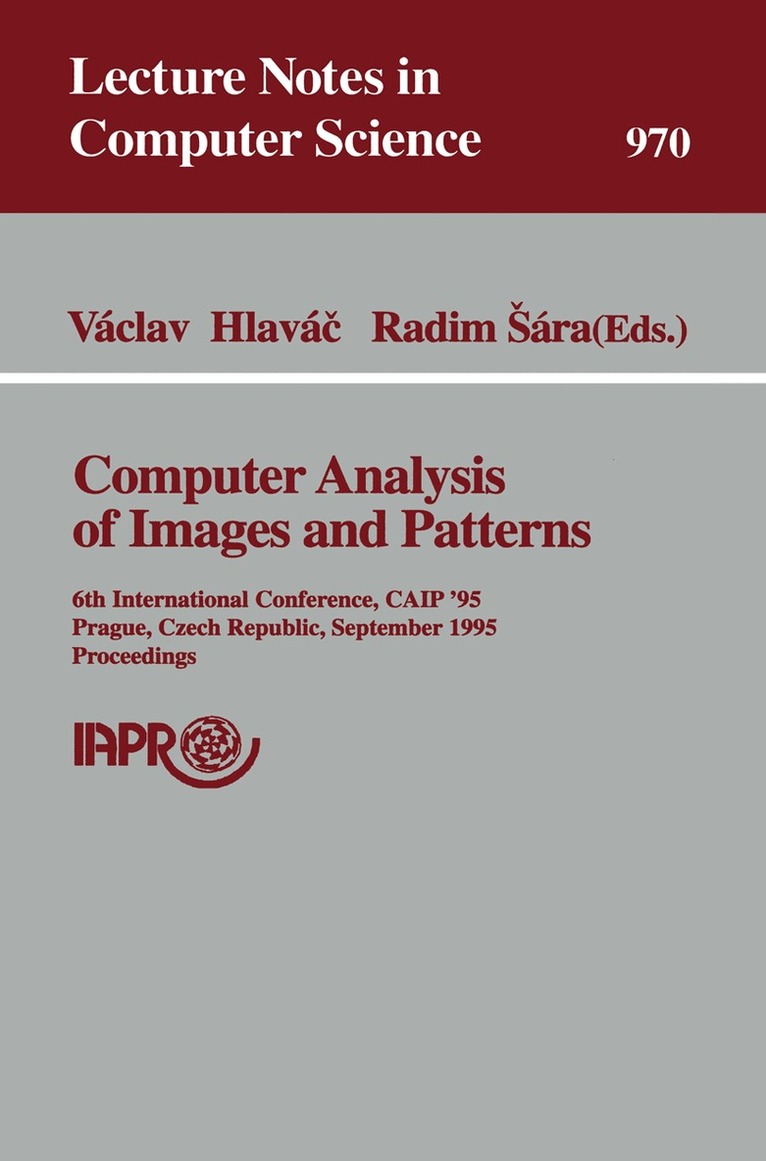
This book presents the proceedings of the Sixth International Conference on Computer Analysis of Images and Patterns, CAIP '95, held in Prague, Czech Republic in September 1995.The volume presents 61 full papers and 75 posters selected from a total of 262 submissions and thus gives a comprehensive view on the state-of-the-art in computer analysis of images and patterns, research, design, and advanced applications. The papers are organized in sections on invariants, segmentation and grouping, optical flow, model recovery and parameter estimation, low level vision, motion detection, structure and matching, active vision and shading, human face recognition, calibration, contour, and sessions on applications in diverse areas.
Del 24 - Computational Imaging and Vision
Ten Lectures on Statistical and Structural Pattern Recognition
Häftad, Engelska, 2011
549 kr
Skickas inom 10-15 vardagar
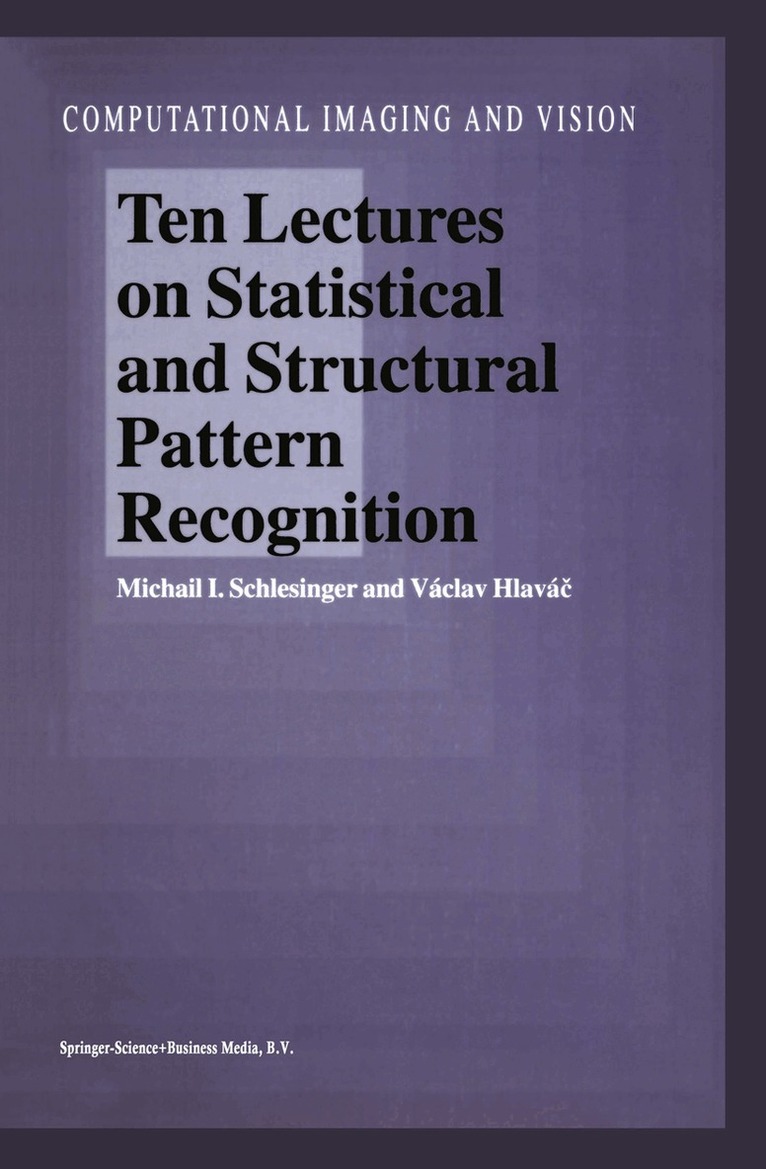
Preface to the English edition This monograph Ten Lectur,es on Statistical and Structural Pattern Recognition uncovers the close relationship between various well known pattern recognition problems that have so far been considered independent. These relationships became apparent when formal procedures addressing not only known prob lems but also their generalisations were discovered. The generalised problem formulations were analysed mathematically and unified algorithms were found. The book unifies of two main streams ill pattern recognition-the statisti cal a11d structural ones. In addition to this bridging on the uppermost level, the book mentions several other unexpected relations within statistical and structural methods. The monograph is intended for experts, for students, as well as for those who want to enter the field of pattern recognition. The theory is built up from scratch with almost no assumptions about any prior knowledge of the reader. Even when rigorous mathematical language is used we make an effort to keep the text easy to comprehend. This approach makes the book suitable for students at the beginning of their scientific career. Basic building blocks are explained in a style of an accessible intellectual exercise, thus promoting good practice in reading mathematical text. The paradoxes, beauty, and pitfalls of scientific research are shown on examples from pattern recognition. Each lecture is amended by a discussion with an inquisitive student that elucidates and deepens the explanation, providing additional pointers to computational procedures and deep rooted errors.
E-bok
PDF, Engelska, 2013712 kr
Läs direkt efter köp
Preface to the English edition This monograph Ten Lectur,es on Statistical and Structural Pattern Recognition uncovers the close relationship between various well known pattern recognition problems that have so far been considered independent. These relationships became apparent when formal procedures addressing not only known prob lems but also their generalisations were discovered. The generalised problem formulations were analysed mathematically and unified algorithms were found. The book unifies of two main streams ill pattern recognition-the statisti cal a11d structural ones. In addition to this bridging on the uppermost level, the book mentions several other unexpected relations within statistical and structural methods. The monograph is intended for experts, for students, as well as for those who want to enter the field of pattern recognition. The theory is built up from scratch with almost no assumptions about any prior knowledge of the reader. Even when rigorous mathematical language is used we make an effort to keep the text easy to comprehend. This approach makes the book suitable for students at the beginning of their scientific career. Basic building blocks are explained in a style of an accessible intellectual exercise, thus promoting good practice in reading mathematical text. The paradoxes, beauty, and pitfalls of scientific research are shown on examples from pattern recognition. Each lecture is amended by a discussion with an inquisitive student that elucidates and deepens the explanation, providing additional pointers to computational procedures and deep rooted errors.