Milos Marek - Böcker
Visar alla böcker från författaren Milos Marek. Handla med fri frakt och snabb leverans.
2 produkter
2 produkter
649 kr
Skickas inom 7-10 vardagar
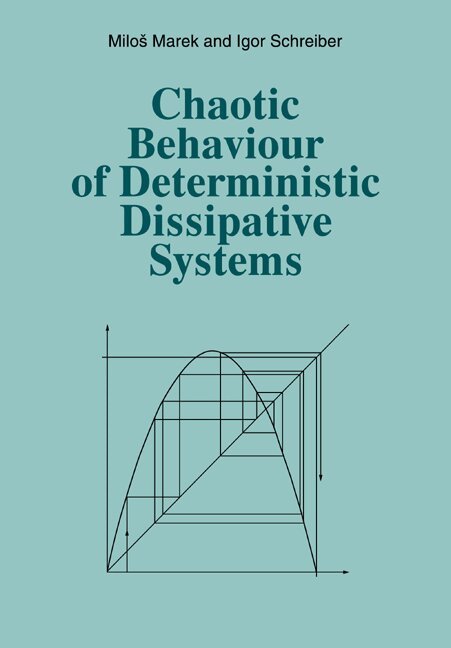
This is a graduate text surveying both the theoretical and experimental aspects of chaotic behaviour. Over the course of the past two decades it has been discovered that relatively simple, deterministic, nonlinear mathematical models that describe dynamic phenomena in various physical, chemical, biological and other systems yield solutions which are aperiodic and depend very sensitively on the initial conditions. This phenomenon is known as deterministic chaos. The authors present chaos as a model of many seemingly random processes in nature. Basic notions from the theory of dynamical systems and bifurcation theory, together with the properties of chaotic solutions, are then described and are illustrated by examples. A review of the numerical methods used both in studies of mathematical models and in the interpretation of experimental data is also provided.
2 166 kr
Skickas inom 10-15 vardagar
The story of Wallachian mobility and settlement is remarkably central to the human condition. At its core, it reflects a fundamental drive to enhance daily life by migrating to new territories. The Wallachian features not only shaped their own existence but also left a lasting impact on the regions they inhabited along the Carpathian Arc. Through their migration beginning roughly in the 14th century and culminating in the 18th, they not only became part of a larger narrative of human resilience and adaptability but also reflect humanity’s drive for better opportunity.Wallachian Mobility and Settlement Carpathian Arc, a project initiated by the Balkan History Association, seeks to fill this void by bringing together the research from multinational scholars of various academic disciplines. Scholars and students seeking to further understand the prevailing academic literature on this topic will find this an invaluable, one-of-a-kind resource.The volume serves as a segue into various academic discussions and encourages exploration of socio-cultural exchange, economic impacts of migration, interethnic interactions, legal systems, environmental effects, technological transfers, linguistic changes and studies on diaspora. Delving into this comparative analysis highlights the complexities and interconnectedness of history.