• Fri frakt över 249 kr
  • •
  • Snabba leveranser
  • •
  • Billiga böcker
Kundservice

Du är på sajten för privatpersoner.

Företag, bibliotek eller offentlig verksamhet?

Du handlar på classic.bokus.com, där alla dina funktioner finns intakta.
Till classic.bokus.com
Bokus logotyp. Gå till startsidan.
  • Erbjudanden
  • Nyheter
  • Student
  • Topplistor
  • Barn & ungdom
  • Bokus Play
  • E-böcker
  • Pocketböcker
  • Spel & pussel

10% rabatt på allt med kod: NYSTART10 →

Sidfot

Mina sidor

    Hjälp

    • Kundservice
    • Vanliga frågor och svar
    • Frakt och leverans
    • Retur vid ångerrätt
    • Reklamera vara
    • Betalning
    • Köpvillkor
    • Allmänna villkor
    • Information om webbplatsens tillgänglighet

    Om Bokus

    • Om oss
    • Pressrum
    • För studenter
    • För företag
    • För bibliotek och offentlig verksamhet
    • För leverantörer
    • Hållbarhet

    Populärt

    • Aktuella erbjudanden
    • Presentkort
    • Studentlitteratur
    • Nya böcker
    • Topplistor
    • Signerade böcker
    • Engelska böcker

    Inspiration

    • Boktips
    • BookTok
    • Populära bokserier
    • Barnbokskaraktärer
    • Populära författare
    Logotyp för Bokus
    Följ oss på Facebook (extern länk)Följ oss på Instagram (extern länk)Följ oss på YouTube (extern länk)Följ oss på TikTok (extern länk)
    bokus @ CookiesAnpassa cookiesIntegritetspolicyKöpvillkor
    Till Citymail hemsida (extern länk)Till Budbee hemsida (extern länk)Till Postnord hemsida (extern länk)Till Schenker hemsida (extern länk)Till Early Bird hemsida (extern länk)Till Walleys hemsida (extern länk)
    1. Historia och arkeologi
    2. Historia
    3. Europas historia
    • Nyhet

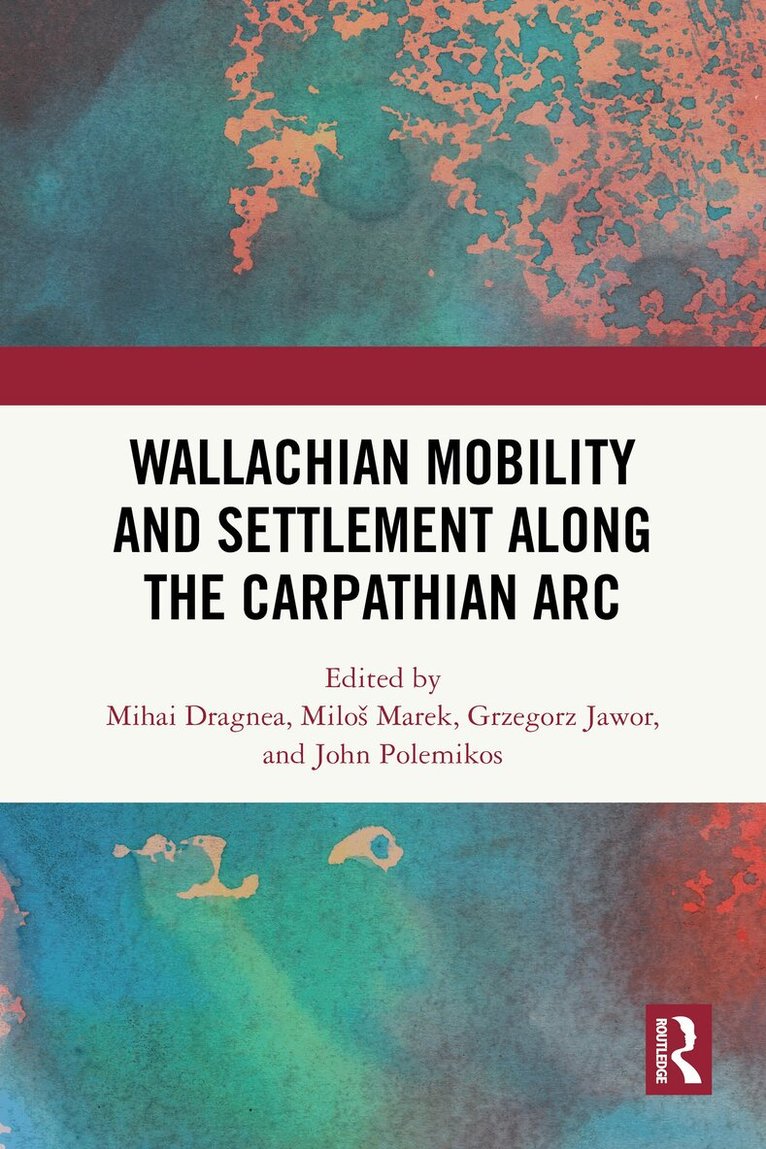
    Wallachian Mobility and Settlement along the Carpathian Arc

    AvMihai Dragnea,Miloš Marek

    Häftad, Engelska, 2026

    701 kr

    Beställningsvara. Skickas inom 10-15 vardagar. Fri frakt över 249 kr.

    Beskrivning

    The story of Wallachian mobility and settlement is remarkably central to the human condition. At its core, it reflects a fundamental drive to enhance daily life by migrating to new territories. The Wallachian features not only shaped their own existence but also left a lasting impact on the regions they inhabited along the Carpathian Arc. Through their migration beginning roughly in the 14th century and culminating in the 18th, they not only became part of a larger narrative of human resilience and adaptability but also reflect humanity’s drive for better opportunity.Wallachian Mobility and Settlement Carpathian Arc, a project initiated by the Balkan History Association, seeks to fill this void by bringing together the research from multinational scholars of various academic disciplines. Scholars and students seeking to further understand the prevailing academic literature on this topic will find this an invaluable, one-of-a-kind resource.The volume serves as a segue into various academic discussions and encourages exploration of socio-cultural exchange, economic impacts of migration, interethnic interactions, legal systems, environmental effects, technological transfers, linguistic changes and studies on diaspora. Delving into this comparative analysis highlights the complexities and interconnectedness of history.

    Produktinformation

    • Utgivningsdatum:2026-07-20
    • Mått:156 x 234 x 13 mm
    • Vikt:440 g
    • Format:Häftad
    • Språk:Engelska
    • Antal sidor:224
    • Förlag:Taylor & Francis Ltd
    • ISBN:9781032819433

    Utforska kategorier

    • Europas historia inom Historia och arkeologi
    • Socialhistoria och kulturhistoria inom Historia och arkeologi
    • Språkvetenskap och lingvistik inom Språk och ordböcker

    Mer om författaren

    Mihai Dragnea, PhD, is the president of the Balkan History Association and Editor-in-Chief of Hiperboreea, the journal affiliated with the association and published by the Pennsylvania State University Press. Since December 2019, he is an associate researcher at the University of Southeastern Norway. He is a member of several public and private research units in Czechia, Poland, Serbia, UK, Romania, and editorial board member of journals in Croatia, Slovenia, Germany, Ukraine, and Romania. He is editor for the Peter Lang series: “South-East European History.” His interests include cultural, social, and political relations between Germans, Scandinavians and Slavs during the Middle Ages, early Slavic ethnicity and state formation, and identity and conflict in South-Eastern Europe.Miloš Marek is a professor in the Department of History in the Faculty of Philosophy and Arts at Trnava University, Trnava, Slovakia, and a member of the Balkan History Association. He received his education at the same university and earned a PhD in Slovakian history. He specializes in history and medieval Latin, and from 2006, he has conducted regular scientific research in the Vatican Apostolic Archives. His research interests focus on the history of medieval settlement, medieval ethnic groups, church history and editing of medieval sources. He has published many articles, books, source editions and a comprehensive dictionary of medieval and modern Latin.Grzegorz Jawor earned his History degree from Maria Curie-Skłodowska University in Lublin. He joined the School of History at UMCS as an assistant intern in 1984, obtaining his PhD in 1989 and advancing to Assistant Professor in 2000. He was conferred the title of Professor of the Humanities in 2014. Currently, he serves as the Director of the Department of Medieval Polish History and Economic History and as Associate Director of the School of History UMCS. Jawor specializes in medieval Polish history, particularly focusing on the rural landscape during the transition from the Middle Ages to modern times.John Polemikos is a teacher at Harlem High School in Machesney Park, Illinois. He is an active member of the Balkan History Association, Rockford Historical Society and Southeast European Studies Association. He earned a Bachelor of Arts in History from Northern Illinois University and a Master of Arts in Teaching from Rockford University, focusing on teaching history to students with special needs. He recently published "When Greek Meets Greek: Foundations of the Rockford Greek Orthodox Parish of Sts. Constantine and Helen" in Nuggets of History 61/4 (2022):1–12.

    Innehållsförteckning

    • Introduction: Current research, debates and controversies surrounding Wallachian mobility and settlementMihai Dragnea, Miloš Marek, Grzegorz Jawor, and John PolemikosChapter 1Theodore Skoutariotes’ Synopsis Chronike: a neglected source for the history of the Vlachs (12th-13th centuries)Anna KotłowskaChapter 2The Romanian Consuetudinary Law (Ius Valachicum). A Comparative Perspective and a Few Sources (14th-18th Centuries)Ela CosmaChapter 3Wallachian colonization and its traces in the toponymy of Slovakia (14th-18th centuries)Miloš MarekChapter 4Wallachian Colonization and its Impact on the Landscape: A Case Study of Central Slovakia in the Late Middle Ages and Early Modern PeriodOto TomečekChapter 5Speaking to the Morlachs: A discussion of the language, state agents and mechanisms involved in communicating with the Morlachs in 16th century Venetian DalmatiaDana Caciur-AndreescuChapter 6On the Heritage of Carpathian Settlers in Eastern Moravia: Early Modern Linguistic Borrowings into the Wallachian DialectMarta Šimečková and Vít BočekChapter 7The Image of Highlanders in the Czech Republic: The Disputed Land and History of Moravian Wallachia (17th-18th centuries)Petra KošťálováChapter 8Economic activity of the hereditary subject classes in south-eastern Moravia in the shadow of the military conflicts of the 17th and early 18th centuryPetr OdehnalChapter 9Historical Anoikonyms and Oikonyms in Relation to Wallachian Colonization of Halenkov from 17th–19th centuries (Moravian Wallachia)Ivana Spitzer Ostřanská