Mihai Dragnea – författare
Visar alla böcker från författaren Mihai Dragnea. Handla med fri frakt och snabb leverans.
13 produkter
13 produkter
Inbunden, Engelska, 2019
786 kr
Skickas inom 10-15 vardagar
The Wendish Crusade of 1147, one of the Northern Crusades and a part of the Second Crusade, took place at a critical phase in the evolution of crusading rhetoric. The initiators and apologists of the campaign employed rhetorical devices to justify the occupation of a region and conversion of a population under the auspices of a crusade. A detailed examination of the primary sources shows that the justification of a crusade against apostates was not only a German endeavour, or the pope’s will, but a political reality of the twelfth century. Therefore, the attitude of the papacy is shown to be reactive rather than proactive.
Häftad, Engelska, 2021
361 kr
Skickas inom 10-15 vardagar
The Wendish Crusade of 1147, one of the Northern Crusades and a part of the Second Crusade, took place at a critical phase in the evolution of crusading rhetoric. The initiators and apologists of the campaign employed rhetorical devices to justify the occupation of a region and conversion of a population under the auspices of a crusade. A detailed examination of the primary sources shows that the justification of a crusade against apostates was not only a German endeavour, or the pope’s will, but a political reality of the twelfth century. Therefore, the attitude of the papacy is shown to be reactive rather than proactive.
Inbunden, Engelska, 2025
2 202 kr
Skickas inom 10-15 vardagar
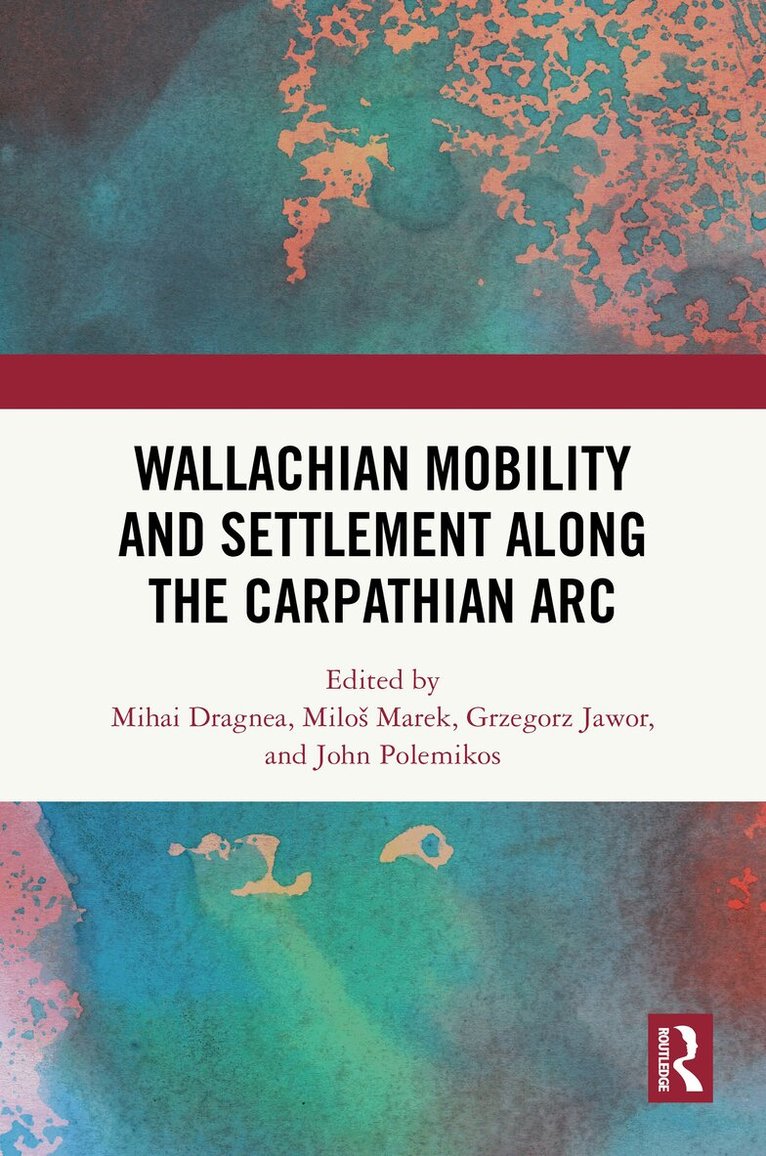
The story of Wallachian mobility and settlement is remarkably central to the human condition. At its core, it reflects a fundamental drive to enhance daily life by migrating to new territories. The Wallachian features not only shaped their own existence but also left a lasting impact on the regions they inhabited along the Carpathian Arc. Through their migration beginning roughly in the 14th century and culminating in the 18th, they not only became part of a larger narrative of human resilience and adaptability but also reflect humanity’s drive for better opportunity.Wallachian Mobility and Settlement Carpathian Arc, a project initiated by the Balkan History Association, seeks to fill this void by bringing together the research from multinational scholars of various academic disciplines. Scholars and students seeking to further understand the prevailing academic literature on this topic will find this an invaluable, one-of-a-kind resource.The volume serves as a segue into various academic discussions and encourages exploration of socio-cultural exchange, economic impacts of migration, interethnic interactions, legal systems, environmental effects, technological transfers, linguistic changes and studies on diaspora. Delving into this comparative analysis highlights the complexities and interconnectedness of history.
Häftad, Engelska, 2026
685 kr
Kommande
The story of Wallachian mobility and settlement is remarkably central to the human condition. At its core, it reflects a fundamental drive to enhance daily life by migrating to new territories. The Wallachian features not only shaped their own existence but also left a lasting impact on the regions they inhabited along the Carpathian Arc. Through their migration beginning roughly in the 14th century and culminating in the 18th, they not only became part of a larger narrative of human resilience and adaptability but also reflect humanity’s drive for better opportunity.Wallachian Mobility and Settlement Carpathian Arc, a project initiated by the Balkan History Association, seeks to fill this void by bringing together the research from multinational scholars of various academic disciplines. Scholars and students seeking to further understand the prevailing academic literature on this topic will find this an invaluable, one-of-a-kind resource.The volume serves as a segue into various academic discussions and encourages exploration of socio-cultural exchange, economic impacts of migration, interethnic interactions, legal systems, environmental effects, technological transfers, linguistic changes and studies on diaspora. Delving into this comparative analysis highlights the complexities and interconnectedness of history.
Inbunden, Engelska, 2021
535 kr
Skickas inom 5-8 vardagar
This book addresses the conversion of the Wends, and how Christian writers of the tenth and eleventh centuries perceived the submission of the Wends to the Christian faith. The main concern of the ecclesiastical authorities was to bring the apostate Wends back into the imperium Christianum: everyone who had accepted Christian baptism had to be prevented by all possible means from religious and political apostasy. More widely, the formation of a Christian identity is an excellent example of how conversion was a fluid set of propositions, discussed and rehearsed, influenced by many factors (not just canonical), and deployed in many contexts. This book’s task is to unravel how this dynamism played out against a marginal group.Reviewed in English by Aleksander Paroń, Speculum, Vol. 99, No. 2 (2024): 567-568; Miroslav Atanasov, Religious Studies Review, Vol. 49, No. 3 (2023): 39; in German by Felix Biermann, Baltische Studien. Pommersche Jahrbücher für Landesgeschichte, Vol. 108 (2022): 201-203; in English by Antoni Grabowski, Acta Poloniae Historica, Vol. 125 (2022): 206-262, Marian Dygo, Zapiski Historyczne, Vol. 87, No. 4 (2022): 145-151, David Kalhous, Historia Slavorum Occidentis, Vol. 1, No. 32 (2022): 186-188 and Tomislav Galović, Journal of the Institute of Croatian History, Vol. 53, No. 2 (2021): 316-318; in Czech by Jaroslav Vokoun, Studia Theologica, Vol. 23, No. 4, (2021): 155-157; in Slovenian by Simon Malmenvall, Bogoslovni vestnik, Vol. 81, No. 1, 2021, pp. 250-252).
Del 5 - South-East European History
Nationalisation of the Sacred
Orthodox Historiography, Memory, and Politics in Montenegro
Inbunden, Engelska, 2024
870 kr
Skickas inom 5-8 vardagar
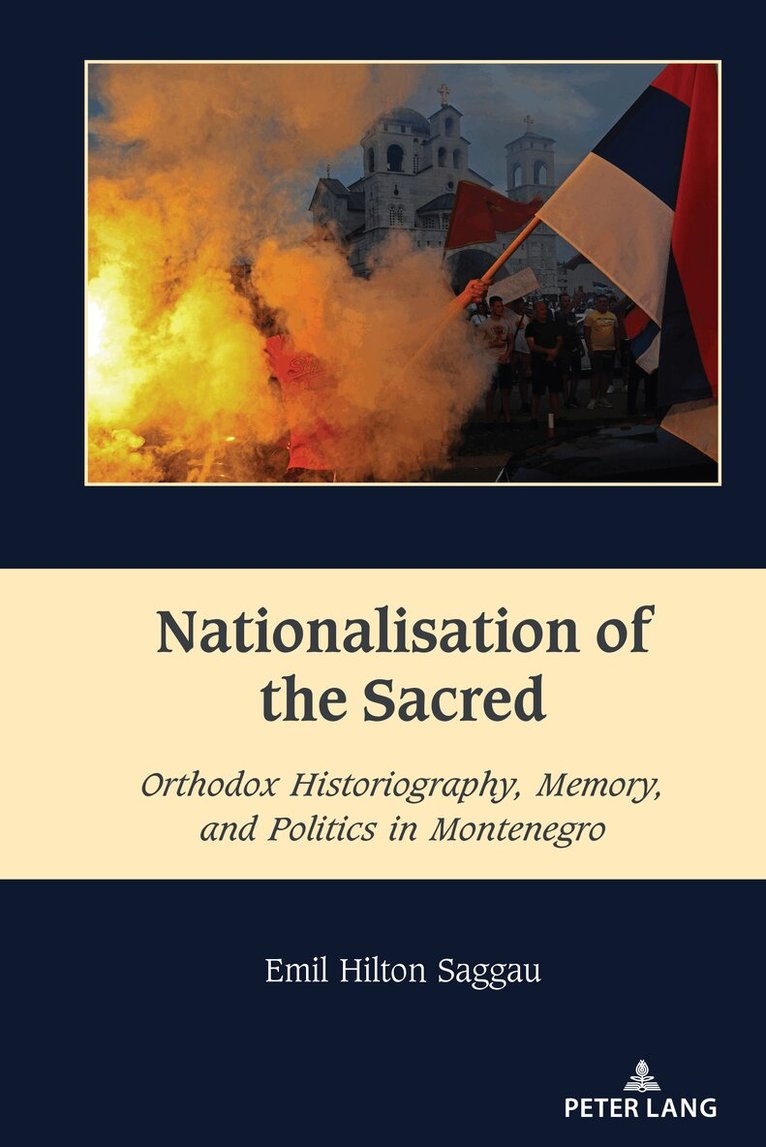
The Eastern Orthodox Churches in post-communist Eastern Europe are embroiled in long-running conflicts over ownership of territory, saints, sites, nations, and history. These often violent conflicts reflect political and national rivalries, most explicitly in former Yugoslavia and Ukraine. They are often understood as simplified ethnic-national tensions with religious overtones, but, as this book demonstrates such an assessment overlooks the deeper theological and historiographical framework.Nationalisation of the Sacred offers a detailed analysis of the theological backdrop to these conflicts. It analyses how various strands of Eastern Orthodoxy have adapted to the contemporary political context, a process where history, memory, and politics are transformed to fit the needs of rival nations and churches. The book provides an in-depth analysis of this process and the transformations in church-related conflicts in post-communist Montenegro, where the Serbian Orthodox Church has been pitted against a rival Montenegrin church and Montenegrin government.Additionally the book provides an up-to-date and unique analysis of Eastern Orthodox historiography, modern Serbian theology, religion in Montenegro more broadly, and the roots of the violent clash between Orthodox believers and the Montenegrin government in 2019-2021.
Del 2 - South-East European History
Aspects of Islamic Radicalization in the Balkans After the Fall of Communism
Inbunden, Engelska, 2023
910 kr
Skickas inom 5-8 vardagar
This book explores the channels through which Islamic fundamentalism has spread among Muslim populations in the Balkans since the fall of communism. The authors collectively examine political and religious ties between Balkan Muslims and various private organizations and state institutions in Muslim states, with a particular focus on the reception of Salafism and its Saudi version, Wahhabism. In that context, they debate the extent to which war crimes committed by Muslims during the Yugoslav Wars were motivated by Salafism, rather than being a result of domestic ethno-national conflicts. Finally, the book also addresses the ideological climate that has generated volunteers for Islamic State (Daesh) in recent years.Cumulatively these essays emphasize the risks to national security in the Western Balkans represented by the return of Islamic State fighters and the spread of so-called jihadist-Salafism within Muslim communities. The volume is intended to help the reader understand the Balkan states’ foreign policy as a response towards the Muslim world in the context of the global war against terrorism. It is the outcome of a research project of the Balkan History Association. "This volume shows that Muslim communities in the Western Balkans face intense propaganda from radical Islam and the incitement of hatred and interreligious divisions, aiming to indoctrinate moderate and tolerant Balkan Muslims. Kosovar youth, for instance, are exposed to a radical ideology which, under the influence of imams trained in fundamentalist madrassas in the Middle East, aims to create a new kind of Muslim, one who is ignorant of the past, of national identity and the values of democracy, and who is concerned only with 'Islamic' values propagated through Salafism."—Kolë Krasniqi, University "Haxhi Zeka" in Peja, Kosovo"Although Islam has historically been a socio-cultural pillar of Southeast European societies, the recent turmoil and failed revolutions across the Muslim world have influenced sections of Muslim communities in the region. This excellent collected volume is a much-needed attempt to trace the subtle workings of re-Islamisation and changes in traditional Muslim identities under the influence of foreign forms of Islam. All chapters show remarkable scholarly achievement and the fruitfulness of pursuing interdisciplinary perspectives on the development of Balkan Muslims communities since 1989."—Francesco Trupia, Nicolaus Copernicus University, Poland
Del 4 - South-East European History
Etymological Dictionary of the Romanian Language
Inbunden, Engelska, 2023
1 154 kr
Skickas inom 5-8 vardagar
The book is a first attempt to analyze the complex problems of Romanian etymology in English. Romanian is a Romance language, but it also inherits an old Pre-Romance layer represented by both Indo-European and Pre-Indo-European elements such as Greek and Albanian. The book is divided into three parts. Part 1 is an extensive introduction which summarises the archaeological, historical, and linguistic problems of southeast Europe, with a focus on Romanian and its neighboring languages (the Slavic languages and Hungarian). It reviews various hypotheses regarding the region’s prehistoric cultures and how they developed across millennia; it continues with the Thracian cultural groups, which represent the substratum of Romanian, and how these groups underwent a long and complex process of Romanization; and finally, it analyzes the migration period and the new cultural groups that emerged during this long period.Part 2, the dictionary, includes more than 5,000 entries reflecting the representative vocabulary, but also rare and dialectal words, and words referring to flora and fauna. It covers the old Latin heritage, the substratum heritage, and Slavic, Hungarian and Ottoman influences, as well as some relevant neo-Romance elements ("the New Romanization of Romanian", a mainly nineteenth-century process.). Part 3 includes a glossary, as well as lists of the relevant prehistoric roots quoted in the dictionary.
Del 13 - South-East European History
Deportation in East Central Europe in the 20th Century
Snapshots of Invisible Incarceration
Inbunden, Engelska, 2024
896 kr
Skickas inom 5-8 vardagar
This edited collection presents a wide-ranging survey of forced deportations by totalitarian regimes in Eastern Europe throughout the 20th century. _e chapters focus on deportation policies and practices among regimes in Romania, Ukraine, Albania, Hungary, Poland, Bulgaria, Greece, and the former U.S.S.R, collectively highlighting the long-term effects of these policies and their significance to contemporary societies in Eastern Europe.Deportation was a pervasive phenomenon, with socio-economic, demographic, and political implications that have structurally affected the shape and composition of contemporary European societies. Whether considering political repression, ideological clashes, social upheavals, territorial claims, ethnic cleansing, or conflicts within and between societies, deportation was a destabilizing factor across all aspects of twentieth-century East European history.Applying cross-disciplinary perspectives, each case study makes extensive use of archival material or oral histories, presenting the stories of those "undesirables" who were cast out by political systems and the communities torn apart by their removal. These snapshots are not just memories of a time gone by, but visceral encounters with individuals, communities, ethnic and religious groups – a scholarly gaze into experiences that spanned across various realms, from the physical to the psychological and the profoundly spiritual. In tracing the impact of these policies down to the present day, the authors not only recount and reassess the dark tides of history but also contemplate the resilience of the human spirit in the face of overwhelming adversity.This volume stands as a crucial resource for researchers, educators, and policymakers. The result of a project initiated by the Balkan History Association, this volume stands as a crucial resource for researchers, educators, and policy makers.
Del 14 - South-East European History
Longue Durée of Paramilitarism
Balkan and Global Perspectives
Inbunden, Engelska, 2024
841 kr
Skickas inom 5-8 vardagar
As turbulent events – including war, civil war, armed intervention, humanitarian crises and civil unrest – unfold around the globe, the actions of various types of paramilitary organization have attracted considerable attention in academic circles, as well as among the public. Bringing together a wide range of respected authors from a variety of academic backgrounds, this volume builds on a rapidly developing literature on paramilitarism, with a focus on the Balkans, East-Central Europe, and the Caucasus. Chapters cover historical examples and various aspects of paramilitarism, including relationships with the state, legal contexts, conduct towards civilian populations, governance, recruitment, links to organized crime or terrorism, violence, and memory and legacy. Overall, this book aims to reassess the existing body of knowledge, and to offer a new theoretical conceptualization of paramilitarism spanning the twentieth and twenty-first centuries. It is the outcome of a research project initiated by the editors and supported by the Balkan History Association.
Del 15 - South-East European History
Saints in the Slavic Christian World
Assessing Power, Religion and Language in Religious Literature
Inbunden, Engelska, 2025
870 kr
Skickas inom 5-8 vardagar
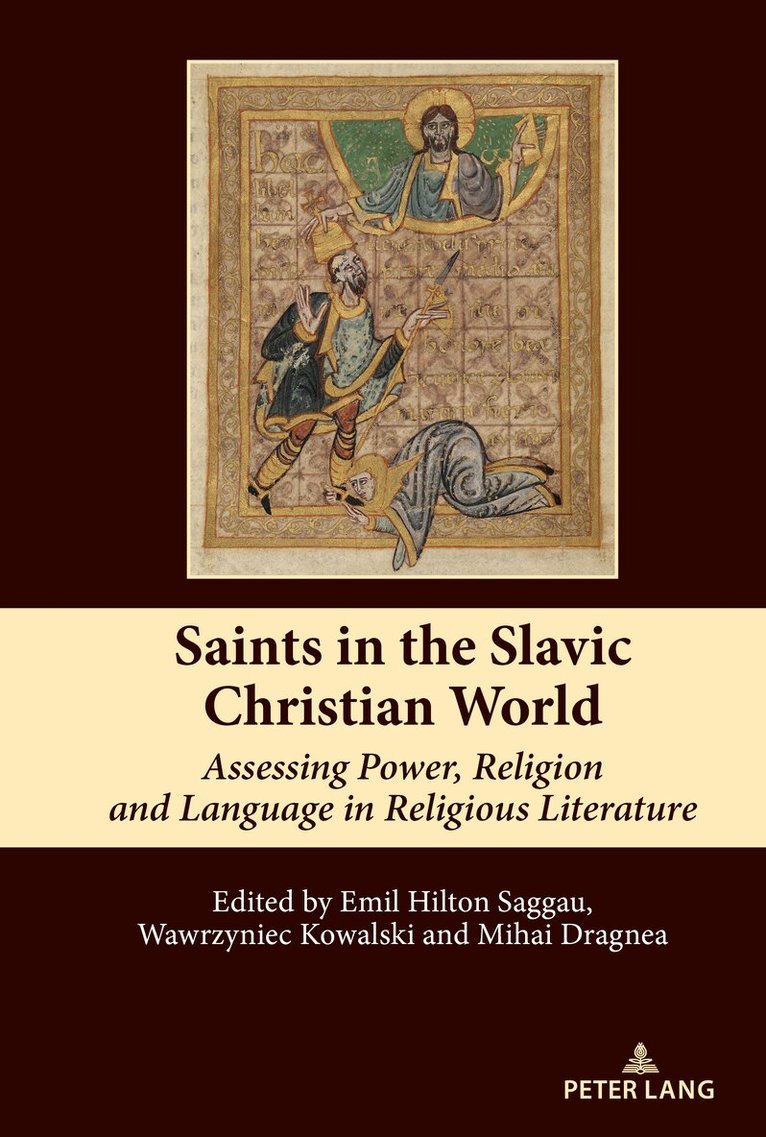
This landmark edited collection offers a new series of studies of power, religion and language in the literature of the Slavic Christian world. The focus is on how saints became symbols of power during conversion and the process of transition to Christianity. Studies of locally venerated saints provide a road into early Slavic societies because saints and their cults existed and were sustained for a wide variety of reasons. Rulers and church-leaders alike needed symbols and narratives to maintain and expand their power, and hagiographies allow us to study how this power was brokered, shared and grasped by elites. Collectively, the authors in this volume pursue the idea that saints are an outward expression of Christianity becoming embedded and localized in the newly Christianized societies of East and Central Europe. The period covered here stretches from the Macedonian dynasty in Eastern Rome (c. 800) to the rise of Muscovite rule in Russia (c. 1600). The main focus is on the Slavic religious traditions but, as this volume demonstrates, Greek and Baltic traditions were also significant.This book will be essential reading for researchers and students interested in the religious and cultural history of Eastern Europe, the cult of saints, and the rise of Christendom.
Inbunden, Engelska, 2024
1 292 kr
Skickas inom 10-15 vardagar
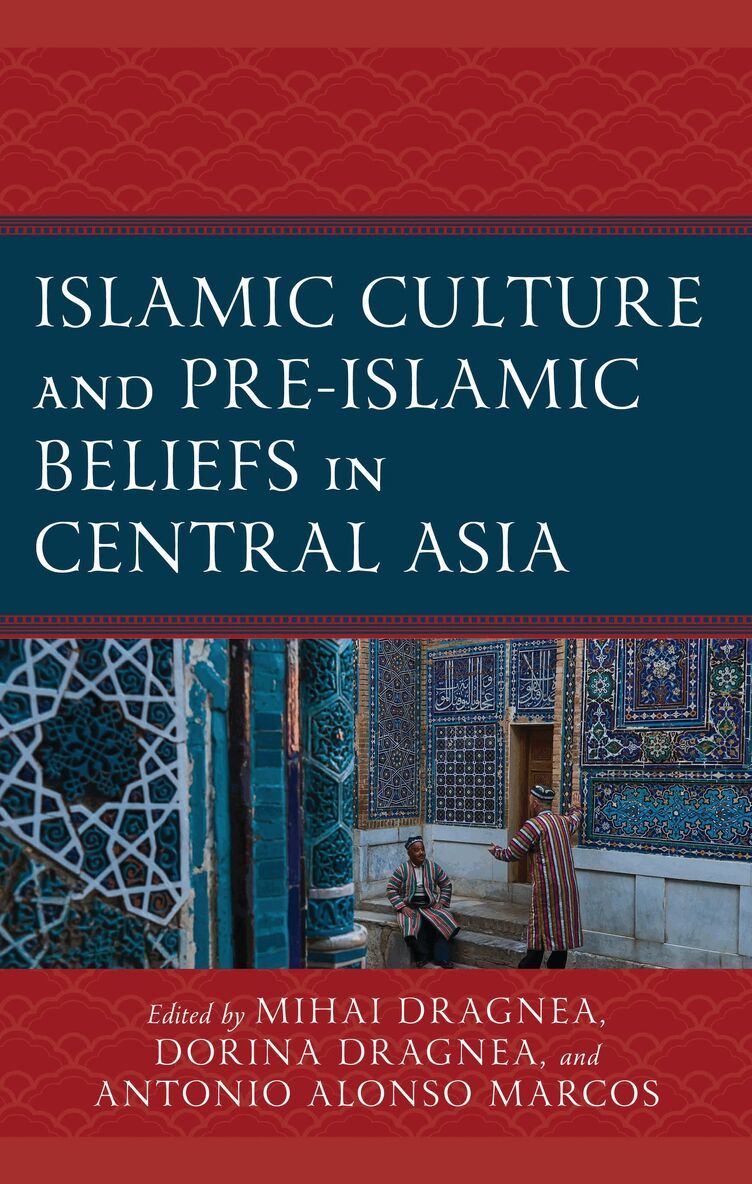
The introduction of Islam ushered in an era of social and cultural change to the region. Some pre-Islamic sacred places have been transformed into Islamic ones, and the cult of saints absorbed elements of both local and Arab mythology. This volume which is a project initiated by the Balkan History Association, focuses on Islamic culture, traditions, and pre-Islamic beliefs in Central Asia. The chapters emphasize the importance of religious life, the significance of certain “sacred places,” and their role in the socio-spiritual life. The volume includes research spanning a period from antiquity to the Post-Soviet era to explore how landscapes of religious places and practices were interpreted and reinterpreted through time.
Inbunden, Engelska, 2026
2 312 kr
Kommande
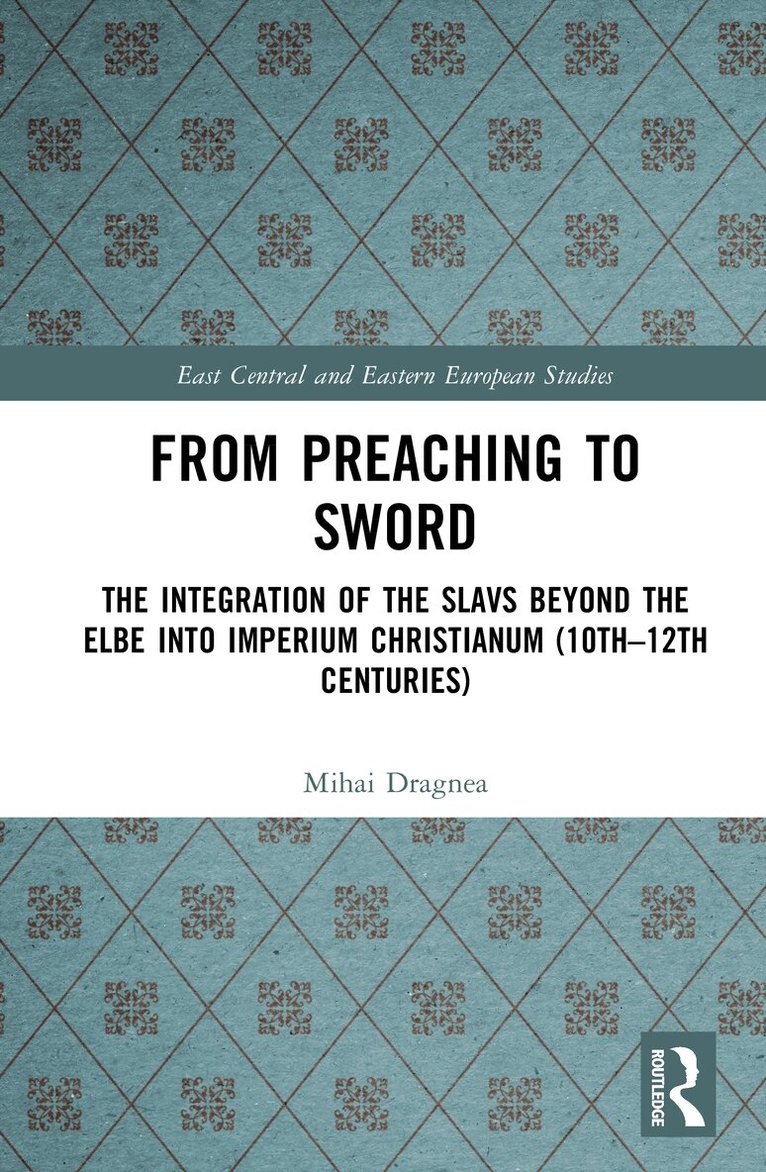
This book examines how Christian writers portrayed the conversion of Slavs beyond the Elbe River—a complex, centuries-long process spanning the tenth through twelfth centuries. Rather than a simple narrative of religious transformation, this conversion unfolded through multiple influences, scholarly debates, and specific historical contexts.The work explores the intricate relationship between conversion and warfare, examining how crusade ideology intersected with territorial conquest. Through detailed analysis, the chapters reveal how this religious and political dynamism affected marginalized populations and demonstrate theology's crucial influence on these processes. The final phase of Slavic integration coincided with a pivotal moment in the development of crusading rhetoric throughout German territories. This timing proved significant for understanding both the conversion process and broader medieval Christian identity.The book offers fresh insights into medieval Christian identity while challenging modern assumptions about paganism. Medieval paganism emerges as a fluid concept rooted in biblical notions of disobedience, rebellion, apostasy, and idolatry—distinct from contemporary pagan movements. These findings will stimulate new research directions on paganism throughout the medieval Latin periphery.