Mohammad H. Sadraey – författare
2 539 kr
Läs direkt efter köp
Aircraft Performance: An Engineering Approach, Second Edition introduces flight performance analysis techniques of fixed-wing air vehicles, particularly heavier-than-aircraft. It covers maximum speed, absolute ceiling, rate of climb, range, endurance, turn performance, and takeoff run.
Enabling the reader to analyze the performance and flight capabilities of an aircraft by utilizing only the aircraft weight data, geometry, and engine characteristics, this book covers the flight performance analysis for both propeller-driven and jet aircraft. The second edition features new content on vertical takeoff and landing, UAV launch, UAV recovery, use of rocket engine as the main engine, range for electric aircraft, electric engine, endurance for electric aircraft, gliding flight, pull-up, and climb-turn. In addition, this book includes end-of-chapter problems, MATLAB® code and examples, and case studies to enhance and reinforce student understanding.
This book is intended for senior undergraduate aerospace students taking courses in Aircraft Performance, Flight Dynamics, and Flight Mechanics.
Instructors will be able to utilize an updated Solutions Manual and Figure Slides for their course.
2 539 kr
Läs direkt efter köp
Aircraft Performance: An Engineering Approach, Second Edition introduces flight performance analysis techniques of fixed-wing air vehicles, particularly heavier-than-aircraft. It covers maximum speed, absolute ceiling, rate of climb, range, endurance, turn performance, and takeoff run.
Enabling the reader to analyze the performance and flight capabilities of an aircraft by utilizing only the aircraft weight data, geometry, and engine characteristics, this book covers the flight performance analysis for both propeller-driven and jet aircraft. The second edition features new content on vertical takeoff and landing, UAV launch, UAV recovery, use of rocket engine as the main engine, range for electric aircraft, electric engine, endurance for electric aircraft, gliding flight, pull-up, and climb-turn. In addition, this book includes end-of-chapter problems, MATLAB® code and examples, and case studies to enhance and reinforce student understanding.
This book is intended for senior undergraduate aerospace students taking courses in Aircraft Performance, Flight Dynamics, and Flight Mechanics.
Instructors will be able to utilize an updated Solutions Manual and Figure Slides for their course.
2 438 kr
Skickas inom 10-15 vardagar
798 kr
Skickas inom 10-15 vardagar
1 961 kr
Läs direkt efter köp
Provides a comprehensive introduction to the design and analysis of unmanned aircraft systems with a systems perspective
Written for students and engineers who are new to the field of unmanned aerial vehicle design, this book teaches the many UAV design techniques being used today and demonstrates how to apply aeronautical science concepts to their design.
Design of Unmanned Aerial Systems covers the design of UAVs in three sections—vehicle design, autopilot design, and ground systems design—in a way that allows readers to fully comprehend the science behind the subject so that they can then demonstrate creativity in the application of these concepts on their own. It teaches students and engineers all about: UAV classifications, design groups, design requirements, mission planning, conceptual design, detail design, and design procedures. It provides them with in-depth knowledge of ground stations, power systems, propulsion systems, automatic flight control systems, guidance systems, navigation systems, and launch and recovery systems. Students will also learn about payloads, manufacturing considerations, design challenges, flight software, microcontroller, and design examples. In addition, the book places major emphasis on the automatic flight control systems and autopilots.
Provides design steps and procedures for each major component Presents several fully solved, step-by-step examples at component level Includes numerous UAV figures/images to emphasize the application of the concepts Describes real stories that stress the significance of safety in UAV design Offers various UAV configurations, geometries, and weight data to demonstrate the real-world applications and examples Covers a variety of design techniques/processes such that the designer has freedom and flexibility to satisfy the design requirements in several ways Features many end-of-chapter problems for readers to practiceDesign of Unmanned Aerial Systems is an excellent text for courses in the design of unmanned aerial vehicles at both the upper division undergraduate and beginning graduate levels.
1 961 kr
Läs direkt efter köp
Provides a comprehensive introduction to the design and analysis of unmanned aircraft systems with a systems perspective
Written for students and engineers who are new to the field of unmanned aerial vehicle design, this book teaches the many UAV design techniques being used today and demonstrates how to apply aeronautical science concepts to their design.
Design of Unmanned Aerial Systems covers the design of UAVs in three sections—vehicle design, autopilot design, and ground systems design—in a way that allows readers to fully comprehend the science behind the subject so that they can then demonstrate creativity in the application of these concepts on their own. It teaches students and engineers all about: UAV classifications, design groups, design requirements, mission planning, conceptual design, detail design, and design procedures. It provides them with in-depth knowledge of ground stations, power systems, propulsion systems, automatic flight control systems, guidance systems, navigation systems, and launch and recovery systems. Students will also learn about payloads, manufacturing considerations, design challenges, flight software, microcontroller, and design examples. In addition, the book places major emphasis on the automatic flight control systems and autopilots.
Provides design steps and procedures for each major component Presents several fully solved, step-by-step examples at component level Includes numerous UAV figures/images to emphasize the application of the concepts Describes real stories that stress the significance of safety in UAV design Offers various UAV configurations, geometries, and weight data to demonstrate the real-world applications and examples Covers a variety of design techniques/processes such that the designer has freedom and flexibility to satisfy the design requirements in several ways Features many end-of-chapter problems for readers to practiceDesign of Unmanned Aerial Systems is an excellent text for courses in the design of unmanned aerial vehicles at both the upper division undergraduate and beginning graduate levels.
1 707 kr
Skickas inom 5-8 vardagar
1 638 kr
Skickas inom 5-8 vardagar
1 882 kr
Läs direkt efter köp
The latest edition of the leading resource on unmanned aerial vehicle systems
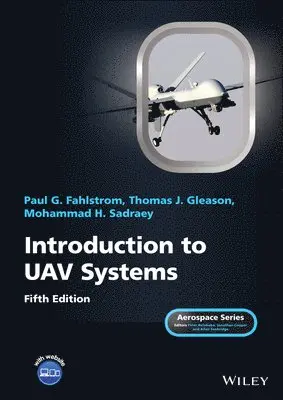
In the newly revised Fifth Edition of Introduction to UAV Systems, an expert team of aviators, engineers, and researchers delivers the fundamentals of UAV systems for both professionals and students in UAV courses. Suitable for students in both Aerospace Engineering programs, as well as Flight and Aeronautics programs, this new edition now includes end-of-chapter questions and online instructor ancillaries that make it an ideal textbook.
As the perfect complement to the author''s Design of Unmanned Aerial Systems, this book includes the history, classes, and missions of UAVs. It covers fundamental topics, like aerodynamics, stability and control, propulsion, loads and structures, mission planning, payloads, and communication systems. Brand-new materials in areas including autopilots, quadcopters, payloads, and ground control stations highlight the latest industry technologies.
The authors also discuss:
A thorough introduction to the history of unmanned aerial vehicles, including their use in various conflicts, an overview of critical UAV systems, and the Predator/Reaper A comprehensive exploration of the classes and missions of UAVs, including several examples of UAV systems, like Mini UAVs, UCAVs, and quadcopters Practical discussions of air vehicles, including coverage of topics like aerodynamics, flight performance, stability, and control In-depth examinations of propulsion, loads, structures, mission planning, control systems, and autonomyPerfect for professional aeronautical and aerospace engineers, as well as students and instructors in courses like Unmanned Aircraft Systems Design and Introduction to Unmanned Aerial Systems, Introduction to UAV Systems is also an indispensable resource for anyone. seeking coverage of the latest industry advances and technologies in UAV and UAS technology.
1 882 kr
Läs direkt efter köp
The latest edition of the leading resource on unmanned aerial vehicle systems
In the newly revised Fifth Edition of Introduction to UAV Systems, an expert team of aviators, engineers, and researchers delivers the fundamentals of UAV systems for both professionals and students in UAV courses. Suitable for students in both Aerospace Engineering programs, as well as Flight and Aeronautics programs, this new edition now includes end-of-chapter questions and online instructor ancillaries that make it an ideal textbook.
As the perfect complement to the author''s Design of Unmanned Aerial Systems, this book includes the history, classes, and missions of UAVs. It covers fundamental topics, like aerodynamics, stability and control, propulsion, loads and structures, mission planning, payloads, and communication systems. Brand-new materials in areas including autopilots, quadcopters, payloads, and ground control stations highlight the latest industry technologies.
The authors also discuss:
A thorough introduction to the history of unmanned aerial vehicles, including their use in various conflicts, an overview of critical UAV systems, and the Predator/Reaper A comprehensive exploration of the classes and missions of UAVs, including several examples of UAV systems, like Mini UAVs, UCAVs, and quadcopters Practical discussions of air vehicles, including coverage of topics like aerodynamics, flight performance, stability, and control In-depth examinations of propulsion, loads, structures, mission planning, control systems, and autonomyPerfect for professional aeronautical and aerospace engineers, as well as students and instructors in courses like Unmanned Aircraft Systems Design and Introduction to Unmanned Aerial Systems, Introduction to UAV Systems is also an indispensable resource for anyone. seeking coverage of the latest industry advances and technologies in UAV and UAS technology.
1 598 kr
Skickas inom 5-8 vardagar
1 750 kr
Läs direkt efter köp
Learn the aircraft design process from a systems-engineering perspective, designed for both aspiring and practicing aerospace engineers
Aircraft design incorporates a range of technological areas, including aerodynamics, flight dynamics, propulsion, and structure. Aircraft engineering design therefore requires techniques from systems engineering to integrate the requirements from these disparate areas into a coherent whole. There has never been a greater need for successful aerospace engineers to have a grasp of systems engineering and its applications in the field.
Aircraft Design: A Systems Engineering Approach meets this need with a volume which takes the reader from conceptual design to detail design. Offering a systems engineering approach that weighs the needs of different aircraft components holistically, it provides readers with a practical look into the process of aircraft design. Now fully updated to reflect the latest industry developments, it promises to continue as an indispensable tool for modern students in the field.
Readers of the second edition of Aircraft Design will also find:
Brand new material on structural design, spoiler design, winglets, aircraft modification and modernization, and more Detailed discussion of emerging topics including all-electric aircraft design, VTOL aircraft design, and many others Guidance on the latest FAA requirements with a design impactAircraft Design is ideal for senior undergraduate and graduate students interested in aircraft design, advanced aircraft design, and air vehicle design. The book may also be of interest to mechanical, industrial, and systems engineers working in the aerospace sector.
1 689 kr
Läs direkt efter köp
Learn the aircraft design process from a systems-engineering perspective, designed for both aspiring and practicing aerospace engineers
Aircraft design incorporates a range of technological areas, including aerodynamics, flight dynamics, propulsion, and structure. Aircraft engineering design therefore requires techniques from systems engineering to integrate the requirements from these disparate areas into a coherent whole. There has never been a greater need for successful aerospace engineers to have a grasp of systems engineering and its applications in the field.
Aircraft Design: A Systems Engineering Approach meets this need with a volume which takes the reader from conceptual design to detail design. Offering a systems engineering approach that weighs the needs of different aircraft components holistically, it provides readers with a practical look into the process of aircraft design. Now fully updated to reflect the latest industry developments, it promises to continue as an indispensable tool for modern students in the field.
Readers of the second edition of Aircraft Design will also find:
Brand new material on structural design, spoiler design, winglets, aircraft modification and modernization, and more Detailed discussion of emerging topics including all-electric aircraft design, VTOL aircraft design, and many others Guidance on the latest FAA requirements with a design impactAircraft Design is ideal for senior undergraduate and graduate students interested in aircraft design, advanced aircraft design, and air vehicle design. The book may also be of interest to mechanical, industrial, and systems engineers working in the aerospace sector.
869 kr
Skickas inom 10-15 vardagar
870 kr
Läs direkt efter köp
625 kr
Skickas inom 5-8 vardagar
653 kr
Skickas inom 10-15 vardagar
328 kr
Skickas
396 kr
Läs direkt efter köp
This book provides fundamental principles, design procedures, and design tools for unmanned aerial vehicles (UAVs) with three sections focusing on vehicle design, autopilot design, and ground system design. The design of manned aircraft and the design of UAVs have some similarities and some differences. They include the design process, constraints (e.g., g-load, pressurization), and UAV main components (autopilot, ground station, communications system, sensors, and payload). A UAV designer must be aware of the latest UAV developments; current technologies; know lessons learned from past failures; and they should appreciate the breadth of UAV design options.
The contribution of unmanned aircraft continues to expand every day and over 67 countries are developing and employing UAVs for both military and civil/scientific purposes. A UAV system is much more than a reusable air vehicle or vehicles. UAVs are air vehicles, they fly like airplanes and operate in an airplane environment. They are designed like air vehicles; they have to meet critical air vehicle requirements. A designer needs to know how to integrate complex, multi-disciplinary systems, and to understand the environment, the requirements and the design challenges and this book is an excellent overview of the fundamentals from an engineering perspective.
This book is meant to meet the needs of newcomers into the world of UAVs. The materials are intended to provide enough information in each area and illustrate how they all play together to support the design of a complete UAV. Therefore, this book can be used both as a reference for engineers entering the field or as a supplementary text for a UAV design course to provide system-level context for each specialized topic.
The second edition is extensively revised. Some of the new terminologies, concepts, and specific unmanned aircraft systems are introduced. The revisions make the book clearer and easier to understand, and will add number of new subjects in areas that have become more prominent in the unmanned aviation world.
1 210 kr
Tillfälligt slut