• Fri frakt över 249 kr
  • •
  • Snabba leveranser
  • •
  • Billiga böcker
Kundservice

Du är på sajten för privatpersoner.

Företag, bibliotek eller offentlig verksamhet?

Du handlar på classic.bokus.com, där alla dina funktioner finns intakta.
Till classic.bokus.com
Bokus logotyp. Gå till startsidan.
  • Erbjudanden
  • Nyheter
  • Student
  • Topplistor
  • Barn & ungdom
  • Bokus Play
  • E-böcker
  • Pocketböcker
  • Spel & pussel

10% rabatt på allt med kod NYSTART10 →

Sidfot

Mina sidor

    Hjälp

    • Kundservice
    • Vanliga frågor och svar
    • Frakt och leverans
    • Retur vid ångerrätt
    • Reklamera vara
    • Betalning
    • Köpvillkor
    • Allmänna villkor
    • Information om webbplatsens tillgänglighet

    Om Bokus

    • Om oss
    • Pressrum
    • För studenter
    • För företag
    • För bibliotek och offentlig verksamhet
    • För leverantörer
    • Hållbarhet

    Populärt

    • Aktuella erbjudanden
    • Presentkort
    • Studentlitteratur
    • Nya böcker
    • Topplistor
    • Signerade böcker
    • Engelska böcker

    Inspiration

    • Boktips
    • BookTok
    • Populära bokserier
    • Barnbokskaraktärer
    • Populära författare
    Logotyp för Bokus
    Följ oss på Facebook (extern länk)Följ oss på Instagram (extern länk)Följ oss på YouTube (extern länk)Följ oss på TikTok (extern länk)
    bokus @ CookiesAnpassa cookiesIntegritetspolicyKöpvillkor
    Till Citymail hemsida (extern länk)Till Budbee hemsida (extern länk)Till Postnord hemsida (extern länk)Till Schenker hemsida (extern länk)Till Early Bird hemsida (extern länk)Till Walleys hemsida (extern länk)
    1. Naturvetenskap och teknik
    2. Teknik och industri
    3. Transportteknik
    4. Flyg- och rymdteknik

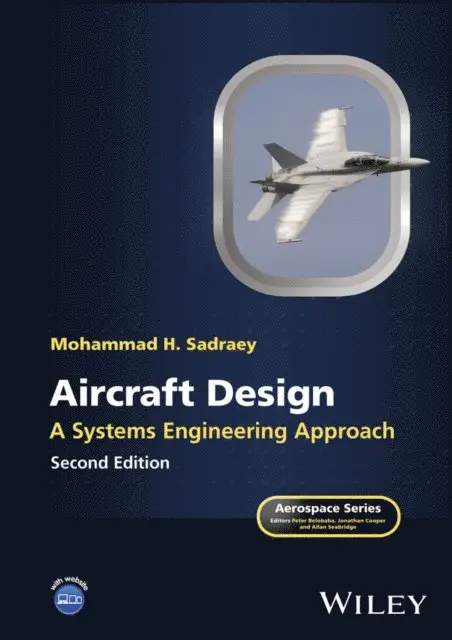
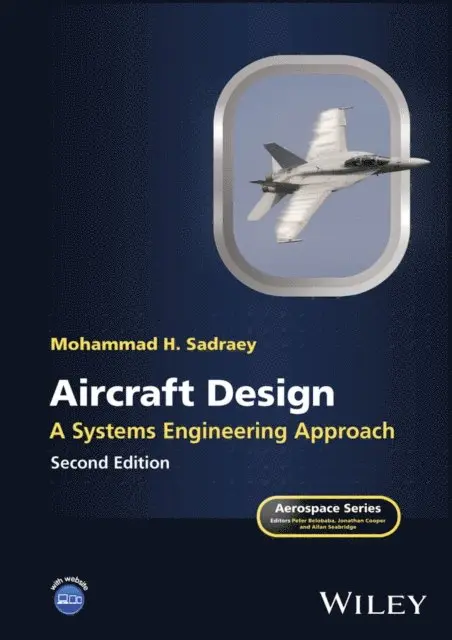
    Aircraft Design

    A Systems Engineering Approach

    AvMohammad H. Sadraey,Peter Belobaba

    Inbunden, Engelska, 2012

    Del i serien Aerospace Series

    1 210 kr

    Tillfälligt slut

    Fler format och utgåvor

    Inbunden

    1 568 kr

    E-bok

    1 861 kr

    E-bok

    1 867 kr

    Beskrivning

    A comprehensive approach to the air vehicle design process using the principles of systems engineeringDue to the high cost and the risks associated with development, complex aircraft systems have become a prime candidate for the adoption of systems engineering methodologies. This book presents the entire process of aircraft design based on a systems engineering approach from conceptual design phase, through to preliminary design phase and to detail design phase.Presenting in one volume the methodologies behind aircraft design, this book covers the components and the issues affected by design procedures. The basic topics that are essential to the process, such as aerodynamics, flight stability and control, aero-structure, and aircraft performance are reviewed in various chapters where required.  Based on these fundamentals and design requirements, the author explains the design process in a holistic manner to emphasise the integration of the individual components into the overall design. Throughout the book the various design options are considered and weighed against each other, to give readers a practical understanding of the process overall. Readers with knowledge of the fundamental concepts of aerodynamics, propulsion, aero-structure, and flight dynamics will find this book ideal to progress towards the next stage in their understanding of the topic. Furthermore, the broad variety of design techniques covered ensures that readers have the freedom and flexibility to satisfy the design requirements when approaching real-world projects.Key features:•         Provides full coverage of the design aspects of an air vehicle including: aeronautical concepts, design techniques and design flowcharts•         Features end of chapter problems to reinforce the learning process as well as fully solved design examples at component level•          Includes fundamental explanations for aeronautical engineering students and practicing engineers•          Features a solutions manual to sample questions on the book’s companion websiteCompanion website -   www.wiley.com/go/sadraey

    Produktinformation

    • Utgivningsdatum:2012-10-26
    • Mått:176 x 252 x 42 mm
    • Vikt:1 334 g
    • Format:Inbunden
    • Språk:Engelska
    • Serie:Aerospace Series
    • Antal sidor:808
    • Förlag:John Wiley & Sons Inc
    • ISBN:9781119953401

    Utforska kategorier

    • Flyg- och rymdteknik inom Naturvetenskap och teknik

    Mer om författaren

    Mohammad H. SadraeyDaniel Webster College, New Hampshire, USA

    Recensioner i media

    “Summing Up: Highly recommended. All academic and technical program engineering collections.”  (Choice, 1 October 2013)"Readers with knowledge of the fundamental concepts of aerodynamics, propulsion, aero-structure, and flight dynamics will find this book ideal to progress towards the next stage in their understanding of the topic. Furthermore, the broad variety of design techniques covered ensures that readers have the freedom and flexibility to satisfy the design requirements when approaching real-world projects."  (Expofairs.com, 25 January 2013)

    Innehållsförteckning

    • Preface xvSeries Preface xixAcknowledgments xxiSymbols and Acronyms xxiii1 Aircraft Design Fundamentals 11.1 Introduction to Design 11.2 Engineering Design 41.3 Design Project Planning 81.4 Decision Making 101.5 Feasibility Analysis 121.6 Tort of Negligence 15References 172 Systems Engineering Approach 192.1 Introduction 192.2 Fundamentals of Systems Engineering 202.3 Conceptual System Design 232.3.1 Definition 232.3.2 Conceptual Design Flowchart 242.3.3 Technical Performance Measures 252.3.4 Functional Analysis 262.3.5 System Trade-Off Analysis 272.3.6 Conceptual Design Review 282.4 Preliminary System Design 292.5 Detail System Design 302.6 Design Requirements 332.7 Design Review, Evaluation, and Feedback 342.8 Systems Engineering Approach in Aircraft Design 372.8.1 Implementation of Systems Engineering 372.8.2 Design Phases 382.8.3 Design Flowchart 392.8.4 Design Groups 412.8.5 Design Steps 43References 473 Aircraft Conceptual Design 493.1 Introduction 493.2 Primary Functions of Aircraft Components 503.3 Aircraft Configuration Alternatives 523.3.1 Wing Configuration 533.3.2 Tail Configuration 553.3.3 Propulsion System Configuration 553.3.4 Landing Gear Configuration 563.3.5 Fuselage Configuration 583.3.6 Manufacturing-Related Items Configuration 583.3.7 Subsystems Configuration 593.4 Aircraft Classification and Design Constraints 623.5 Configuration Selection Process and Trade-Off Analysis 683.6 Conceptual Design Optimization 743.6.1 Mathematical Tools 743.6.2 Methodology 76Problems 86References 924 Preliminary Design 934.1 Introduction 934.2 Maximum Take-Off Weight Estimation 944.2.1 The General Technique 944.2.2 Weight Build-up 954.2.3 Payload Weight 964.2.4 Crew Weight 974.2.5 Fuel Weight 1004.2.6 Empty Weight 1084.2.7 Practical Steps of the Technique 1124.3 Wing Area and Engine Sizing 1134.3.1 Summary of the Technique 1134.3.2 Stall Speed 1184.3.3 Maximum Speed 1204.3.4 Take-Off Run 1314.3.5 Rate of Climb 1364.3.6 Ceiling 1404.4 Design Examples 145Problems 155References 1585 Wing Design 1615.1 Introduction 1615.2 Number of Wings 1645.3 Wing Vertical Location 1655.3.1 High Wing 1655.3.2 Low Wing 1685.3.3 Mid-Wing 1695.3.4 Parasol Wing 1695.3.5 The Selection Process 1695.4 Airfoil Section 1705.4.1 Airfoil Design or Airfoil Selection 1715.4.2 General Features of an Airfoil 1735.4.3 Characteristic Graphs of an Airfoil 1765.4.4 Airfoil Selection Criteria 1825.4.5 NACA Airfoils 1835.4.6 Practical Steps for Wing Airfoil Section Selection 1885.5 Wing Incidence 1955.6 Aspect Ratio 1985.7 Taper Ratio 2035.8 The Significance of Lift and Load Distributions 2065.9 Sweep Angle 2095.10 Twist Angle 2235.11 Dihedral Angle 2265.12 High-Lift Device 2305.12.1 The Functions of a High-Lift Device 2305.12.2 High-Lift Device Classification 2325.12.3 Design Technique 2355.13 Aileron 2415.14 Lifting-Line Theory 2425.15 Accessories 2465.15.1 Strake 2475.15.2 Fence 2475.15.3 Vortex Generator 2485.15.4 Winglet 2485.16 Wing Design Steps 2495.17 Wing Design Example 250Problems 259References 2646 Tail Design 2656.1 Introduction 2656.2 Aircraft Trim Requirements 2686.2.1 Longitudinal Trim 2706.2.2 Directional and Lateral Trim 2766.3 A Review on Stability and Control 2786.3.1 Stability 2786.3.2 Control 2826.3.3 Handling Qualities 2846.4 Tail Configuration 2856.4.1 Basic Tail Configuration 2856.4.2 Aft Tail Configuration 2886.5 Canard or Aft Tail 2946.6 Optimum Tail Arm 2986.7 Horizontal Tail Parameters 3016.7.1 Horizontal Tail Design Fundamental Governing Equation 3016.7.2 Fixed, All-Moving, or Adjustable 3046.7.3 Airfoil Section 3066.7.4 Tail Incidence 3086.7.5 Aspect Ratio 3116.7.6 Taper Ratio 3126.7.7 Sweep Angle 3136.7.8 Dihedral Angle 3136.7.9 Tail Vertical Location 3146.7.10 Other Tail Geometries 3156.7.11 Control Provision 3166.7.12 Final Check 3166.8 Vertical Tail Design 3176.8.1 Vertical Tail Design Requirements 3176.8.2 Vertical Tail Parameters 3196.9 Practical Design Steps 3296.10 Tail Design Example 331Problems 336References 3407 Fuselage Design 3417.1 Introduction 3417.2 Functional Analysis and Design Flowchart 3417.3 Fuselage Configuration Design and Internal Arrangement 3457.4 Ergonomics 3467.4.1 Definitions 3467.4.2 Human Dimensions and Limits 3487.5 Cockpit Design 3507.5.1 Number of Pilots and Crew Members 3517.5.2 Pilot/Crew Mission 3537.5.3 Pilot/Crew Comfort/Hardship Level 3537.5.4 Pilot Personal Equipment 3547.5.5 Control Equipment 3557.5.6 Measurement Equipment 3567.5.7 Level of Automation 3577.5.8 External Constraints 3597.5.9 Cockpit Integration 3597.6 Passenger Cabin Design 3607.7 Cargo Section Design 3687.8 Optimum Length-to-Diameter Ratio 3727.8.1 Optimum Slenderness Ratio for Lowest f LD 3727.8.2 Optimum Slenderness Ratio for Lowest Fuselage Wetted Area 3787.8.3 Optimum Slenderness Ratio for the Lightest Fuselage 3807.9 Other Fuselage Internal Segments 3807.9.1 Fuel Tanks 3817.9.2 Radar Dish 3857.9.3 Wing Box 3867.9.4 Power Transmission Systems 3877.10 Lofting 3887.10.1 Aerodynamics Considerations 3887.10.2 Area Ruling 3907.10.3 Radar Detectability 3927.10.4 Fuselage Rear Section 3927.11 Fuselage Design Steps 3947.12 Design Example 395Problems 406References 4108 Propulsion System Design 4138.1 Introduction 4138.2 Functional Analysis and Design Requirements 4148.3 Engine Type Selection 4168.3.1 Aircraft Engine Classification 4178.3.2 Selection of Engine Type 4288.4 Number of Engines 4368.4.1 Flight Safety 4378.4.2 Other Influential Parameters 4388.5 Engine Location 4398.5.1 Design Requirements 4398.5.2 General Guidelines 4418.5.3 Podded versus Buried 4438.5.4 Pusher versus Tractor 4448.5.5 Twin-Jet Engine: Under-Wing versus Rear Fuselage 4468.6 Engine Installation 4488.6.1 Prop-Driven Engine 4508.6.2 Jet Engine 4528.7 Propeller Sizing 4568.8 Engine Performance 4618.8.1 Prop-Driven Engine 4618.8.2 Jet Engine 4628.9 Engine Selection 4628.10 Propulsion System Design Steps 4648.11 Design Example 467Problems 471References 4789 Landing Gear Design 4799.1 Introduction 4799.2 Functional Analysis and Design Requirements 4819.3 Landing Gear Configuration 4849.3.1 Single Main 4849.3.2 Bicycle 4859.3.3 Tail-Gear 4879.3.4 Tricycle 4879.3.5 Quadricycle 4889.3.6 Multi-Bogey 4899.3.7 Releasable Rail 4899.3.8 Skid 4899.3.9 Seaplane Landing Device 4909.3.10 Human Leg 4919.3.11 Landing Gear Configuration Selection Process 4929.3.12 Landing Gear Attachment 4939.4 Fixed, Retractable, or Separable Landing Gear 4949.5 Landing Gear Geometry 4979.5.1 Landing Gear Height 4989.5.2 Wheel Base 5039.5.3 Wheel Track 5089.6 Landing Gear and Aircraft Center of Gravity 5169.6.1 Tipback and Tipforward Angle Requirements 5169.6.2 Take-Off Rotation Requirement 5189.7 Landing Gear Mechanical Subsystems/Parameters 5249.7.1 Tire Sizing 5249.7.2 Shock Absorber 5259.7.3 Strut Sizing 5269.7.4 Steering Subsystem 5279.7.5 Landing Gear Retraction System 5279.8 Landing Gear Design Steps 5289.9 Landing Gear Design Example 529Problems 539References 54410 Weight of Components 54710.1 Introduction 54710.2 Sensitivity of Weight Calculation 54910.3 Aircraft Major Components 55310.4 Weight Calculation Technique 55610.4.1 Wing Weight 55910.4.2 Horizontal Tail Weight 56110.4.3 Vertical Tail Weight 56110.4.4 Fuselage Weight 56210.4.5 Landing Gear Weight 56310.4.6 Installed Engine Weight 56410.4.7 Fuel System Weight 56410.4.8 Weight of Other Equipment and Subsystems 56510.5 Chapter Examples 565Problems 570References 57311 Aircraft Weight Distribution 57511.1 Introduction 57511.2 Aircraft Center of Gravity Calculation 57811.3 Center of Gravity Range 58511.3.1 Fixed or Variable Center of Gravity 58511.3.2 Center of Gravity Range Definition 58611.3.3 Ideal Center of Gravity Location 58711.4 Longitudinal Center of Gravity Location 59011.5 Technique to Determine the Aircraft Forward and Aft Center of Gravity 59811.6 Weight Distribution Technique 60611.6.1 Fundamentals of Weight Distribution 60711.6.2 Longitudinal Stability Requirements 60911.6.3 Longitudinal Controllability Requirements 61111.6.4 Longitudinal Handling Quality Requirements 61311.7 Aircraft Mass Moment of Inertia 61511.8 Chapter Example 620Problems 624References 63012 Design of Control Surfaces 63112.1 Introduction 63112.2 Configuration Selection of Control Surfaces 63712.3 Handling Qualities 63812.3.1 Definitions 64012.3.2 Longitudinal Handling Qualities 64312.3.3 Lateral-Directional Handling Qualities 64712.4 Aileron Design 65412.4.1 Introduction 65412.4.2 Principles of Aileron Design 65612.4.3 Aileron Design Constraints 66412.4.4 Steps in Aileron Design 66912.5 Elevator Design 67012.5.1 Introduction 67012.5.2 Principles of Elevator Design 67212.5.3 Take-Off Rotation Requirement 67612.5.4 Longitudinal Trim Requirement 68012.5.5 Elevator Design Procedure 68312.6 Rudder Design 68512.6.1 Introduction to Rudder Design 68512.6.2 Fundamentals of Rudder Design 68812.6.3 Rudder Design Steps 70912.7 Aerodynamic Balance and Mass Balance 71312.7.1 Aerodynamic Balance 71512.7.2 Mass Balance 72212.8 Chapter Examples 72312.8.1 Aileron Design Example 72312.8.2 Elevator Design Example 72912.8.3 Rudder Design Example 738Problems 745References 752Appendices 755Appendix A: Standard Atmosphere, SI Units 755Appendix B: Standard Atmosphere, British Units 756Index 757