Muhammad Ismail – författare
708 kr
Läs direkt efter köp
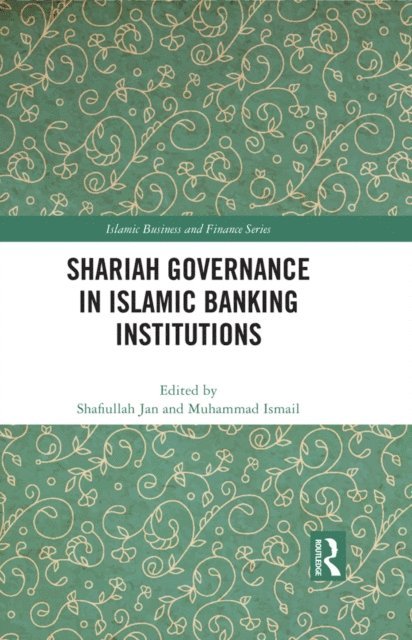
Shariah governance assumes the primary instrument through which Islamic Banking Institutions (IBIs) ensure the Islamicity of their products, services, operations, and internal environments. It is considered to be one the fundamental elements that differentiates IBIs from their traditional counterparts.
Shariah Governance in Islamic Banking Institutions provides a critical overview of the key aspects pertaining to Shariah governance within Islamic financial institutions and presents a detailed analysis of its conceptual background. The authors have identified the unique issues that have emerged due to the integration of Shariah, namely the involvement of the Shariah supervisory board (SSB), in the corporate governance arrangements of Islamic banks. These issues relate to disclosure, transparency, independency, consistency, confidentiality, competency, and reputation. The book details the doctrines of Shariah pronouncements in Islamic banks, the importance of having a central advisory board at a regulatory level in the standardization of Islamic banking practices, as well as the competence required for Shariah supervisory board members. It provides a critical analysis of the Shariah governance framework in Pakistan and introduces the authors’ vision of an ideal Shariah governance framework. Furthermore, the chapters offer guidance in promoting effective policies for improving Shariah governance.
This is one of the core challenges facing Islamic banks, namely, to ensure compliance with faith and provide legitimacy to the business of IBIs, and as such, the book will appeal to both the research and professional communities.
702 kr
Läs direkt efter köp
Shariah governance assumes the primary instrument through which Islamic Banking Institutions (IBIs) ensure the Islamicity of their products, services, operations, and internal environments. It is considered to be one the fundamental elements that differentiates IBIs from their traditional counterparts.
Shariah Governance in Islamic Banking Institutions provides a critical overview of the key aspects pertaining to Shariah governance within Islamic financial institutions and presents a detailed analysis of its conceptual background. The authors have identified the unique issues that have emerged due to the integration of Shariah, namely the involvement of the Shariah supervisory board (SSB), in the corporate governance arrangements of Islamic banks. These issues relate to disclosure, transparency, independency, consistency, confidentiality, competency, and reputation. The book details the doctrines of Shariah pronouncements in Islamic banks, the importance of having a central advisory board at a regulatory level in the standardization of Islamic banking practices, as well as the competence required for Shariah supervisory board members. It provides a critical analysis of the Shariah governance framework in Pakistan and introduces the authors’ vision of an ideal Shariah governance framework. Furthermore, the chapters offer guidance in promoting effective policies for improving Shariah governance.
This is one of the core challenges facing Islamic banks, namely, to ensure compliance with faith and provide legitimacy to the business of IBIs, and as such, the book will appeal to both the research and professional communities.
2 013 kr
Skickas inom 10-15 vardagar
605 kr
Skickas inom 10-15 vardagar
2 073 kr
Skickas inom 10-15 vardagar
691 kr
Kommande
769 kr
Läs direkt efter köp
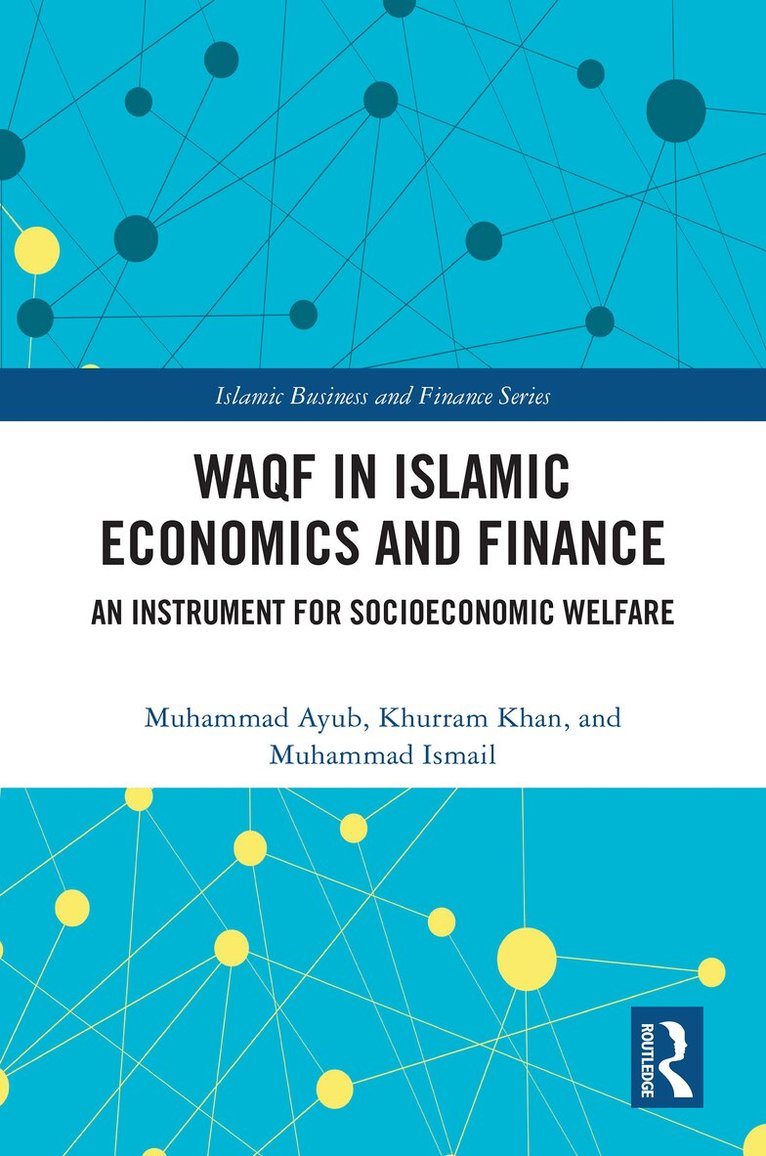
Waqf is emerging globally as a distinctive institution, serving as a vital bridge between societal and economic needs, and resource allocation. Waqfs functioning in some parts of the world, of a variety of assets such as cash, stocks, securities, intellectual property rights, and other financial instruments by individual, institutional, and corporate wāqifs, are paving the way for financial and social inclusion. This book explains how the system of awqāf leads to welfare in society by facilitating financial and social intermediation.
It describes waqf in accessible terms, focusing on how it helps people, communities, and nations, and how it can help make societies equitable, peaceful, efficient, and more prosperous. It comprises eight key themes, including a brief overview of the historical role of waqf in various periods in Muslim societies in socioeconomic sectors; the evolutionary aspects of waqf as an institution; the role of waqf in promoting entrepreneurship; the role of awqāf system in an economy by facilitating financial and social intermediation; potential options for using waqf as financial intermediation; an overview of the management and regulation of waqf entities; the organizational and legal framework for the institution of waqf; and key findings and recommendations for realizing the capacity of waqf in the pursuit of socioeconomic welfare. Specifically, the book takes Pakistan as a case study.
This research-oriented book is tailored to readers interested in understanding the fundamental concepts of Islamic finance and social welfare, without requiring a background in the discipline. It caters to academics, researchers, policymakers, and those keen on exploring the transformative potential of waqf to achieve societal welfare and shared economic growth.
776 kr
Läs direkt efter köp
Waqf is emerging globally as a distinctive institution, serving as a vital bridge between societal and economic needs, and resource allocation. Waqfs functioning in some parts of the world, of a variety of assets such as cash, stocks, securities, intellectual property rights, and other financial instruments by individual, institutional, and corporate wāqifs, are paving the way for financial and social inclusion. This book explains how the system of awqāf leads to welfare in society by facilitating financial and social intermediation.
It describes waqf in accessible terms, focusing on how it helps people, communities, and nations, and how it can help make societies equitable, peaceful, efficient, and more prosperous. It comprises eight key themes, including a brief overview of the historical role of waqf in various periods in Muslim societies in socioeconomic sectors; the evolutionary aspects of waqf as an institution; the role of waqf in promoting entrepreneurship; the role of awqāf system in an economy by facilitating financial and social intermediation; potential options for using waqf as financial intermediation; an overview of the management and regulation of waqf entities; the organizational and legal framework for the institution of waqf; and key findings and recommendations for realizing the capacity of waqf in the pursuit of socioeconomic welfare. Specifically, the book takes Pakistan as a case study.
This research-oriented book is tailored to readers interested in understanding the fundamental concepts of Islamic finance and social welfare, without requiring a background in the discipline. It caters to academics, researchers, policymakers, and those keen on exploring the transformative potential of waqf to achieve societal welfare and shared economic growth.
2 225 kr
Kommande
1 313 kr
Läs direkt efter köp
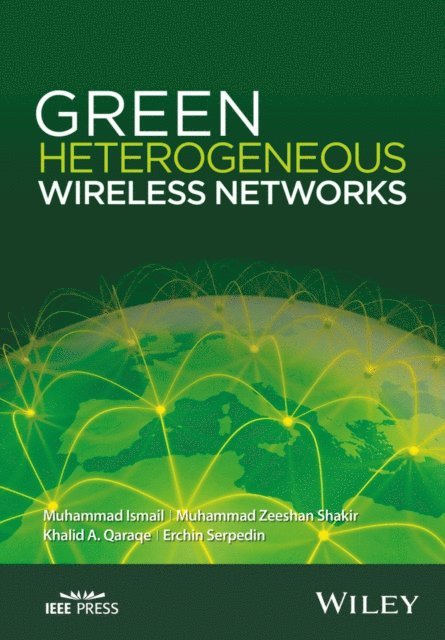
This book focuses on the emerging research topic "green (energy efficient) wireless networks" which has drawn huge attention recently from both academia and industry. This topic is highly motivated due to important environmental, financial, and quality-of-experience (QoE) considerations. Specifically, the high energy consumption of the wireless networks manifests in approximately 2% of all CO2 emissions worldwide. This book presents the authors’ visions and solutions for deployment of energy efficient (green) heterogeneous wireless communication networks. The book consists of three major parts. The first part provides an introduction to the "green networks" concept, the second part targets the green multi-homing resource allocation problem, and the third chapter presents a novel deployment of device-to-device (D2D) communications and its successful integration in Heterogeneous Networks (HetNets).
The book is novel in that it specifically targets green networking in a heterogeneous wireless medium, which represents the current and future wireless communication medium faced by the existing and next generation communication networks. The book focuses on multi-homing resource allocation, exploiting network cooperation, and integrating different and new network technologies (radio frequency and VLC), expanding the network coverage and integrating new device centric communication paradigms such as D2D Communications. Whilst the book discusses a significant research topic supported with advanced mathematical analysis, the resulting algorithms and solutions are explained and summarized in a way that is easy to follow and grasp. This book is suitable for networking and telecommunications engineers, researchers in industry and academia, as well as students and instructors.
1 313 kr
Läs direkt efter köp
This book focuses on the emerging research topic "green (energy efficient) wireless networks" which has drawn huge attention recently from both academia and industry. This topic is highly motivated due to important environmental, financial, and quality-of-experience (QoE) considerations. Specifically, the high energy consumption of the wireless networks manifests in approximately 2% of all CO2 emissions worldwide. This book presents the authors’ visions and solutions for deployment of energy efficient (green) heterogeneous wireless communication networks. The book consists of three major parts. The first part provides an introduction to the "green networks" concept, the second part targets the green multi-homing resource allocation problem, and the third chapter presents a novel deployment of device-to-device (D2D) communications and its successful integration in Heterogeneous Networks (HetNets).
The book is novel in that it specifically targets green networking in a heterogeneous wireless medium, which represents the current and future wireless communication medium faced by the existing and next generation communication networks. The book focuses on multi-homing resource allocation, exploiting network cooperation, and integrating different and new network technologies (radio frequency and VLC), expanding the network coverage and integrating new device centric communication paradigms such as D2D Communications. Whilst the book discusses a significant research topic supported with advanced mathematical analysis, the resulting algorithms and solutions are explained and summarized in a way that is easy to follow and grasp. This book is suitable for networking and telecommunications engineers, researchers in industry and academia, as well as students and instructors.
1 129 kr
Skickas inom 11-20 vardagar
544 kr
Skickas inom 10-15 vardagar
687 kr
Läs direkt efter köp
Cognitive Radio Oriented Wireless Networks
10th International Conference, CROWNCOM 2015, Doha, Qatar, April 21-23, 2015, Revised Selected Papers
544 kr
Skickas inom 10-15 vardagar
693 kr
Läs direkt efter köp
This book constitutes the thoroughly refereed post-conference proceedings of the 10th International Conference on Cognitive Radio Oriented Wireless Networks, CROWNCOM 2015, held in Doha, Qatar, in April 2015.
The 66 revised full papers presented were carefully reviewed and selected from 110 submissions and cover the evolution of cognitive radio technology pertaining to 5G networks. The papers are clustered to topics on dynamic spectrum access/management, networking protocols for CR, modeling and theory, HW architecture and implementations, next generation of cognitive networks, standards and business models, and emerging applications for cognitive networks.
1 667 kr
Skickas inom 10-15 vardagar
1 565 kr
Läs direkt efter köp
1 225 kr
Skickas inom 10-15 vardagar
540 kr
Skickas inom 10-15 vardagar
687 kr
Läs direkt efter köp
This book discusses the smooth integration of optical and RF networks in 5G and beyond (5G+) heterogeneous networks (HetNets), covering both planning and operational aspects. The integration of high-frequency air interfaces into 5G+ wireless networks can relieve the congested radio frequency (RF) bands. Visible light communication (VLC) is now emerging as a promising candidate for future generations of HetNets. Heterogeneous RF-optical networks combine the high throughput of visible light and the high reliability of RF. However, when implementing these HetNets in mobile scenarios, several challenges arise from both planning and operational perspectives. Since the mmWave, terahertz, and visible light bands share similar wave propagation characteristics, the concepts presented here can be broadly applied in all such bands.
To facilitate the planning of RF-optical HetNets, the authors present an algorithm that specifies the joint optimal densities of the base stations by drawing on stochastic geometry in order to satisfy the users’ quality-of-service (QoS) demands with minimum network power consumption. From an operational perspective, the book explores vertical handovers and multi-homing using a cooperative framework. For vertical handovers, it employs a data-driven approach based on deep neural networks to predict abrupt optical outages; and, on the basis of this prediction, proposes a reinforcement learning strategy that ensures minimal network latency during handovers. In terms of multi-homing support, the authors examine the aggregation of the resources from both optical and RF networks, adopting a two-timescale multi-agent reinforcement learning strategy for optimal power allocation.
Presenting comprehensive planning and operational strategies, the book allows readers to gain an in-depth grasp of how to integrate future coexisting networks at high-frequency bands in a cooperative manner, yielding reliable and high-speed 5G+ HetNets.
540 kr
Skickas inom 10-15 vardagar