Mukul Gupta - Böcker
Visar alla böcker från författaren Mukul Gupta. Handla med fri frakt och snabb leverans.
3 produkter
3 produkter
1 483 kr
Skickas inom 10-15 vardagar
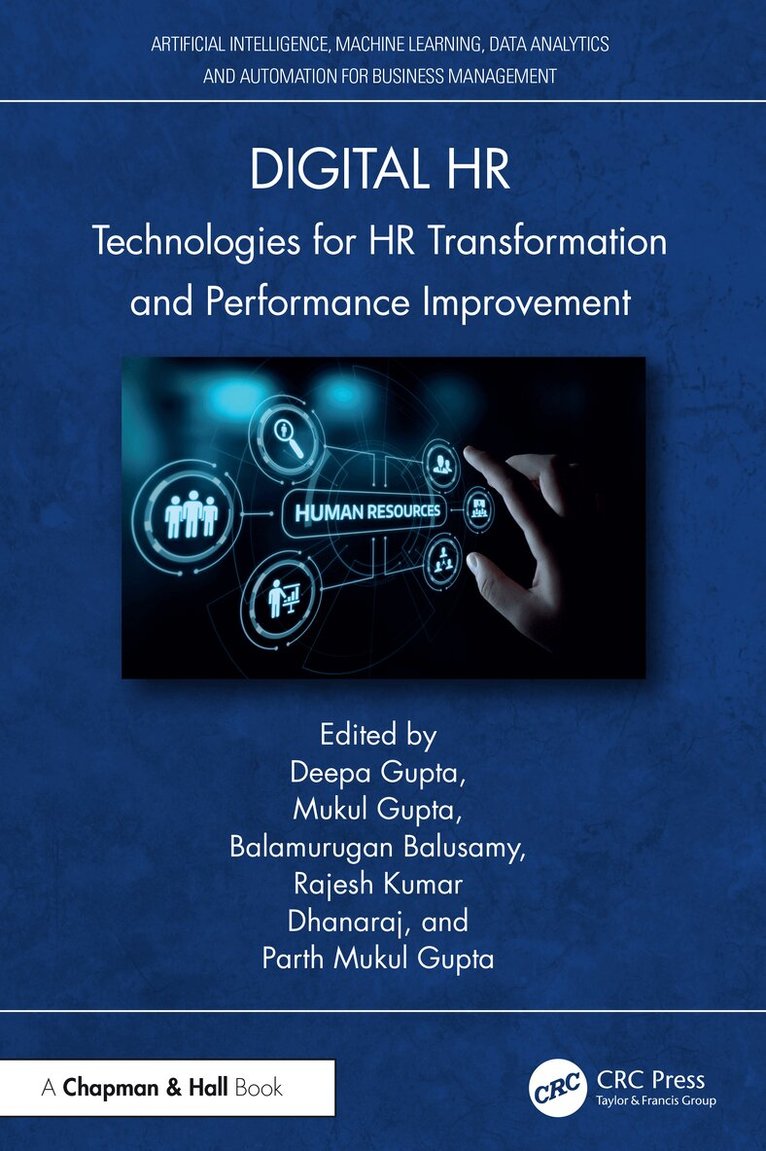
This book explores the impact of technology on Human Resource (HR) practices and how organisations can effectively incorporate progress in technology to improve HR processes. It provides a comprehensive overview of the various advancements that are transforming HR, including artificial intelligence (AI), machine learning, big data, and blockchain. Digital HR provides real-world examples, case studies, and best practices that illustrate how organisations are successfully leveraging technology to improve their HR management (HRM) processes and outcomes. This practical orientation makes the book valuable for professionals and scholars who are interested or have actionable insights to implement technologies for HR transformation and performance improvement in their organisations.Offers case studies, best practices, and real-world examples of successful and unsuccessful HR transformation initiativesIllustrates the technological progress transforming HR, including AI, machine learning, big data, and blockchain -- HR Software SolutionsDiscusses challenges associated with adapting and implementing them in the various practices and processes of the HRMStudies different applications of AI and machine learning in HR, including talent acquisition, performance management, and employee engagement end-to-end technology implementation in their domainThis book is intended for professionals, managers, and executives seeking an understanding of the impact of technology on the workforce and how they can leverage it to achieve their goals. It will also be useful for scholars and researchers interested in digital HR from the fields of computer science, business management, human resources, and HRM.
1 976 kr
Skickas inom 7-10 vardagar
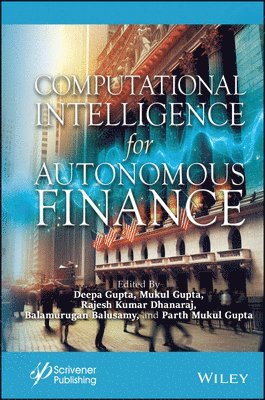
The book serves as an essential guide and a deep dive into the intersection of AI and finance, providing readers with a thorough understanding of the current state, challenges, and future possibilities of autonomous financial systems. In the rapidly evolving domain of autonomous finance, the convergence of computational intelligence techniques and financial technologies has paved the way for a new era of financial services. This transformation is driven by the integration of artificial intelligence (AI), machine learning (ML), blockchain, and big data analytics into financial systems, leading to the development of more responsive, efficient, and personalized financial products and services. Computational Intelligence for Autonomous Finance delves into the heart of this technological revolution, offering a comprehensive exploration of the theoretical foundations, practical applications, and future prospects of computational intelligence in the financial sector. The backbone of autonomous finance is a complex, interconnected ecosystem that leverages computational intelligence to automate decision-making processes, optimize financial operations, and enhance customer experiences. The book introduces the concept of an Intelligent Autonomous Financial Network (IAFN), which integrates various computational intelligence techniques with cutting-edge financial technologies to create a self-organizing, adaptive, and scalable financial system. The IAFN framework facilitates seamless interactions between diverse financial entities, enabling the provision of innovative financial services such as automated trading, real-time risk management, personalized financial planning, and fraud detection. The book meticulously analyzes the key challenges including data security and privacy concerns, algorithmic biases, regulatory compliance, and the need for interoperable standards. It also presents state-of-the-art solutions and best practices for overcoming these challenges, emphasizing the importance of ethical AI, robust data protection mechanisms, transparent algorithms, and collaborative regulatory frameworks. It discusses emerging trends such as quantum computing, edge computing, and decentralized finance (DeFi), highlighting their potential to further transform the financial landscape. The book also addresses the societal implications of autonomous finance, including its impact on employment, wealth distribution, and financial inclusion, advocating for a balanced approach that maximizes benefits while minimizing negative outcomes. AudienceThis book is aimed at researchers, industry professionals, policymakers, and graduate students in finance, computational intelligence, and related fields.
501 kr
Skickas