Nada R. Sanders – författare
Visar alla böcker från författaren Nada R. Sanders. Handla med fri frakt och snabb leverans.
8 produkter
8 produkter
487 kr
Skickas inom 10-15 vardagar
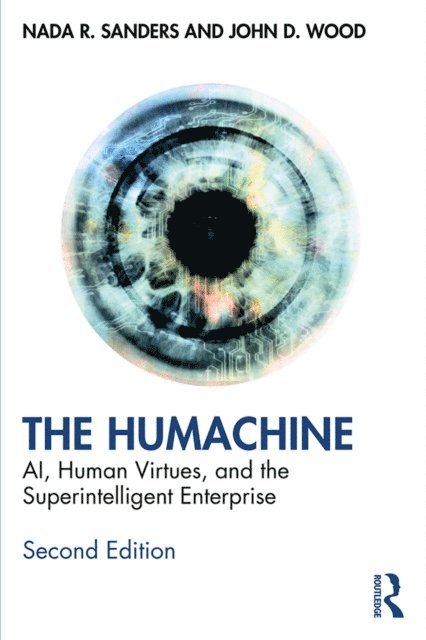
Updated for a post-Covid world, the second edition of this groundbreaking book explains why becoming a Humachine enterprise is the only way forward for a company to maintain a competitive advantage in the age of artificial intelligence (AI).The first edition of The Humachine offered a foundation for a new form of enterprise, integrating AI technology and human resources to optimize the unique advantages possessed by each. Now, in the face of the ‘Great Resignation’ and ‘botsourcing’—where an activity previously done by humans is replaced by technology—thought leaders Sanders and Wood present a more positive and promising scenario, where an enterprise recognizes human resources as an asset class that possesses skills that cannot be replaced by automation. Enlightened business leaders will look to create synergy between technology and people, enabling the organization to maximize its capabilities by elevating the basis of decision making with closer-to-perfect information and rationality. This book provides a roadmap for how to do this and achieve collective intelligence at the enterprise level: superintelligence. More specifically, it answers these questions, and more.Why must an enterprise achieve superintelligence as a competitive advantage in the age of AI?How can any organization achieve superintelligence by following the 4-I model?What is the step-by-step process an enterprise should follow in becoming a Humachine?What strategies can be used by enterprise leaders to ‘futureproof’ the Humachine against uncertainty?All business leaders, executives, and managers at companies wanting to use AI and technology to survive and thrive in this new age, and students of analytics and decision-making, will value this thought-provoking and practical book, rich with case studies.
2 052 kr
Skickas inom 10-15 vardagar
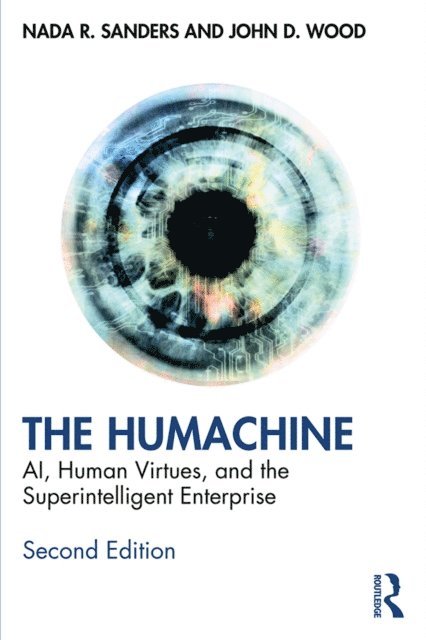
Updated for a post-Covid world, the second edition of this groundbreaking book explains why becoming a Humachine enterprise is the only way forward for a company to maintain a competitive advantage in the age of artificial intelligence (AI).The first edition of The Humachine offered a foundation for a new form of enterprise, integrating AI technology and human resources to optimize the unique advantages possessed by each. Now, in the face of the ‘Great Resignation’ and ‘botsourcing’—where an activity previously done by humans is replaced by technology—thought leaders Sanders and Wood present a more positive and promising scenario, where an enterprise recognizes human resources as an asset class that possesses skills that cannot be replaced by automation. Enlightened business leaders will look to create synergy between technology and people, enabling the organization to maximize its capabilities by elevating the basis of decision making with closer-to-perfect information and rationality. This book provides a roadmap for how to do this and achieve collective intelligence at the enterprise level: superintelligence. More specifically, it answers these questions, and more.Why must an enterprise achieve superintelligence as a competitive advantage in the age of AI?How can any organization achieve superintelligence by following the 4-I model?What is the step-by-step process an enterprise should follow in becoming a Humachine?What strategies can be used by enterprise leaders to ‘futureproof’ the Humachine against uncertainty?All business leaders, executives, and managers at companies wanting to use AI and technology to survive and thrive in this new age, and students of analytics and decision-making, will value this thought-provoking and practical book, rich with case studies.
1 721 kr
Skickas inom 5-8 vardagar
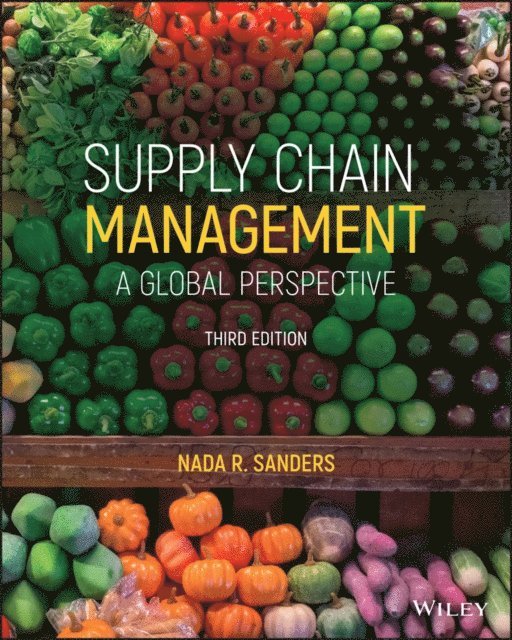
Like no other text on the subject, Supply Chain Management: A Global Perspective provides a balanced and integrated perspective of both the foundational principles and pragmatic, business-oriented functions of SCM. Highlighting the holistic and interconnected nature of SCM, this comprehensive volume addresses supply chain strategy, design, planning, controlling, management and more. The text features numerous real-world business examples that illustrate SCM best practices while helping students understand the complexities of SCM decision making.Now in its third edition, this well-respected text provides a global focus, cross-functional approach, and strong pedagogy. Clear, student-friendly chapters contain discussion questions, case studies, and examples designed to develop managerial thinking, explore key managerial issues, and bring difficult concepts to life. Detailed yet accessible coverage of topics including operations management, sourcing, logistics, forecasting, demand planning, and sustainable supply chain management offers a realistic practitioner’s view of SCM in the contemporary business landscape.
2 044 kr
Skickas inom 5-8 vardagar
Illustrates SCM best practices while helping students understand the complexities of SCM decision makingNow in its fourth edition, Supply Chain Management: A Global Perspective integrates the foundational principles and business-oriented functions of supply chain management (SCM) in one comprehensive volume. Providing students with a balanced and integrated perspective with a global focus, this market-leading textbook highlights the holistic and interconnected nature of SCM while addressing supply chain strategy, design, planning, sourcing, logistics, forecasting, demand planning, operations management, and more.A standard text at universities around the world, Supply Chain Management offers cross-functional coverage, a student-friendly pedagogy, and a wealth of real-world examples of SCM in companies of various sizes. Author Nada R Sanders draws upon her extensive experience in academia and industry to provide both the foundational material required to understand the subject matter and practical tips that demonstrate how the latest techniques are being applied.Supply chain management is advancing rapidly and becoming ever more important in the global business climate. Covering both the underlying principles and practical techniques of SCM, Supply Chain Management: A Global Perspective, Fourth Edition, remains an ideal textbook for upper-level undergraduate courses in Operations Management, Supply Chain Management, and Logistics Management programs.New to this Edition: Updated content in each chapter illustrating the latest business practices in the context of SCMIncreased focus on new and emerging technologies, including AI, that are changing supply chainsNew real-world examples of key concepts applied to supply chains of companies of various sizes and sectorsNew discussion topics reflecting recent international, government, and organizational policy issues relevant to SCMNew and updated cases, discussion questions, examples, and classroom exercisesWiley Advantage: Provides consistent and fully integrated coverage of all key areas of SCM concepts, strategic implementations, and operational techniquesExamines supply chain management as a boundary-spanning function that is intertwined with other organizational areasDiscusses how recent developments in trade, tax, tariffs, data protection, and national security impact the global supply changeContains extensive pedagogical tools and solved problems designed to make difficult concepts accessibleFeatures a wealth of cases and examples of the latest business practices in supply chain managementIncludes access to a companion website with an extensive test bank, PowerPoint slides, an instructor's manual, and other teaching resources
1 721 kr
Skickas inom 5-8 vardagar
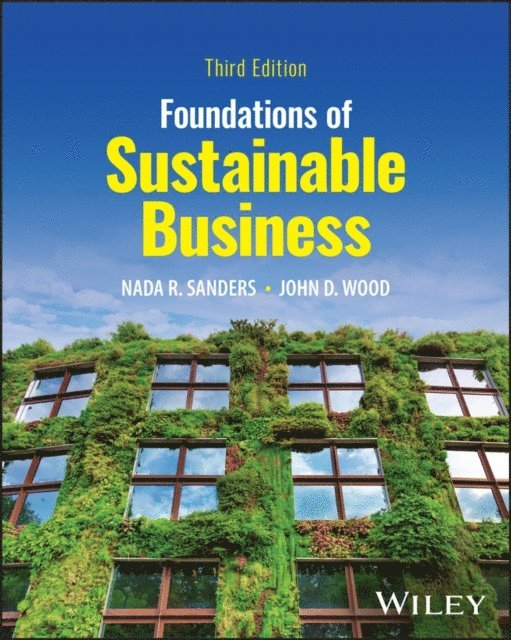
An insightful and easy-to-follow introduction to the defining business sustainability issues of our generation Describing sustainable business from the perspective of management, Nada R. Sanders and John D. Wood explain how and why increased consumer and regulatory pressure for sustainable performance is driving changes in core business functions, legal frameworks, metrics, reporting, and more. Clear and accessible chapters offer comprehensive, well-balanced coverage of key concepts in social, economic, and environmental sustainability, supported by original case studies, real-world examples, practice quizzes, and other learning tools. Now in its third edition, Foundations of Sustainable Business; Theory, Function, and Strategy provides a thorough introduction to the social and environmental issues defining contemporary markets and societies. Designed to prepare aspiring business leaders to tackle urgent problems with a direct impact on their firms’ bottom lines, this respected textbook employs a qualitative learning process that walks students through the application of sustainability concepts to leadership, finance, accounting, risk management, marketing, supply chain management, and operations. Written by a business thought-leader and a public interest policy expert, Foundations of Sustainable Business: Theory, Function, and Strategy, Third Edition is an excellent primary or supplementary textbook for undergraduate and graduate courses in business administration, management, and marketing. It is also an invaluable resource for business leaders looking for an intuitive and incisive introduction to sustainability concepts relevant to modern professionals, managers, and executives.
813 kr
Skickas inom 5-8 vardagar
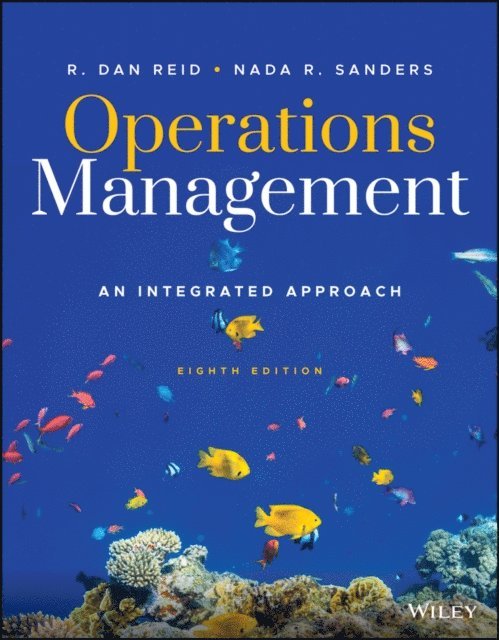
Operations Management: An Integrated Approach, 8th edition, provides a solid foundation of the subject with clear, guided instructions and a balance between quantitative and qualitative concepts, thus providing both an applied and practical approach. In addition to leveraging customizable, tactile teaching and learning methods, the text covers emerging topics like artificial intelligence, robotics, data analytics, and sustainability.This international edition includes several revisions and additions to the content, including updated company examples across all chapters, updated discussions with regard to the latest technologies that impact operations and supply chain management, and revised problems in all chapters. In addition, the edition includes a new “Pandemic Effects” box that addresses how the chapter topic has evolved or changed during the COVID-19 pandemic and how it is evolving in a post-pandemic environment.
253 kr
Skickas inom 5-8 vardagar
This book is for everyone who wants to make better forecasts. It is not about mathematics and statistics. It is about following a well-established forecasting process to create and implement good forecasts. This is true whether you are forecasting global markets, sales of SKUs, competitive strategy, or market disruptions. Today, most forecasts are generated using software. However, no amount of technology and statistics can compensate for a poor forecasting process. Forecasting is not just about generating a number. Forecasters need to understand the problems they are trying to solve. They also need to follow a process that is justifiable to other parties and be implemented in practice. This is what the book is about. Accurate forecasts are essential for predicting demand, identifying new market opportunities, forecasting risks, disruptions, innovation, competition, market growth and trends. Companies can navigate this daunting landscape and improve their forecasts by following some well-established principles. This book is written to provide the fundamentals business leaders need in order to make good forecasts. These fundamentals hold true regardless of what is being forecast and what technology is being used. It provides the basic foundational principles all companies need to achieve competitive forecast accuracy.
782 kr
Skickas inom 5-8 vardagar