Neil M. Coe - Böcker
Visar alla böcker från författaren Neil M. Coe. Handla med fri frakt och snabb leverans.
8 produkter
8 produkter
Global Production Networks
Theorizing Economic Development in an Interconnected World
Inbunden, Engelska, 2015
1 412 kr
Skickas inom 7-10 vardagar
Accelerating processes of economic globalization have fundamentally reshaped the organization of the global economy towards much greater integration and functional interdependence through cross-border economic activity. In this interconnected world system, a new form of economic organization has emerged: Global Production Networks (GPNs). This brings together a wide array of economic actors, most notably capitalist firms, state institutions, labour unions, consumers and non-government organizations, in the transnational production of economic value. National and sub-national economic development in this highly interdependent global economy can no longer be conceived of, and understood within, the distinct territorial boundaries of individual countries and regions. Instead, global production networks are organizational platforms through which actors in these different national or regional economies compete and cooperate for a larger share of the creation, transformation, and capture of value through transnational economic activity. They are also vehicles for transferring the value captured between different places. This book ultimately aims to develop a theory of global production networks that explains economic development in the interconnected global economy. While primarily theoretical in nature, it is well grounded in cutting-edge empirical work in the parallel and highly impactful strands of social science literature on the changing organization of the global economy relating to global commodity chains (GCC), global value chains (GVC), and global production networks (GPN).
Global Production Networks
Theorizing Economic Development in an Interconnected World
Häftad, Engelska, 2015
468 kr
Skickas inom 5-8 vardagar
Accelerating processes of economic globalization have fundamentally reshaped the organization of the global economy towards much greater integration and functional interdependence through cross-border economic activity. In this interconnected world system, a new form of economic organization has emerged: Global Production Networks (GPNs). This brings together a wide array of economic actors, most notably capitalist firms, state institutions, labour unions, consumers and non-government organizations, in the transnational production of economic value. National and sub-national economic development in this highly interdependent global economy can no longer be conceived of, and understood within, the distinct territorial boundaries of individual countries and regions. Instead, global production networks are organizational platforms through which actors in these different national or regional economies compete and cooperate for a larger share of the creation, transformation, and capture of value through transnational economic activity. They are also vehicles for transferring the value captured between different places. This book ultimately aims to develop a theory of global production networks that explains economic development in the interconnected global economy. While primarily theoretical in nature, it is well grounded in cutting-edge empirical work in the parallel and highly impactful strands of social science literature on the changing organization of the global economy relating to global commodity chains (GCC), global value chains (GVC), and global production networks (GPN).
455 kr
Skickas inom 7-10 vardagar
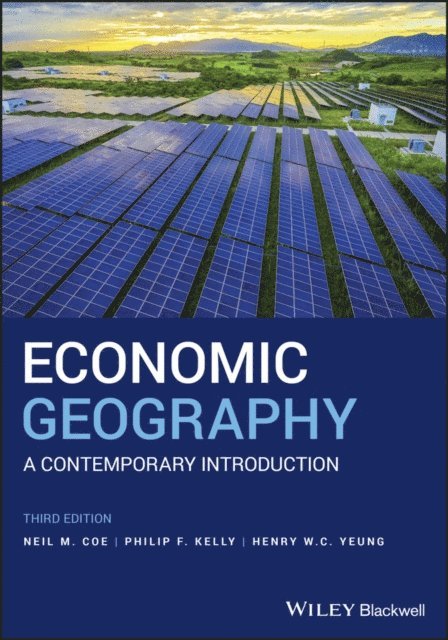
A revised and updated edition of the leading introductory text on the geography of economic life, from the local to the globalEconomic Geography is an engaging and accessible introduction to the different ways modern economic geographers understand, analyze, and interpret economic processes. This comprehensive text addresses significant questions relevant to contemporary economic life, from the activities of transnational corporations to issues surrounding workplaces and consumption. It encourages readers to explore how spatial patterns, places, networks, and territories shape large-scale economic processes. Accessible, highly-illustrated material presents fresh insights from the field—complemented by relatable, real-world examples that help students understand the social, cultural, and political contexts underpinning global economic processes.Now in its third edition, this extensively revised and updated textbook retains the features and thematic structure that have proved popular with students and instructors alike, while adding exciting new content. New chapters explore how the global economy and global development are institutionalized and governed, the economic geographies of global climate change, economic practices outside the capitalist mainstream, the role of migrants in labour markets, global production networks, and more. Introduces economic geography with a thematic approach including major concepts, current debates, and case studiesRevised and updated to enhance international coverage, including three entirely new chapters on international development, alternative economies, and global climate changeSubstantial new content on labour migration, global production networks, and recent intellectual trends such as evolutionary economic geographyHighly illustrated with diagrams and photographs closely integrated into the textPedagogical aids including key case studies, learning objectives, text boxes, chapter essay questions, summaries, and further readingCore geographical concepts – such as place, networks and territory – are closely integrated into all chapters.Economic Geography: A Contemporary Introduction is an invaluable source of up-to-date knowledge for students new to the field, for those requiring a solid foundation, as well as for a broader academic and public readership with interest in this area of study.
1 524 kr
Skickas inom 5-8 vardagar
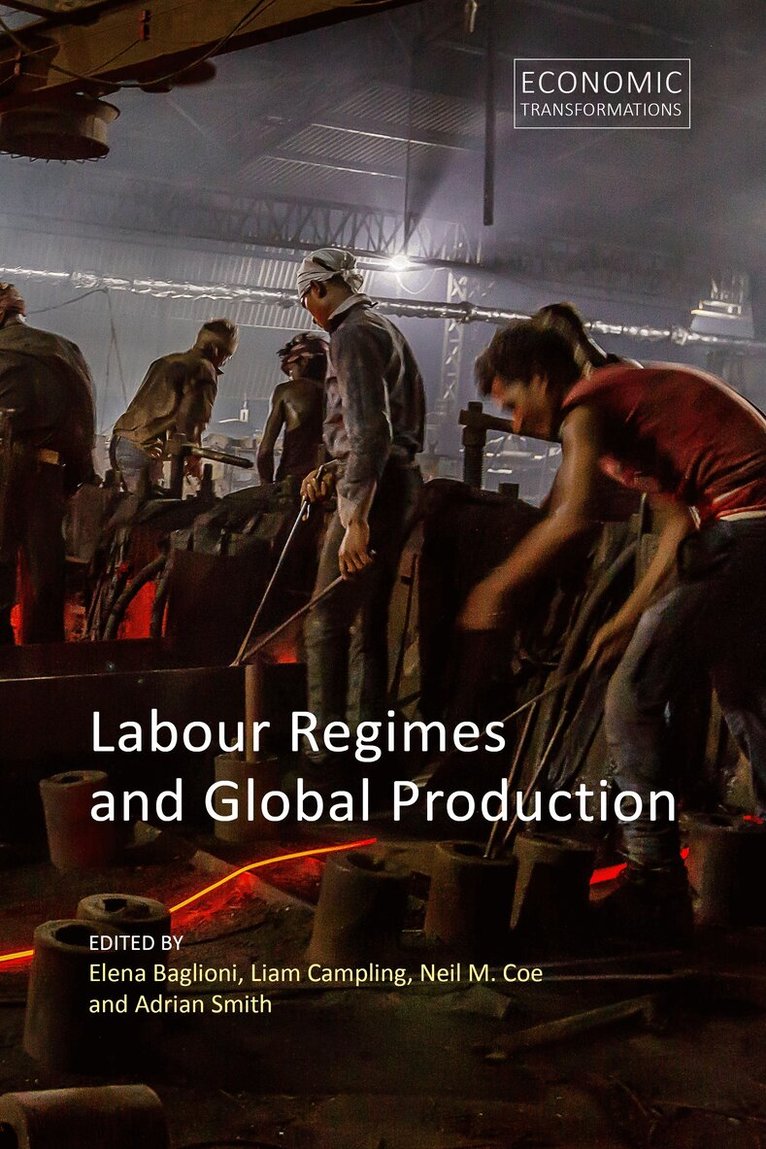
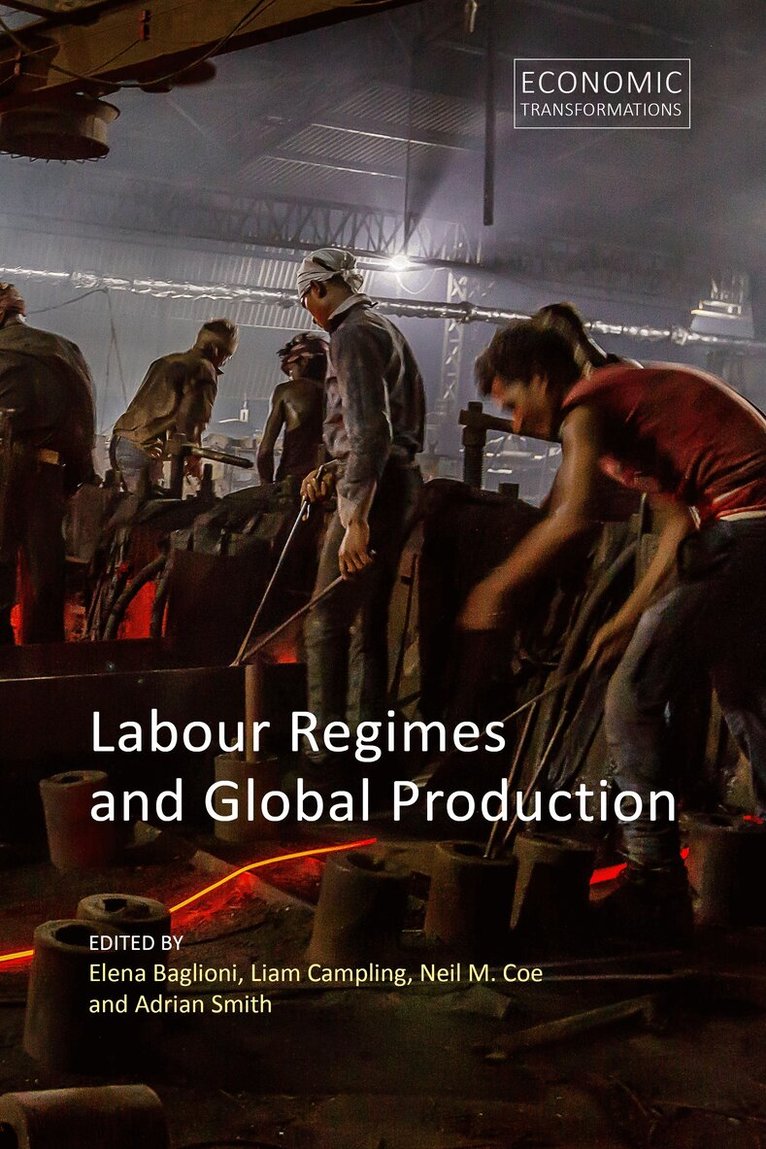
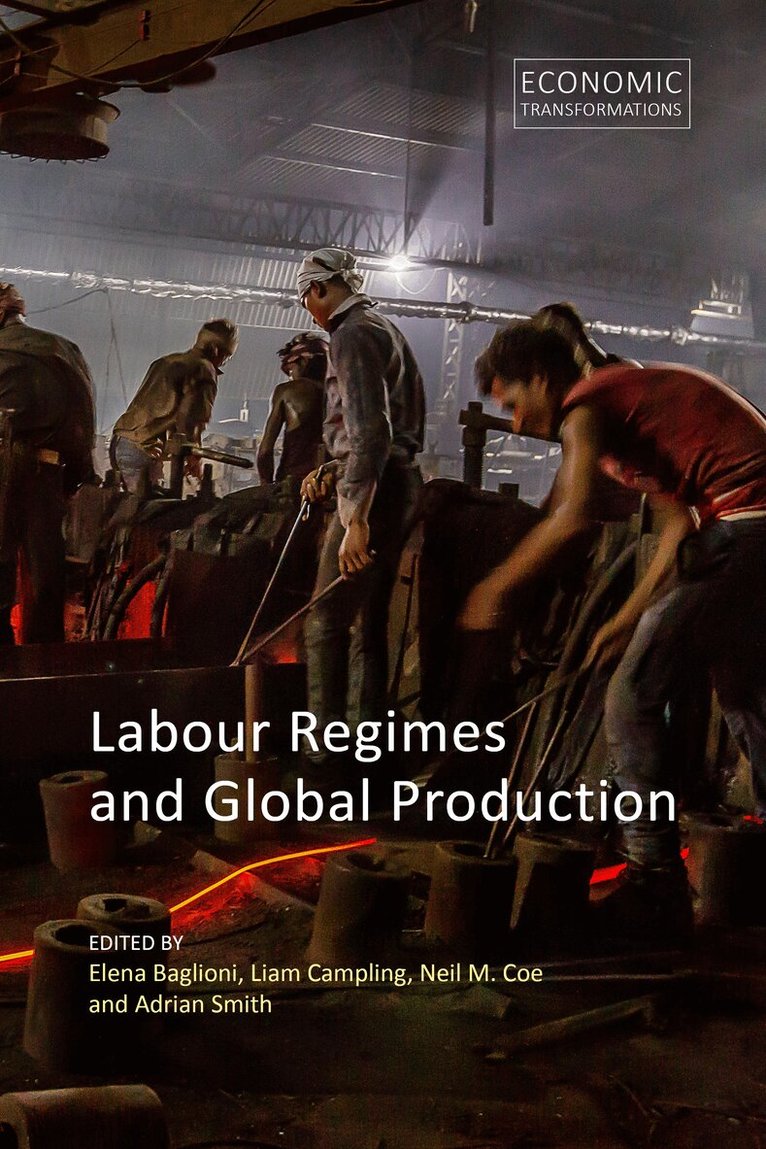
There has been a recent resurgence in interest in the theorization of labour regimes in various disciplines. This has taken the form of a concern to understand the role that labour regimes play in the structuring, organization and dynamics of global systems of production and reproduction. The concept has a long heritage that can be traced back to the 1970s and the contributions to this book seek to develop further this emerging field.The book traces the intellectual development of labour regime concepts across various disciplines, notably political economy, development studies, sociology and geography. Building on these foundations it considers conceptual debates around labour regimes and global production relating to issues of scale, informality, gender, race, social reproduction, ecology and migration, and offers new insights into the work conditions of global production chains from Amazon's warehouses in the United States, to industrial production networks in the Global South, and to the dormitory towns of migrant workers in Czechia. It also explores recent mobilizations of labour regime analysis in relation to methods, theory and research practice.
547 kr
Skickas inom 5-8 vardagar
There has been a recent resurgence in interest in the theorization of labour regimes in various disciplines. This has taken the form of a concern to understand the role that labour regimes play in the structuring, organization and dynamics of global systems of production and reproduction. The concept has a long heritage that can be traced back to the 1970s and the contributions to this book seek to develop further this emerging field.The book traces the intellectual development of labour regime concepts across various disciplines, notably political economy, development studies, sociology and geography. Building on these foundations it considers conceptual debates around labour regimes and global production relating to issues of scale, informality, gender, race, social reproduction, ecology and migration, and offers new insights into the work conditions of global production chains from Amazon's warehouses in the United States, to industrial production networks in the Global South, and to the dormitory towns of migrant workers in Czechia. It also explores recent mobilizations of labour regime analysis in relation to methods, theory and research practice.
1 546 kr
Skickas inom 7-10 vardagar
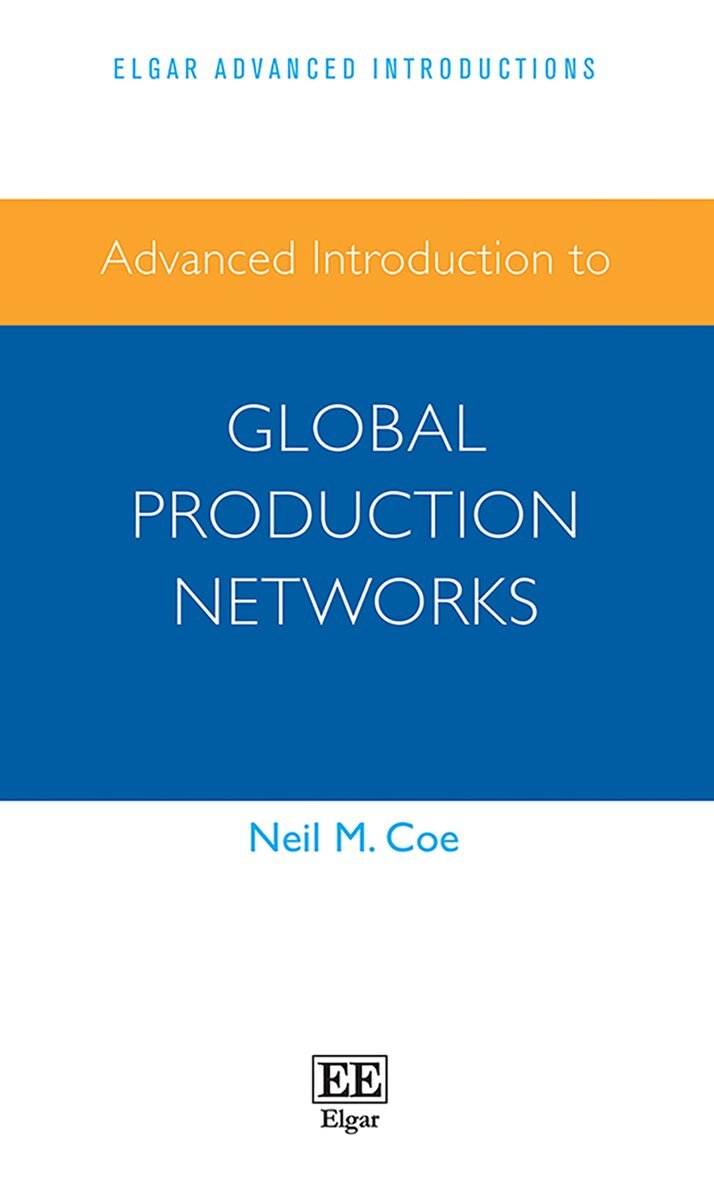
Elgar Advanced Introductions are stimulating and thoughtful introductions to major fields in the social sciences, business and law, expertly written by the world's leading scholars. Designed to be accessible yet rigorous, they offer concise and lucid surveys of the substantive and policy issues associated with discrete subject areas.This Advanced Introduction provides a comprehensive guide to the vibrant and expanding global production network (GPN) approach. Neil M. Coe deftly explores the antecedents and theoretical underpinnings of GPN analysis, as well as debates and controversies surrounding the approach and its position in wider interdisciplinary discussions. He argues overall that, during a time of profound ongoing challenges within the global economic system, the need for a GPN framework has never been more pressing.Key features include:an up-to-date assessment of current debates in the literaturean integrated perspective on how GPN thinking can aid understanding of capitalist uneven developmenta wide range of sectoral and geographical examplesa thorough discussion of connections to cognate debates in the wider social sciences and business and management studiesidentification of future research challenges in the field.In short, Advanced Introduction to Global Production Networks is an ideal introductory book for students at both undergraduate and postgraduate levels in geography, economics and business looking to understand the organization and dynamics of the global economy.
298 kr
Elgar Advanced Introductions are stimulating and thoughtful introductions to major fields in the social sciences, business and law, expertly written by the world's leading scholars. Designed to be accessible yet rigorous, they offer concise and lucid surveys of the substantive and policy issues associated with discrete subject areas.This Advanced Introduction provides a comprehensive guide to the vibrant and expanding global production network (GPN) approach. Neil M. Coe deftly explores the antecedents and theoretical underpinnings of GPN analysis, as well as debates and controversies surrounding the approach and its position in wider interdisciplinary discussions. He argues overall that, during a time of profound ongoing challenges within the global economic system, the need for a GPN framework has never been more pressing.Key features include:an up-to-date assessment of current debates in the literaturean integrated perspective on how GPN thinking can aid understanding of capitalist uneven developmenta wide range of sectoral and geographical examplesa thorough discussion of connections to cognate debates in the wider social sciences and business and management studiesidentification of future research challenges in the field.In short, Advanced Introduction to Global Production Networks is an ideal introductory book for students at both undergraduate and postgraduate levels in geography, economics and business looking to understand the organization and dynamics of the global economy.
Del 22 - The Globalization of the World Economy series
Globalization of Retailing
Inbunden, Engelska, 2009
7 961 kr
Skickas inom 7-10 vardagar
This path-breaking collection, edited by two leading scholars in the field, brings together seminal contributions from the burgeoning multidisciplinary literature on the globalization of retailing. In addition to focusing on the retail corporations and their expansionary strategies, it explores the multi-faceted impacts of retail globalization on host economies and profiles the store and sourcing dimensions of transnational retail activity.These volumes are of particular interest to scholars in management and business studies, economic geography, development studies and economics, and more generally to all social scientists interested in the transformative role of retailing within the global economy.