Nick Megoran – författare
Visar alla böcker från författaren Nick Megoran. Handla med fri frakt och snabb leverans.
14 produkter
14 produkter
Inbunden, Engelska, 2013
1 348 kr
Skickas inom 3-6 vardagar
Häftad, Engelska, 2017
723 kr
Skickas inom 5-8 vardagar
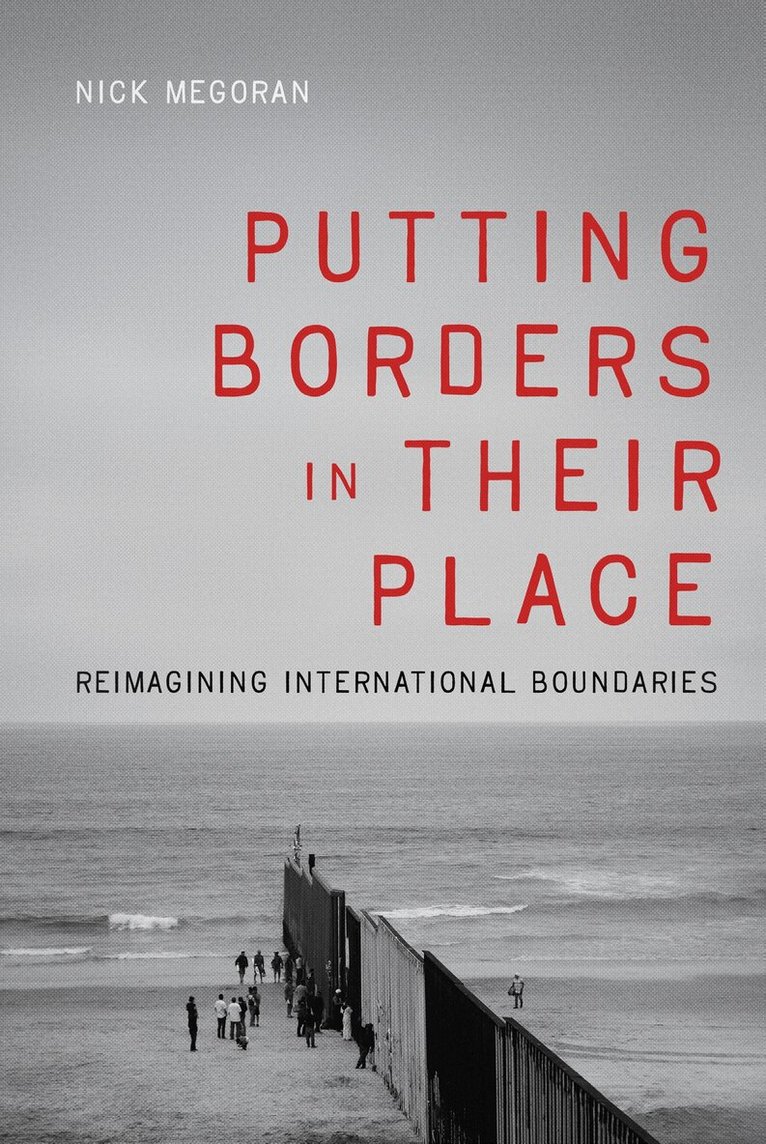
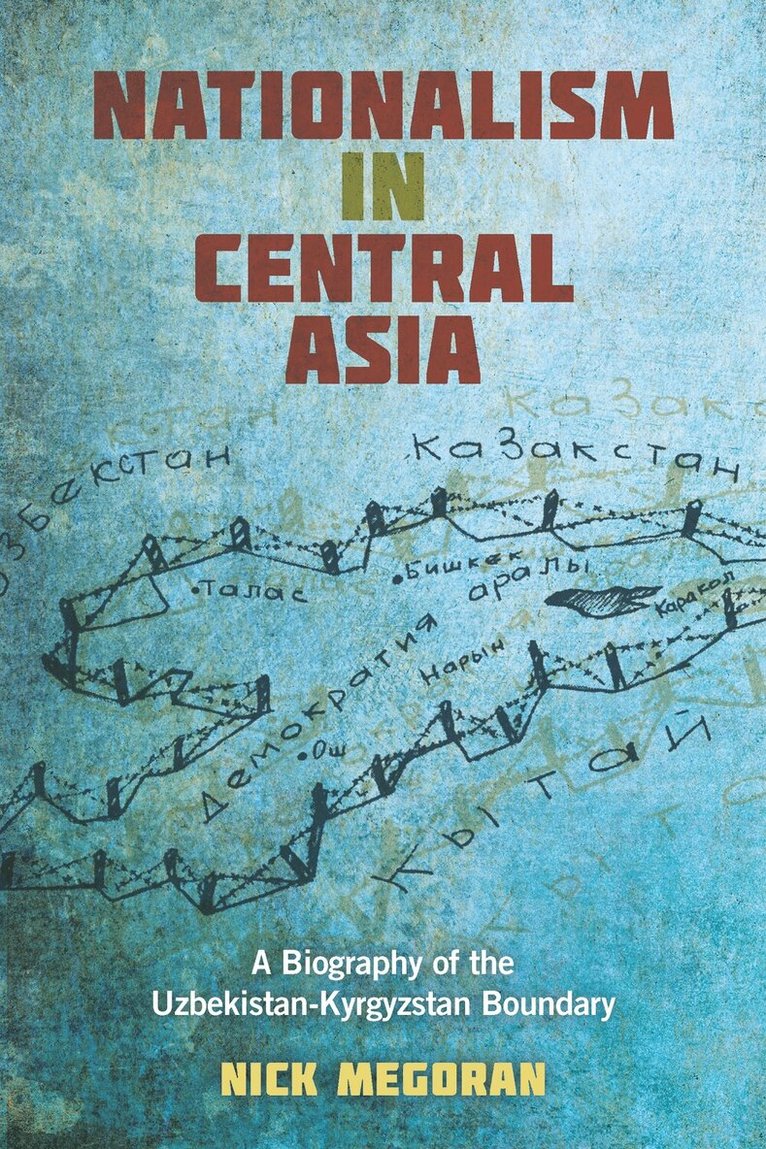
Nick Megoran explores the process of building independent nation-states in post-Soviet Central Asia through the lens of the disputed border territory between Uzbekistan and Kyrgyzstan. In his rich "biography" of the boundary, he employs a combination of political, cultural, historical, ethnographic, and geographic frames to shed new light on nation-building process in this volatile and geopolitically significant region. Megoran draws on twenty years of extensive research in the borderlands via interviews, observations, participation, and newspaper analysis. He considers the problems of nationalist discourse versus local vernacular, elite struggles versus borderland solidarities, boundary delimitation versus everyday experience, border control versus resistance, and mass violence in 2010, all of which have exacerbated territorial anxieties. Megoran also revisits theories of causation, such as the loss of Soviet control, poorly defined boundaries, natural resource disputes, and historic ethnic clashes, to show that while these all contribute to heightened tensions, political actors and their agendas have clearly driven territorial aspirations and are the overriding source of conflict. As this compelling case study shows, the boundaries of the The Ferghana Valley put in succinct focus larger global and moral questions of what defines a good border.
E-bok
Engelska, 20141 881 kr
Läs direkt efter köp
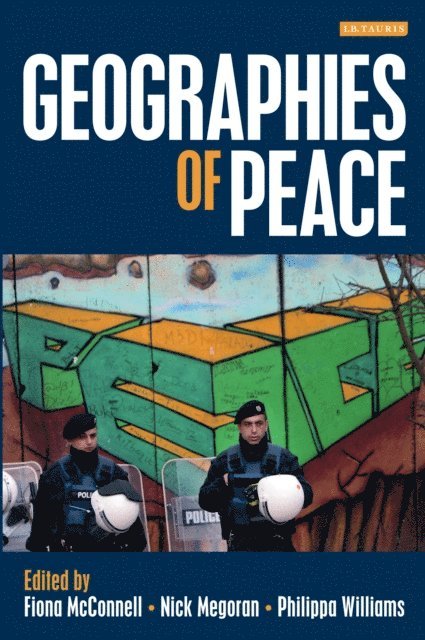
From handshakes on the White House lawn to Picasso's iconic dove of peace, the images and stereotypes of peace are powerful, widespread and easily recognizable. Yet if we try to offer a concise definition of peace it is altogether a more complicated exercise. Not only is peace an emotive and value-laden concept, it is also abstract, ambiguous and seemingly inextricably tied to its antithesis: war. And it is war and violence that have been so compellingly studied within critical geography in recent years. This volume offers an attempt to redress that balance, and to think more expansively and critically about what peace means and what geographies of peace may entail. The editors begin with an examination of critical approaches to peace in other disciplines and a helpful genealogy of peace studies within geography. The book is then divided into three sections. The opening section examines how the idea of peace may be variously constructed and interpreted according to different sites and scales. The chapters in the second section explore a remarkably wide range of techniques of peacemaking.This widens the discussion from the archetypical image of top-down, diplomatic state-led initiatives to imperial boundary making practices, grassroots cultural identity assertion, boycotts, self-immolation, ex-paramilitary community activism, and 'protective accompaniment'.The final section shifts the scale and focus to everyday personal relations and a range of practices around the concept of coexistence. In their concluding chapter the editors spell out some of the key questions that they believe a geography of peace must address: What spatial factors have facilitated the success or precipitated the failure of some peace movements or diplomatic negotiations? Why are some ideologies productive of violence in some places but co-operation in others? How have some communities been better able to deal with religious, racial, cultural and class conflict than others? How have creative approaches to sharing sovereignty mitigated or transformed territorial disputes that once seemed intractable? Geographies of Peace is the first book wholly devoted to exploring the geography of peace.Drawing on both recent advances in social and political theory and detailed empirical research covering four continents, it makes a significant intervention into current debates about peace and violence.
Häftad, Engelska, 2017
363 kr
Skickas inom 5-8 vardagar
E-bok
Engelska, 2017655 kr
Läs direkt efter köp
How should Christians respond to war? This age-old question has become more pressing given Western governments'' recent overseas military interventions and the rise of extremist Islamist jihadism. Grounded in conservative evangelical theology, this book argues the historic church position that it is inadmissible for Christians to use violence or take part in war. It shows how the church''s propensity to support the "just wars," crusades, rebellions, or "humanitarian interventions" of its host nations over time has been disastrous for the reputation of the gospel. Instead, the church''s response to war is simply to be the church, by preaching the gospel and making peace in the love and power of God. The book considers challenges to this argument for "gospel peace." What about warfare in the Old Testament and military metaphors in the New? What of church history? And how do we deal with tyrants like Hitler and terrorists like Islamic State? Charting a path between just war theory and liberal pacifism, numerous inspiring examples from the worldwide church are used to demonstrate effective and authentically Christian responses to violence. The author argues that as Christians increasingly drop their unbiblical addiction to war, we may be entering one of the most exciting periods of church history.
Inbunden, Engelska, 2017
580 kr
Skickas inom 5-8 vardagar
Häftad, Engelska, 2022
124 kr
Skickas inom 5-8 vardagar
Inbunden, Engelska, 2022
254 kr
Skickas inom 5-8 vardagar
149 kr
Läs direkt efter köp
Does life have meaning, purpose and value? Can we know whether God exists? If he does, why does he allow bad things to happen? How can we make sense of death, and what lies beyond it? And how can we live life well during a personal, national, or global crisis? Human beings have always asked these big questions. However, crises like the COVID-19 pandemic, the 2007-2008 financial collapse, or the War on Terror following the 9/11 attacks, make them seem more urgent and harder to avoid.This short book is an accessible introduction to these questions. It makes no assumptions about the reader''s beliefs but is written for anyone who wants to understand how Christian ideas can help make sense of life and live it well during difficult times.Each chapter is illustrated with examples from the lives of a wide range of people over time, as well as stories from films, novels, and music, to help the reader think through these weighty issues in an engaging way.
Inbunden, Engelska, 2014
1 935 kr
Skickas inom 10-15 vardagar
From handshakes on the White House lawn to Picasso's iconic dove of peace, the images and stereotypes of peace are powerful, widespread and easily recognizable. Yet if we try to offer a concise definition of peace it is altogether a more complicated exercise. Not only is peace an emotive and value-laden concept, it is also abstract, ambiguous and seemingly inextricably tied to its antithesis: war. And it is war and violence that have been so compellingly studied within critical geography in recent years. This volume offers an attempt to redress that balance, and to think more expansively and critically about what peace means and what geographies of peace may entail. The editors begin with an examination of critical approaches to peace in other disciplines and a helpful genealogy of peace studies within geography. The book is then divided into three sections. The opening section examines how the idea of peace may be variously constructed and interpreted according to different sites and scales. The chapters in the second section explore a remarkably wide range of techniques of peacemaking.This widens the discussion from the archetypical image of top-down, diplomatic state-led initiatives to imperial boundary making practices, grassroots cultural identity assertion, boycotts, self-immolation, ex-paramilitary community activism, and 'protective accompaniment'.The final section shifts the scale and focus to everyday personal relations and a range of practices around the concept of coexistence. In their concluding chapter the editors spell out some of the key questions that they believe a geography of peace must address: What spatial factors have facilitated the success or precipitated the failure of some peace movements or diplomatic negotiations? Why are some ideologies productive of violence in some places but co-operation in others? How have some communities been better able to deal with religious, racial, cultural and class conflict than others? How have creative approaches to sharing sovereignty mitigated or transformed territorial disputes that once seemed intractable? Geographies of Peace is the first book wholly devoted to exploring the geography of peace.Drawing on both recent advances in social and political theory and detailed empirical research covering four continents, it makes a significant intervention into current debates about peace and violence.
Inbunden, Engelska, 2018
1 646 kr
Skickas inom 10-15 vardagar
The collapse of the USSR wrought dramatic changes in Eurasia, both in terms of the structure of state power within the region, and the ways in which Western states and international organisations engaged with it. Analyses of conflict in this region remain rooted in supposed ‘global models’, often assuming that patterns of state failure are due to resistance to the liberal model of peacebuilding. This book sets out a challenge to these assumptions and framings. It not only questions but resolutely dismisses the notion that the peacebuilding methods favoured by Western states remain the most salient in Eurasia. Instead, it develops a framework that seeks to conceptualise the ways in which non-liberal actors contest or transform globally promoted norms of conflict management and promote alternative ones in their place. Authoritarian Conflict Management (ACM) consists of an ensemble of norms and practices in which non-liberal actors attempt to exert sustained hegemonic control over the local discursive, economic and spatial realms in a given territory. With case studies ranging from Afghanistan to Uzbekistan, Xinjiang to the Caucasus, the chapters shed light on the ways in which local and regional actors enact practice of ACM in order to impose stability in conflict-prone localities, thereby challenging the Western-led consensus known as the ‘liberal peace’.
Häftad, Engelska, 2018
553 kr
Skickas inom 10-15 vardagar
The collapse of the USSR wrought dramatic changes in Eurasia, both in terms of the structure of state power within the region, and the ways in which Western states and international organisations engaged with it. Analyses of conflict in this region remain rooted in supposed ‘global models’, often assuming that patterns of state failure are due to resistance to the liberal model of peacebuilding. This book sets out a challenge to these assumptions and framings. It not only questions but resolutely dismisses the notion that the peacebuilding methods favoured by Western states remain the most salient in Eurasia. Instead, it develops a framework that seeks to conceptualise the ways in which non-liberal actors contest or transform globally promoted norms of conflict management and promote alternative ones in their place. Authoritarian Conflict Management (ACM) consists of an ensemble of norms and practices in which non-liberal actors attempt to exert sustained hegemonic control over the local discursive, economic and spatial realms in a given territory. With case studies ranging from Afghanistan to Uzbekistan, Xinjiang to the Caucasus, the chapters shed light on the ways in which local and regional actors enact practice of ACM in order to impose stability in conflict-prone localities, thereby challenging the Western-led consensus known as the ‘liberal peace’.
E-bok
Engelska, 2018581 kr
Läs direkt efter köp
The collapse of the USSR wrought dramatic changes in Eurasia, both in terms of the structure of state power within the region, and the ways in which Western states and international organisations engaged with it. Analyses of conflict in this region remain rooted in supposed ‘global models’, often assuming that patterns of state failure are due to resistance to the liberal model of peacebuilding. This book sets out a challenge to these assumptions and framings. It not only questions but resolutely dismisses the notion that the peacebuilding methods favoured by Western states remain the most salient in Eurasia. Instead, it develops a framework that seeks to conceptualise the ways in which non-liberal actors contest or transform globally promoted norms of conflict management and promote alternative ones in their place. Authoritarian Conflict Management (ACM) consists of an ensemble of norms and practices in which non-liberal actors attempt to exert sustained hegemonic control over the local discursive, economic and spatial realms in a given territory. With case studies ranging from Afghanistan to Uzbekistan, Xinjiang to the Caucasus, the chapters shed light on the ways in which local and regional actors enact practice of ACM in order to impose stability in conflict-prone localities, thereby challenging the Western-led consensus known as the ‘liberal peace’.
Inbunden, Engelska, 2013
582 kr
Skickas inom 7-10 vardagar
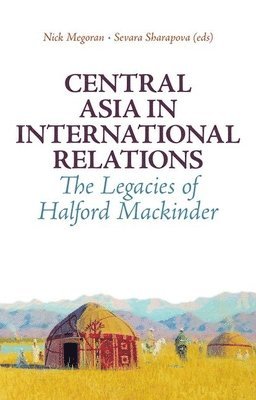
The republics of Central Asia re-emerged as independent actors in the global interstate system in the wake of the collapse of the Soviet Union, their varied histories and geographies offering many different possible opportunities and course of action. In order to explain their often confusing and complicated foreign policy alignments, many analysts have turned again to the theories of Sir Halford Mackinder (1861-1947), the British geographer who is widely regarded as the founding father of geopolitics. This book brings together historical geographers and political scientists to explore this remarkable renaissance of Mackinder's thinking. It charts his own engagement with the region, in both his writings and his visit to Central Asia as a British envoy in the aftermath of World War I. It outlines and evaluates how his ideas have been used by Central Asian, Russian, and American scholars to explain the region's international relations, and it traces how his writings actually reached Central Asia and the manner in which they have been dynamically reworked by scholars 'in transit'. The book is thus an important contribution not only to theorising the international relations of Central Asia, but also to our understanding of the historical geography of how ideas are ex- changed and reworked in the process.