Fiona McConnell – författare
1 881 kr
Läs direkt efter köp
916 kr
Läs direkt efter köp
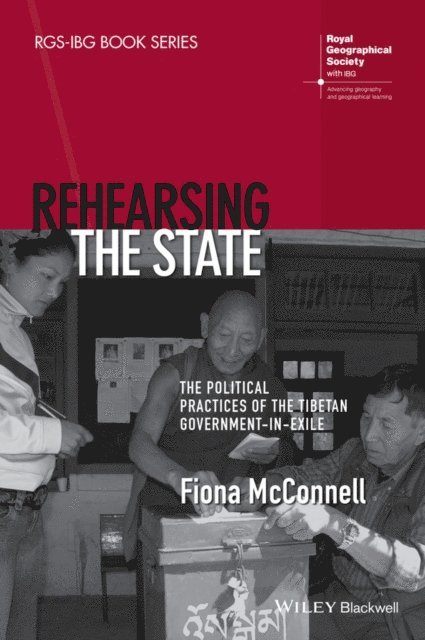
Rehearsing the State presents a comprehensive investigation of the institutions, performances, and actors through which the Tibetan Government-in-Exile is rehearsing statecraft. McConnell offers new insights into how communities officially excluded from formal state politics enact hoped-for futures and seek legitimacy in the present.
Offers timely and original insights into exile Tibetan politics based on detailed qualitative research in Tibetan communities in India Advances existing debates in political geography by bringing ideas of stateness and statecraft into dialogue with geographies of temporality Explores the provisional and pedagogical dimensions of state practices, adding weight to assertions that states are in a continual situation of emergence Makes a significant contribution to critical state theory382 kr
Läs direkt efter köp
Rehearsing the State presents a comprehensive investigation of the institutions, performances, and actors through which the Tibetan Government-in-Exile is rehearsing statecraft. McConnell offers new insights into how communities officially excluded from formal state politics enact hoped-for futures and seek legitimacy in the present.
Offers timely and original insights into exile Tibetan politics based on detailed qualitative research in Tibetan communities in India Advances existing debates in political geography by bringing ideas of stateness and statecraft into dialogue with geographies of temporality Explores the provisional and pedagogical dimensions of state practices, adding weight to assertions that states are in a continual situation of emergence Makes a significant contribution to critical state theory809 kr
Skickas
341 kr
Skickas inom 11-20 vardagar
770 kr
Skickas inom 10-15 vardagar
2 297 kr
Skickas inom 10-15 vardagar
892 kr
Läs direkt efter köp
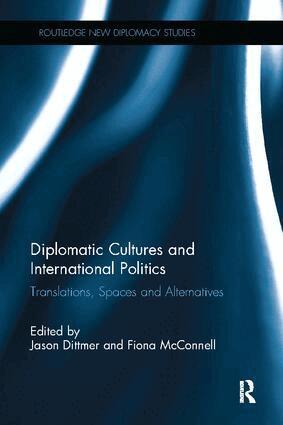
This volume offers an inter-disciplinary and critical analysis of the role of culture in diplomatic practice.
If diplomacy is understood as the practice of conducting negotiations between representatives of distinct communities or causes, then questions of culture and the spaces of cultural exchange are at its core. But what of the culture of diplomacy itself? When and how did this culture emerge, and what alternative cultures of diplomacy run parallel to it, both historically and today? How do particular spaces and places inform and shape the articulation of diplomatic culture(s)? This volume addresses these questions by bringing together a collection of theoretically rich and empirically detailed contributions from leading scholars in history, international relations, geography, and literary theory. Chapters attend to cross-cutting issues of the translation of diplomatic cultures, the role of space in diplomatic exchange and the diversity of diplomatic cultures beyond the formal state system. Drawing on a range of methodological approaches the contributors discuss empirical cases ranging from indigenous diplomacies of the Inuit Circumpolar Council, to the European External Action Service, the 1955 Bandung Conference, the spatial imaginaries of mid twentieth-century Balkan writer diplomats, celebrity and missionary diplomacy, and paradiplomatic narratives of The Hague. The volume demonstrates that, when approached from multiple disciplinary perspectives and understood as expansive and plural, diplomatic cultures offer an important lens onto issues as diverse as global governance, sovereignty regimes and geographical imaginations.
This book will be of much interest to students of public diplomacy, foreign policy, international organisations, media and communications studies, and IR in general.
892 kr
Läs direkt efter köp
This volume offers an inter-disciplinary and critical analysis of the role of culture in diplomatic practice.
If diplomacy is understood as the practice of conducting negotiations between representatives of distinct communities or causes, then questions of culture and the spaces of cultural exchange are at its core. But what of the culture of diplomacy itself? When and how did this culture emerge, and what alternative cultures of diplomacy run parallel to it, both historically and today? How do particular spaces and places inform and shape the articulation of diplomatic culture(s)? This volume addresses these questions by bringing together a collection of theoretically rich and empirically detailed contributions from leading scholars in history, international relations, geography, and literary theory. Chapters attend to cross-cutting issues of the translation of diplomatic cultures, the role of space in diplomatic exchange and the diversity of diplomatic cultures beyond the formal state system. Drawing on a range of methodological approaches the contributors discuss empirical cases ranging from indigenous diplomacies of the Inuit Circumpolar Council, to the European External Action Service, the 1955 Bandung Conference, the spatial imaginaries of mid twentieth-century Balkan writer diplomats, celebrity and missionary diplomacy, and paradiplomatic narratives of The Hague. The volume demonstrates that, when approached from multiple disciplinary perspectives and understood as expansive and plural, diplomatic cultures offer an important lens onto issues as diverse as global governance, sovereignty regimes and geographical imaginations.
This book will be of much interest to students of public diplomacy, foreign policy, international organisations, media and communications studies, and IR in general.
1 322 kr
Skickas inom 5-8 vardagar
1 919 kr
Skickas inom 10-15 vardagar
1 070 kr
Skickas inom 5-8 vardagar
1 156 kr
Läs direkt efter köp