

‘I wish I had copies like this at Drama School. Essential notes on the language for those who will get up and speak it, not purely for those who will sit and study it. An incredibly useful tool with room on every page to make notes. Next time I’m in rehearsal on a Shakespeare play, I have no doubt that a copy from this series will be in my hand.’ ADRIAN LESTER, Actor, Director and WriterArden Performance Editions are ideal for anyone engaging with a Shakespeare play in performance. With clear facing-page notes giving definitions of words, easily accessible information about key textual variants, lineation, metrical ambiguities and pronunciation, each edition has been developed to open the play’s possibilities and meanings to actors and students.Each edition offers: -Facing-page notes -Short, clear definitions of words-Easily accessible information about key textual variants-Notes on pronunciation of difficult names and unfamiliar words-An easy to read layout -Space to write notes -A short introduction to the play
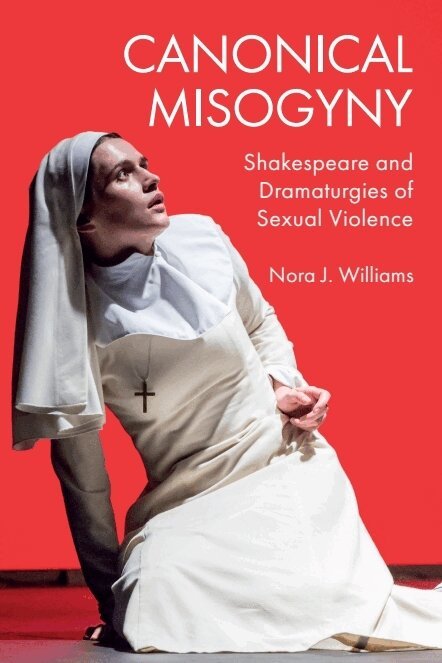
If misogyny is a systemic problem, then in order to understand its influence on canonical works like Shakespeare's, those works must be investigated at their systems level in other words, at the level of their dramaturgies. This landmark study arises from an eight-year practice-as-research (PaR) investigation of sexual violence and rape culture through Shakespeare's Measure for Measure. Moving between analytical and critical-reflective voices, and prioritising knowledge arising from and questions generated by the author's embodied investment in this PaR work, Canonical Misogyny focuses on dramaturgy as a site of ideology and meaning-making. It seeks to address the ways in which contemporary theatre allows producers of Shakespeare to represent gendered violence in unethical and irresponsible ways. It also demonstrates how failures to make meaningful dramaturgical interventions in early modern plays result in the tacit (or even explicit) glorifying and/or trivialising of their problematic approaches to consent and agency, which intersects with questions of race, gender, sexuality and class.
If misogyny is a systemic problem, then in order to understand its influence on canonical works like Shakespeare’s, those works must be investigated at their systems level – in other words, at the level of their dramaturgies. This landmark study arises from an eight-year practice-as-research (PaR) investigation of sexual violence and rape culture through Shakespeare’s Measure for Measure. Moving between analytical and critical-reflective voices, and prioritising knowledge arising from and questions generated by the author’s embodied investment in this PaR work, Canonical Misogyny focuses on dramaturgy as a site of ideology and meaning-making. It seeks to address the ways in which contemporary theatre allows producers of Shakespeare to represent gendered violence in unethical and irresponsible ways. It also demonstrates how failures to make meaningful dramaturgical interventions in early modern plays result in the tacit (or even explicit) glorifying and/or trivialising of their problematic approaches to consent and agency, which intersects with questions of race, gender, sexuality and class.
‘I wish I had copies like this at Drama School. Essential notes on the language for those who will get up and speak it, not purely for those who will sit and study it. An incredibly useful tool with room on every page to make notes. Next time I’m in rehearsal on a Shakespeare play, I have no doubt that a copy from this series will be in my hand.’ ADRIAN LESTER, Actor, Director and WriterArden Performance Editions are ideal for anyone engaging with a Shakespeare play in performance. With clear facing-page notes giving definitions of words, easily accessible information about key textual variants, lineation, metrical ambiguities and pronunciation, each edition has been developed to open the play’s possibilities and meanings to actors and students.Each edition offers: -Facing-page notes -Short, clear definitions of words-Easily accessible information about key textual variants-Notes on pronunciation of difficult names and unfamiliar words-An easy to read layout -Space to write notes -A short introduction to the play
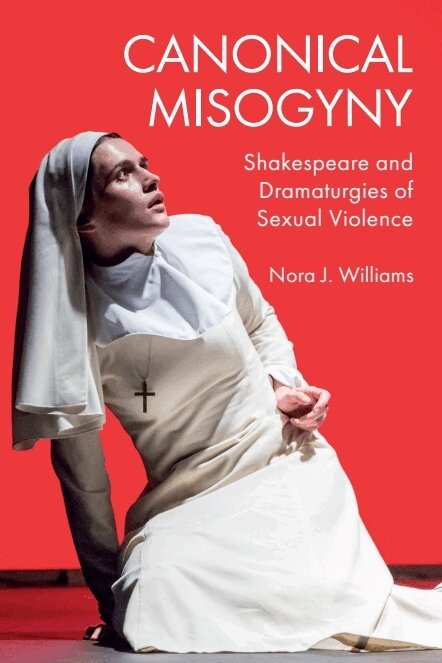
If misogyny is a systemic problem, then in order to understand its influence on canonical works like Shakespeare's, those works must be investigated at their systems level in other words, at the level of their dramaturgies. This landmark study arises from an eight-year practice-as-research (PaR) investigation of sexual violence and rape culture through Shakespeare's Measure for Measure. Moving between analytical and critical-reflective voices, and prioritising knowledge arising from and questions generated by the author's embodied investment in this PaR work, Canonical Misogyny focuses on dramaturgy as a site of ideology and meaning-making. It seeks to address the ways in which contemporary theatre allows producers of Shakespeare to represent gendered violence in unethical and irresponsible ways. It also demonstrates how failures to make meaningful dramaturgical interventions in early modern plays result in the tacit (or even explicit) glorifying and/or trivialising of their problematic approaches to consent and agency, which intersects with questions of race, gender, sexuality and class.
If misogyny is a systemic problem, then in order to understand its influence on canonical works like Shakespeare’s, those works must be investigated at their systems level – in other words, at the level of their dramaturgies. This landmark study arises from an eight-year practice-as-research (PaR) investigation of sexual violence and rape culture through Shakespeare’s Measure for Measure. Moving between analytical and critical-reflective voices, and prioritising knowledge arising from and questions generated by the author’s embodied investment in this PaR work, Canonical Misogyny focuses on dramaturgy as a site of ideology and meaning-making. It seeks to address the ways in which contemporary theatre allows producers of Shakespeare to represent gendered violence in unethical and irresponsible ways. It also demonstrates how failures to make meaningful dramaturgical interventions in early modern plays result in the tacit (or even explicit) glorifying and/or trivialising of their problematic approaches to consent and agency, which intersects with questions of race, gender, sexuality and class.