Olabisi Peter Abioye – författare
2 739 kr
Skickas inom 10-15 vardagar
946 kr
Skickas inom 10-15 vardagar
3 258 kr
Läs direkt efter köp
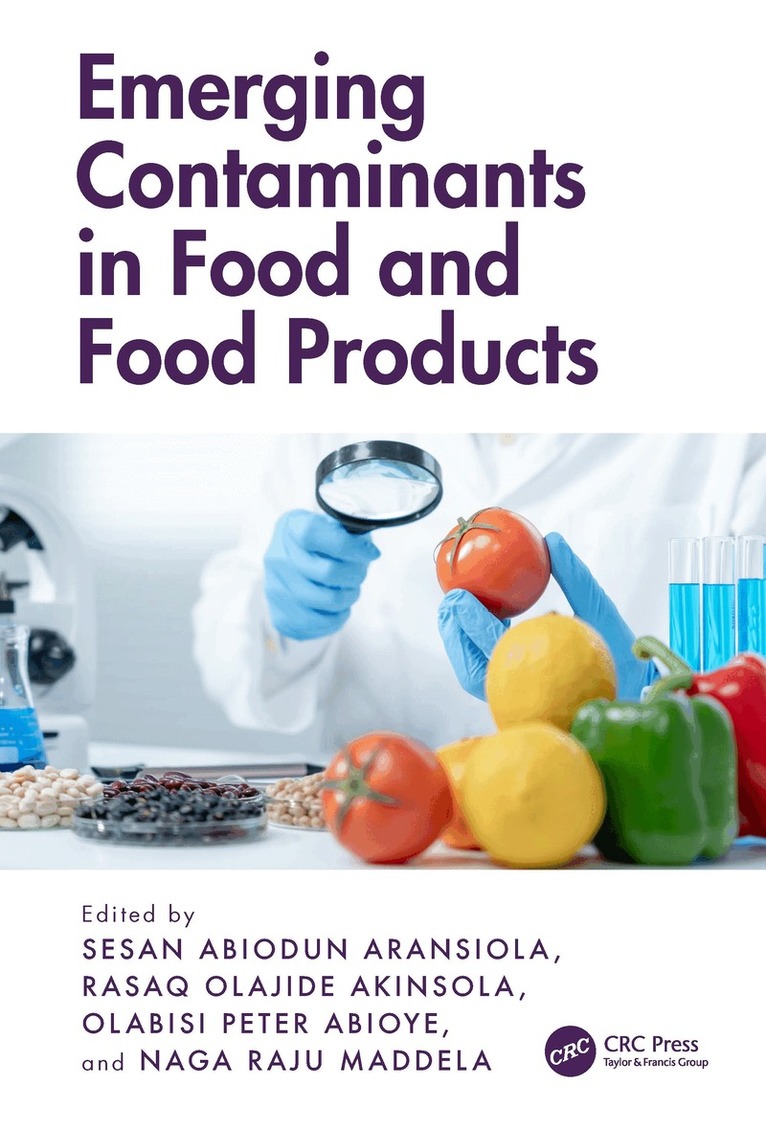
In recent years, a wide variety of new chemicals have continued to be developed as a result of industrial development and associated anthropogenic activities. The microbial contaminants in the environment, more precisely, antibiotic-resistant genes/bacteria produced as a result of mutation due to antibacterial drugs, are also considered emerging contaminants and specifically called emerging microbial contaminants such as sapoviruses, Waddlia chondrophila and Streptococcus parauberis. Additionally, pharmaceuticals and personal care products are a diverse group of compounds that include ibuprofen, diclofenac, triclosan, antibiotics, anti-inflammatory agents, steroidal hormones and active ingredients in soaps, detergents and perfumes which could find their way into food materials, are tagged as emerging contaminants.
Given this, Emerging Contaminants in Food and Food Products discusses issues around the emerging contaminants in food and food products. Different types of contaminants, such as biological, chemical, organic, inorganic and microbial contaminants in foods, ways of detecting them and regulations surrounding global food safety, are all covered.
Key features:
Discusses all the categories of contaminants in food and food products. Biological, chemical, organic, inorganic and microbial contaminants. Provides full information on emerging food contaminants, their effect on human and animal health, and how it affects global food security and emerging technological applications in solving this global problem. Gives detection and prevention strategies and guideline policies on emerging contaminants of foods. Brings into account global perspectives on food contaminants and health implications.This volume will serve as an information hub of emerging contaminants for scientists/researchers and professionals globally. This book is a good collection of independent chapters, which presents full insights into the study of emerging contamination in food and the effects of these contaminants in humans and animals.
3 258 kr
Läs direkt efter köp
In recent years, a wide variety of new chemicals have continued to be developed as a result of industrial development and associated anthropogenic activities. The microbial contaminants in the environment, more precisely, antibiotic-resistant genes/bacteria produced as a result of mutation due to antibacterial drugs, are also considered emerging contaminants and specifically called emerging microbial contaminants such as sapoviruses, Waddlia chondrophila and Streptococcus parauberis. Additionally, pharmaceuticals and personal care products are a diverse group of compounds that include ibuprofen, diclofenac, triclosan, antibiotics, anti-inflammatory agents, steroidal hormones and active ingredients in soaps, detergents and perfumes which could find their way into food materials, are tagged as emerging contaminants.
Given this, Emerging Contaminants in Food and Food Products discusses issues around the emerging contaminants in food and food products. Different types of contaminants, such as biological, chemical, organic, inorganic and microbial contaminants in foods, ways of detecting them and regulations surrounding global food safety, are all covered.
Key features:
Discusses all the categories of contaminants in food and food products. Biological, chemical, organic, inorganic and microbial contaminants. Provides full information on emerging food contaminants, their effect on human and animal health, and how it affects global food security and emerging technological applications in solving this global problem. Gives detection and prevention strategies and guideline policies on emerging contaminants of foods. Brings into account global perspectives on food contaminants and health implications.This volume will serve as an information hub of emerging contaminants for scientists/researchers and professionals globally. This book is a good collection of independent chapters, which presents full insights into the study of emerging contamination in food and the effects of these contaminants in humans and animals.
1 848 kr
Skickas inom 10-15 vardagar
2 283 kr
Läs direkt efter köp
This volume comprehensively discusses marine bioprospecting and its applications in the marine bioeconomy, specifically in clean energy generation, and in biomedical, industrial and agricultural sectors. The advent of modern technology, particularly advancements in deep-sea exploration and biotechnology, has enabled scientists to delve deeper into the ocean''s depths and discover a treasure trove of unique organisms and compounds. This demonstrates that the rich history of human interactions with the oceans is firmly ingrained in marine bioprospecting. The blue-economy, which is a more accurate name for the systematic search for valuable substances and organisms in the water, has gained popularity in recent years as a possible route for sustainable economic development. One of the key driving factors behind marine bioprospecting is the growing realization that marine organisms possess unique biochemical compounds with the potential to revolutionize various industries. These compounds include novel enzymes, antimicrobial agents, bioactive molecules, and even potential pharmaceuticals. Readers will learn about the applications of these discoveries in bioremediation, wastewater treatment, and biofuel production, as well as the identification of natural substitutes for things that are detrimental to the environment, which include biodegradable plastics derived from marine microorganisms. The primary audience for the book will be governmental and international organizations, professionals, and economists, while the secondary audience will be professors and researchers in the fields of Chemistry, Biotechnology, Environmental Microbiology, and general Ocean Sciences.
Water Resources Management in Nigeria
1 903 kr
Skickas inom 10-15 vardagar
2 351 kr
Läs direkt efter köp