Ole B. Jensen - Böcker
Visar alla böcker från författaren Ole B. Jensen. Handla med fri frakt och snabb leverans.
15 produkter
15 produkter
2 088 kr
Skickas inom 10-15 vardagar
Material Mobilities explores the material dimension of various forms of mobilities and its implications for society, politics and everyday experiences as well as investigates how materials themselves are on the move. Together the different contributions and perspectives on material mobilities illustrate how materialities are critical components within mobilities but also shape how mobilities are produced and consumed within contemporary mobile societies. This insight may potentially influence the ways disciplines of mobilities understand and approach mobilities in the future.This book exemplifies how the new Mobilities turn may profit from foregrounding materials, the material, and materiality as a common pivot for social analysis. During the last decade of research affiliated to the ‘new mobilities turn’ the societal repercussions of intensive mobilities has been in focus. The ‘turn’ has documented the social, environmental, economic, and cultural effects of the contemporary patterns of movement of people, vehicles, goods, data and information. In parallel with this work new ideas and concepts about the human/non-human and the ‘material dimension’ of the social world has surfaced within a wide array of fields such as philosophy, anthropology, and cultural studies. Material Mobilities offers a materially sensitive and focused attention to the new Mobilities turn. The ‘turn to the material’ opens up a new set of research questions related to how artefacts and technologies facilitating and affording mobilities are being designed, constructed, and instituted. The new material interest furthermore points at new ways of comprehending the political and the power-dimensions of mobilities and infrastructural landscapes. The turn to the material furthermore problematizes the Modern binary distinctions between humans and non-humans, subjects and objects, culture and nature.
685 kr
Skickas inom 10-15 vardagar
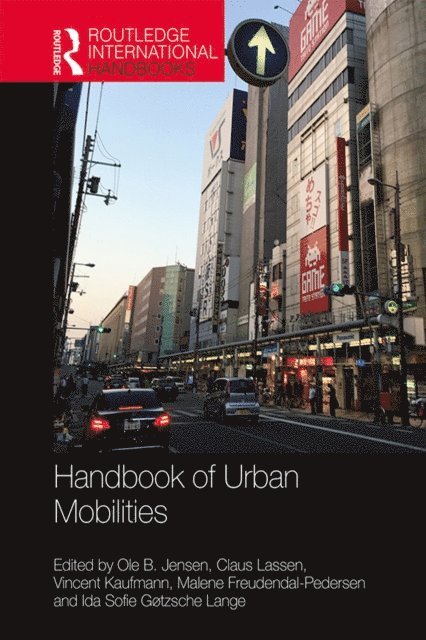
This book offers the reader a comprehensive understanding and the multitude of methods utilized in the research of urban mobilities with cities and ‘the urban’ as its pivotal axis. It covers theories and concepts for scholars and researchers to understand, observe and analyse the world of urban mobilities.The Handbook of Urban Mobilities facilitates the understanding of urban mobilities within a historic conscience of societal transformation. It explores key concepts and theories within the ‘mobilities turn’ with a particular urban framework, as well as the methods and tools at play when empirical, urban mobilities research is undertaken. This book also explores the urban mobilities practices related to commutes; particular modes of moving; the exploration of everyday life and embodied practices as they manifest themselves within urban mobilities; and the themes of power, conflict, and social exclusion. A discussion of urban planning, public control, and governance is also undertaken in the book, wherein the themes of infrastructures, technologies and design are duly considered. With chapters written in an accessible style, this handbook carries timely contributions within the contemporary state of the art of urban mobilities research. It will thus be useful for academics and students of graduate programmes and post-graduate studies within disciplines such as urban geography, political science, sociology, anthropology, urban planning, traffic and transportation planning, and architecture and urban design.
644 kr
Skickas inom 10-15 vardagar
Material Mobilities explores the material dimension of various forms of mobilities and its implications for society, politics and everyday experiences as well as investigates how materials themselves are on the move. Together the different contributions and perspectives on material mobilities illustrate how materialities are critical components within mobilities but also shape how mobilities are produced and consumed within contemporary mobile societies. This insight may potentially influence the ways disciplines of mobilities understand and approach mobilities in the future.This book exemplifies how the new Mobilities turn may profit from foregrounding materials, the material, and materiality as a common pivot for social analysis. During the last decade of research affiliated to the ‘new mobilities turn’ the societal repercussions of intensive mobilities has been in focus. The ‘turn’ has documented the social, environmental, economic, and cultural effects of the contemporary patterns of movement of people, vehicles, goods, data and information. In parallel with this work new ideas and concepts about the human/non-human and the ‘material dimension’ of the social world has surfaced within a wide array of fields such as philosophy, anthropology, and cultural studies. Material Mobilities offers a materially sensitive and focused attention to the new Mobilities turn. The ‘turn to the material’ opens up a new set of research questions related to how artefacts and technologies facilitating and affording mobilities are being designed, constructed, and instituted. The new material interest furthermore points at new ways of comprehending the political and the power-dimensions of mobilities and infrastructural landscapes. The turn to the material furthermore problematizes the Modern binary distinctions between humans and non-humans, subjects and objects, culture and nature.
617 kr
Skickas inom 10-15 vardagar
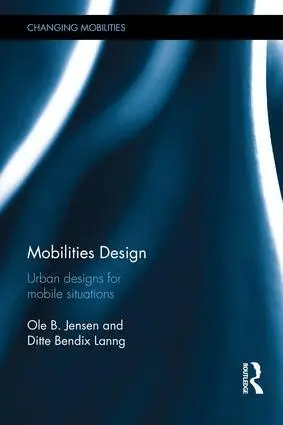
Contemporary society is marked and defined by the ways in which mobile goods, bodies, vehicles, objects, and data are organized, moved and staged. Against the background of the ‘mobilities turn’ this book articulates a new and emerging research field, namely that of ‘mobilities design’. The book revolves around the following research question: How are design decisions and interventions staging mobilities? It builds upon the ‘Staging Mobilities’ model (Jensen 2013) in an exploratory inquiry into the problems and potentials of the design of mobilities. The exchange value between mobilities and design research is twofold. To mobilities research this means getting closer to the ‘material’, and to engage in the creative, exploratory and experimental approaches of the design world which offer new potential for innovative research. Design research, on the other hand, might enter into a fruitful relationship with mobilities research, offering a relational and mobile design thinking and a valuable basis for design reflections around the ubiquitous structures, spaces and systems of mobilities.
752 kr
Skickas inom 10-15 vardagar
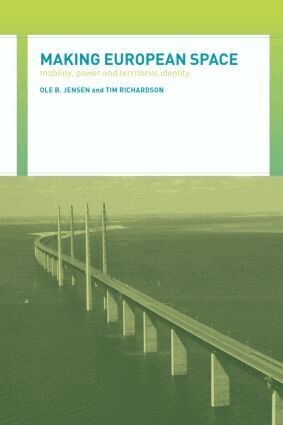
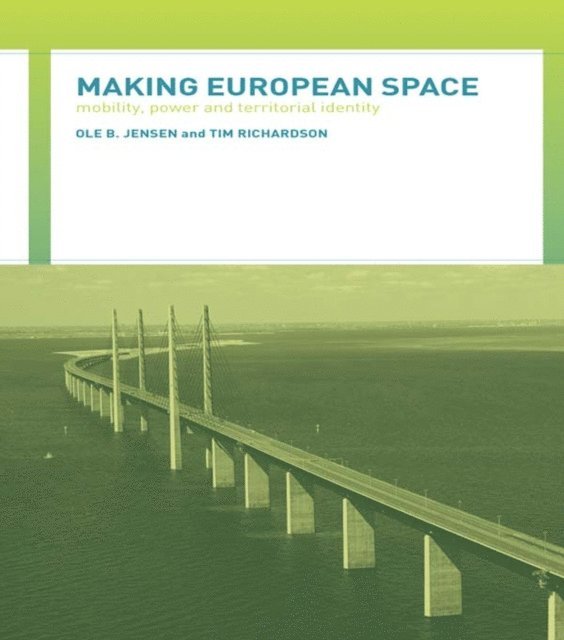
Making European Space explores how future visions of Europe's physical space are being decisively shaped by transnational politics and power struggles, which are being played out in new multi-level arenas of governance across the European Union. At stake are big ideas about mobility and friction, about relations between core and peripheral regions, and about the future Europe's cities and countryside. The book builds a critical narrative of the emergence of a new discourse of Europe as 'monotopia', revealing a very real project to shape European space in line with visions of high speed, frictionless mobility, the transgression of borders, and the creation of city networks. The narrative explores in depth how the particular ideas of mobility and space which underpin this discourse are being constructed in policy making, and reflects on the legitimacy of these policy processes. In particular, it shows how spatial ideas are becoming embedded in the everyday practices of the social and political organisation of space, in ways that make a frictionless Europe seem natural, and part of a common European territorial identity.
427 kr
Skickas inom 10-15 vardagar
Making European Space explores how future visions of Europe's physical space are being decisively shaped by transnational politics and power struggles, which are being played out in new multi-level arenas of governance across the European Union. At stake are big ideas about mobility and friction, about relations between core and peripheral regions, and about the future Europe's cities and countryside. The book builds a critical narrative of the emergence of a new discourse of Europe as 'monotopia', revealing a very real project to shape European space in line with visions of high speed, frictionless mobility, the transgression of borders, and the creation of city networks. The narrative explores in depth how the particular ideas of mobility and space which underpin this discourse are being constructed in policy making, and reflects on the legitimacy of these policy processes. In particular, it shows how spatial ideas are becoming embedded in the everyday practices of the social and political organisation of space, in ways that make a frictionless Europe seem natural, and part of a common European territorial identity.
2 289 kr
Skickas inom 10-15 vardagar
In recent years, the social sciences have taken a ‘mobilities turn’. There has been a developing realisation that mobilities do not ‘just happen’. Mobilities are carefully and meticulously designed, planned and staged (from above). However, they are equally importantly acted out, performed and lived as people are ‘staging themselves’ (from below). Staging mobilities is a dynamic process between ‘being staged’ (for example, being stopped at traffic lights) and the ‘mobile staging’ of interacting individuals (negotiating a passage on the pavement).Staging Mobilities is about the fact that mobility is more than movement between point A and B. It explores how the movement of people, goods, information, and signs influences human understandings of self, other and the built environment. Moving towards a new understanding of the relationship between movement, interaction and environments, the book asks: what are the physical, social, technical, and cultural conditions to the staging of contemporary urban mobilities? Jensen argues that we need to understand the contemporary city as an assemblage of circulating people, goods, information and signs in relational networks creating the ‘meaning of movement’. The book will be of interest to students and scholars of sociology, urban studies, mobility studies, architecture and cultural studies.
2 150 kr
Skickas inom 10-15 vardagar
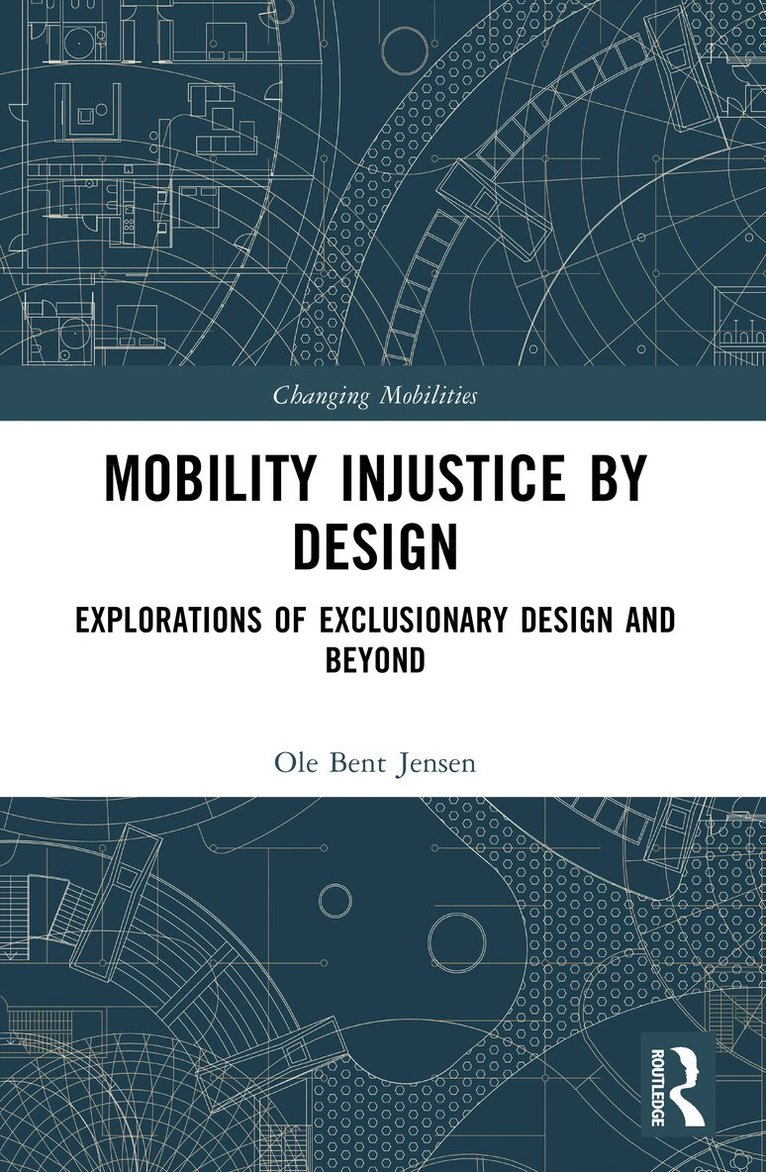
Mobility Injustice by Design examines the social exclusion of vulnerable people in urban spaces, revealing how millions of citizens have their ‘right to roam’ curbed by design and planning decisions made either intentionally to facilitate immobility or social exclusion, or because of a lack of awareness of the aggregated consequences.Ole B. Jensen’s insightful volume offers a theoretically informed framework, allowing us to ‘see’ mobility injustices more clearly, consider how new knowledge can mobilize design ethics, and think about how mobility justice can be brought about. It challenges us to reassess how choices of materials, design of spaces, and implementation of technologies afford or hinder particular mobilities. It explores a way of thinking about mobility and injustice that recognizes that everyone is assisted in their mobility practices and that human capacity for acting in the world is mediated by spaces, things, artifacts, and technologies. It examines not only the centrality of design but also the possibility that design may be working counter to the widespread cultural belief that design is in the service of ‘the good’. It locates thinking about mobility injustice between affect, experiences, and sensations on the one hand and reason, principles, and formal rules on the other. Focusing on three realms of practice, it reveals the ways in which the design of cities and urban spaces accommodates the needs of people living as unhoused, disabled, and aged and how these groups experience mobility injustice. Crucially, it provides insight into the potential to move toward a future, more mobility‑just society on a local, national, and global scale, in light of warfare, environmental, and migration crises.Mobility Injustice by Design informs the future agenda of both critical mobilities research and the design fields and reflects on the potential for those in the arts and design to provoke public engagement in these timely issues. It is essential reading for all those concerned with the study and practice of mobilities theory, urban sociology, urban planning and design, architecture, urban geography, disability studies, and gerontology.
650 kr
Kommande
Mobility Injustice by Design examines the social exclusion of vulnerable people in urban spaces, revealing how millions of citizens have their ‘right to roam’ curbed by design and planning decisions made either intentionally to facilitate immobility or social exclusion, or because of a lack of awareness of the aggregated consequences.Ole B. Jensen’s insightful volume offers a theoretically informed framework, allowing us to ‘see’ mobility injustices more clearly, consider how new knowledge can mobilize design ethics, and think about how mobility justice can be brought about. It challenges us to reassess how choices of materials, design of spaces, and implementation of technologies afford or hinder particular mobilities. It explores a way of thinking about mobility and injustice that recognizes that everyone is assisted in their mobility practices and that human capacity for acting in the world is mediated by spaces, things, artifacts, and technologies. It examines not only the centrality of design but also the possibility that design may be working counter to the widespread cultural belief that design is in the service of ‘the good’. It locates thinking about mobility injustice between affect, experiences, and sensations on the one hand and reason, principles, and formal rules on the other. Focusing on three realms of practice, it reveals the ways in which the design of cities and urban spaces accommodates the needs of people living as unhoused, disabled, and aged and how these groups experience mobility injustice. Crucially, it provides insight into the potential to move toward a future, more mobility‑just society on a local, national, and global scale, in light of warfare, environmental, and migration crises.Mobility Injustice by Design informs the future agenda of both critical mobilities research and the design fields and reflects on the potential for those in the arts and design to provoke public engagement in these timely issues. It is essential reading for all those concerned with the study and practice of mobilities theory, urban sociology, urban planning and design, architecture, urban geography, disability studies, and gerontology.
587 kr
Skickas inom 10-15 vardagar
In recent years, the social sciences have taken a ‘mobilities turn’. There has been a developing realisation that mobilities do not ‘just happen’. Mobilities are carefully and meticulously designed, planned and staged (from above). However, they are equally importantly acted out, performed and lived as people are ‘staging themselves’ (from below). Staging mobilities is a dynamic process between ‘being staged’ (for example, being stopped at traffic lights) and the ‘mobile staging’ of interacting individuals (negotiating a passage on the pavement).Staging Mobilities is about the fact that mobility is more than movement between point A and B. It explores how the movement of people, goods, information, and signs influences human understandings of self, other and the built environment. Moving towards a new understanding of the relationship between movement, interaction and environments, the book asks: what are the physical, social, technical, and cultural conditions to the staging of contemporary urban mobilities? Jensen argues that we need to understand the contemporary city as an assemblage of circulating people, goods, information and signs in relational networks creating the ‘meaning of movement’. The book will be of interest to students and scholars of sociology, urban studies, mobility studies, architecture and cultural studies.
Mobilities
2015
21 222 kr
Skickas inom 10-15 vardagar
The world is on the move. This is a widespread understanding by many inhabitants of contemporary society across the Globe. But what does it actually mean? During over one decade the ‘mobilities turn’ within the social sciences have provided a new set of insights into the repercussions of mobilities to social networks, personal identities, and our relationship to the built environment. The omnipresence of mobilities within everyday life, high politics, technology, and tourism (to mention but a few) all point to a key insight harnessed by the ‘mobilities turn’. Namely that mobilities is much more than simple movements of people, goods, and information from A to B. This new title creates a state-of-the-art reference work for all students and scholars with an interest in the ‘mobilities turn’ and its contributions to a deeper understanding of the contemporary and mobile world. The entries chosen all are amongst the most creative and thought provoking of this diverse field. The selection covers diverse topics such as theories, concepts, methods, and approaches as well as exploring various modes of mobilities and the relationship to everyday life practices. The pieces also cover the ‘politics of mobilities’ from local urban planning schemes to geopolitical issues of refugees and environmental degradation. The spaces and territories marked by mobilities as well as the sites marked by the bypassing of such are explored. Moreover, the architectural and technological dimensions to infrastructures and sites of mobilities will be included alongside issues of power, social exclusion, consumption, surveillance and mobilities history, to mention some of the many themes covered by this reference work of the best previously published material. The focus is on the academic contributions to this understanding by primarily focusing on works and publications in the aftermath of the seminal book and landmark text ‘Sociology Beyond Societies. Mobilities for the 21th Century’ by John Urry (Routledge, 2000) which in many ways have worked as the starting point for the ‘mobilities turn’.
3 161 kr
Skickas inom 10-15 vardagar
This book offers the reader a comprehensive understanding and the multitude of methods utilized in the research of urban mobilities with cities and ‘the urban’ as its pivotal axis. It covers theories and concepts for scholars and researchers to understand, observe and analyse the world of urban mobilities.The Handbook of Urban Mobilities facilitates the understanding of urban mobilities within a historic conscience of societal transformation. It explores key concepts and theories within the ‘mobilities turn’ with a particular urban framework, as well as the methods and tools at play when empirical, urban mobilities research is undertaken. This book also explores the urban mobilities practices related to commutes; particular modes of moving; the exploration of everyday life and embodied practices as they manifest themselves within urban mobilities; and the themes of power, conflict, and social exclusion. A discussion of urban planning, public control, and governance is also undertaken in the book, wherein the themes of infrastructures, technologies and design are duly considered. With chapters written in an accessible style, this handbook carries timely contributions within the contemporary state of the art of urban mobilities research. It will thus be useful for academics and students of graduate programmes and post-graduate studies within disciplines such as urban geography, political science, sociology, anthropology, urban planning, traffic and transportation planning, and architecture and urban design.
2 692 kr
Skickas inom 10-15 vardagar
The new ‘mobilities turn’ has become a powerful perspective in social theory. John Urry’s oeuvre has been very influential in the emergence of this new field and has had lasting impacts on many scholars. This collection presents originally commissioned essays from leading scholars in the field who reflect on how Urry’s writing influenced the course of their research and theorizing. This volume gathers contributions in relation to John Urry’s path-breaking work. The new ‘mobilities turn’ made a strong imprint in European social theory and is beginning to make an impact in the Americas and Asia as well. It challenges mainstream theoretical and empirical approaches that were grounded in a sedentary and bounded view of states. It propels innovative thinking about social and media ecologies, complex systems and social change. It bridges many disciplines and methodologies, leading to new approaches to existing problems while also resonating with questions about both history and the future. Mobilities research marks the rise of academic and intellectual cooperation and collaboration ‘beyond societies’, as nations around the world face the ecological limits of contemporary mobility and energy systems. The contributors represent several national contexts, including England, Germany, Denmark, Finland, Taiwan, Brazil, Canada, Australia and the USA. This book collects personal essays and gives insight into a vivid network of scientists who have connections of various degrees to the late John Urry as an academic figure, an author and a person.
563 kr
Skickas inom 10-15 vardagar
The new ‘mobilities turn’ has become a powerful perspective in social theory. John Urry’s oeuvre has been very influential in the emergence of this new field and has had lasting impacts on many scholars. This collection presents originally commissioned essays from leading scholars in the field who reflect on how Urry’s writing influenced the course of their research and theorizing. This volume gathers contributions in relation to John Urry’s path-breaking work. The new ‘mobilities turn’ made a strong imprint in European social theory and is beginning to make an impact in the Americas and Asia as well. It challenges mainstream theoretical and empirical approaches that were grounded in a sedentary and bounded view of states. It propels innovative thinking about social and media ecologies, complex systems and social change. It bridges many disciplines and methodologies, leading to new approaches to existing problems while also resonating with questions about both history and the future. Mobilities research marks the rise of academic and intellectual cooperation and collaboration ‘beyond societies’, as nations around the world face the ecological limits of contemporary mobility and energy systems. The contributors represent several national contexts, including England, Germany, Denmark, Finland, Taiwan, Brazil, Canada, Australia and the USA. This book collects personal essays and gives insight into a vivid network of scientists who have connections of various degrees to the late John Urry as an academic figure, an author and a person.
2 155 kr
Skickas inom 10-15 vardagar
Contemporary society is marked and defined by the ways in which mobile goods, bodies, vehicles, objects, and data are organized, moved and staged. Against the background of the ‘mobilities turn’ this book articulates a new and emerging research field, namely that of ‘mobilities design’. The book revolves around the following research question: How are design decisions and interventions staging mobilities? It builds upon the ‘Staging Mobilities’ model (Jensen 2013) in an exploratory inquiry into the problems and potentials of the design of mobilities. The exchange value between mobilities and design research is twofold. To mobilities research this means getting closer to the ‘material’, and to engage in the creative, exploratory and experimental approaches of the design world which offer new potential for innovative research. Design research, on the other hand, might enter into a fruitful relationship with mobilities research, offering a relational and mobile design thinking and a valuable basis for design reflections around the ubiquitous structures, spaces and systems of mobilities.