Oleg Khlevniuk - Böcker
Visar alla böcker från författaren Oleg Khlevniuk. Handla med fri frakt och snabb leverans.
7 produkter
7 produkter
581 kr
Skickas inom 5-8 vardagar
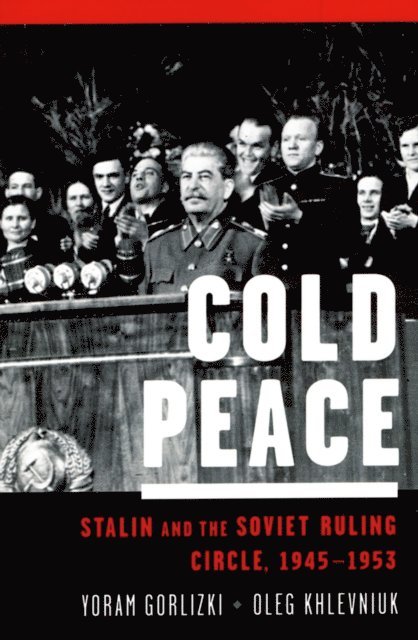
Following his country's victory over Nazi Germany, Joseph Stalin was widely hailed as a great wartime leader and international statesman. Unchallenged on the domestic front, he headed one of the most powerful nations in the world. Yet, in the period from the end of World War II until his death, Stalin remained a man possessed by his fears. In order to reinforce his despotic rule in the face of old age and uncertain health, he habitually humiliated and terrorized members of his inner circle. He had their telephones bugged and even forced his deputy, Viacheslav Molotov, to betray his own spouse as a token of his allegiance.Often dismissed as paranoid and irrational, Stalin's behavior followed a clear political logic, contend Yoram Gorlizki and Oleg Khlevniuk. Stalin's consistent and overriding goal after the war was to consolidate the Soviet Union's status as a superpower and, in the face of growing decrepitude, to maintain his own hold as leader of that power. To that end, he fashioned a system of leadership that was at once patrimonial-repressive and quite modern. While maintaining informal relations based on personal loyalty at the apex of the system, in the postwar period Stalin also vested authority in committees, elevated younger specialists, and initiated key institutional innovations with lasting consequences.Close scrutiny of Stalin's relationships with his most intimate colleagues also shows how, in the teeth of periodic persecution, Stalin's deputies cultivated informal norms and mutual understandings which provided the foundations for collective rule after his death. Based on newly released archival documents, including personal correspondence, drafts of Central Committee paperwork, new memoirs, and interviews with former functionaries and the families of Politburo members, this book will appeal to all those interested in Soviet history, political history, and the lives of dictators.
534 kr
Skickas inom 5-8 vardagar
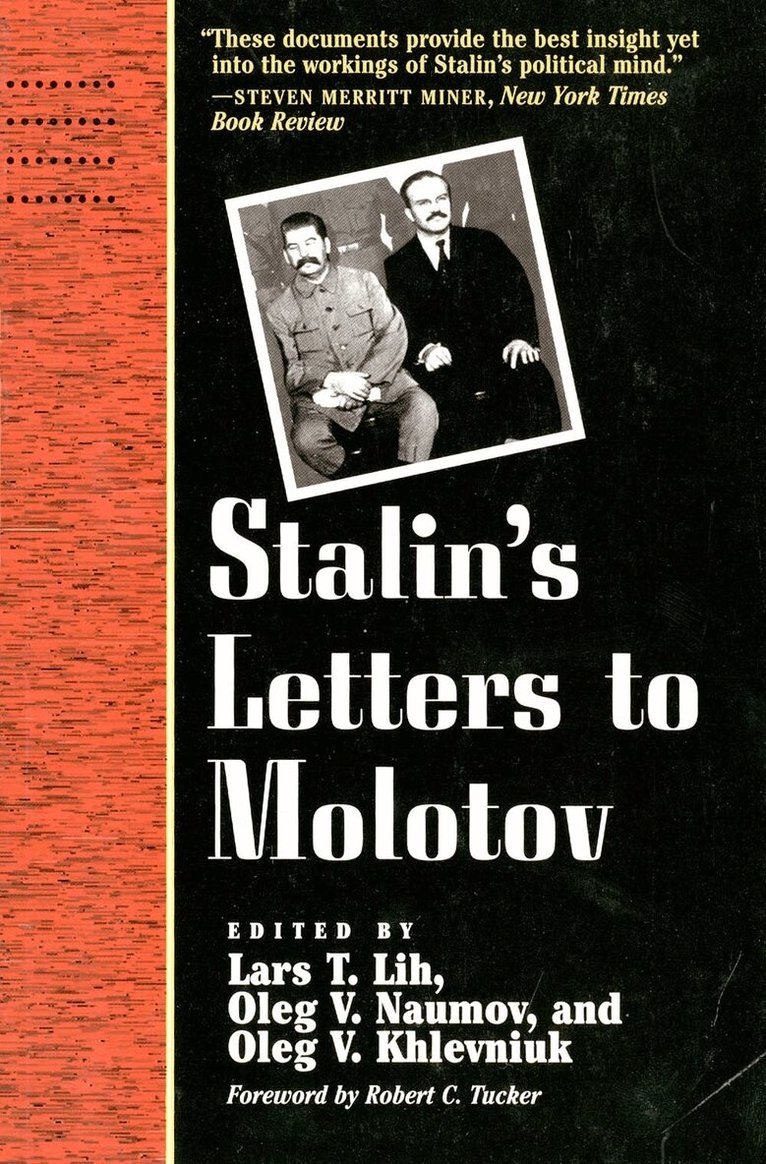
"It is thus important to a) fundamentally purge the Finance and Gosbank bureaucracy, despite the wails of dubious Communists like Briukhanov-Piatakov; b) definitely shoot two or three dozen wreckers from these apparaty, including several dozen common cashiers."— J. Stalin, no earlier than 6 August 1930"Today I read the section on international affairs. It came out well. The confident, contemptuous tone with respect to the great powers, the belief in our own strength, the delicate but plain spitting in the pot of the swaggering great powers—very good. Let them eat it."—J. Stalin, January 1933 Between 1925 and 1936, a dramatic period of transformation within the Soviet Union, Josef Stalin wrote frequently to his trusted friend and political colleague Viacheslav Molotov, Politburo member, chairman of the USSR Council of Commissars, and minister of foreign affairs. In these letters, Stalin mused on political events, argued with fellow Politburo members, and issued orders. The more than 85 letters collected in this volume constitute a unique historical record of Stalin's thinking—both personal and political—and throw valuable light on the way he controlled the government, plotted the overthrow of his enemies, and imagined the future. This formerly top secret correspondence, once housed in Soviet archives, is now published for the first time.The letters reveal Stalin in many different and dramatic situations: fighting against party rivals like Trotsky and Bukharin, trying to maneuver in the rapids of the Chinese revolution, negotiating with the West, insisting on the completion of all-out collectivization, and ordering the execution of scapegoats for economic failures. And they provide important and fascinating information about the Soviet Union's party-state leadership, about party politics, and about Stalin himself—as an administrator, as a Bolshevik, and as an individual.The book includes much supplementary material that places the letters in context. Russian editor Oleg V. Naumov and his associates have annotated the letters, introduced each chronological section, and added other archival documents that help explain the correspondence. American editor Lars T. Lih has provided a lengthy introduction identifying what is new in the letters and using them to draw a portrait of Stalin as leader. Lih points out how the letters help us grasp Stalin's unique blend of cynicism and belief, manipulation and sincerity—a combination of qualities with catastrophic consequences for Soviet Russia and the world.
1 070 kr
Skickas inom 5-8 vardagar
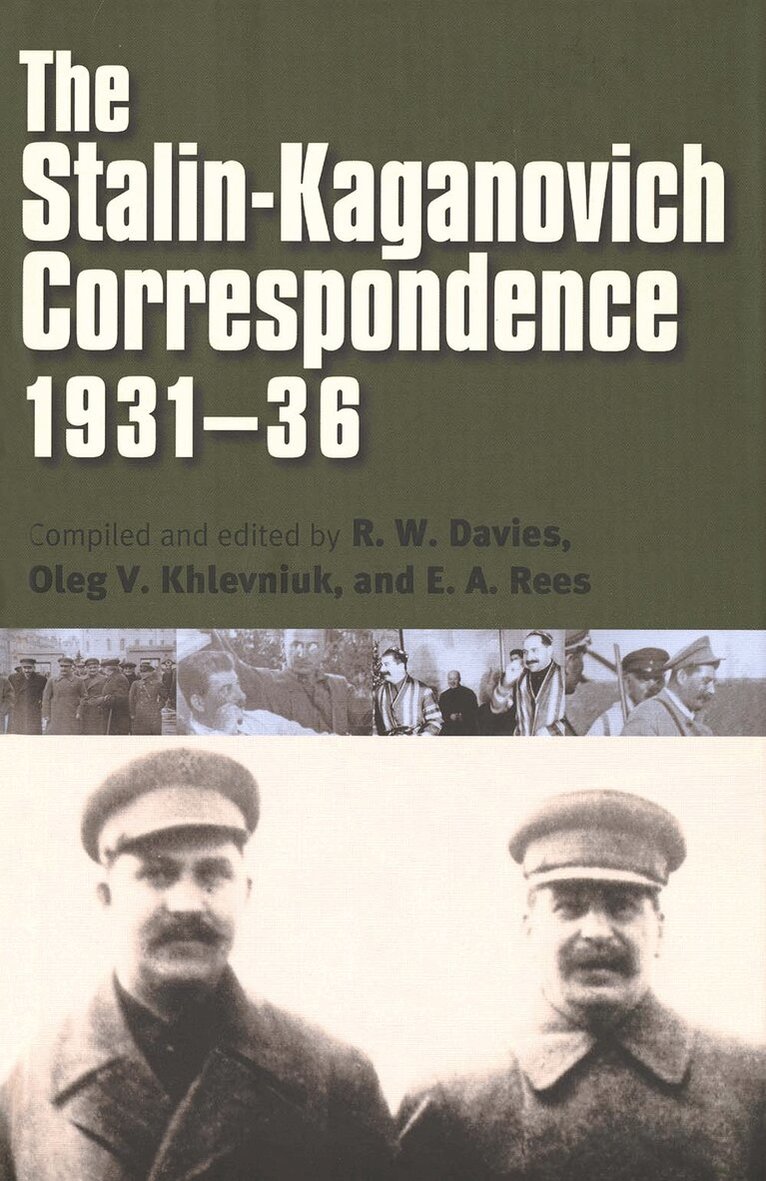
From 1931 to 1936, Stalin vacationed at his Black Sea residence for two to three months each year. While away from Moscow, he relied on correspondence with his subordinates to receive information, watch over the work of the Politburo and the government, give orders, and express his opinions. This book publishes for the first time translations of 177 handwritten letters and coded telegrams exchanged during this period between Stalin and his most highly trusted deputy, Lazar Kaganovich. The unique and revealing collection of letters—all previously classified top secret—provides a dramatic account of the mainsprings of Soviet policy while Stalin was consolidating his position as personal dictator. The correspondence records his positions on major internal and foreign affairs decisions and reveals his opinions about fellow members of the Politburo and other senior figures. Written during the years of agricultural collectivization, forced industrialization, famine, repression, and Soviet rearmament in the face of threats from Germany and Japan, these letters constitute an unsurpassed historical resource for all students of the Stalin regime and Soviet history.
1 147 kr
Skickas inom 5-8 vardagar
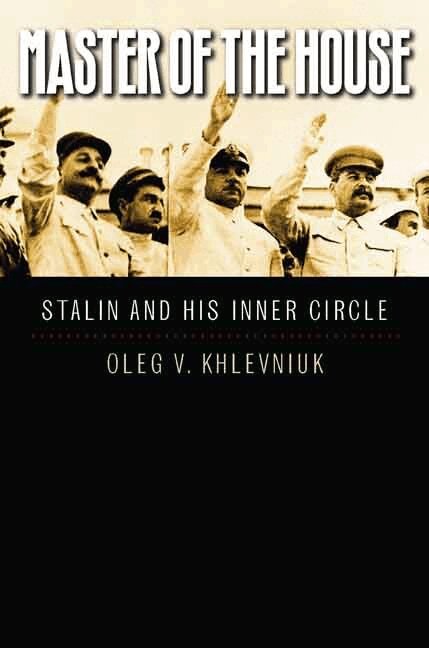
Based on meticulous research in previously unavailable documents in the Soviet archives, this compelling book illuminates the secret inner mechanisms of power in the Soviet Union during the years when Stalin established his notorious dictatorship. Oleg V. Khlevniuk focuses on the top organ in Soviet Russia’s political hierarchy of the 1930s—the Political Bureau of the Central Committee of the Communist Party—and on the political and interpersonal dynamics that weakened its collective leadership and enabled Stalin’s rise. Khlevniuk’s unparalleled research challenges existing theories of the workings of the Politburo and uncovers many new findings regarding the nature of alliances among Politburo members, Sergei Kirov’s murder, the implementation of the Great Terror, and much more. The author analyzes Stalin’s mechanisms of generating and retaining power and presents a new understanding, unmatched in texture and depth, of the highest tiers of the Communist Party in a crucial era of Soviet history.
643 kr
Skickas inom 5-8 vardagar
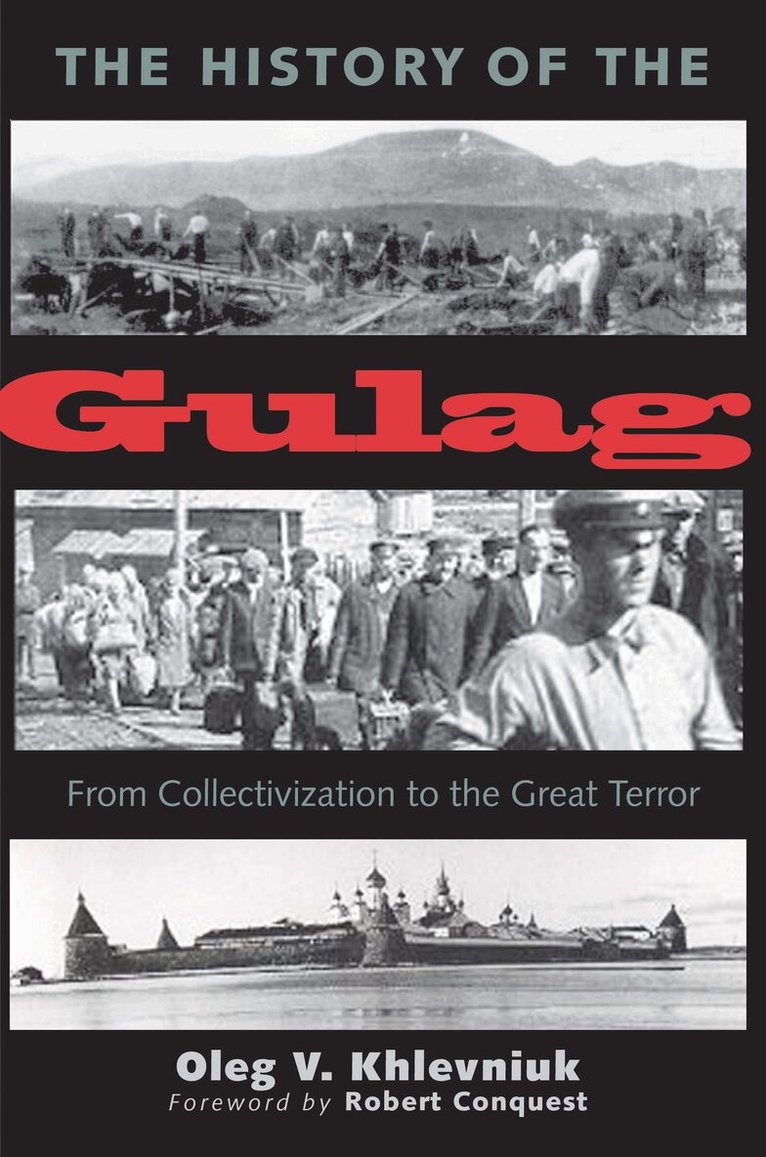
"What a long, extraordinary process digging into the deepest secrets of the Gulag has been. Now, here is its history, fully, factually, and humanly effected for the present day by Oleg Khlevniuk."- Robert Conquest, from the forwardThe human cost of the Gulag, the Soviet labor camp system in which millions of people were imprisoned between 1920 and 1956, was staggering. Aleksandr Solzhenitsyn and others after him have written movingly about the Gulag, yet never has there been a thorough historical study of this unique and tragic episode in Soviet history. This groundbreaking book presents the first comprehensive, historically accurate account of the camp system. Russian historian Oleg Khlevniuk has mined the contents of extensive archives, including long-suppressed state and Communist Party documents, to uncover the secrets of the Gulag and how it became a central component of Soviet ideology and social policy. Khlevniuk argues persuasively that the Stalinist penal camps created in the 1930s were essentially different from previous camps. He shows that political motivations and paranoia about potential enemies contributed no more to the expansion of the Gulag than the economic incentive of slave labor did. And he offers powerful evidence that the Great Terror was planned centrally and targeted against particular categories of the population. Khlevniuk makes a signal contribution to Soviet history with this exceptionally informed and balanced view of the Gulag.
208 kr
Skickas inom 7-10 vardagar
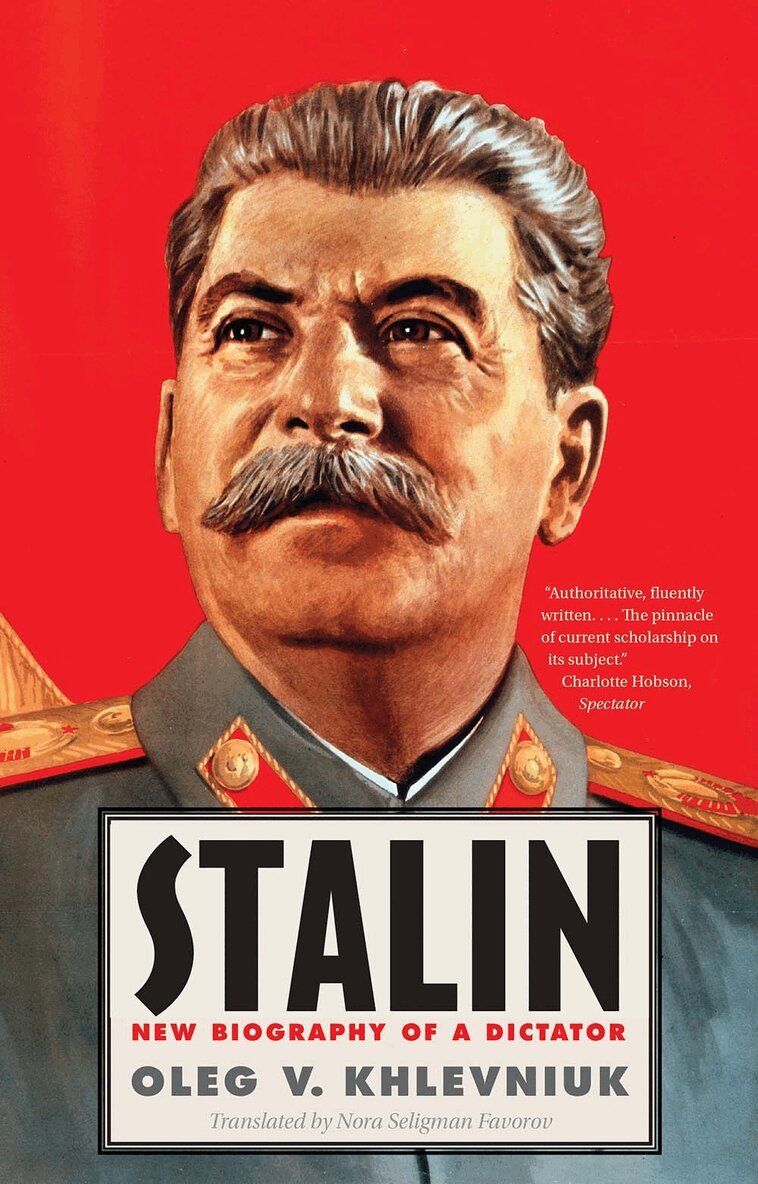
The most authoritative and engrossing biography of the notorious dictator ever written, winner of the 2016 PROSE Award for Biography & Autobiography"Enthralling, brilliant, and groundbreaking, this book confirms Khlevniuk as probably the greatest living expert on Stalin. Essential reading."—Simon Sebag Montefiore, author of Stalin: the Court of the Red TsarJosef Stalin exercised supreme power in the Soviet Union from 1929 until his death in 1953. During that quarter-century, by Oleg Khlevniuk’s estimate, he caused the imprisonment and execution of no fewer than a million Soviet citizens per year. Millions more were victims of famine directly resulting from Stalin's policies. What drove him toward such ruthlessness? This essential biography, by the author most deeply familiar with the vast archives of the Soviet era, offers an unprecedented, fine-grained portrait of Stalin the man and dictator. Without mythologizing Stalin as either benevolent or an evil genius, Khlevniuk resolves numerous controversies about specific events in the dictator’s life while assembling many hundreds of previously unknown letters, memos, reports, and diaries into a comprehensive, compelling narrative of a life that altered the course of world history. In brief, revealing prologues to each chapter, Khlevniuk takes his reader into Stalin’s favorite dacha, where the innermost circle of Soviet leadership gathered as their vozhd lay dying. Chronological chapters then illuminate major themes: Stalin’s childhood, his involvement in the Revolution and the early Bolshevik government under Lenin, his assumption of undivided power and mandate for industrialization and collectivization, the Terror, World War II, and the postwar period. At the book’s conclusion, the author presents a cogent warning against nostalgia for the Stalinist era.
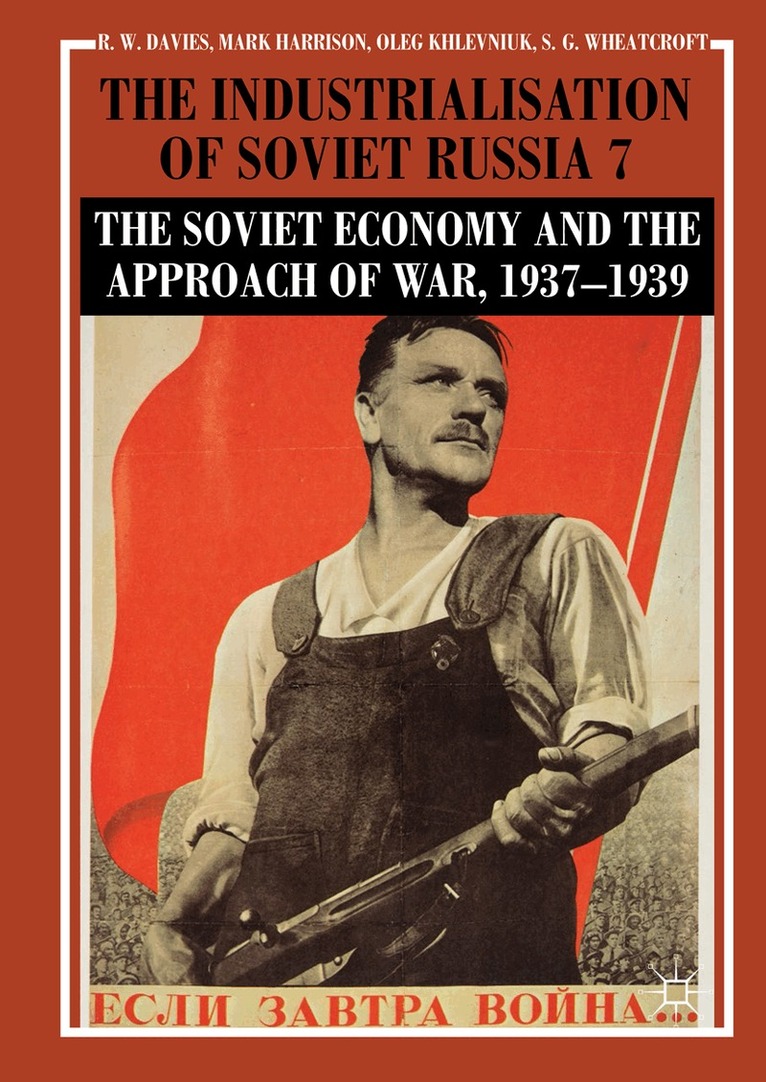
Industrialisation of Soviet Russia Volume 7: The Soviet Economy and the Approach of War, 1937–1939
Inbunden, Engelska, 2018
1 528 kr
Skickas inom 10-15 vardagar
This book concludes The Industrialisation of Soviet Russia, an authoritative account of the Soviet Union’s industrial transformation between 1929 and 1939. During that time, Soviet society was repeatedly mobilised against internal and external enemies, and the economy provided one of the main arenas for the struggle.