Olga Smoliak – författare
Visar alla böcker från författaren Olga Smoliak. Handla med fri frakt och snabb leverans.
6 produkter
6 produkter
Inbunden, Engelska, 2025
3 682 kr
Skickas inom 10-15 vardagar
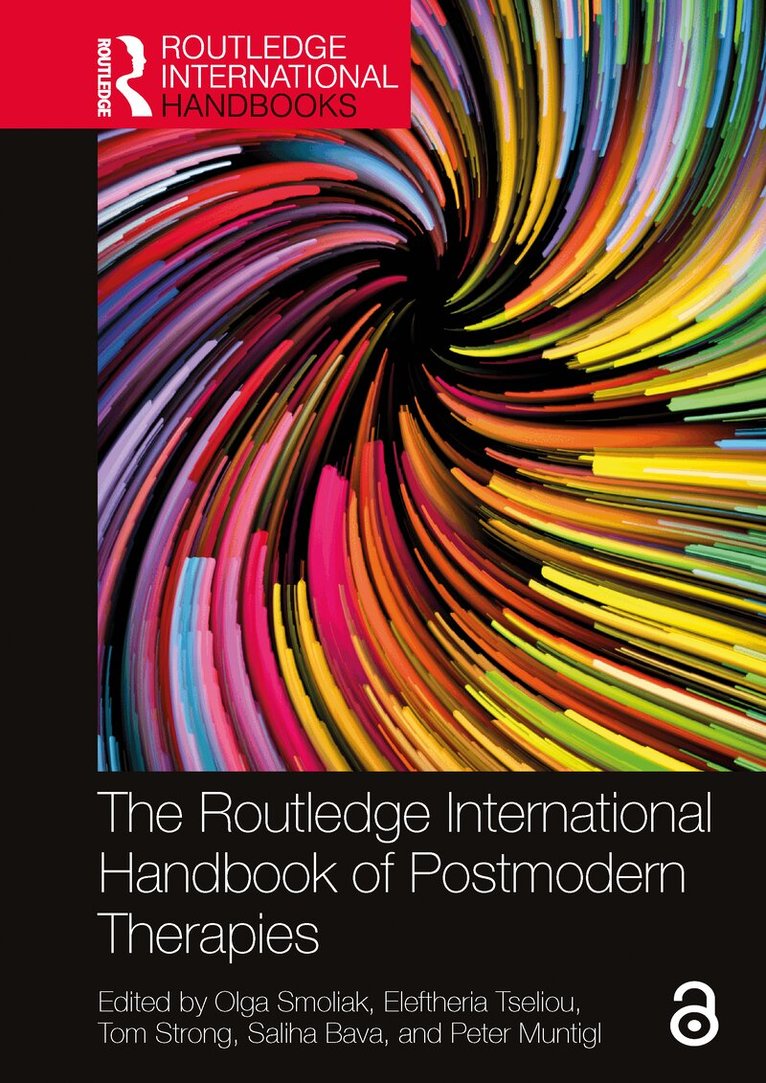
The Routledge International Handbook of Postmodern Therapies includes contributions by leading international experts to provide an invaluable resource and reference for therapy students, scholars, educators, and practitioners.Along with discussing key postmodern approaches, including collaborative-dialogic, narrative, solution focused, and open dialogue, the handbook features advances in theory, research, and applications of postmodern practice. It covers both critical perspectives and methodologies, such as narrative, poststructuralist, performative, and postqualitative. Considerations of issues of diversity, power, and privilege are infused throughout the handbook.This handbook is essential for practitioners and students interested in teaching, using, and researching postmodern practice, including counselors, clinical psychologists, family therapists, psychotherapists, and social workers.Chapter 28 and Chapter 38 of this book are freely available as downloadable Open Access PDFs at http://www.taylorfrancis.com under a Creative Commons Attribution-Non Commercial 4.0 license (CC-BY-NC).
E-bok
PDF, Engelska, 2025869 kr
Läs direkt efter köp
The Routledge International Handbook of Postmodern Therapies includes contributions by leading international experts to provide an invaluable resource and reference for therapy students, scholars, educators, and practitioners.Along with discussing key postmodern approaches, including collaborative-dialogic, narrative, solution focused, and open dialogue, the handbook features advances in theory, research, and applications of postmodern practice. It covers both critical perspectives and methodologies, such as narrative, poststructuralist, performative, and postqualitative. Considerations of issues of diversity, power, and privilege are infused throughout the handbook.This handbook is essential for practitioners and students interested in teaching, using, and researching postmodern practice, including counselors, clinical psychologists, family therapists, psychotherapists, and social workers.Chapter 28 and Chapter 38 of this book are freely available as downloadable Open Access PDFs at http://www.taylorfrancis.com under a Creative Commons Attribution-Non Commercial 4.0 license (CC-BY-NC).
E-bok
Engelska, 2025874 kr
Läs direkt efter köp
The Routledge International Handbook of Postmodern Therapies includes contributions by leading international experts to provide an invaluable resource and reference for therapy students, scholars, educators, and practitioners.Along with discussing key postmodern approaches, including collaborative-dialogic, narrative, solution focused, and open dialogue, the handbook features advances in theory, research, and applications of postmodern practice. It covers both critical perspectives and methodologies, such as narrative, poststructuralist, performative, and postqualitative. Considerations of issues of diversity, power, and privilege are infused throughout the handbook.This handbook is essential for practitioners and students interested in teaching, using, and researching postmodern practice, including counselors, clinical psychologists, family therapists, psychotherapists, and social workers.Chapter 28 and Chapter 38 of this book are freely available as downloadable Open Access PDFs at http://www.taylorfrancis.com under a Creative Commons Attribution-Non Commercial 4.0 license (CC-BY-NC).
Häftad, Engelska, 2018
950 kr
Skickas inom 10-15 vardagar
This book addresses the premise that therapy can be understood, practiced, and researched as a discursive activity. Using varied forms of discourse analysis, it examines the cultural, institutional, and face-to-face communications that shape, and occur within, therapies that are discursively understood and practiced. By first providing an overview of commonalities across discursive therapies and research approaches, the authors discursively examine general aspects of therapy. Topics explored include subjectivity, psychological terms, institutional influences, therapeutic relationships, therapists’ ways of talking and questioning, discursive ethics, and assessment of therapeutic processes and outcomes. This book offers a macro-analysis of the conversational practices of a discursively informed approach to therapy; as well as a micro-analysis of the ways in which language shapes and is used in a discursively informed approach to therapy. This book will interest practitioners seeking to better understand therapy as a discursive process, and discourse analysts wanting to understand therapy as discursive therapists might practice it.
Inbunden, Engelska, 2018
1 338 kr
Skickas inom 10-15 vardagar
This book addresses the premise that therapy can be understood, practiced, and researched as a discursive activity. Using varied forms of discourse analysis, it examines the cultural, institutional, and face-to-face communications that shape, and occur within, therapies that are discursively understood and practiced. By first providing an overview of commonalities across discursive therapies and research approaches, the authors discursively examine general aspects of therapy. Topics explored include subjectivity, psychological terms, institutional influences, therapeutic relationships, therapists’ ways of talking and questioning, discursive ethics, and assessment of therapeutic processes and outcomes. This book offers a macro-analysis of the conversational practices of a discursively informed approach to therapy; as well as a micro-analysis of the ways in which language shapes and is used in a discursively informed approach to therapy. This book will interest practitioners seeking to better understand therapy as a discursive process, and discourse analysts wanting to understand therapy as discursive therapists might practice it.
E-bok
Engelska, 20181 146 kr
Läs direkt efter köp
This book addresses the premise that therapy can be understood, practiced, and researched as a discursive activity. Using varied forms of discourse analysis, it examines the cultural, institutional, and face-to-face communications that shape, and occur within, therapies that are discursively understood and practiced. By first providing an overview of commonalities across discursive therapies and research approaches, the authors discursively examine general aspects of therapy. Topics explored include subjectivity, psychological terms, institutional influences, therapeutic relationships, therapists’ ways of talking and questioning, discursive ethics, and assessment of therapeutic processes and outcomes. This book offers a macro-analysis of the conversational practices of a discursively informed approach to therapy; as well as a micro-analysis of the ways in which language shapes and is used in a discursively informed approach to therapy. This book will interest practitioners seeking to better understand therapy as a discursive process, and discourse analysts wanting to understand therapy as discursive therapists might practice it.