Olivier Bouin – författare
Visar alla böcker från författaren Olivier Bouin. Handla med fri frakt och snabb leverans.
4 produkter
4 produkter
Inbunden, Engelska, 2017
824 kr
Skickas inom 5-8 vardagar
Today, the European Union is facing a crisis as serious as anything it has experienced since its origins more than half a century ago. What makes this so serious is that it is not a single crisis but rather multiple crises – the euro crisis, the migration/refugee crisis, Brexit, etc. – that overlap and reinforce one another, creating a cumulative array of challenges that threatens the very survival of the EU. For the first time in its history, there is a real risk that the EU could break up. This volume brings together sociologists, economists and political scientists from around Europe to shed light on how the EU got into this predicament. It argues that the multiple crises that have plagued the European Union in the last decade stem to a large extent from flaws in its construction and that these flaws are consequences of the political processes that led to the formation of the EU – in other words, the decisions that made possible the development of the EU created the conditions for the multiple crises it experiences today. This timely and wide-ranging book on one of the most important issues of our time will be of great interest to students and scholars in the social sciences, to politicians and policy-makers and to anyone concerned with Europe and its future.
Häftad, Engelska, 2017
266 kr
Skickas inom 5-8 vardagar
Today, the European Union is facing a crisis as serious as anything it has experienced since its origins more than half a century ago. What makes this so serious is that it is not a single crisis but rather multiple crises – the euro crisis, the migration/refugee crisis, Brexit, etc. – that overlap and reinforce one another, creating a cumulative array of challenges that threatens the very survival of the EU. For the first time in its history, there is a real risk that the EU could break up. This volume brings together sociologists, economists and political scientists from around Europe to shed light on how the EU got into this predicament. It argues that the multiple crises that have plagued the European Union in the last decade stem to a large extent from flaws in its construction and that these flaws are consequences of the political processes that led to the formation of the EU – in other words, the decisions that made possible the development of the EU created the conditions for the multiple crises it experiences today. This timely and wide-ranging book on one of the most important issues of our time will be of great interest to students and scholars in the social sciences, to politicians and policy-makers and to anyone concerned with Europe and its future.
E-bok
Engelska, 2017290 kr
Läs direkt efter köp
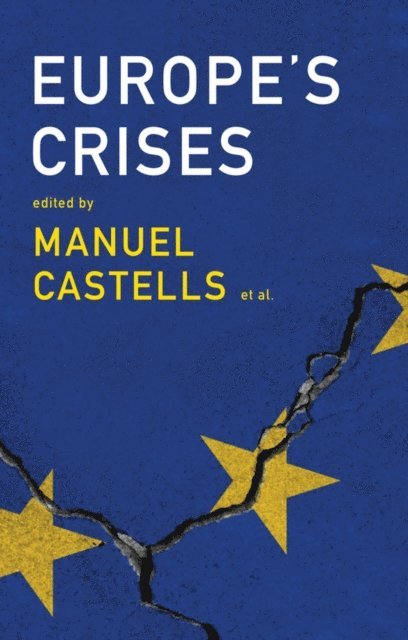
Today, the European Union is facing a crisis as serious as anything it has experienced since its origins more than half a century ago. What makes this so serious is that it is not a single crisis but rather multiple crises – the euro crisis, the migration/refugee crisis, Brexit, etc. – that overlap and reinforce one another, creating a cumulative array of challenges that threatens the very survival of the EU. For the first time in its history, there is a real risk that the EU could break up. This volume brings together sociologists, economists and political scientists from around Europe to shed light on how the EU got into this predicament. It argues that the multiple crises that have plagued the European Union in the last decade stem to a large extent from flaws in its construction and that these flaws are consequences of the political processes that led to the formation of the EU – in other words, the decisions that made possible the development of the EU created the conditions for the multiple crises it experiences today. This timely and wide-ranging book on one of the most important issues of our time will be of great interest to students and scholars in the social sciences, to politicians and policy-makers and to anyone concerned with Europe and its future.
E-bok
Spanska, 2020124 kr
Läs direkt efter köp
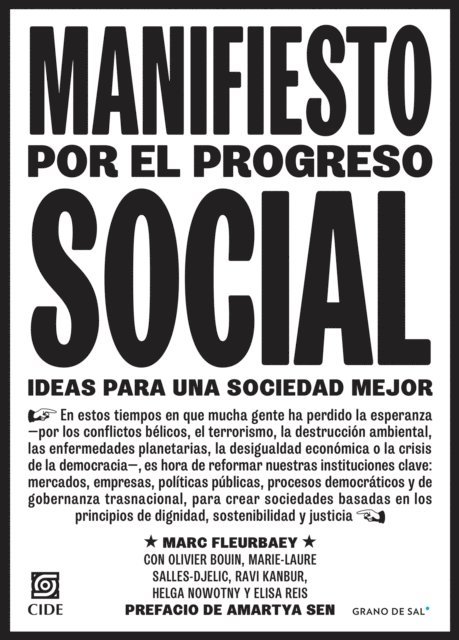
El progreso social puede verse como un objetivo a alcanzar o como una amenaza de la que conviene apartarse. En décadas recientes hemos atestiguado el declive de la pobreza mundial y el arribo de la democracia a numerosos países, la ampliación de programas de salud y educación, con innegables mejoras en la esperanza y la calidad de vida, pero a la vez reina una atmósfera de escepticismo sobre la posibilidad —y la conveniencia— de inducir un progreso social como el alcanzado por las sociedades más desarrolladas, con su cauda de desigualdad y sus costos ambientales. En busca de soluciones a los problemas globales, el Panel Internacional sobre Progreso Social reunió a más de 300 científicos sociales para que, con base en estudios novedosos, con una vocación multidisciplinaria y una mirada prospectiva, revisaran numerosas opciones de cambio social a largo plazo, exploraran los retos actuales y propusieran formas de mejorar las principales instituciones de las sociedades modernas. De ese trabajo colaborativo surge este manifiesto, en el que el ánimo utópico convive con el pragmatismo, en el que la búsqueda de justicia es compatible con el fortalecimiento de actores clave, como la empresa o el mercado. La conclusión es simple y a la vez entraña enormes complicaciones: sí es posible una sociedad mejor pero urge armonizar diversas fuerzas. Para lograr un cambio cultural de grandes proporciones, se requiere una audaz mezcla de idealismo y sensatez. Es lo que este manifiesto ofrece.