Pablo Vila – författare
Visar alla böcker från författaren Pablo Vila. Handla med fri frakt och snabb leverans.
16 produkter
16 produkter
E-bok
Engelska, 2014354 kr
Läs direkt efter köp
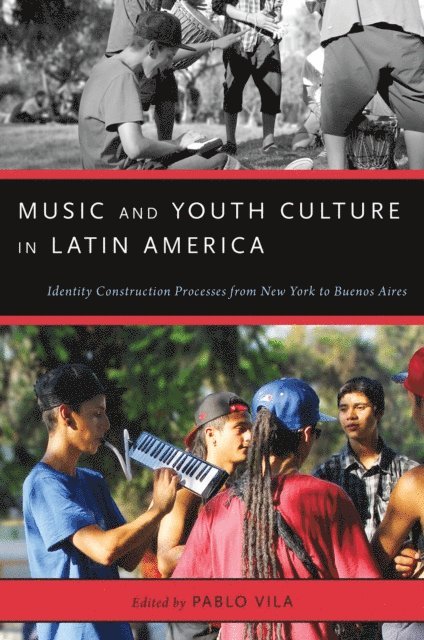
Music is one of the most distinctive cultural characteristics of Latin American countries. But, while many people in the United States and Europe are familiar with musical genres such as salsa, merengue, and reggaet?n, the musical manifestations that young people listen to in most Latin American countries are much more varied than these commercially successful ones that have entered the American and European markets. Not only that, the young people themselves often have little in common with the stereotypical image of them that exists in the American imagination. Bridging this divide between perception and reality, Music and Youth Culture in Latin America brings together contributors from throughout Latin America and the US to examine the ways in which music is used to advance identity claims in several Latin American countries and among Latinos in the US. From young Latin American musicians who want to participate in the vibrant jazz scene of New York without losing their cultural roots, to Peruvian rockers who sing in their native language (Quechua) for the same reasons, to the young Cubans who use music to construct a post-communist social identification, this volume sheds new light on the complex ways in which music provides people from different countries and social sectors with both enjoyment and tools for understanding who they are in terms of nationality, region, race, ethnicity, class, gender, and migration status. Drawing on a vast array of fields including popular music studies, ethnomusicology, sociology, and history, Music and Youth Culture in Latin America is an illuminating read for anyone interested in Latin American music, culture, and society.
Inbunden, Engelska, 2014
1 844 kr
Skickas inom 5-8 vardagar
Music is one of the most distinctive cultural characteristics of Latin American countries. But, while many people in the United States and Europe are familiar with musical genres such as salsa, merengue, and reggaeton, the musical manifestations that young people listen to in most Latin American countries are much more varied than these commercially successful ones that have entered the American and European markets. Not only that, the young people themselves often have little in common with the stereotypical image of them that exists in the American imagination. Bridging this divide between perception and reality, Music and Youth Culture in Latin America brings together contributors from throughout Latin America and the US to examine the ways in which music is used to advance identity claims in several Latin American countries and among Latinos in the US. From young Latin American musicians who want to participate in the vibrant jazz scene of New York without losing their cultural roots, to Peruvian rockers who sing in their native language (Quechua) for the same reasons, to the young Cubans who use music to construct a post-communist social identification, this volume sheds new light on the complex ways in which music provides people from different countries and social sectors with both enjoyment and tools for understanding who they are in terms of nationality, region, race, ethnicity, class, gender, and migration status. Drawing on a vast array of fields including popular music studies, ethnomusicology, sociology, and history, Music and Youth Culture in Latin America is an illuminating read for anyone interested in Latin American music, culture, and society.
Häftad, Engelska, 2014
441 kr
Skickas inom 5-8 vardagar
Music is one of the most distinctive cultural characteristics of Latin American countries. But, while many people in the United States and Europe are familiar with musical genres such as salsa, merengue, and reggaeton, the musical manifestations that young people listen to in most Latin American countries are much more varied than these commercially successful ones that have entered the American and European markets. Not only that, the young people themselves often have little in common with the stereotypical image of them that exists in the American imagination. Bridging this divide between perception and reality, Music and Youth Culture in Latin America brings together contributors from throughout Latin America and the US to examine the ways in which music is used to advance identity claims in several Latin American countries and among Latinos in the US. From young Latin American musicians who want to participate in the vibrant jazz scene of New York without losing their cultural roots, to Peruvian rockers who sing in their native language (Quechua) for the same reasons, to the young Cubans who use music to construct a post-communist social identification, this volume sheds new light on the complex ways in which music provides people from different countries and social sectors with both enjoyment and tools for understanding who they are in terms of nationality, region, race, ethnicity, class, gender, and migration status. Drawing on a vast array of fields including popular music studies, ethnomusicology, sociology, and history, Music and Youth Culture in Latin America is an illuminating read for anyone interested in Latin American music, culture, and society.
E-bok
PDF, Engelska, 2014357 kr
Läs direkt efter köp
Music is one of the most distinctive cultural characteristics of Latin American countries. But, while many people in the United States and Europe are familiar with musical genres such as salsa, merengue, and reggaet?n, the musical manifestations that young people listen to in most Latin American countries are much more varied than these commercially successful ones that have entered the American and European markets. Not only that, the young people themselves often have little in common with the stereotypical image of them that exists in the American imagination. Bridging this divide between perception and reality, Music and Youth Culture in Latin America brings together contributors from throughout Latin America and the US to examine the ways in which music is used to advance identity claims in several Latin American countries and among Latinos in the US. From young Latin American musicians who want to participate in the vibrant jazz scene of New York without losing their cultural roots, to Peruvian rockers who sing in their native language (Quechua) for the same reasons, to the young Cubans who use music to construct a post-communist social identification, this volume sheds new light on the complex ways in which music provides people from different countries and social sectors with both enjoyment and tools for understanding who they are in terms of nationality, region, race, ethnicity, class, gender, and migration status. Drawing on a vast array of fields including popular music studies, ethnomusicology, sociology, and history, Music and Youth Culture in Latin America is an illuminating read for anyone interested in Latin American music, culture, and society.
Häftad, Engelska, 2005
324 kr
Skickas inom 10-15 vardagar
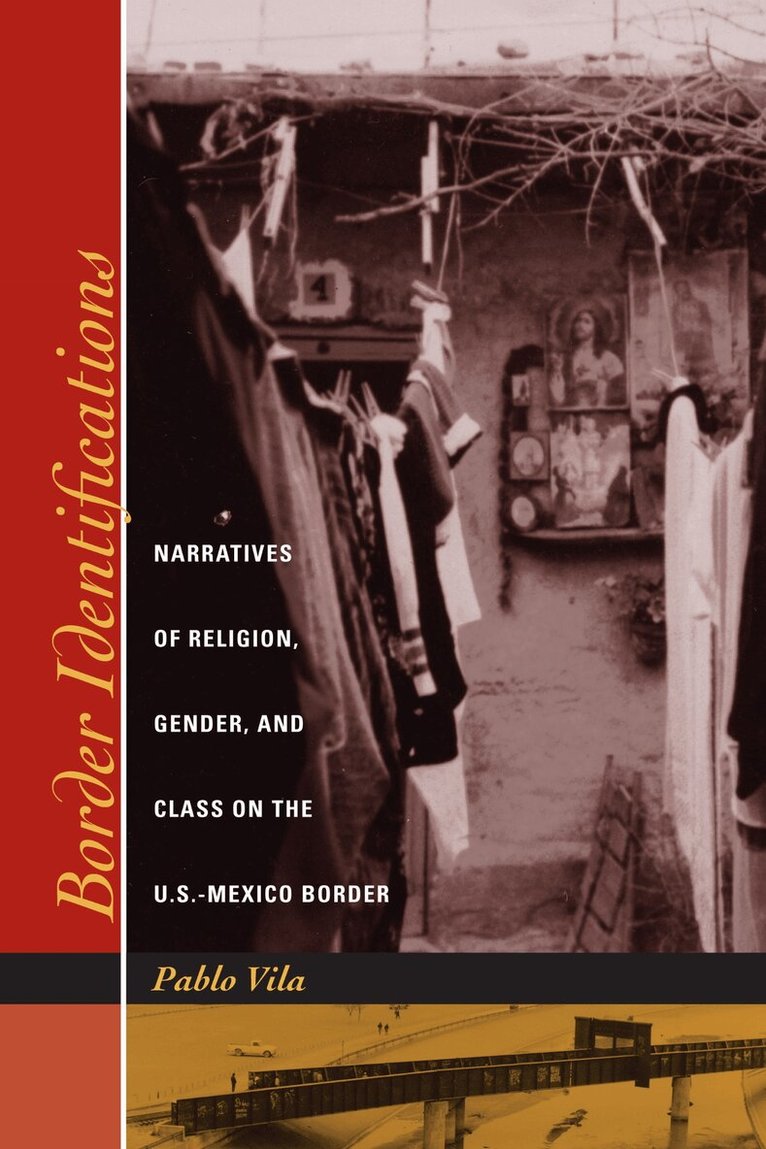
From poets to sociologists, many people who write about life on the U.S.-Mexico border use terms such as "border crossing" and "hybridity" which suggest that a unified culture-neither Mexican nor American, but an amalgamation of both-has arisen in the borderlands. But talking to people who actually live on either side of the border reveals no single commonly shared sense of identity, as Pablo Vila demonstrated in his book Crossing Borders, Reinforcing Borders: Social Categories, Metaphors, and Narrative Identities on the U.S.-Mexico Frontier. Instead, people living near the border, like people everywhere, base their sense of identity on a constellation of interacting factors that includes regional identity, but also nationality, ethnicity, and race. In this book, Vila continues the exploration of identities he began in Crossing Borders, Reinforcing Borders by looking at how religion, gender, and class also affect people's identifications of self and "others" among Mexican nationals, Mexican immigrants, Mexican Americans, Anglos, and African Americans in the Cuidad JuÁrez-El Paso area. Among the many fascinating issues he raises are how the perception that "all Mexicans are Catholic" affects Mexican Protestants and Pentecostals; how the discourse about proper gender roles may feed the violence against women that has made JuÁrez the "women's murder capital of the world"; and why class consciousness is paradoxically absent in a region with great disparities of wealth. His research underscores the complexity of the process of social identification and confirms that the idealized notion of "hybridity" is only partially adequate to define people's identity on the U.S.-Mexico border.
Häftad, Engelska, 2000
324 kr
Skickas inom 10-15 vardagar
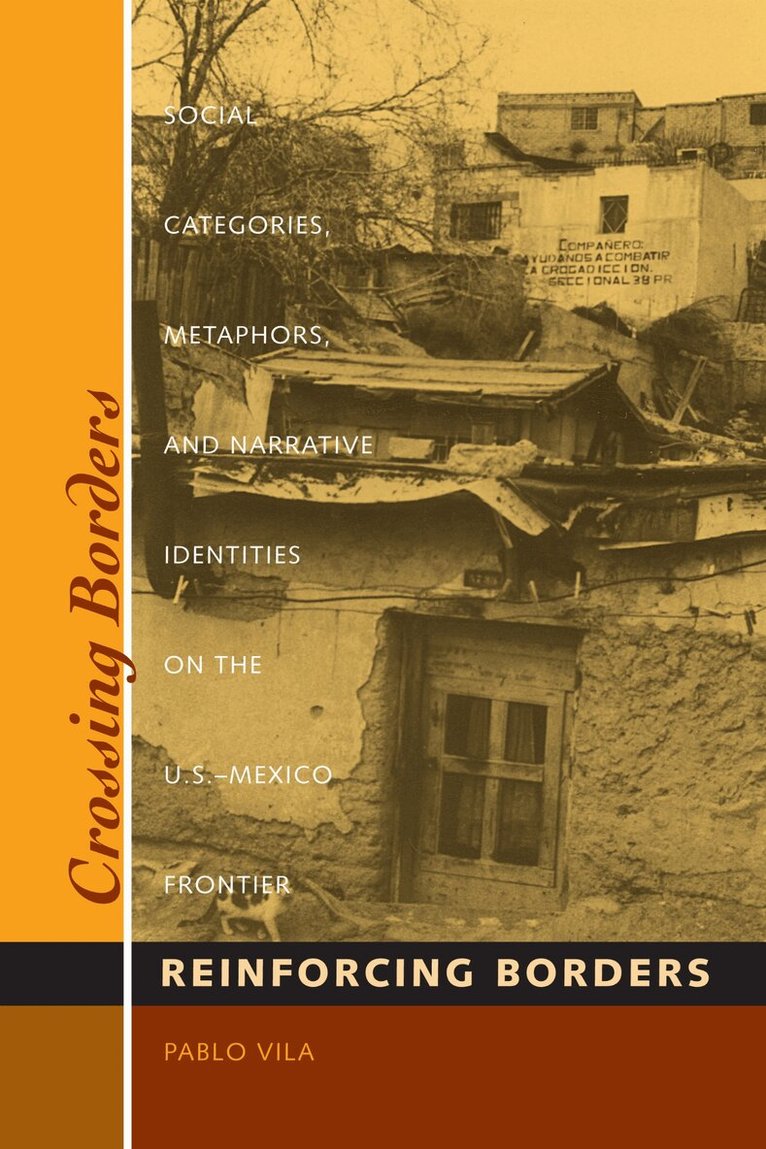
Along the U.S.-Mexico frontier, where border crossings are a daily occurrence for many people, reinforcing borders is also a common activity. Not only does the U.S. Border Patrol strive to "hold the line" against illegal immigrants, but many residents on both sides of the border seek to define and bound themselves apart from groups they perceive as "others." This pathfinding ethnography charts the social categories, metaphors, and narratives that inhabitants of El Paso and Ciudad JuÁrez use to define their group identity and distinguish themselves from "others." Pablo Vila draws on over 200 group interviews with more than 900 area residents to describe how Mexican nationals, Mexican immigrants, Mexican Americans, African Americans, and Anglos make sense of themselves and perceive their differences from others. This research uncovers the regionalism by which many northern Mexicans construct their sense of identity, the nationalism that often divides Mexican Americans from Mexican nationals, and the role of ethnicity in setting boundaries among Anglos, Mexicans, and African Americans. Vila also looks at how gender, age, religion, and class intertwine with these factors. He concludes with fascinating excerpts from re-interviews with several informants, who modified their views of other groups when confronted by the author with the narrative character of their identities.
Häftad, Engelska, 2003
316 kr
Skickas inom 5-8 vardagar
An illuminating account of life at the U.S.-Mexico borderFor cultural theorists, “the border” has proven a fluid and hybrid space profitably explored for new ideas about identity, gender, and ethnicity. But for those who occupy this region, the border is not merely a metaphor, but a lived experience, yielding immediate, often pressing ambiguities, problems, and perils. Focusing on a particular area of the U.S.-Mexico border, Ciudad Juarez-El Paso, Ethnography at the Border brings out the complexity of the border experience through the voices of the diverse people who inhabit the region. In a series of ethnographic essays that investigate specific aspects of border existence, the contributors provide rich and detailed insights into such topics as life in illegal subdivisions, called colonias, in Texas; the experience of actually crossing the bridge between El Paso and Ciudad Juarez; the impact of Operation Blockade on illegal crossings; the controversy surrounding the El Paso Border Patrol’s proposal for a border wall in Sunland Park; the paradoxes of making “American products” using Mexican workers; and the relevance of grassroots efforts, environmental problems, and the multiple meanings of “Mexican.” The final chapter offers a critique of the all too metaphorical border often depicted by cultural studies. Painstakingly conveying how the border looks and feels to those on both sides, Ethnography at the Border transmutes statistics on migration, labor markets, and economic trends-as well as conceptualizations of cross-cultural identities-into the experience, the observations, and the troubling lessons of border life.Contributors: Eduardo Barrera, U of Texas, El Paso, and El Colegio de la Frontera Norte; Jessica Chapin, U of Texas, Austin; Tim J. Dunn, Salisbury U; Sarah Hill, Western Michigan U; Victor M. Ortiz, Northeastern Illinois U at Chicago; John A. Peterson, U of Texas, El Paso; Leslie Salzinger, U of Chicago; David Spener, Trinity U; MarÍa Socorro Tabuenca CÓrdoba, El Colegio de la Frontera Norte; Melissa W. Wright, Penn State U.
Inbunden, Engelska, 2013
1 325 kr
Skickas inom 5-8 vardagar
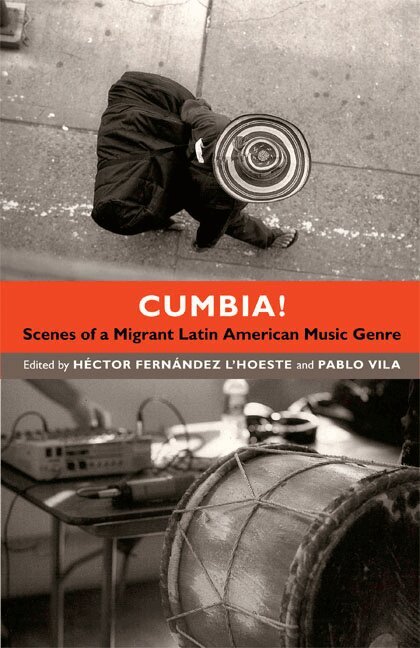
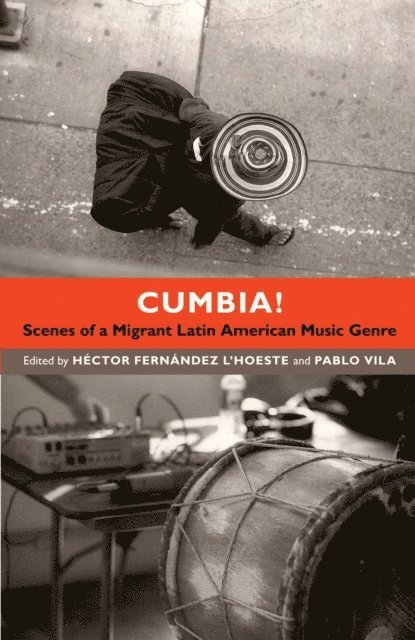
Cumbia is a musical form that originated in northern Colombia and then spread throughout Latin America and wherever Latin Americans travel and settle. It has become one of the most popular musical genre in the Americas. Its popularity is largely due to its stylistic flexibility. Cumbia absorbs and mixes with the local musical styles it encounters. Known for its appeal to workers, the music takes on different styles and meanings from place to place, and even, as the contributors to this collection show, from person to person. Cumbia is a different music among the working classes of northern Mexico, Latin American immigrants in New York City, Andean migrants to Lima, and upper-class Colombians, who now see the music that they once disdained as a source of national prestige. The contributors to this collection look at particular manifestations of cumbia through their disciplinary lenses of musicology, sociology, history, anthropology, linguistics, and literary criticism. Taken together, their essays highlight how intersecting forms of identity-such as nation, region, class, race, ethnicity, and gender-are negotiated through interaction with the music.Contributors. Cristian AlarcÓn, Jorge ArÉvalo Mateus, Leonardo D'Amico, HÉctor FernÁndez L'Hoeste, Alejandro L. Madrid, Kathryn Metz, JosÉ Juan Olvera GudiÑo, Cathy Ragland, Pablo SemÁn, Joshua Tucker, Matthew J. Van Hoose, Pablo Vila
Häftad, Engelska, 2013
386 kr
Skickas inom 5-8 vardagar
Cumbia is a musical form that originated in northern Colombia and then spread throughout Latin America and wherever Latin Americans travel and settle. It has become one of the most popular musical genre in the Americas. Its popularity is largely due to its stylistic flexibility. Cumbia absorbs and mixes with the local musical styles it encounters. Known for its appeal to workers, the music takes on different styles and meanings from place to place, and even, as the contributors to this collection show, from person to person. Cumbia is a different music among the working classes of northern Mexico, Latin American immigrants in New York City, Andean migrants to Lima, and upper-class Colombians, who now see the music that they once disdained as a source of national prestige. The contributors to this collection look at particular manifestations of cumbia through their disciplinary lenses of musicology, sociology, history, anthropology, linguistics, and literary criticism. Taken together, their essays highlight how intersecting forms of identity-such as nation, region, class, race, ethnicity, and gender-are negotiated through interaction with the music.Contributors. Cristian AlarcÓn, Jorge ArÉvalo Mateus, Leonardo D'Amico, HÉctor FernÁndez L'Hoeste, Alejandro L. Madrid, Kathryn Metz, JosÉ Juan Olvera GudiÑo, Cathy Ragland, Pablo SemÁn, Joshua Tucker, Matthew J. Van Hoose, Pablo Vila
E-bok
PDF, Engelska, 2013550 kr
Läs direkt efter köp
Cumbia is a musical form that originated in northern Colombia and then spread throughout Latin America and wherever Latin Americans travel and settle. It has become one of the most popular musical genre in the Americas. Its popularity is largely due to its stylistic flexibility. Cumbia absorbs and mixes with the local musical styles it encounters. Known for its appeal to workers, the music takes on different styles and meanings from place to place, and even, as the contributors to this collection show, from person to person. Cumbia is a different music among the working classes of northern Mexico, Latin American immigrants in New York City, Andean migrants to Lima, and upper-class Colombians, who now see the music that they once disdained as a source of national prestige. The contributors to this collection look at particular manifestations of cumbia through their disciplinary lenses of musicology, sociology, history, anthropology, linguistics, and literary criticism. Taken together, their essays highlight how intersecting forms of identity—such as nation, region, class, race, ethnicity, and gender—are negotiated through interaction with the music.Contributors. Cristian Alarcón, Jorge Arévalo Mateus, Leonardo D''Amico, Héctor Fernández L''Hoeste, Alejandro L. Madrid, Kathryn Metz, José Juan Olvera Gudiño, Cathy Ragland, Pablo Semán, Joshua Tucker, Matthew J. Van Hoose, Pablo Vila
Inbunden, Engelska, 2011
1 031 kr
Skickas inom 5-8 vardagar
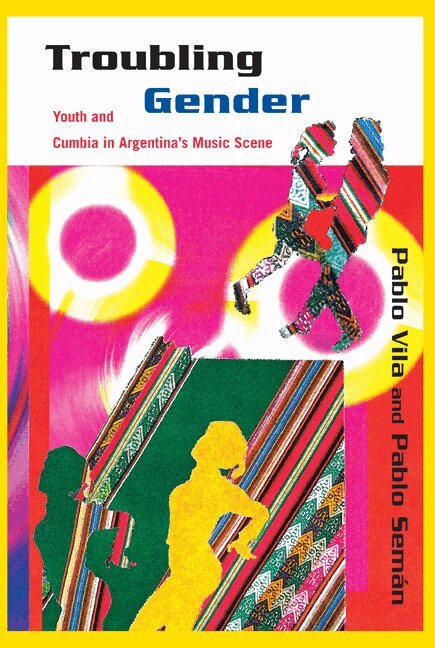
How cumbia villera and Argentine popular culture reshape and reflect the changes in gender relations among the country's underclass youth
Häftad, Engelska, 2011
344 kr
Skickas inom 5-8 vardagar
How cumbia villera and Argentine popular culture reshape and reflect the changes in gender relations among the country's underclass youth
Häftad, Engelska, 2015
718 kr
Skickas inom 10-15 vardagar
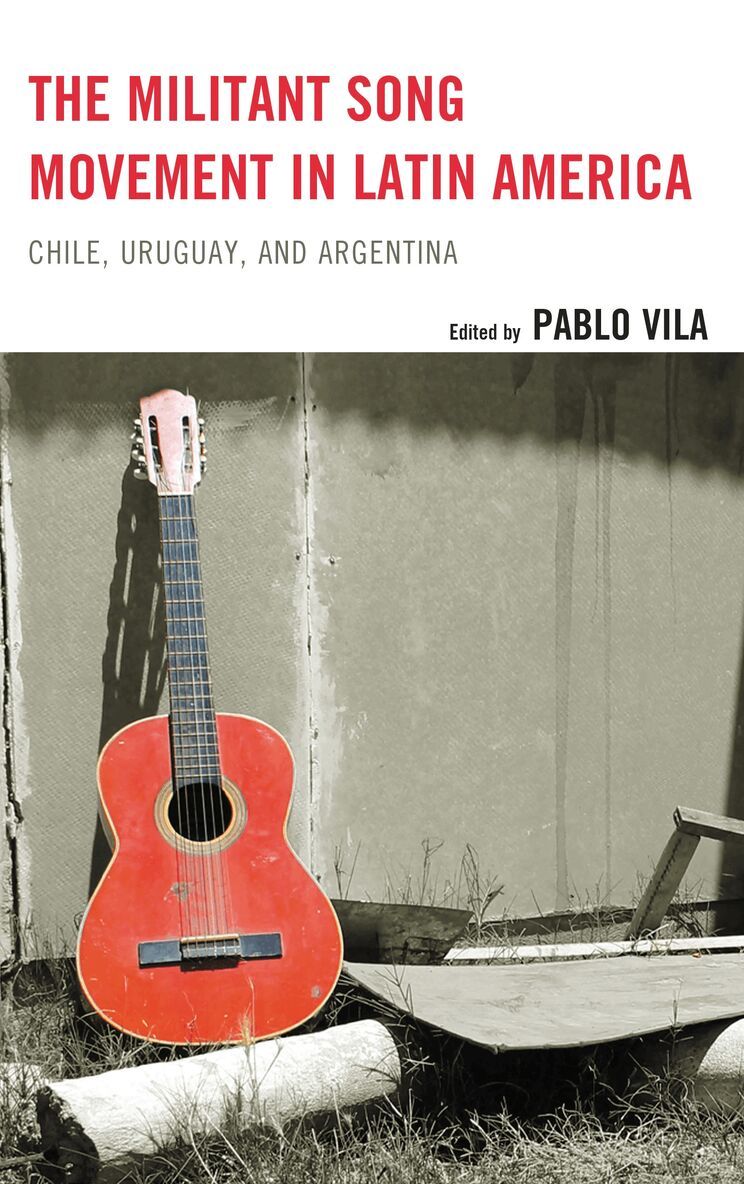
Latin America in the 1960s and 1970s underwent a profound and often violent process of social change. From the Cuban Revolution to the massive guerrilla movements in Argentina, Uruguay, Peru, Colombia, and most of Central America, to the democratic socialist experiment of Allende in Chile, to the increased popularity of socialist-oriented parties in Uruguay, or para-socialist movements, such as the Juventud Peronista in Argentina, the idea of social change was in the air. Although this topic has been explored from a political and social point of view, there is an aspect that has remained fairly unexplored. The cultural—and especially musical—dimension of this movement, so vital in order to comprehend the extent of its emotional appeal, has not been fully documented. Without an account of how music was pervasively used in the construction of the emotional components that always accompany political action, any explanation of what occurred in Latin America during that period will be always partial. This bookis an initial attempt to overcome this deficit. In this collection of essays, we examine the history of the militant song movement in Chile, Uruguay, and Argentina at the peak of its popularity (from the mid-1960s to the coup d’états in the mid-1970s), considering their different political stances and musical deportments. Throughout the book, the contribution of the most important musicians of the movement (Violeta Parra, Víctor Jara, Patricio Manns, Quilapayún, Inti-Illimani, etc., in Chile; Daniel Viglietti, Alfredo Zitarrosa, Los Olimareños, etc., in Uruguay; Atahualpa Yupanqui, Horacio Guarany, Mercedes Sosa, Marian Farías Gómez, Armando Tejada Gómez, César Isella, Víctor Heredia, Los Trovadores, etc., in Argentina) are highlighted; and some of the most important conceptual extended oeuvres of the period (called “cantatas”) are analyzed (such as “La Cantata Popular Santa María de Iquique” in the Chilean case and “Montoneros” in the Argentine case). The contributors to the collection deal with the complex relationship that the aesthetic of the movement established between the political content of the lyrics and the musical and performative aspects of the most popular songs of the period.
Inbunden, Engelska, 2017
1 572 kr
Skickas inom 10-15 vardagar
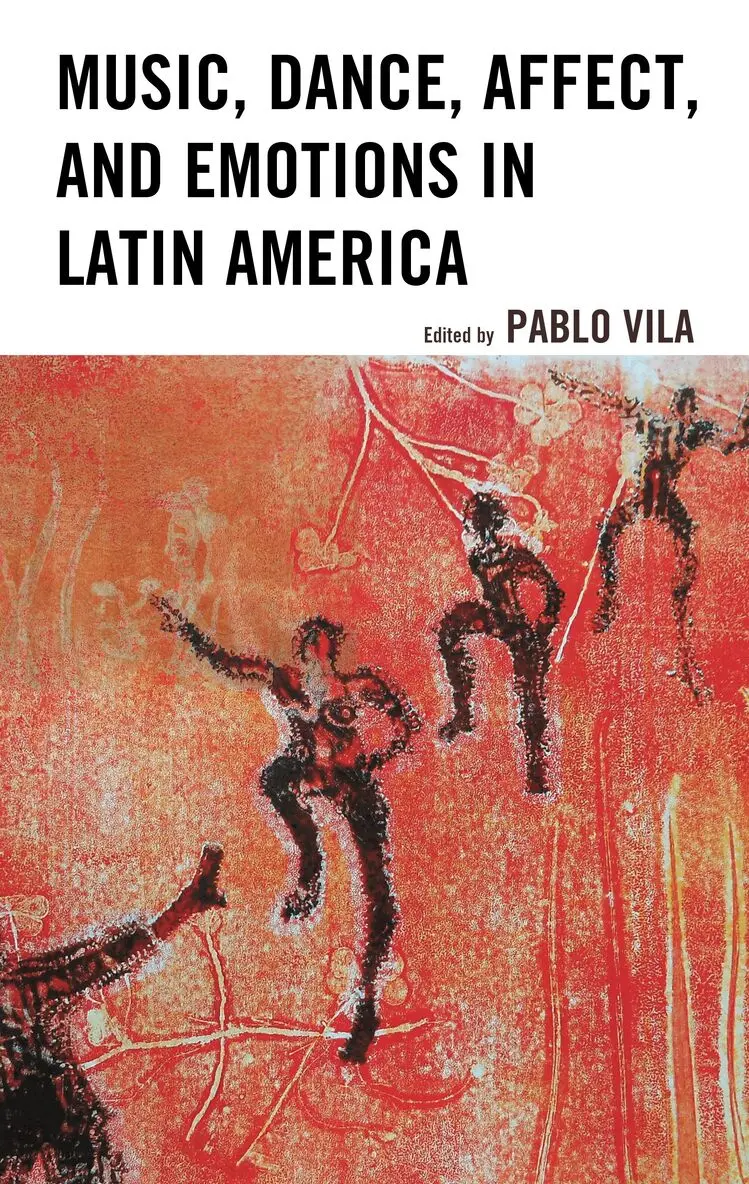
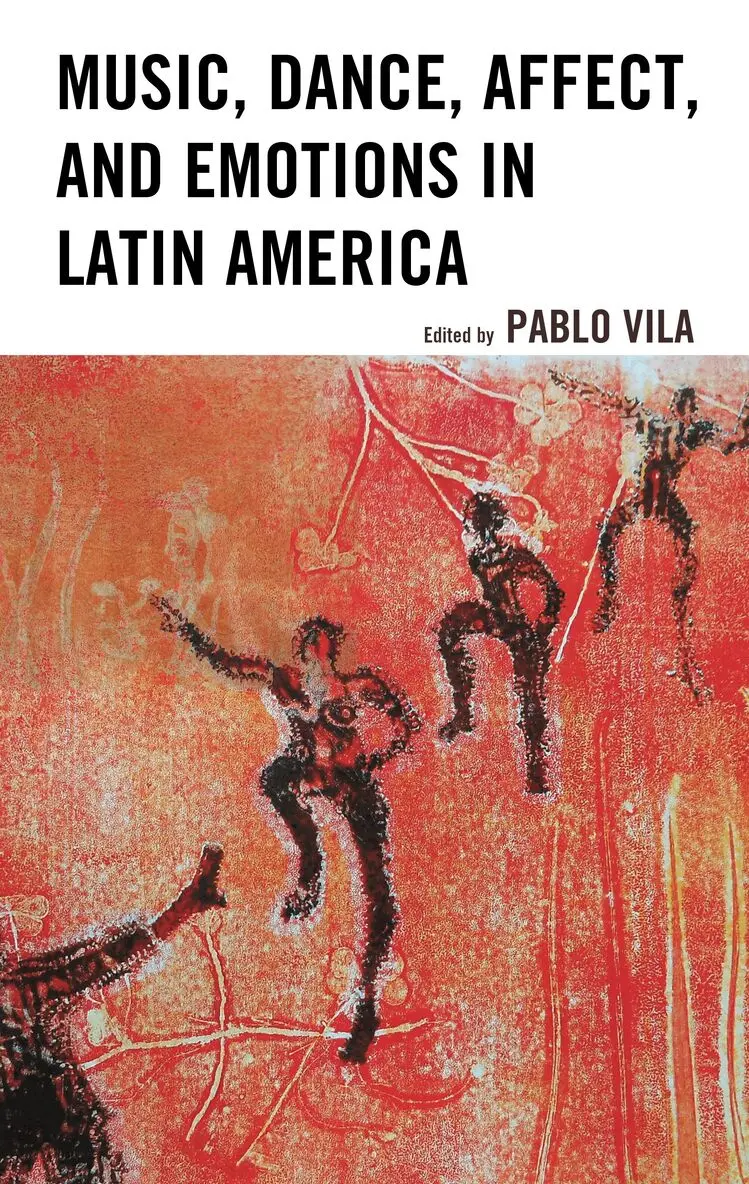
Music, Dance, Affect, and Emotions in Latin America is a collection of essays that analyze different manifestations of Argentine music and dance taking advantage of the exciting new theoretical developments advanced by the current affective turn. Contributors deal with the relationship between music, dance, affects, feelings, and emotions in different scenarios and show how the embodiment of music shape the experiential in ways that may impact upon but nevertheless many times evade conscious knowing. This book is one of the first academic attempts (regardless of region or country of scope) to try to solve some of the most important problems the affective turn has identified regarding how music and dance have been researched so far, such as the tendency, in representational accounts of music, to ignore the sensory and sonic registers to the detriment of the embodied and lived registers of experience and feeling that unfold in the process of making or listening to music.
Häftad, Engelska, 2018
576 kr
Skickas inom 10-15 vardagar
Music, Dance, Affect, and Emotions in Latin America is a collection of essays that analyze different manifestations of Argentine music and dance taking advantage of the exciting new theoretical developments advanced by the current affective turn. Contributors deal with the relationship between music, dance, affects, feelings, and emotions in different scenarios and show how the embodiment of music shape the experiential in ways that may impact upon but nevertheless many times evade conscious knowing. This book is one of the first academic attempts (regardless of region or country of scope) to try to solve some of the most important problems the affective turn has identified regarding how music and dance have been researched so far, such as the tendency, in representational accounts of music, to ignore the sensory and sonic registers to the detriment of the embodied and lived registers of experience and feeling that unfold in the process of making or listening to music.
Inbunden, Engelska, 2017
1 250 kr
Skickas inom 10-15 vardagar
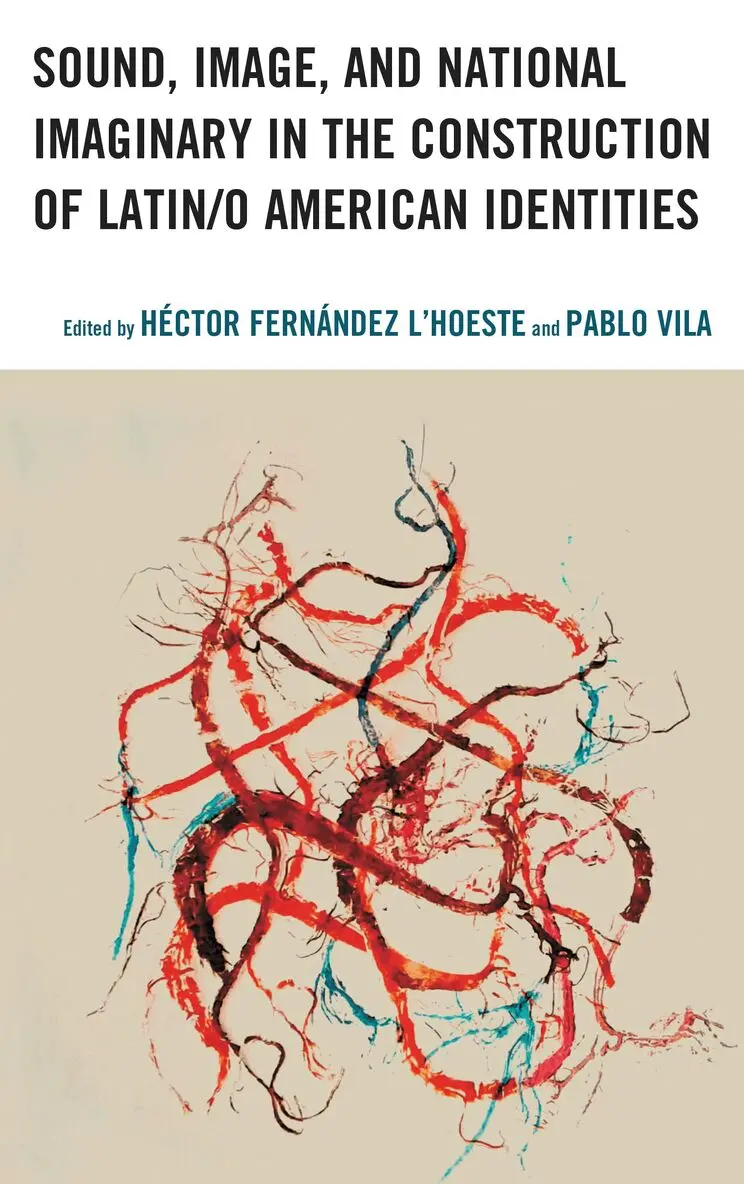
Sound, Image, and National Imaginary in the Construction of Latin/o American Identities addresses a gap in the many narratives discussing the cultural histories of Latin American nations, particularly in terms of the birth, configuration, and perpetuation of national identities. It argues that these processes were not as gradual or constrained as traditionally conceived. The actual circumstances dictating the adoption of particular technologies for the representation of national ideas shifted and varied according to many factors including local circumstances, political singularities, economic disparities, and highly individualized cultural transitions. This book proposes a model of chronology that is valid not only for nations that underwent strong processes of nationalism during the early or mid-twentieth century, but also for those that experienced highly idiosyncratic cultural, economic, and political development into the early twenty-first century.