Paolo Malanima – författare
Visar alla böcker från författaren Paolo Malanima. Handla med fri frakt och snabb leverans.
11 produkter
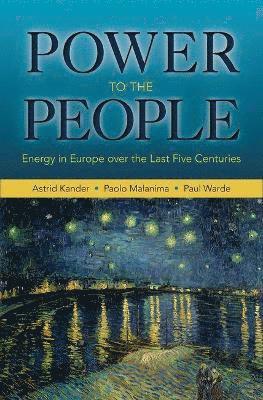
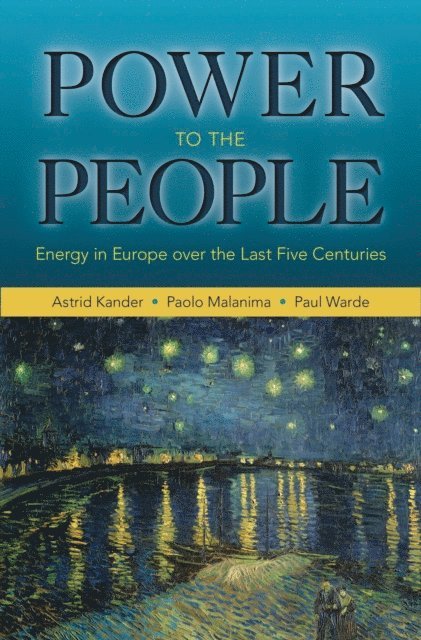
Power to the People
Energy in Europe over the Last Five Centuries
Av Astrid Kander, Paolo Malanima m. fl.
Inbunden, 2014
514 kr
Lägg i varukorg
Power to the People examines the varied but interconnected relationships between energy consumption and economic development in Europe over the last five centuries. It describes how the traditional energy economy of medieval and early modern Europe was marked by stable or falling per capita energy …
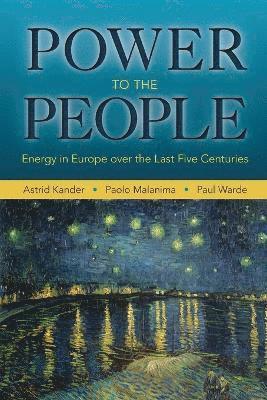
Power to the People
Energy in Europe over the Last Five Centuries
Av Astrid Kander, Paolo Malanima m. fl.
Häftad, 2015
676 kr
Lägg i varukorg
Power to the People examines the varied but interconnected relationships between energy consumption and economic development in Europe over the last five centuries. It describes how the traditional energy economy of medieval and early modern Europe was marked by stable or falling per capita energy …
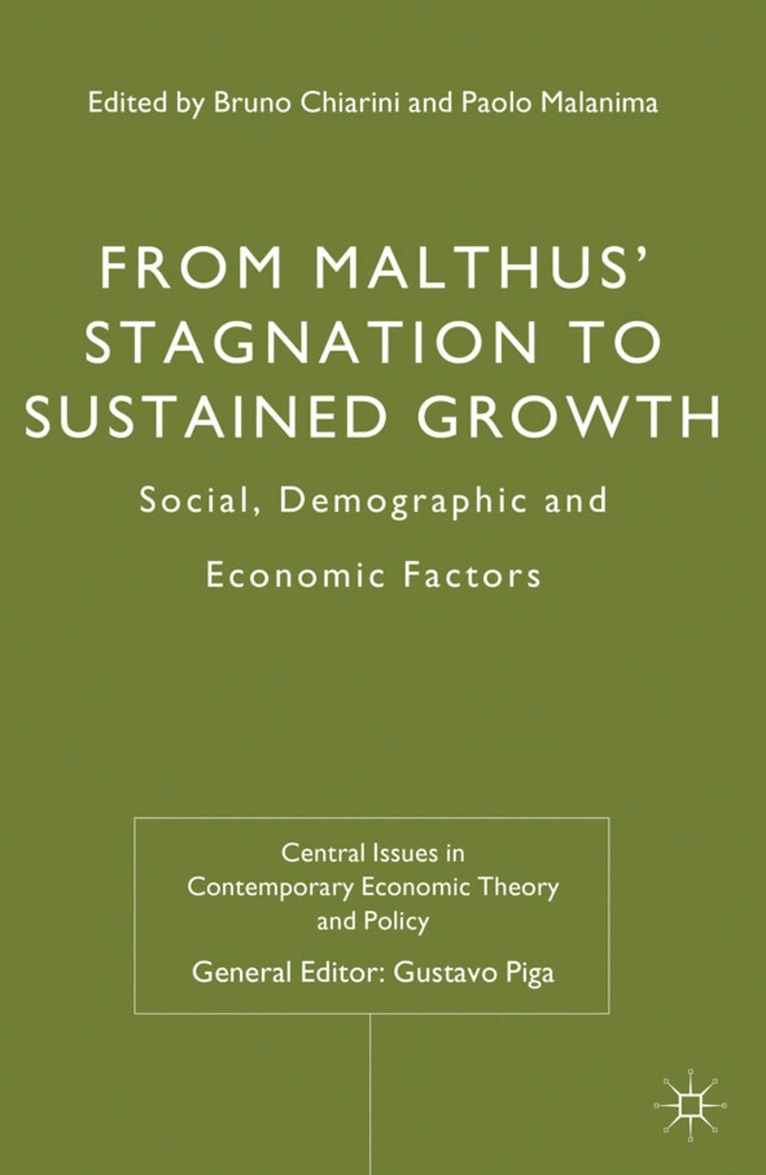
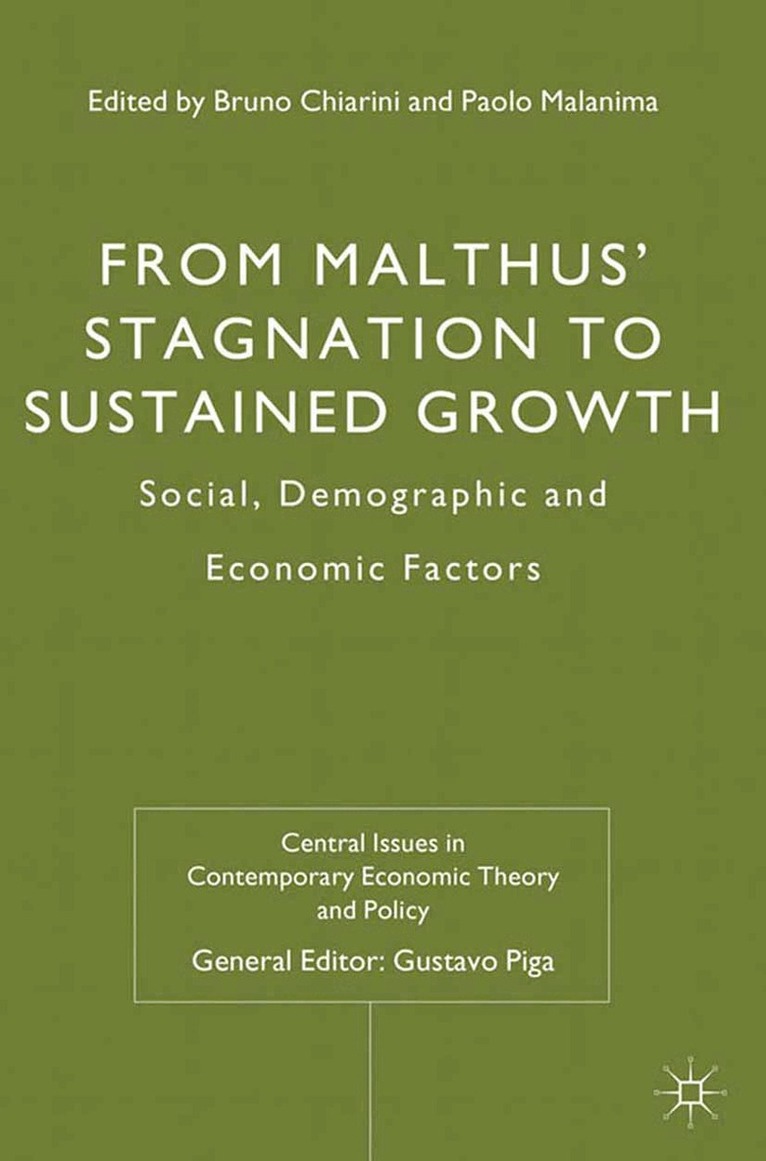
From Malthus' Stagnation to Sustained Growth
Social, Demographic and Economic Factors
Av Bruno Chiarini, Paolo Malanima m. fl.
Inbunden, 2012
550 kr
Lägg i varukorg
A detailed exploration of the influence and utility of Thomas Malthus' model of population growth and economic changes in Europe since the nineteenth century. This important contribution to current discussions on theories of economic growth includes discussion of issues ranging from mortality and …
From Malthus' Stagnation to Sustained Growth
Social, Demographic and Economic Factors
Av Paolo Malanima, Bruno Chiarini
E-bok, 2012
779 kr
Lägg i varukorg
A detailed exploration of the influence and utility of Thomas Malthus'' model of population growth and economic changes in Europe since the nineteenth century. This important contribution to current discussions on theories of economic growth includes discussion of issues ranging from mortality and …
Economy of Renaissance Italy
Inbunden, 2022
2591 kr
Lägg i varukorg
Drawing on a wide range of literature and adopting a macroeconomic approach, this book provides a comprehensive overview of the Italian economy during the Renaissance, focusing on the period between 1348, the year of the Black Death, and 1630.The Italian Renaissance played a crucial role in the …
Economy of Renaissance Italy
Häftad, 2024
692 kr
Lägg i varukorg
Drawing on a wide range of literature and adopting a macroeconomic approach, this book provides a comprehensive overview of the Italian economy during the Renaissance, focusing on the period between 1348, the year of the Black Death, and 1630.The Italian Renaissance played a crucial role in the …
Economy of Renaissance Italy
E-bok, 2022
838 kr
Lägg i varukorg
Drawing on a wide range of literature and adopting a macroeconomic approach, this book provides a comprehensive overview of the Italian economy during the Renaissance, focusing on the period between 1348, the year of the Black Death, and 1630. The Italian Renaissance played a crucial role in the …
Economy of Renaissance Italy
E-bok, 2022
820 kr
Lägg i varukorg
Drawing on a wide range of literature and adopting a macroeconomic approach, this book provides a comprehensive overview of the Italian economy during the Renaissance, focusing on the period between 1348, the year of the Black Death, and 1630. The Italian Renaissance played a crucial role in the …
From Malthus' Stagnation to Sustained Growth
Social, Demographic and Economic Factors
Av Bruno Chiarini, Paolo Malanima
Häftad, 2013
550 kr
Lägg i varukorg
A detailed exploration of the influence and utility of Thomas Malthus' model of population growth and economic changes in Europe since the nineteenth century. This important contribution to current discussions on theories of economic growth includes discussion of issues ranging from mortality and …
Power to the People
Energy in Europe over the Last Five Centuries
Av Paul Warde, Paolo Malanima m. fl.
E-bok, 2014
514 kr
Lägg i varukorg
Power to the People examines the varied but interconnected relationships between energy consumption and economic development in Europe over the last five centuries. It describes how the traditional energy economy of medieval and early modern Europe was marked by stable or falling per capita energy …
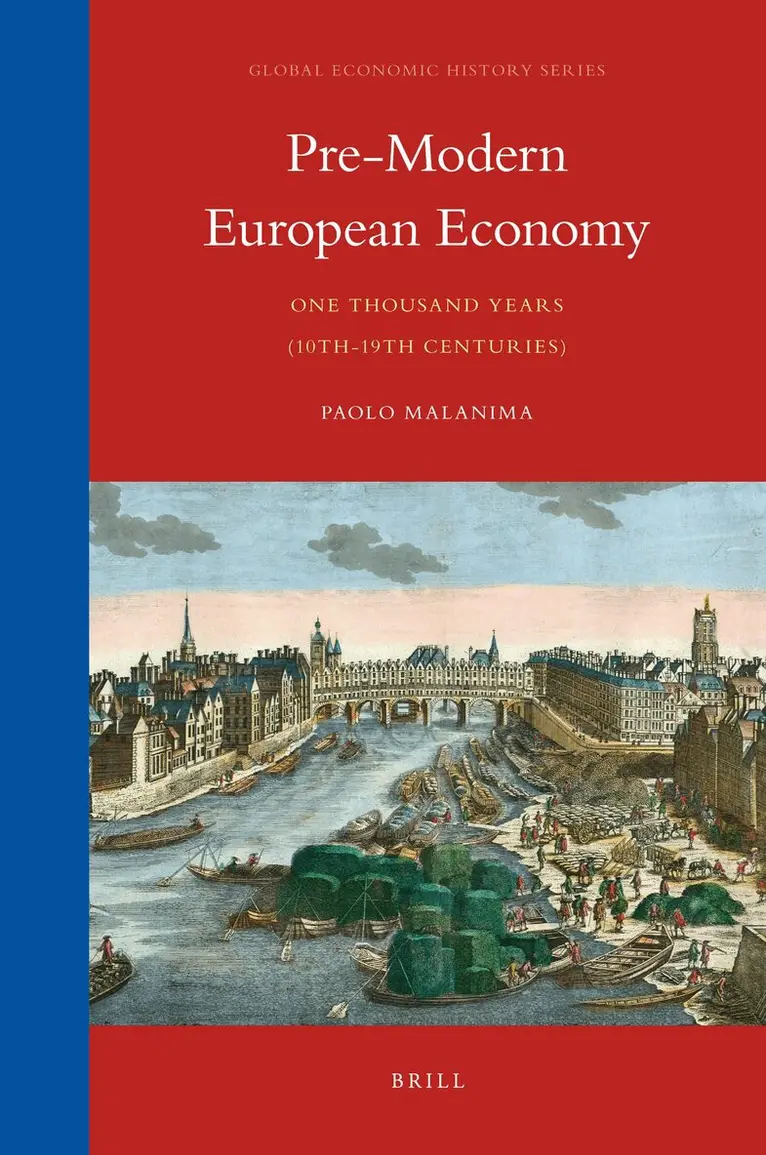
Pre-Modern European Economy
One Thousand Years (10th-19th Centuries)
Inbunden, 2009
3273 kr
Lägg i varukorg
The book deals with the characters and evolution of the European economy from the high Middle Ages until the start of modern growth in the 19th century. Europe is always set in a global context and the European specific features are analysed on the background of the world economy. The main aim of …