Pardeep Kumar Sadh – författare
2 714 kr
Skickas inom 10-15 vardagar
948 kr
Skickas inom 10-15 vardagar
1 103 kr
Läs direkt efter köp
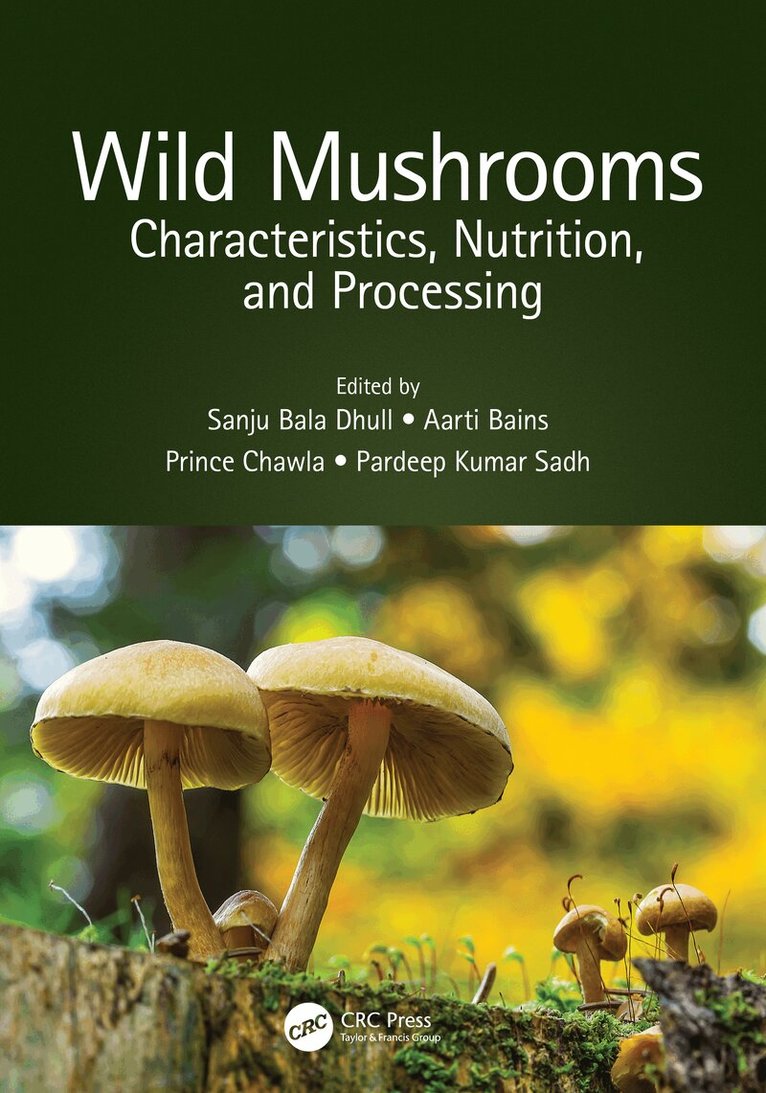
Many wild varieties of mushrooms are consumed by people around the world, yet many species remain unexplored, their nutritional as well as pharmacological significance yet to be discovered for many of them. Wild Mushrooms: Characteristics, Nutrition, and Processing informs readers about different unexplored wild mushrooms, their methods of cultivation, nutritional values, pharmaceutical values, and possible utilization for human wellbeing.
The book represents a comprehensive assessement of current knowledge about the edible mushrooms commercialization, especially as nutraceuticals and dietary supplement formulation, mineral supplementation and source of quality proteins in foods and diet. The health benefits of edible mushrooms, nature and chemistry of bioactive components and in-vitro and in-vivo bioactivity of edible mushrooms are also highlighted in different chapters. By bringing diverse areas such as oxidative stress and longevity, techniques of mushroom analysis, toxicology and extracellular enzymes of wild mushrooms, it lays the groundwork for striking expansion in our understanding of these important biochemicals and their role in health and disease prevention.
Key Features:
Explores major preservation and processing technologies for wild mushrooms and their effects on bioavailability and nutritional value of mushrooms
Presents the classical taxonomy and genetic classification of mushrooms
Discusses the different components present in mushrooms and their biological activities and the health attribute of mushrooms due to these bioactive components
Reviews the applications of mushrooms in environmental pollution reduction
Covers different cultivation strategies of edible and medicinal mushrooms
The book also explores the role of mushrooms in the degradation of harmful xenobiotic compounds as well as reduction of pesticides. It discusses the utilization of wild mushrooms in waste management and cultivation of wild mushroom using lignocellulosic biomass-based residue as a substrate. This book should be of interest to a large and varied audience of researchers in academia, industry, nutritionists, dietitian, food scientists, agriculturists and regulators.
1 103 kr
Läs direkt efter köp
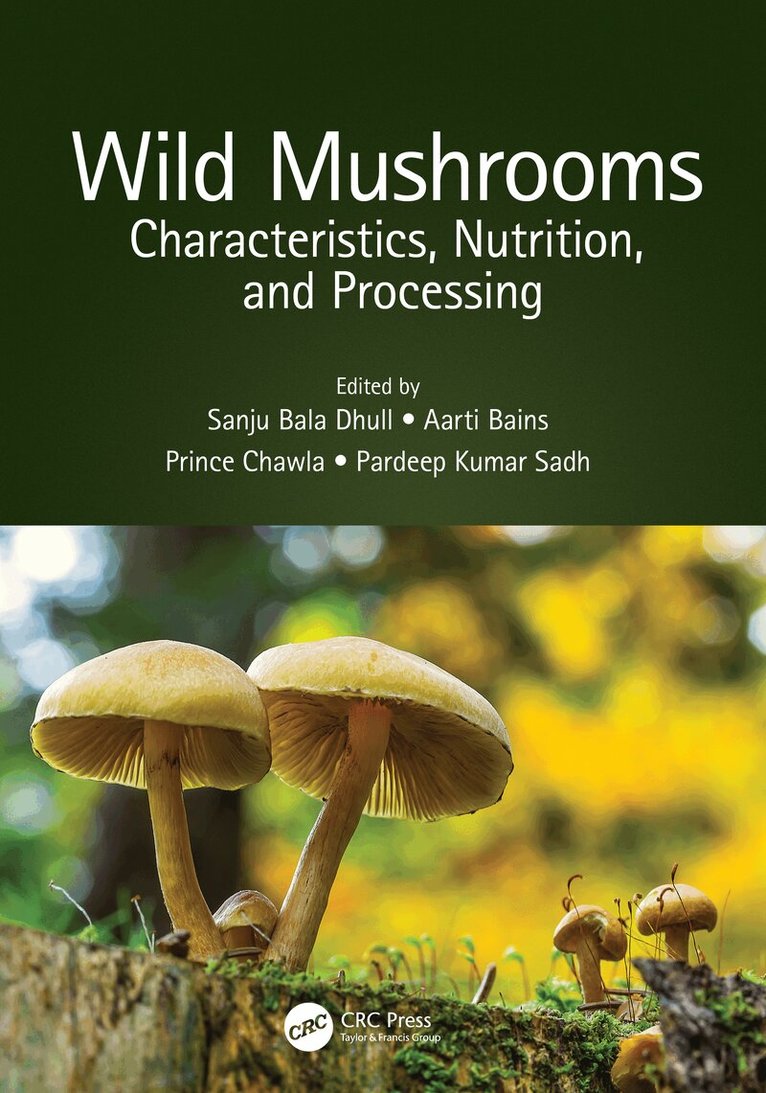
Many wild varieties of mushrooms are consumed by people around the world, yet many species remain unexplored, their nutritional as well as pharmacological significance yet to be discovered for many of them. Wild Mushrooms: Characteristics, Nutrition, and Processing informs readers about different unexplored wild mushrooms, their methods of cultivation, nutritional values, pharmaceutical values, and possible utilization for human wellbeing.
The book represents a comprehensive assessement of current knowledge about the edible mushrooms commercialization, especially as nutraceuticals and dietary supplement formulation, mineral supplementation and source of quality proteins in foods and diet. The health benefits of edible mushrooms, nature and chemistry of bioactive components and in-vitro and in-vivo bioactivity of edible mushrooms are also highlighted in different chapters. By bringing diverse areas such as oxidative stress and longevity, techniques of mushroom analysis, toxicology and extracellular enzymes of wild mushrooms, it lays the groundwork for striking expansion in our understanding of these important biochemicals and their role in health and disease prevention.
Key Features:
Explores major preservation and processing technologies for wild mushrooms and their effects on bioavailability and nutritional value of mushrooms
Presents the classical taxonomy and genetic classification of mushrooms
Discusses the different components present in mushrooms and their biological activities and the health attribute of mushrooms due to these bioactive components
Reviews the applications of mushrooms in environmental pollution reduction
Covers different cultivation strategies of edible and medicinal mushrooms
The book also explores the role of mushrooms in the degradation of harmful xenobiotic compounds as well as reduction of pesticides. It discusses the utilization of wild mushrooms in waste management and cultivation of wild mushroom using lignocellulosic biomass-based residue as a substrate. This book should be of interest to a large and varied audience of researchers in academia, industry, nutritionists, dietitian, food scientists, agriculturists and regulators.
1 667 kr
Skickas inom 10-15 vardagar
909 kr
Läs direkt efter köp
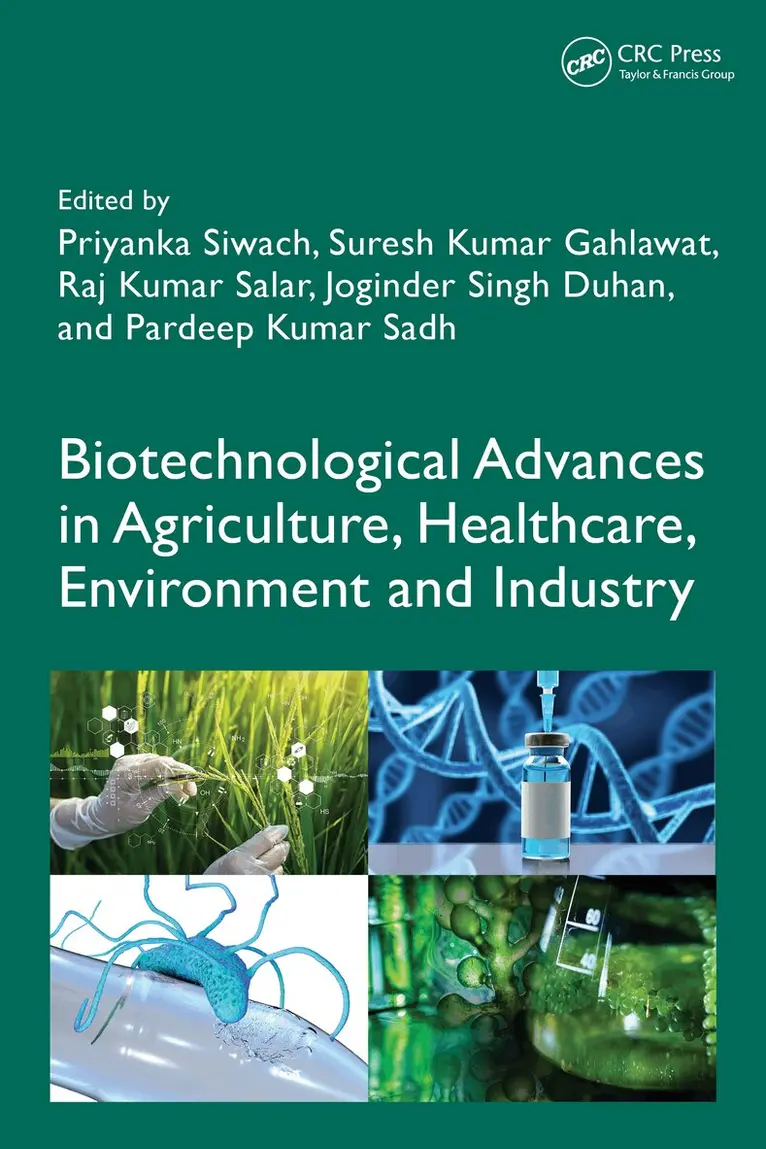
There has been a surge in critical situations such as malnutrition, agricultural productivity, viral diseases, noncommunicable diseases, antibiotic resistance, and depletion of natural resourcest hreatening human welfare during the last decade. Fortunately, a parallel unprecedented growth and development have also taken place in various biotechnological sectors, giving hope and direction to meet these challenges.
This book has been written with a very clear purpose of highlighting the contributions of modern biotechnology in solving emerging problems in various sectors. It has been divided into four major sections: Agricultural Biotechnology, Healthcare Biotechnology, Environmental Biotechnology, and Industrial Biotechnology. The chapters under each section are dedicated to the latest developments with comprehensive information about background, prospects, and applications. We have tried to incorporate the latest innovative biotechnological solutions such as biofortification, exome sequencing, genome sequencing, RNAi, drug discovery, nutrigenomics, bioremediation, nanobiotechnology and many more which have contributed remarkably in recent years to address the modern challenges in various sectors.
The key highlights of this book are as follows:
• Multidisciplinary perspective of biotechnological approaches.
• Extensive investigation of hot topics.
• Updated information with relevant data and statistics.
• Application-based study of biotechnology.
• Profusely illustrated and labeled diagrams to supplement the descriptions.
This fully updated book will serve as a high-value resource book for students, teachers, researchers, and industry personnel in various disciplines of life sciences, agricultural sciences, medicine, environment, and industrial biotechnology. It will serve as a comprehensive resource book to develop an in-depth understanding of the emerging challenges in the areas of human welfare and analyze the latest biotechnological advancements in the direction of solving these concerns.
909 kr
Läs direkt efter köp
There has been a surge in critical situations such as malnutrition, agricultural productivity, viral diseases, noncommunicable diseases, antibiotic resistance, and depletion of natural resourcest hreatening human welfare during the last decade. Fortunately, a parallel unprecedented growth and development have also taken place in various biotechnological sectors, giving hope and direction to meet these challenges.
This book has been written with a very clear purpose of highlighting the contributions of modern biotechnology in solving emerging problems in various sectors. It has been divided into four major sections: Agricultural Biotechnology, Healthcare Biotechnology, Environmental Biotechnology, and Industrial Biotechnology. The chapters under each section are dedicated to the latest developments with comprehensive information about background, prospects, and applications. We have tried to incorporate the latest innovative biotechnological solutions such as biofortification, exome sequencing, genome sequencing, RNAi, drug discovery, nutrigenomics, bioremediation, nanobiotechnology and many more which have contributed remarkably in recent years to address the modern challenges in various sectors.
The key highlights of this book are as follows:
• Multidisciplinary perspective of biotechnological approaches.
• Extensive investigation of hot topics.
• Updated information with relevant data and statistics.
• Application-based study of biotechnology.
• Profusely illustrated and labeled diagrams to supplement the descriptions.
This fully updated book will serve as a high-value resource book for students, teachers, researchers, and industry personnel in various disciplines of life sciences, agricultural sciences, medicine, environment, and industrial biotechnology. It will serve as a comprehensive resource book to develop an in-depth understanding of the emerging challenges in the areas of human welfare and analyze the latest biotechnological advancements in the direction of solving these concerns.