Patrick Amory - Böcker
Visar alla böcker från författaren Patrick Amory. Handla med fri frakt och snabb leverans.
2 produkter
2 produkter
Del 33 - Cambridge Studies in Medieval Life and Thought: Fourth Series
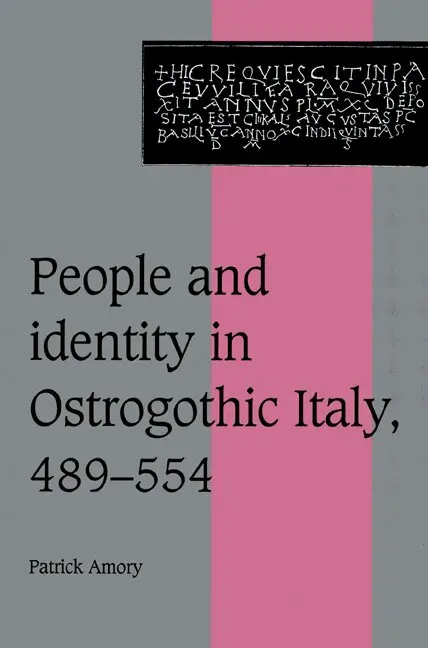
People and Identity in Ostrogothic Italy, 489-554
Häftad, Engelska, 2003
550 kr
Skickas inom 7-10 vardagar
The barbarians of the fifth and sixth centuries were long thought to be races, tribes or ethnic groups who toppled the Roman Empire and racist, nationalist assumptions about the composition of the barbarian groups still permeate much scholarship on the subject. This book proposes a new view, through a case-study of the Goths of Italy between 489 and 554. It contains a detailed examination of the personal details and biographies of 379 individuals and compares their behaviour with ideological texts of the time. This inquiry suggests wholly new ways of understanding the appearance of barbarian groups and the end of the western Roman Empire, as well as proposing new models of regional and professional loyalty and group cohesion. In addition, the book proposes a complete reinterpretation of the evolution of Christian conceptions of community, and of so-called 'Germanic' Arianism.
Del 33 - Cambridge Studies in Medieval Life and Thought: Fourth Series
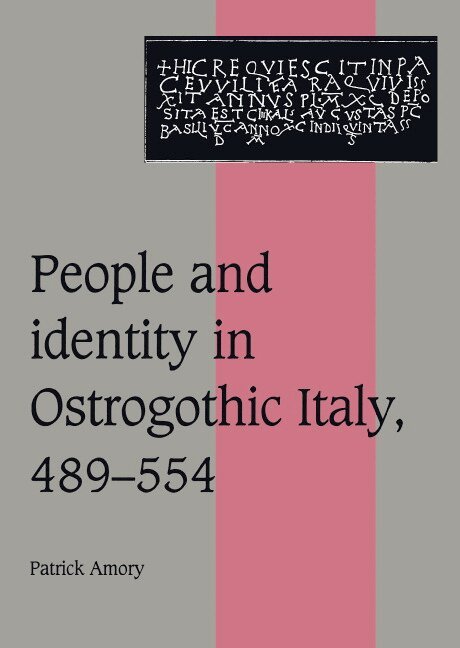
People and Identity in Ostrogothic Italy, 489-554
Inbunden, Engelska, 1997
1 878 kr
Skickas inom 7-10 vardagar
The barbarians of the fifth and sixth centuries were long thought to be races, tribes or ethnic groups who toppled the Roman Empire and racist, nationalist assumptions about the composition of the barbarian groups still permeate much scholarship on the subject. This book proposes a new view, through a case-study of the Goths of Italy between 489 and 554. It contains a detailed examination of the personal details and biographies of 379 individuals and compares their behaviour with ideological texts of the time. This inquiry suggests wholly new ways of understanding the appearance of barbarian groups and the end of the western Roman Empire, as well as proposing new models of regional and professional loyalty and group cohesion. In addition, the book proposes a complete reinterpretation of the evolution of Christian conceptions of community, and of so-called 'Germanic' Arianism.